TR
TR EN
EN

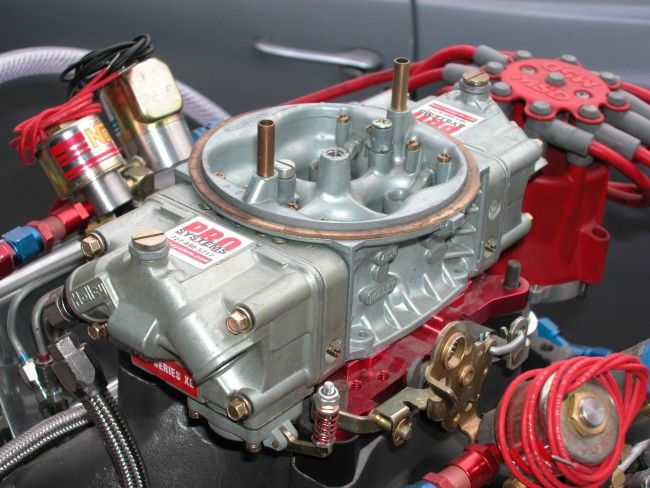
What Are the Parts of a Carburetor? Their Functions and Working Principles
A carburetor is a mechanical fuel-delivery device designed to mix gasoline with incoming air before the mixture enters the engine. Before electronic fuel injection became widespread, carburetors were used on a huge range of gasoline engines, from small motorcycles and classic cars to high-performance applications.
Although carburetors may look relatively simple from the outside, the inside contains several passages, valves, jets, diaphragms, and mechanical mechanisms. Each one has a specific function, and the carburetor must balance fuel level, airflow, vacuum, and throttle position to provide an appropriate mixture.
Understanding these components makes it much easier to diagnose problems such as difficult starting, excessive fuel consumption, unstable idle, hesitation, flooding, and poor acceleration.
How Does a Carburetor Work?
The basic operating principle of a carburetor is based on the relationship between airflow and pressure.
As air passes through a narrowed section called the venturi, its velocity increases and static pressure decreases. This pressure difference allows gasoline from the float chamber to be drawn through calibrated passages and mixed with the incoming air.
The throttle determines how much air can enter the engine. As the throttle opens, airflow increases, engine load changes, and the carburetor's different fuel circuits become active.
A simplified sequence is:
Fuel tank → fuel pump → carburetor inlet → float chamber → jets → venturi → air-fuel mixture → intake manifold → engine
The important point is that a carburetor does not simply use one fuel passage for every operating condition. Different circuits are used at idle, during normal driving, during acceleration, and at high engine load.
Float Bowl
The float bowl, also called the float chamber, stores a small quantity of gasoline inside the carburetor.
Its main purpose is to maintain a relatively stable fuel supply close to the jets.
A stable fuel level is important because the pressure difference that draws gasoline through the jets depends partly on the fuel level inside the carburetor.
If the fuel level is too high, the engine may receive too much fuel. This can create a rich mixture, fuel leakage, black exhaust smoke, poor fuel economy, or flooding.
If the fuel level is too low, the engine may become lean, especially during acceleration or high load.
Float
The float controls the fuel level inside the float bowl.
It is usually made from a lightweight material that allows it to move up and down with the fuel level.
As gasoline enters the float bowl, the float rises. When the fuel reaches the specified level, the float moves the needle valve toward its closed position and reduces or stops additional fuel entering the bowl.
As the engine consumes fuel, the fuel level drops and the float moves downward. This allows the needle valve to open again so that more fuel can enter.
The float therefore works as a mechanical fuel-level control system.
A damaged, incorrectly adjusted, or fuel-soaked float can cause incorrect fuel levels and serious carburetor problems.
Needle Valve
The needle valve, sometimes called the inlet needle and seat, controls the flow of gasoline into the float bowl.
It works together with the float.
When the fuel level becomes high enough, the float pushes the needle valve toward its seat and restricts fuel flow. When the fuel level drops, the valve opens again.
A worn or dirty needle valve may fail to seal properly. In that situation, gasoline can continue entering the float bowl, potentially causing flooding or fuel leakage.
Venturi
The venturi is one of the most important parts of a carburetor.
It is a narrowed section inside the airflow passage. As air passes through the restriction, its velocity increases and pressure decreases.
This pressure difference helps draw fuel from the carburetor's fuel circuit into the airflow.
The shape and size of the venturi have a major influence on carburetor behavior.
A smaller venturi can generally produce stronger airflow velocity at lower engine speeds, which can help throttle response and low-speed operation.
A larger venturi can allow greater airflow at higher engine speeds, potentially supporting greater engine power, but may reduce airflow velocity at low engine speeds.
This is one reason carburetor selection must be matched to the engine rather than based simply on the largest possible carburetor.
Main Jet
The main jet controls the amount of fuel available to the main fuel circuit.
It becomes increasingly important as engine speed and airflow increase and the main circuit becomes active.
The size of the main jet influences the mixture under many normal and higher-load operating conditions.
A jet that is too large can contribute to a rich mixture, while a jet that is too small can contribute to a lean mixture.
However, jet sizing should not be judged by size alone. The correct calibration depends on the carburetor design, engine displacement, airflow, intake system, exhaust system, altitude, fuel characteristics, and operating conditions.
Emulsion Tube
Many carburetors use an emulsion tube or a similar fuel-metering component in the main circuit.
Its function is to introduce air into the fuel circuit and help control how fuel is mixed and atomized before reaching the venturi.
The emulsion characteristics influence how the mixture changes as airflow and engine speed increase.
This component is particularly important when tuning performance carburetors because changing the emulsion characteristics can alter fuel delivery across different engine-speed ranges.
Air Correction Jet
An air correction jet controls the amount of air entering the main fuel circuit.
Its purpose is to help compensate for changes in fuel delivery as airflow and engine speed increase.
Without appropriate correction, the mixture could become excessively rich as engine speed rises.
The air correction system therefore helps shape the fuel curve across the operating range.
Idle Jet and Idle Circuit
At idle, airflow through the main venturi is relatively low. The main fuel circuit may therefore not provide enough fuel for stable engine operation.
The idle circuit supplies fuel during idle and low-throttle conditions.
The idle jet meters the fuel used by this circuit.
A clogged idle jet can cause:
-
Unstable idle
-
Stalling
-
Poor low-speed response
-
Difficulty maintaining idle
-
Hesitation when the throttle is first opened
Because the passages in the idle circuit are small, even small deposits can significantly affect engine operation.
Mixture Screw
The mixture screw is used to adjust the fuel-air characteristics of the idle or low-speed circuit, depending on carburetor design.
Its exact function depends on whether the screw is located on the fuel side or air side of the circuit.
Turning the screw does not have the same effect on every carburetor, so adjustment procedures must be based on the specific carburetor design.
Incorrect adjustment can result in:
-
Rough idle
-
Excessive fuel consumption
-
Lean hesitation
-
High emissions
-
Difficult starting
Carburetor mixture screws should not be adjusted randomly. The engine should normally be at the appropriate operating temperature and the manufacturer's or carburetor manufacturer's adjustment procedure should be followed.
Throttle Valve
The throttle valve, or throttle plate, controls the amount of air entering the engine.
When the accelerator is pressed, the throttle opens and allows more air into the intake system.
The increased airflow creates a greater engine load demand and causes the carburetor to supply additional fuel through the appropriate circuits.
At idle, the throttle remains almost closed, with a small controlled amount of air entering the engine through the idle and bypass circuits.
Accelerator Pump
The accelerator pump is responsible for supplying additional fuel during rapid throttle opening.
When the throttle is opened suddenly, airflow can change very quickly. Without additional fuel, the mixture can temporarily become too lean.
The accelerator pump delivers a short burst of additional fuel to compensate for this transition.
A faulty accelerator pump can cause:
-
Hesitation when accelerating
-
Stumbling
-
Temporary loss of power
-
Poor throttle response
-
Lean popping during acceleration
The accelerator pump is especially important in carburetors used on engines that require rapid throttle response.
Choke
The choke is used primarily during cold starting.
A cold engine may require a richer mixture because gasoline does not vaporize as effectively at low temperatures.
The choke restricts airflow or otherwise enriches the mixture, depending on the carburetor design.
Once the engine warms up, the choke should progressively open.
Older carburetors may use a manually operated choke, while others use automatic mechanisms controlled by temperature-sensitive devices.
A choke that remains partially closed after warm-up can cause:
-
Rich running
-
Poor fuel economy
-
Black exhaust smoke
-
Carbon deposits
-
Rough running
-
Excessive fuel consumption
Choke Pull-Off Mechanism
Many automatic choke systems use a choke pull-off or vacuum-operated mechanism.
When the engine starts, intake vacuum can move the choke slightly open so that the engine does not remain excessively rich.
This is important because a completely closed choke can provide too much fuel once the engine has started.
A damaged pull-off diaphragm or vacuum problem can therefore create difficult cold-running or rich-mixture symptoms.
Idle Speed Screw
The idle speed screw controls the mechanical position of the throttle at idle.
Opening the throttle slightly allows more air into the engine and generally increases idle speed. Closing it reduces airflow and can lower idle speed.
Idle speed should be adjusted according to the engine manufacturer's specification rather than simply setting the highest or smoothest possible idle.
Power Valve or Enrichment System
Some carburetors use a power valve or another load-sensitive enrichment system.
The purpose is to provide additional fuel when the engine is under high load and requires a richer mixture.
Under light-load conditions, the system can remain closed or inactive. When manifold vacuum changes because of increased engine load, the enrichment mechanism can activate.
The exact design varies considerably between carburetor manufacturers.
Vacuum Diaphragms
Many carburetors use vacuum-operated diaphragms for different functions.
Depending on the carburetor, vacuum may be used to control:
-
Choke mechanisms
-
Secondary throttle operation
-
Fuel enrichment
-
Distributor vacuum signals
-
Other load-dependent functions
A cracked or leaking diaphragm can prevent the related mechanism from operating correctly.
Because vacuum is fundamental to carburetor operation, damaged vacuum hoses and diaphragms can create symptoms that initially appear to be fuel-related.
Secondary Throttle System
Some carburetors have two stages or multiple barrels.
The primary side handles normal driving and low-to-medium engine demand. The secondary side opens when additional airflow is required.
Secondary operation can be mechanical or vacuum controlled, depending on the carburetor design.
This arrangement allows the carburetor to provide good low-speed drivability without sacrificing high-speed airflow capacity.
A poorly adjusted secondary mechanism can cause hesitation, poor performance, or excessive fuel consumption.
Air Horn
The air horn is the upper section of the carburetor through which intake air enters before passing through the venturi.
It may contain or support components such as:
-
Choke mechanism
-
Air corrector jets
-
Float assembly
-
Air passages
Its shape also influences how air moves through the carburetor.
Fuel Passages
Inside the carburetor are numerous small fuel and air passages.
These passages connect the float chamber with the different metering circuits.
Because many of these passages are extremely small, dirt, varnish, corrosion, or fuel deposits can restrict them.
A carburetor can therefore appear clean externally while still having significant internal contamination.
Carburetor Gaskets and Seals
Gaskets and seals prevent fuel and air leaks between carburetor sections and between the carburetor and intake manifold.
A damaged gasket can create either a fuel leak or an unwanted air leak, depending on its location.
An intake-side air leak can introduce unmetered air into the engine and create a lean mixture, unstable idle, or hesitation.
A fuel-side gasket failure can cause gasoline leakage and should be treated as a safety issue.
How the Carburetor Circuits Work Together
One of the most important things to understand about carburetors is that different circuits operate at different stages of engine operation.
During cold starting
The choke and cold-start enrichment system help provide the richer mixture needed by the cold engine.
At idle
The idle circuit and idle jet provide most of the fuel required because airflow through the main venturi is relatively low.
During normal driving
As the throttle opens and airflow increases, the main fuel circuit becomes increasingly important.
During rapid acceleration
The accelerator pump provides additional fuel to compensate for the rapid change in airflow.
Under heavy load
Power enrichment systems can provide additional fuel when the engine requires a richer mixture.
At high airflow
The main metering system and secondary barrels, when equipped, provide the fuel and airflow capacity needed for higher engine demand.
This division of functions is what allows a relatively mechanical system to operate across a wide range of conditions.
Why Carburetor Adjustment Is Important
Even a mechanically sound carburetor can perform poorly if it is incorrectly adjusted.
The following factors can significantly affect operation:
-
Float level
-
Main jet size
-
Idle jet size
-
Mixture adjustment
-
Idle speed
-
Choke adjustment
-
Accelerator pump adjustment
-
Secondary opening
-
Fuel pressure
-
Ignition timing
-
Vacuum condition
-
Air filter condition
Carburetor tuning should therefore be approached as a complete system rather than by turning a single adjustment screw.
Common Carburetor Problems
Because so many components work together, several different faults can produce similar symptoms.
For example, a rough idle could be caused by a clogged idle jet, an incorrect mixture setting, a vacuum leak, incorrect ignition timing, an incorrect float level, or an engine mechanical problem.
Similarly, excessive fuel consumption does not automatically mean that the main jet is too large. A leaking needle valve, high fuel level, stuck choke, incorrect fuel pressure, or ignition problem could produce a similar symptom.
This is why diagnosis should begin with identifying the operating condition in which the problem occurs.
Why Carburetors Were Eventually Replaced by Fuel Injection
Carburetors can provide effective fuel delivery with a relatively simple mechanical design, but modern engines require much greater control.
Electronic fuel injection can monitor engine speed, load, temperature, airflow, throttle position, oxygen sensor feedback, and many other parameters. The ECU can then adjust fuel delivery according to the actual operating conditions.
This provides major advantages in cold starting, fuel economy, emissions control, throttle response, altitude compensation, and diagnostic capability.
The carburetor therefore represents an important stage in the development of gasoline engine technology. Its individual components demonstrate how engineers were able to manage fuel and airflow mechanically long before modern ECUs and electronic injectors became standard.
Understanding the float, needle valve, venturi, jets, idle circuit, accelerator pump, choke, throttle, enrichment systems, and vacuum mechanisms also provides a useful foundation for diagnosing and maintaining classic carbureted engines.