TR
TR EN
EN

What Is Engine Braking? How Does It Work and What Are Its Advantages?
When a vehicle is moving downhill or you need to reduce speed without using the brake pedal continuously, there is another source of deceleration that can help: the engine itself.
This is known as engine braking.
Engine braking occurs when the driver releases the accelerator while the vehicle remains in gear. Instead of the engine driving the wheels, the rotating wheels begin driving the engine through the transmission and drivetrain. The resistance created inside the engine slows the vehicle down.
Engine braking is a normal characteristic of internal combustion engines and is not, by itself, harmful to the engine or transmission when used correctly.
It can be especially useful when descending long hills, approaching corners, controlling speed in traffic, or reducing the amount of heat generated by the conventional braking system.
What Exactly Is Engine Braking?
Engine braking is the reduction in vehicle speed that occurs when the accelerator is released while the transmission remains connected to the engine.
Under acceleration, the power flow is generally:
Engine → Transmission → Driveshaft/axles → Wheels
During engine braking, the direction of mechanical energy flow effectively reverses:
Wheels → Drivetrain → Transmission → Engine
The wheels continue rotating because of the vehicle's momentum. Through the transmission, they force the engine to rotate.
The engine resists this rotation, and that resistance produces a decelerating force.
The important point is that engine braking does not mean applying the vehicle's conventional friction brakes. Instead, the engine and drivetrain provide part of the resistance that slows the vehicle.
How Does Engine Braking Work?
The exact mechanism depends on the engine, fuel system, transmission, and vehicle design, but several effects work together.
When you release the accelerator, the engine is no longer producing the same driving torque as it does under acceleration.
In many gasoline engines with a conventional throttle, the throttle plate closes significantly when the accelerator is released.
The vehicle is still moving, so the wheels continue turning the engine through the transmission.
Because the throttle is closed or nearly closed, the engine has to draw air against a restriction. This creates a pumping effect that contributes to deceleration.
There is also internal friction, compression-related resistance, accessory load, and other mechanical losses.
The combined effect is what the driver experiences as engine braking.
What Happens to the Engine When You Release the Accelerator?
Suppose you are driving at 80 km/h in third gear and suddenly release the accelerator.
The vehicle does not immediately disconnect the engine from the wheels.
Because the transmission is still in gear, the wheels continue turning the transmission and engine.
The engine speed may remain relatively high even though you are no longer pressing the accelerator.
Instead of the engine providing strong positive torque to accelerate the vehicle, the engine is now absorbing mechanical energy.
This produces deceleration.
If you press the clutch pedal in a manual transmission vehicle, or shift to neutral, the mechanical connection between the engine and wheels is interrupted. Engine braking then largely disappears.
Why Does a Higher Gear Produce Less Engine Braking?
Engine braking is strongly affected by the selected gear.
Lower gears generally produce stronger engine braking because the transmission provides greater torque multiplication between the engine and the wheels.
For example, when descending a steep hill, selecting a lower gear keeps the engine at a higher RPM and allows the engine to provide more resistance against the vehicle's movement.
In a high gear, the engine may rotate at a relatively low speed while the vehicle continues moving quickly. The engine's resistance at the wheels is generally less pronounced.
This is why drivers often select a lower gear before descending a long or steep hill.
However, selecting a gear that forces the engine to exceed its safe operating speed is not appropriate.
Engine Braking in a Manual Transmission
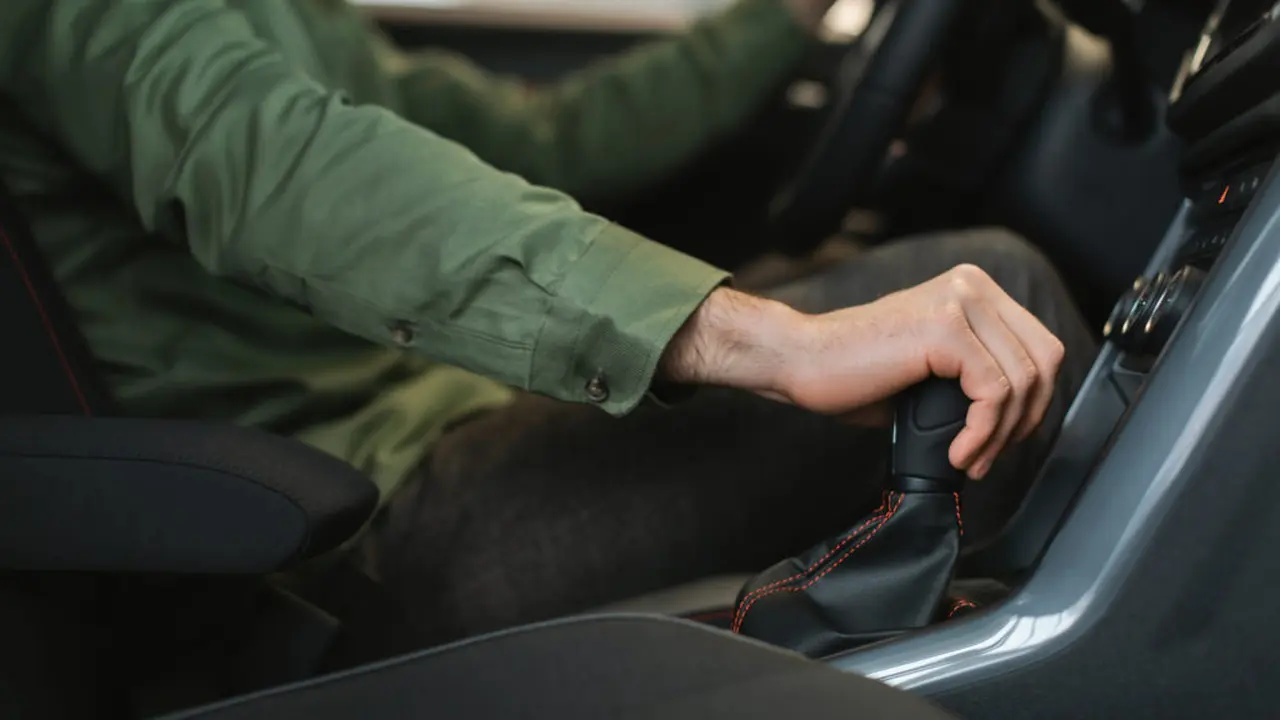
Engine braking is particularly easy to control with a manual transmission.
When approaching a downhill section, the driver can release the accelerator while remaining in gear.
If additional deceleration is needed, the driver can select a lower gear.
For example:
-
6th gear may provide relatively little engine braking.
-
5th gear may provide more.
-
4th gear may provide stronger resistance.
-
3rd or 2nd gear may provide substantially stronger engine braking.
The correct gear depends on the vehicle, road speed, road gradient, engine characteristics, and manufacturer's recommendations.
The driver should select a gear that keeps the engine within an appropriate RPM range.
Is Engine Braking the Same as Downshifting?
Not exactly.
Engine braking refers to the deceleration created by the engine when the vehicle remains mechanically connected to it and the engine is not producing enough positive torque to maintain vehicle speed.
Downshifting is changing to a lower transmission gear.
Downshifting can increase engine braking, but engine braking can occur without changing gears.
For example, if you are driving in fourth gear and simply release the accelerator, the vehicle can experience engine braking without any gear change.
If you then shift from fourth to third, the engine speed rises and engine braking can become stronger.
What Happens During Engine Braking in a Gasoline Engine?
In a traditional gasoline engine, releasing the accelerator usually causes the throttle plate to close substantially.
The pistons continue moving because the wheels are driving the engine.
During the intake stroke, the engine attempts to draw air into the cylinders. With the throttle largely closed, airflow is restricted.
This creates a relatively low pressure in the intake manifold compared with atmospheric pressure.
The engine therefore has to do work to pump air through the restricted intake path.
That pumping work contributes to engine braking.
The engine's internal friction and compression-related effects also contribute.
What Happens During Engine Braking in a Diesel Engine?
Diesel engines are somewhat different.
Traditional diesel engines generally do not use a conventional throttle plate in the same way as gasoline engines. Consequently, the intake pumping losses associated with a closed throttle are usually less significant.
Diesel engine braking can therefore feel different from gasoline engine braking.
However, diesel engines can still provide substantial engine braking through:
-
Engine compression and pumping effects
-
Internal friction
-
High compression ratio
-
Exhaust restrictions in certain systems
-
Turbocharger-related effects
-
Exhaust brakes or compression-release systems on some commercial vehicles
Modern diesel vehicles can also use electronically controlled systems to influence engine braking behavior.
What Is Fuel Cut During Engine Braking?
One of the most useful characteristics of modern electronically controlled gasoline and diesel engines is deceleration fuel cut-off.
When certain operating conditions are met, the engine control unit may completely stop fuel injection while the vehicle is decelerating in gear.
The wheels are still turning the engine, so the engine continues rotating without needing fuel to maintain its RPM.
This is one reason why a modern fuel-injected vehicle can show extremely low or even zero instantaneous fuel consumption during certain periods of closed-throttle deceleration.
The exact conditions vary by engine and calibration.
Fuel injection may resume as engine speed approaches a predetermined threshold or when the driver requests torque again.
Does Engine Braking Use Fuel?
In many modern vehicles, engine braking while coasting in gear can result in zero fuel injection for a period of time, provided the engine control system activates deceleration fuel cut-off.
This does not mean that every situation of slowing down in gear uses absolutely no fuel.
Fuel injection depends on factors such as:
-
Engine speed
-
Coolant temperature
-
Vehicle speed
-
Throttle position
-
Gear selection
-
Emissions strategy
-
Transmission operation
-
Engine control calibration
For this reason, it is incorrect to say that engine braking always consumes zero fuel.
Engine Braking vs. Coasting in Neutral
These two situations are fundamentally different.
When you release the accelerator but remain in gear, the wheels continue driving the engine.
This creates engine braking.
When you select neutral, the engine is disconnected from the driven wheels. The vehicle can roll more freely, so engine braking is largely removed.
In modern vehicles, staying in gear during deceleration can also allow the ECU to activate fuel cut-off.
Therefore, coasting in neutral is not automatically more fuel-efficient than remaining in gear.
There are also safety considerations. Keeping the vehicle in an appropriate gear maintains a direct drivetrain connection and gives the driver more immediate control over vehicle acceleration.
What Are the Advantages of Engine Braking?
Engine braking has several practical advantages.
It reduces brake wear
When engine braking is used appropriately, the conventional brake system does not have to provide all of the required deceleration.
This can reduce the frequency and intensity of brake application.
The effect can be particularly useful on long downhill roads.
It helps prevent brake overheating
Brake pads and discs convert kinetic energy into heat.
If the driver continuously uses the brake pedal on a long, steep descent, the brakes can become extremely hot.
Excessive temperature can reduce braking performance and may contribute to brake fade.
Using an appropriate lower gear can reduce the amount of work required from the friction brakes.
It provides better speed control on descents
Engine braking can help maintain a more stable speed when driving downhill.
Instead of repeatedly accelerating and braking, the driver can select an appropriate gear and allow the engine to provide continuous resistance.
The friction brakes can then be used when additional stopping force is required.
It can reduce fuel injection during deceleration
When the ECU activates deceleration fuel cut-off, fuel injection can temporarily stop.
This can make in-gear deceleration efficient from a fuel-consumption perspective.
It can reduce brake system workload
Using the engine to assist deceleration distributes the work between the drivetrain and friction brakes.
This can be especially valuable when the vehicle is heavily loaded or traveling through mountainous terrain.
Is Engine Braking Good for the Engine?
Normal engine braking within the manufacturer's recommended RPM range is generally a normal operating condition.
An engine is designed to experience changes in load and rotational speed.
However, there is an important distinction between controlled engine braking and aggressive downshifting that causes excessive RPM.
If a driver selects an excessively low gear at high road speed, the wheels can force the engine to rotate at an excessively high speed.
This is sometimes called an over-rev or mechanical over-speed.
Such an event can be very different from normal engine braking and can potentially cause serious engine or drivetrain damage.
The solution is not to avoid engine braking, but to use appropriate gears and speeds.
Can Engine Braking Damage the Transmission?
Normal engine braking should not damage a properly functioning transmission when used according to the manufacturer's operating recommendations.
Modern manual and automatic transmissions are designed to handle torque in both directions.
However, aggressive or inappropriate downshifting can place considerable load on:
-
Clutch components
-
Synchronizers
-
Transmission gears
-
Driveshafts
-
CV joints
-
Differential components
-
Engine and transmission mounts
This is why smooth gear selection is important.
In a manual transmission, matching engine speed to the lower gear can make downshifts smoother and reduce unnecessary shock loads.
What Is Rev Matching?
Rev matching is the practice of adjusting engine speed before completing a downshift so that the engine speed more closely matches the RPM required by the lower gear.
For example, if you are driving in fourth gear and shift into third, the engine must rotate faster at the same road speed.
If the engine speed is too low when the clutch is released, the drivetrain can experience a sudden change in torque.
A properly executed rev-matched downshift can make engine braking smoother and reduce driveline shock.
Some modern manual vehicles provide automatic rev-matching assistance.
Can Engine Braking Cause Wheel Lockup?
Under normal conditions, engine braking should not cause wheel lockup.
However, aggressive downshifting on a low-grip surface can create a substantial reverse torque through the drivetrain.
For example, suddenly selecting a much lower gear on snow, ice, or another slippery surface can cause the driven wheels to lose traction.
This is one reason smooth gear changes are important in low-traction conditions.
Modern vehicles may use traction control, stability control, and other electronic systems to manage such events, but the driver should still avoid abrupt drivetrain inputs.
Engine Braking and Automatic Transmissions
Automatic transmissions can also provide engine braking.
Depending on the transmission design and control strategy, the transmission may:
-
Hold a lower gear during downhill driving
-
Downshift automatically
-
Lock the torque converter
-
Respond to accelerator release
-
Use adaptive shift strategies
-
Coordinate with stability and brake systems
Some vehicles have dedicated modes such as L, B, M, or manually selected gears that increase engine braking.
The exact meaning varies between manufacturers.
For example, a "B" mode on one vehicle may be designed specifically to increase regenerative or engine-based deceleration, while another vehicle may use a different strategy.
The owner's manual should therefore be consulted for the specific transmission.
Engine Braking in CVT Vehicles
Continuously variable transmissions behave differently because they do not use fixed conventional gear ratios in the same way as a traditional automatic transmission.
Nevertheless, a CVT can provide engine braking.
The transmission control system can change the effective ratio to increase engine speed and provide stronger deceleration.
Some CVT-equipped vehicles have dedicated downhill or low-range-like modes designed to increase braking assistance.
Again, the exact behavior depends on the specific transmission and calibration.
Engine Braking in Hybrid and Electric Vehicles
Hybrid and electric vehicles introduce another important concept: regenerative braking.
When the accelerator is released, an electric motor can operate as a generator.
Instead of simply wasting the vehicle's kinetic energy as heat through the friction brakes, part of that energy can be converted into electrical energy and stored in the high-voltage battery.
This is technically different from traditional internal combustion engine braking.
Depending on the vehicle, the driver may experience strong deceleration when lifting off the accelerator. This is often referred to as one-pedal driving when the vehicle can decelerate significantly without using the brake pedal.
Hybrid vehicles can combine:
-
Regenerative braking
-
Engine braking
-
Friction braking
The vehicle's control system determines how these sources of deceleration are blended.
Engine Braking on Long Downhill Roads
One of the most useful applications of engine braking is descending a long mountain road.
A common mistake is to select a high gear and continuously use the brake pedal to maintain speed.
This can generate substantial heat in the brake discs and pads.
A better approach, when appropriate for the vehicle, is to select a lower gear before or at the beginning of the descent.
The engine can then provide continuous resistance while the friction brakes are used as necessary.
The driver should still monitor road conditions and never assume that engine braking alone will keep the vehicle at a safe speed.
Does Engine Braking Replace the Brakes?
No.
Engine braking is an assistance method, not a replacement for the vehicle's braking system.
If the vehicle needs to stop quickly, the conventional braking system remains essential.
Engine braking is best viewed as a way to help control speed and reduce unnecessary brake use.
The driver should never avoid using the brakes simply to maximize engine braking.
Is It Better to Brake With the Engine or Brake Pedal?
The answer is not "always use one or the other."
Both systems have different purposes.
Engine braking is useful for:
-
Gradual deceleration
-
Downhill speed control
-
Reducing brake workload
-
Maintaining vehicle control while remaining in gear
The friction brakes are necessary for:
-
Rapid deceleration
-
Emergency stops
-
Coming to a complete stop
-
Situations where engine braking alone is insufficient
Good driving technique uses both appropriately.
Does Engine Braking Save Brake Pads?
Yes, it can reduce brake pad wear because the friction brakes are used less frequently or with less intensity.
However, the amount of wear reduction depends heavily on driving style.
A driver who frequently anticipates traffic and allows the vehicle to decelerate in gear may use the brakes less than a driver who accelerates toward every junction and then brakes heavily.
Engine braking therefore works best as part of smooth, anticipatory driving.
Common Mistakes When Using Engine Braking
Engine braking is useful, but it should be used correctly.
One common mistake is selecting an excessively low gear at high speed.
Another is making an abrupt downshift that causes a large RPM increase.
Other mistakes include:
-
Relying entirely on engine braking during an emergency
-
Selecting neutral unnecessarily on a descent
-
Making abrupt gear changes on slippery roads
-
Ignoring the vehicle manufacturer's transmission recommendations
-
Assuming every automatic transmission behaves identically
Engine braking should be progressive and predictable.
Does Engine Braking Increase Engine Wear?
Normal engine braking does not necessarily mean abnormal engine wear.
The engine is still rotating, but the direction and magnitude of torque through the drivetrain are different from acceleration.
In many modern vehicles, engine braking is an expected operating condition.
The greater concern is not ordinary engine braking but excessive RPM, harsh downshifts, poor lubrication, or operating the engine outside its specified limits.
Engine Braking and Clutch Wear in Manual Cars
If engine braking is performed simply by releasing the accelerator while remaining in the same gear, the clutch is not continuously slipping.
Once the clutch is fully engaged, the engine and transmission are mechanically connected.
However, repeated poorly executed downshifts can increase clutch wear because the clutch may have to absorb a large difference in rotational speed.
Smooth downshifting and appropriate rev matching can minimize this unnecessary wear.
How to Use Engine Braking Correctly
A simple approach for a manual transmission vehicle is:
-
Release the accelerator smoothly.
-
Remain in gear.
-
Allow the engine to decelerate the vehicle.
-
If more resistance is needed, select an appropriate lower gear.
-
Avoid forcing the engine beyond its safe RPM range.
-
Use the brake pedal whenever additional braking is necessary.
-
On slippery surfaces, avoid abrupt downshifts.
For an automatic, automated manual, dual-clutch, or CVT vehicle, use the transmission's available modes according to the manufacturer's instructions.
Final Thoughts
Engine braking is a natural and useful characteristic of a vehicle's drivetrain. It occurs when the vehicle remains connected to the engine while the accelerator is released, allowing the wheels to drive the engine and creating resistance that slows the vehicle.
Its benefits go beyond simply reducing speed.
Used correctly, engine braking can help control a vehicle on downhill roads, reduce brake pad and disc workload, limit brake heat buildup, and in many modern vehicles allow the ECU to temporarily stop fuel injection during deceleration.
The strength of engine braking depends on the engine, transmission, selected gear, vehicle speed, drivetrain design, and control strategy. Gasoline, diesel, automatic, CVT, hybrid, and electric vehicles can all produce deceleration through different mechanisms.
The most important rule is to use engine braking smoothly and within the vehicle's operating limits. It should assist the conventional brakes rather than replace them, and aggressive downshifting that causes excessive engine RPM should always be avoided.
When used properly, engine braking is not a harmful driving technique. It is simply another way the vehicle's mechanical and electronic systems can manage speed efficiently and safely.