TR
TR EN
EN

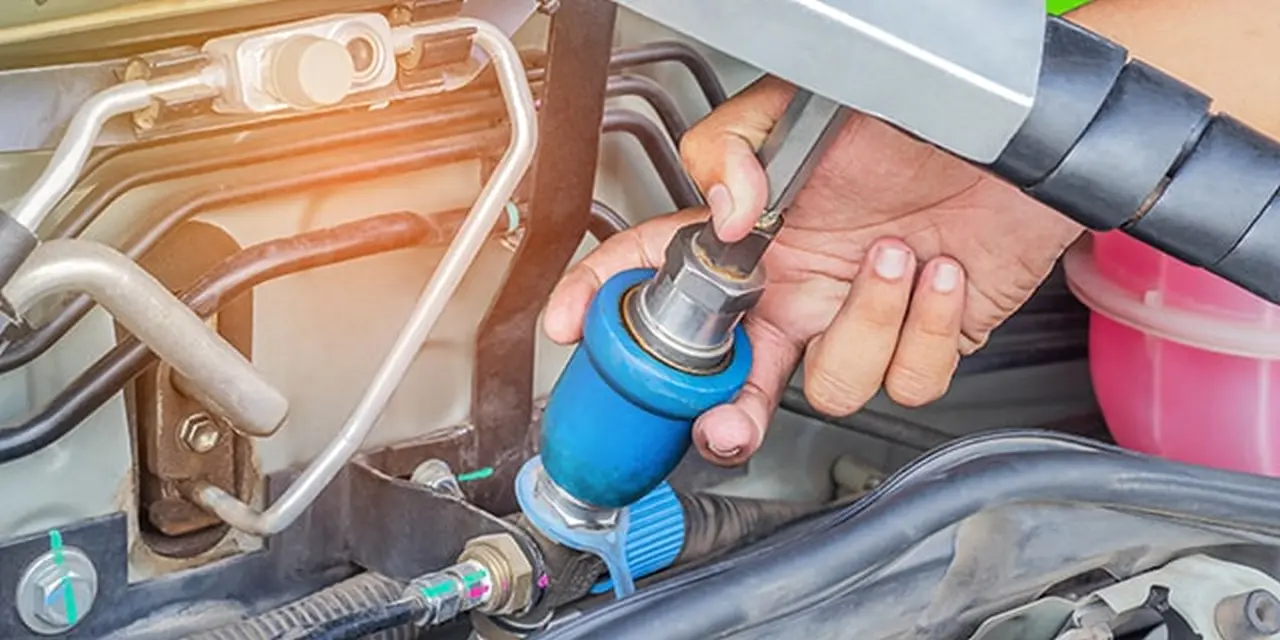
What Is a CNG System?
CNG stands for Compressed Natural Gas. A CNG system is a fuel system that uses compressed natural gas as an alternative fuel for an internal combustion engine.
The main component of natural gas is methane. Unlike LPG, which is stored in liquid form under pressure, CNG is stored as a gas under very high pressure.
CNG is commonly used in buses, trucks, commercial vehicles, fleet vehicles, and some passenger cars. Its operation is based on storing natural gas in high-pressure tanks, reducing its pressure through a regulator, and then delivering the required amount of gas to the engine through CNG injectors.
How Does a CNG System Work?
The basic fuel path can be described as:
CNG tank → high-pressure line → pressure regulator → filter → CNG injectors → engine
Natural gas is stored in the vehicle's tanks at very high pressure. It cannot be sent directly to the engine at this pressure.
The gas first passes through a pressure regulator or pressure-reduction device. The regulator reduces the tank pressure to a level suitable for the fuel system and engine.
The gas then reaches the injectors. The CNG ECU or the vehicle's engine management system determines how much fuel is required based on engine speed, load, temperature, pressure, and other operating parameters.
The injectors open for precisely controlled periods and deliver CNG to the engine.
Main Components of a CNG System
The exact components depend on the vehicle and system design, but a typical CNG system includes several important parts.
CNG tank
The tank stores natural gas at very high pressure.
CNG tanks can be manufactured from steel or composite materials, depending on the application and design. They must be specifically designed and certified for high-pressure gas storage.
Filling valve
The filling valve allows the vehicle to be connected to a CNG refueling station.
High-pressure fuel lines
These lines carry CNG from the tank to the pressure-reduction system.
Pressure regulator
The regulator reduces the high pressure coming from the tank to the pressure required by the engine and injection system.
CNG filter
The filter helps reduce the amount of contaminants and particles reaching the regulator and injectors.
CNG injectors
CNG injectors control the amount of gas delivered to the engine according to ECU commands.
Electronic control unit
The ECU controls fuel delivery according to engine operating conditions. Depending on the system, CNG control may be integrated with the vehicle's original ECU or managed through a dedicated CNG control unit.
Pressure and temperature sensors
These sensors monitor important fuel-system parameters and provide information needed for accurate fuel metering and system control.
Safety and shut-off valves
Because CNG is stored at very high pressure, the system incorporates safety and isolation devices designed to control or shut off gas flow when necessary.
What Is the Difference Between CNG and LPG?
CNG and LPG are both alternative gaseous fuels, but they are not the same fuel.
CNG consists primarily of methane.
LPG consists mainly of propane and butane.
Another major difference is how the fuels are stored.
LPG is normally stored as a liquid under pressure, while CNG is stored as a compressed gas.
Because of this difference, CNG systems require different tanks, pressure regulators, injectors, pressure sensors, and control strategies.
CNG components should therefore not be substituted with LPG components simply because both systems use gaseous fuels.
How Does a CNG Engine Work?
CNG can be burned in an internal combustion engine in a similar basic way to other gaseous fuels.
The CNG is mixed with air and delivered to the combustion process. In spark-ignition engines, the spark plug ignites the mixture.
When a gasoline engine is converted to CNG, the system generally requires dedicated CNG tanks, pressure regulation, injectors, control electronics, and appropriate calibration.
Correct fuel metering is extremely important. An excessively lean or rich mixture can affect performance, fuel economy, emissions, and drivability.
What Are the Advantages of CNG?
CNG has several characteristics that make it attractive for certain applications.
Lower particulate emissions
CNG combustion can produce significantly lower particulate emissions than diesel fuel, particularly in applications where particulate matter is a major concern.
Potentially lower carbon emissions
Because natural gas is primarily methane, CNG can have lower CO₂ emissions per unit of energy than some conventional fossil fuels.
However, the overall environmental advantage depends on the vehicle, engine efficiency, source of the natural gas, methane leakage, and the wider fuel-production process.
Clean combustion characteristics
CNG is already in gaseous form when it enters the fuel system. This can provide good air-fuel mixing in suitable engine designs.
Suitable for fleet vehicles
CNG can be particularly useful for buses, delivery vehicles, municipal vehicles, and other fleets that operate predictable routes and consume large amounts of fuel.
What Are the Disadvantages of CNG?
CNG also has several limitations.
High storage pressure
CNG must be stored at very high pressure to provide a practical amount of fuel energy in the vehicle.
This makes the condition of the tank, valves, lines, and other high-pressure components particularly important.
Tank size
Although the gas is compressed, CNG has a lower volumetric energy density than liquid fuels. Therefore, relatively large tanks may be required to achieve a useful driving range.
This can reduce available luggage or cargo space.
Limited refueling infrastructure
In many regions, CNG stations are much less common than gasoline, diesel, or LPG stations.
This can be an important consideration for private vehicle owners and long-distance drivers.
Conversion cost
Converting a gasoline vehicle to CNG requires specialized equipment, including high-pressure tanks, regulators, injectors, control electronics, and safety components.
The total conversion cost can therefore be significant.
Why Are CNG Tanks So Important?
The CNG tank is one of the most safety-critical components of the entire system.
It contains natural gas at very high pressure, so its physical condition and installation are extremely important.
The tank should be inspected for issues such as:
-
Impact damage
-
Corrosion
-
Cracks
-
Deformation
-
Damaged mounting points
-
Problems around valves and connections
A CNG tank should not be treated like a conventional gasoline or diesel fuel tank.
Inspection and replacement requirements should follow the applicable standards, manufacturer requirements, and regulations for the particular vehicle and tank.
What Are the Symptoms of a CNG System Problem?
Different CNG system faults can produce different symptoms.
Possible symptoms include:
-
Difficult starting on CNG
-
Rough idle
-
Misfires
-
Hesitation during acceleration
-
Reduced engine power
-
Increased fuel consumption
-
Automatic switching from CNG to gasoline
-
Check Engine Light
-
CNG pressure-related fault codes
-
Injector-related problems
-
Unstable fuel pressure
-
Poor performance under high engine load
However, these symptoms do not automatically mean that the CNG injectors or regulator have failed.
The filter, pressure sensors, wiring, ECU calibration, ignition system, and high-pressure components may also need to be inspected.
Why Do CNG Injectors Fail?
CNG injectors are electromagnetic components and can develop problems over time.
Common causes include:
-
Neglected filter maintenance
-
Contamination
-
Mechanical wear
-
Electrical faults
-
Damaged wiring or connectors
-
Incorrect fuel pressure
-
Incorrect injector selection
-
Incorrect ECU calibration
If a CNG injector is suspected of being faulty, it should ideally be tested electrically and mechanically before replacement.
Replacing an injector without identifying the actual cause can result in the replacement injector developing the same problem.
When Should a CNG Filter Be Replaced?
There is no universal mileage interval for every CNG filter.
The correct replacement interval depends on:
-
CNG system manufacturer recommendations
-
Vehicle manufacturer's maintenance schedule
-
Filter type
-
Fuel quality
-
Operating conditions
-
Vehicle mileage and usage
A filter that remains in service too long can allow contaminants to affect the fuel system or become restrictive itself.
Regular filter inspection and replacement are therefore important for maintaining injector and regulator performance.
Is a CNG System Safe?
A properly designed, correctly installed, certified, and properly maintained CNG system can be used safely.
However, the high-pressure nature of CNG means that the system should not be treated like a conventional low-pressure fuel system.
Components such as:
-
CNG tanks
-
High-pressure lines
-
Filling valves
-
Pressure regulators
-
Shut-off valves
-
Safety devices
should be inspected and serviced using the correct equipment and procedures.
If a CNG gas leak is suspected, the vehicle should not continue to be operated normally. The system should be inspected by a qualified technician.
What Maintenance Does a CNG System Need?
CNG maintenance involves more than simply servicing the engine.
The fuel system itself should also be inspected regularly.
Important inspection points include:
-
CNG filters
-
Fuel pressure
-
Pressure regulator
-
Injectors
-
Pressure and temperature sensors
-
Electrical connections
-
High-pressure lines
-
Tank condition and mounting
-
Filling system
-
ECU operation and calibration
-
Shut-off and safety devices
Because the system contains high-pressure gas, specialized training and equipment are important when performing CNG system repairs.
Is CNG Suitable for Every Vehicle?
CNG is not necessarily the best choice for every vehicle.
It can be particularly attractive for vehicles that travel high annual mileage and have reliable access to CNG refueling.
Examples include:
-
City buses
-
Commercial fleets
-
Delivery vehicles
-
Fleet passenger cars
-
High-mileage commercial vehicles
For a private passenger car, factors such as CNG station availability, tank size, available vehicle space, driving range, conversion cost, and local regulations should all be considered.
CNG System vs. LPG System
Although CNG and LPG systems may look similar because both use gas as a fuel, their operating principles and hardware are significantly different.
CNG uses primarily methane and stores it as a compressed gas at very high pressure.
LPG uses primarily propane and butane and is normally stored as a liquid under pressure.
As a result, the two systems use different tank designs, pressure requirements, regulators, injectors, and control strategies.
This distinction is especially important when servicing or converting a vehicle. A component designed for LPG should not automatically be installed in a CNG system.
What Should Be Checked When a CNG Vehicle Loses Power?
If a CNG vehicle suddenly loses power, the diagnosis should begin with the basics rather than immediately replacing the injectors.
Fuel pressure should be checked under different engine loads. The regulator should be inspected for correct pressure control, while the filter should be checked for restriction.
The CNG injectors can then be tested for electrical operation and consistent fuel delivery.
Pressure and temperature sensor readings should also be compared with actual operating conditions.
If the CNG system appears to be functioning correctly, the technician should also consider ignition problems, intake leaks, engine mechanical problems, and ECU calibration.
This approach helps distinguish a genuine CNG fuel-system problem from an engine problem that only becomes noticeable when running on CNG.
The Most Important Point About CNG Systems
A CNG system is a fuel system designed to store and deliver compressed natural gas, primarily methane, to an internal combustion engine.
Its main characteristics are high-pressure fuel storage, pressure reduction, gas injection, electronic fuel control, and specialized safety equipment.
Although CNG and LPG are both gaseous alternative fuels, they are not interchangeable systems. Their fuels, storage methods, pressure levels, tanks, regulators, injectors, and control strategies are different.
When a CNG vehicle develops a performance, starting, fuel-consumption, or drivability problem, the correct approach is to evaluate the system as a whole. The tank, high-pressure lines, filter, regulator, sensors, injectors, wiring, ECU, and calibration should be considered together rather than assuming that one particular component is automatically responsible for the fault.