TR
TR EN
EN

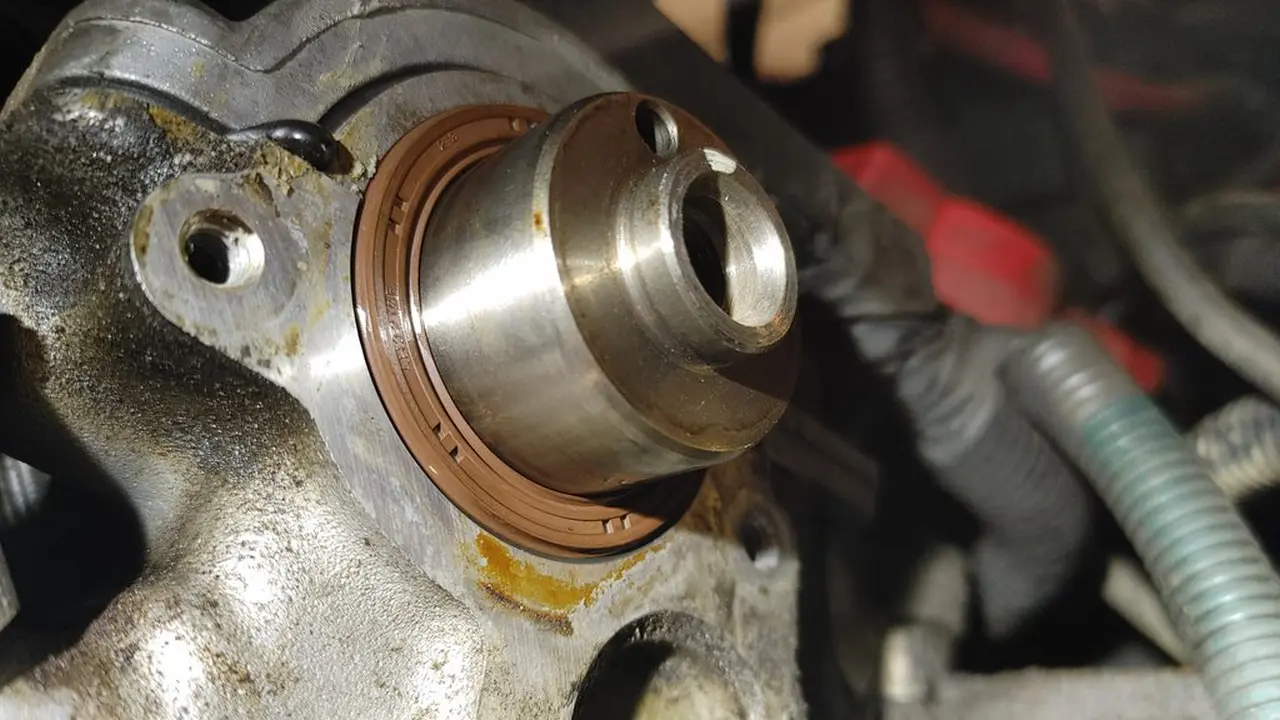
What Is a Camshaft Seal? When Should It Be Replaced?
The camshaft is one of the most important components inside an internal combustion engine. It controls the opening and closing of the engine's intake and exhaust valves and must rotate precisely in synchronization with the crankshaft.
Because the camshaft passes through the engine housing and rotates continuously, the point where it exits the cylinder head or timing area needs to be properly sealed.
This is where the camshaft seal comes into play.
The camshaft seal is a relatively small component, but its job is extremely important. When it becomes hard, cracked, worn, or damaged, engine oil can begin leaking from the camshaft area.
A camshaft seal does not usually have a fixed replacement interval like engine oil or a timing belt. Instead, it is generally replaced when there are signs of leakage, during certain major engine repairs, or as preventive maintenance when related components are already being removed.
What Is a Camshaft Seal?
A camshaft seal is a sealing component designed to prevent engine oil from escaping around the rotating camshaft.
It is usually made from a specialized rubber or elastomer material and incorporates a sealing lip that contacts the camshaft surface.
The seal must perform its job while exposed to:
-
Engine oil
-
High temperatures
-
Continuous rotational movement
-
Pressure fluctuations
-
Engine vibration
-
Long-term thermal cycling
The exact design varies between engines.
Some engines use conventional radial shaft seals, while others use more specialized sealing arrangements integrated into the cylinder head or timing system.
Regardless of the design, the basic purpose is the same:
Keep engine oil inside the engine while allowing the camshaft to rotate freely.
Where Is the Camshaft Seal Located?
The location depends on the engine design.
On many engines, the camshaft seal is located at the end of the camshaft where it passes through the cylinder head or camshaft housing.
In engines with a timing belt, the camshaft seal may be located behind the timing belt pulley or sprocket.
In other engines, the seal may be positioned behind a timing chain drive or another component.
This means that replacing a camshaft seal can sometimes be a relatively simple repair, while on other engines significant disassembly may be necessary.
The engine's exact design should always be considered before estimating the labor involved.
What Does a Camshaft Seal Do?
The main function is oil containment.
Engine oil is continuously circulated through the cylinder head to lubricate components such as:
-
Camshaft journals
-
Camshaft bearings
-
Valve train components
-
Rocker arms
-
Hydraulic lifters
-
Variable valve timing components
The camshaft rotates while oil is present around its lubricated surfaces.
Without an effective seal, oil could escape through the point where the camshaft exits the engine.
The camshaft seal therefore prevents this oil from reaching areas where it should not be.
Why Does a Camshaft Seal Start Leaking?
Camshaft seals do not normally fail because they suddenly stop working. Their deterioration is usually gradual.
Several factors can contribute to failure.
Age and material deterioration
Rubber seals are exposed to heat and oil for years.
Eventually, the material can lose its elasticity and become harder.
Once the sealing lip becomes stiff, it may no longer maintain adequate contact with the camshaft.
Small leaks can then develop.
High engine temperature
Repeated exposure to high temperatures accelerates the aging of sealing materials.
An engine that frequently operates under excessive heat can place additional stress on seals and gaskets.
Wear on the camshaft sealing surface
The seal lip constantly contacts the rotating camshaft.
Over a long period, the contact area can develop wear.
If the camshaft surface becomes damaged, grooved, or excessively worn, installing a new seal alone may not completely solve the leakage.
Excessive crankcase pressure
A blocked or malfunctioning crankcase ventilation system can increase pressure inside the engine.
Excessive crankcase pressure can force oil past seals and gaskets.
In this situation, replacing the camshaft seal without addressing the underlying pressure problem may result in another leak.
Incorrect installation
A new seal can leak if it is installed incorrectly.
For example:
-
The seal can be installed at the wrong depth
-
The sealing lip can be damaged
-
The seal can be installed crooked
-
The sealing surface can be scratched
-
The wrong seal can be used
-
The seal can be damaged during installation
Proper installation is therefore just as important as using a high-quality replacement part.
What Are the Symptoms of a Bad Camshaft Seal?
The most common symptom is an engine oil leak around the camshaft or timing area.
However, the exact symptoms depend on the engine design and the location of the seal.
Oil around the timing area
Oil may appear around the camshaft pulley, sprocket, timing cover, or nearby components.
This is an important warning sign.
However, oil found in this area does not automatically prove that the camshaft seal is leaking.
Oil can travel from another location and accumulate around the timing system.
Possible alternative sources include:
-
Valve cover gasket
-
Camshaft housing seal
-
Vacuum pump seal
-
Crankshaft seal
-
Oil filler area
-
Other engine gaskets
The leak source should therefore be identified before replacing parts.
Oil dripping from the engine
A leaking camshaft seal can eventually allow enough oil to reach lower areas of the engine.
The oil may then run down the cylinder head, engine block, or transmission housing.
In severe cases, oil may eventually reach the ground.
Again, the location where oil is found underneath the vehicle is not necessarily the location where the leak started.
Burning oil smell
If leaking oil reaches a hot exhaust component, it can produce a noticeable burning oil smell.
You may smell burning oil shortly after driving or when the engine is hot.
This should be investigated promptly because oil leaking onto hot components can create smoke and potentially increase fire risk.
Visible smoke from the engine compartment
Oil leaking onto hot engine or exhaust components may produce smoke from under the hood.
This is not a normal characteristic of a minor oil leak and should not be ignored.
Can a Camshaft Seal Cause an Oil Pressure Problem?
A leaking camshaft seal usually does not directly cause a sudden oil pressure failure.
The amount of oil escaping through a typical seal leak is often relatively small at first.
However, any significant engine oil leak can eventually reduce the engine's oil level.
If the oil level becomes dangerously low, engine oil pressure can fall.
Therefore, a camshaft seal leak should not be ignored simply because the engine still appears to run normally.
Low oil level can eventually cause severe engine damage.
Can a Camshaft Seal Cause Engine Performance Problems?
Usually, a camshaft seal itself does not directly cause poor engine performance.
Its primary function is sealing engine oil.
However, a severe leak can create secondary problems.
For example, oil contamination around a timing system can affect components in that area. On some engines, oil contamination can also affect sensors, electrical connectors, or other components located nearby.
If oil reaches the timing belt, the consequences can be particularly serious.
Therefore, a camshaft seal leak can sometimes lead to performance or reliability problems indirectly.
Can Oil From a Camshaft Seal Damage a Timing Belt?
Yes, and this is one of the most important reasons to take a camshaft seal leak seriously on a timing-belt engine.
Timing belts are designed to operate in a relatively dry environment.
If engine oil contaminates the belt, the belt material can deteriorate or its friction characteristics can change.
Depending on the engine and the amount of contamination, this can contribute to:
-
Premature belt deterioration
-
Belt slippage
-
Belt damage
-
Incorrect valve timing
-
Timing belt failure
A timing belt failure can result in severe engine damage on an interference engine.
If a camshaft seal is leaking near a timing belt, the condition of the belt should be carefully inspected.
In many cases, replacing a contaminated timing belt at the same time as the leaking seal is the safer approach.
What About Timing Chains?
Timing chain systems are different.
A camshaft seal leak generally does not contaminate a timing chain in the same way that oil can contaminate a rubber timing belt.
The timing chain itself operates in an oil-lubricated environment on many engines.
However, a camshaft seal leak can still contaminate surrounding components and should be repaired when necessary.
When Should a Camshaft Seal Be Replaced?
There is usually no universal mileage interval for camshaft seal replacement.
Unlike a timing belt, the seal is not normally replaced at a specific mileage simply because a certain number has been reached.
Replacement is generally appropriate when:
-
There is confirmed leakage from the seal
-
The seal has become hard or damaged
-
The sealing lip is worn
-
The camshaft seal was disturbed during a related repair
-
A timing belt replacement provides convenient access
-
The manufacturer specifies replacement during a particular service procedure
The exact recommendation depends on the engine.
Should the Camshaft Seal Be Replaced During a Timing Belt Change?
In many engines, replacing the camshaft seal during a timing belt service can make sense if there are signs of leakage or if the seal is already accessible.
However, replacing every seal automatically is not always necessary.
A technician should inspect the seal and surrounding area.
If the seal is dry, undamaged, and the manufacturer does not recommend preventive replacement, there may be no need to replace it simply because the timing belt is being changed.
On the other hand, if the seal is already leaking, replacing it while the timing components are removed can prevent having to repeat significant labor later.
How Is a Camshaft Seal Replaced?
The exact procedure varies considerably by engine.
A typical repair may involve:
-
Disconnecting or protecting components as required
-
Removing covers or components that obstruct access
-
Removing the timing belt or chain-related components if necessary
-
Removing the camshaft pulley or sprocket when required
-
Accessing the camshaft seal
-
Carefully removing the old seal
-
Inspecting the camshaft sealing surface
-
Cleaning the sealing area
-
Installing the new seal correctly
-
Reinstalling removed components
-
Setting and verifying engine timing when applicable
-
Checking for oil leaks after starting the engine
On some engines, this can be a straightforward job.
On others, it can require extensive disassembly.
Why Is Camshaft Seal Installation So Important?
A new seal can fail quickly if it is installed incorrectly.
The sealing lip must be positioned correctly against the appropriate surface.
If the seal is installed at the wrong depth, the sealing lip may contact a worn area of the camshaft or fail to seal properly.
The seal should also be protected from damage during installation.
Scratching the camshaft or damaging the sealing lip can create a new leak immediately after the repair.
The manufacturer's installation procedure should therefore be followed carefully.
Should the Camshaft Seal Be Lubricated Before Installation?
In many applications, the sealing lip is lightly lubricated with clean engine oil before installation.
This can help prevent the seal from running dry during the first moments after engine startup.
However, installation requirements vary by seal and engine design.
Some seals may have specific installation instructions or require a particular lubricant.
Always follow the manufacturer's procedure for the specific engine.
What If the New Camshaft Seal Still Leaks?
A new seal that leaks shortly after installation does not necessarily mean that the replacement part is defective.
Possible causes include:
-
Incorrect installation
-
Damaged sealing lip
-
Incorrect seal size
-
Wrong installation depth
-
Worn camshaft surface
-
Damaged camshaft
-
Excessive crankcase pressure
-
Contaminated sealing surface
-
Another nearby oil leak being mistaken for a camshaft seal leak
This is why simply replacing the seal repeatedly is not a good diagnostic strategy.
The actual cause should be identified.
Can a Camshaft Seal Leak Without Leaving Oil on the Ground?
Yes.
Small leaks may not produce visible drops on the ground.
Oil can accumulate around the engine and timing components, evaporate from hot surfaces, or spread across the engine before reaching the ground.
You may therefore notice:
-
A damp engine area
-
Oil residue
-
Dirt sticking to oily surfaces
-
A burning oil smell
-
Oil inside a timing cover
-
Gradually decreasing oil level
before you ever see an oil spot underneath the vehicle.
Is a Camshaft Seal Leak an Emergency?
Not every camshaft seal leak requires immediate engine shutdown.
The severity matters.
A very small external leak may allow the vehicle to be driven temporarily while a repair is scheduled, provided the engine oil level is monitored carefully and no other warning signs are present.
However, the situation becomes much more serious if:
-
Oil pressure warning lights appear
-
The engine is losing oil rapidly
-
Oil is reaching the timing belt
-
Oil is dripping onto hot exhaust components
-
Smoke is coming from the engine compartment
-
Unusual engine noises develop
-
The oil level is becoming dangerously low
In these situations, continued driving can lead to expensive engine damage or create a safety hazard.
Camshaft Seal vs. Valve Cover Gasket
These two leaks are sometimes confused.
A valve cover gasket seals the joint between the valve cover and the cylinder head.
A camshaft seal seals around the rotating camshaft.
Both can cause oil to appear in the upper part of the engine.
Oil leaking from a valve cover gasket can travel downward and make it appear as though the camshaft seal is leaking.
This is why proper leak diagnosis is important before replacing the seal.
Camshaft Seal vs. Crankshaft Seal
The crankshaft also passes through engine housings and requires seals.
A crankshaft seal is designed to prevent oil from escaping around the rotating crankshaft.
A camshaft seal performs a similar function around the camshaft.
The two components are not interchangeable.
Their locations, dimensions, and installation procedures are engine-specific.
How Long Does a Camshaft Seal Last?
There is no universal lifespan.
A camshaft seal can last for many years and a high mileage under normal conditions.
Its lifespan is influenced by:
-
Engine temperature
-
Oil quality
-
Oil change frequency
-
Crankcase ventilation
-
Camshaft surface condition
-
Seal material
-
Engine design
-
Installation quality
A vehicle that has received proper maintenance can often go a long time without a camshaft seal problem.
How Can You Help Prevent Camshaft Seal Failure?
You cannot completely prevent seal aging, but proper maintenance can reduce the risk of premature failure.
Use the correct engine oil
Use the viscosity and specification recommended by the vehicle manufacturer.
Change engine oil regularly
Old, degraded oil can contribute to deposits and can expose seals and other components to harsher operating conditions.
Keep the crankcase ventilation system working correctly
A properly functioning PCV or crankcase ventilation system helps control pressure inside the engine.
Avoid prolonged overheating
Repeated overheating can accelerate the deterioration of seals, gaskets, and other engine components.
Repair oil leaks early
A small leak is easier and usually less expensive to address before oil contaminates timing components or other parts.
What Happens If You Ignore a Camshaft Seal Leak?
Ignoring a small oil leak may seem harmless, but the consequences can gradually become more serious.
The leak can worsen over time.
The engine may lose increasing amounts of oil, and oil can spread to components that were not designed to be exposed to it.
On a timing-belt engine, oil contamination can be particularly concerning.
In addition, if the engine oil level eventually becomes too low, lubrication problems can develop.
The cost of repairing a leaking seal is generally much lower than repairing an engine damaged by prolonged oil loss or a failed oil-contaminated timing belt.
Final Thoughts
The camshaft seal is a small but important component that prevents engine oil from escaping around the rotating camshaft.
It does not normally have a fixed replacement interval. Instead, it is replaced when leakage or damage is confirmed, or when replacement is appropriate during a related repair.
The most common warning sign is oil leakage around the camshaft or timing area, but this does not automatically prove that the camshaft seal is the source. Valve cover gaskets, crankshaft seals, vacuum pump seals, and other components can produce similar symptoms.
A leaking camshaft seal should be diagnosed and repaired before the problem becomes more serious.
This is especially important on engines equipped with timing belts, because oil contamination can potentially damage the belt and lead to major engine problems.
Regular oil changes, correct engine oil, proper crankcase ventilation, and early attention to oil leaks can all help protect the camshaft seal and the engine as a whole.
A camshaft seal may be inexpensive compared with major engine components, but getting the diagnosis and installation right is essential for a reliable repair.