TR
TR EN
EN

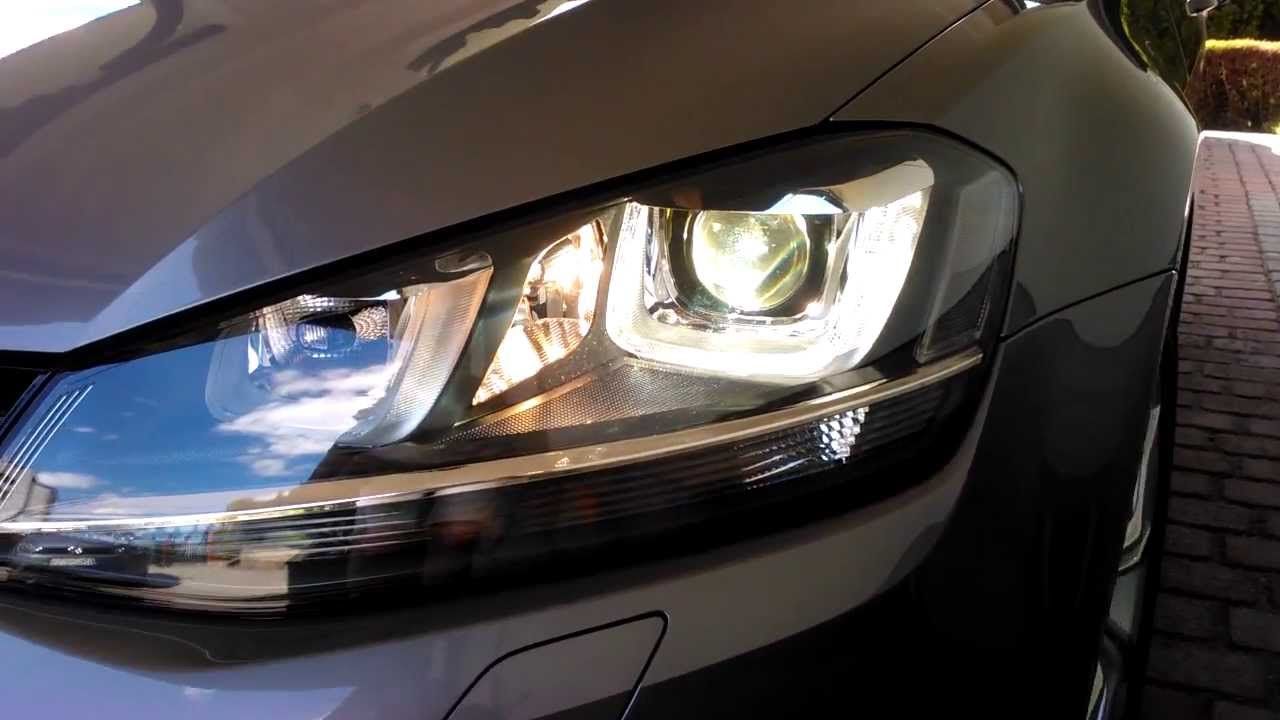
What Are the Differences Between Xenon and Bi-Xenon Headlights?
Xenon and Bi-Xenon headlights are high-intensity discharge (HID) lighting systems that became common on many vehicles, particularly from the 2000s onward. The main difference between the two systems is how the low-beam and high-beam functions are produced.
In simple terms:
-
Xenon headlights: The xenon light source is typically used for one lighting function, while another bulb or light source may be used for the other function.
-
Bi-Xenon headlights: The same xenon light source can provide both low beam and high beam. A mechanism inside the projector changes the light distribution when switching between the two.
The exact design can vary between vehicle manufacturers, so the terms "Xenon" and "Bi-Xenon" do not always describe identical hardware across every vehicle.
What Is a Xenon Headlight?
A xenon headlight uses a gas-discharge bulb rather than the heated filament found in a conventional halogen bulb.
The bulb contains xenon gas and produces light by creating an electrical arc. Because the system requires high voltage to start the arc, a ballast is used as part of the lighting system.
The ballast helps to:
-
Provide the high voltage required to start the bulb
-
Control the electrical current
-
Maintain stable operation after the bulb has ignited
Therefore, a factory xenon system is not simply a xenon bulb. The bulb, ballast, ignition electronics, wiring, and optical system all work together.
What Is a Bi-Xenon Headlight?
The main idea behind a Bi-Xenon system is that the same xenon light source can perform both the low-beam and high-beam functions.
This is usually achieved with a projector and a movable shutter inside the headlight.
When low beam is selected, the shutter blocks part of the light output. This creates a controlled beam pattern with a defined cutoff that helps prevent glare for oncoming traffic.
When high beam is activated, an electromagnetic actuator moves the shutter out of the way. More of the light is then projected forward, producing the high-beam pattern.
This means that switching to high beam in a Bi-Xenon system does not necessarily mean that another xenon bulb is being switched on. The same light source is being used differently by changing the optical path.
The Main Difference Between Xenon and Bi-Xenon
The fundamental difference is how the light source is used.
In a conventional Xenon setup, the xenon bulb may be dedicated to the low beam, while a separate halogen or other light source provides the high beam.
In a Bi-Xenon system, the same xenon projector can provide both functions.
A movable shutter inside the projector changes the shape and distribution of the beam when the driver switches between low and high beam.
How Does the High Beam Work in a Bi-Xenon System?
The operation is relatively simple when viewed from inside the projector.
With the low beam activated, the shutter limits part of the light output. This creates a controlled cutoff and keeps light from being projected too high into the eyes of other drivers.
When the high beam is activated, an electromagnetic actuator moves the shutter.
As a result:
-
More light is projected forward.
-
The beam cutoff changes.
-
More of the road ahead can be illuminated.
-
The system can switch between low and high beam very quickly.
A small mechanical movement can sometimes be heard when the Bi-Xenon system switches between beam modes. A faint clicking sound from the projector mechanism can be normal.
Is Every Xenon Headlight a Bi-Xenon Headlight?
No.
A vehicle having xenon headlights does not automatically mean that it has a Bi-Xenon system.
For example, a vehicle may use:
-
Xenon low beam
-
Halogen high beam
Another vehicle may use:
-
A Bi-Xenon projector
-
Separate daytime running lights
-
Separate parking lights
-
LED or halogen fog lights
All of these components can be incorporated into the same headlight assembly.
The vehicle's original equipment configuration and the internal design of the headlight should therefore be checked rather than relying solely on the name.
Advantages of Xenon Headlights
Xenon systems can provide several advantages compared with traditional halogen lighting.
High light output:
When combined with a properly designed optical system, xenon lighting can produce strong road illumination.
Good nighttime visibility:
The characteristics of xenon light are different from those of traditional halogen lighting, and a properly designed system can provide excellent visibility at night.
Longer bulb life:
High-quality OEM xenon bulbs can generally last longer than conventional halogen bulbs.
Whiter light:
Xenon systems typically produce a whiter-looking light than traditional halogen bulbs.
However, a whiter light does not automatically mean better illumination. Beam pattern, optical design, bulb quality, and correct headlight adjustment are much more important.
Advantages of Bi-Xenon Headlights
The biggest advantage of Bi-Xenon technology is that the same projector can provide both low and high beam.
This can allow:
-
More efficient use of space inside the headlight
-
A controlled projector-based beam pattern
-
Fast switching between low and high beam
-
A compact optical design
However, Bi-Xenon does not automatically mean that the headlight produces more light than every conventional Xenon system.
Actual performance depends heavily on the projector, lens, reflector, bulb, ballast, beam pattern, and overall headlight design.
Common Xenon and Bi-Xenon Problems
Because xenon systems are more complex than conventional halogen headlights, they have more components that can potentially fail.
Possible failure points include:
-
Xenon bulb
-
Ballast
-
Ignition unit
-
Projector
-
Wiring
-
Electrical connectors
-
Headlight control module
A Bi-Xenon system has an additional potential failure point: the shutter mechanism and its actuator.
If the projector shutter becomes stuck, the high beam may stop working even though the xenon bulb itself is still functioning correctly.
Why Do Xenon Bulbs Change Color With Age?
Xenon bulbs can change their light characteristics as they age.
An old xenon bulb may:
-
Become more bluish or purple
-
Produce less light
-
Take longer to reach its normal color
-
Look noticeably different from the bulb on the opposite side
If one headlight is a noticeably different color from the other, the bulb should not automatically be blamed on the ballast.
The age and condition of the xenon bulb should also be checked.
When both bulbs have been used for a long time, replacing them as a pair can help maintain more consistent color and light output.
What Happens When the Bi-Xenon Shutter Fails?
The movable shutter is one of the characteristic components of many Bi-Xenon systems.
If it fails, the vehicle may experience problems such as:
-
High beam not working
-
One headlight switching to high beam while the other does not
-
High beam remaining in an incorrect position
-
A missing mechanical clicking sound during beam switching
-
A projector mechanism becoming stuck
In this situation, replacing the xenon bulb may not solve the problem because the bulb may be functioning normally.
The actuator, wiring, control system, and projector mechanism should be inspected.
Are Xenon and Bi-Xenon Headlights Legal?
Having a xenon bulb installed and having a properly engineered, approved xenon headlight system are not necessarily the same thing.
A factory-installed xenon system is designed as a complete assembly, including the headlight housing, projector, electronics, beam pattern, and other supporting components required by the vehicle's design and applicable regulations.
By contrast, simply installing a xenon bulb into a headlight designed for halogen bulbs can produce an incorrect beam pattern and excessive glare.
An inappropriate retrofit may result in:
-
Poor beam distribution
-
Glare for oncoming drivers
-
Incorrect headlight adjustment
-
Electrical compatibility problems
-
Inspection or regulatory issues
For this reason, xenon conversions should be evaluated as a complete lighting system rather than simply as a bulb replacement.
Automatic Headlight Leveling and Headlight Washers
Some factory xenon systems are equipped with automatic headlight leveling and headlight washer systems.
Automatic leveling helps compensate for changes in vehicle attitude caused by passenger or cargo loads and suspension movement. The goal is to keep the beam correctly aimed and reduce the risk of glare.
However, the exact equipment and legal requirements depend on the vehicle, headlight type, approval system, and applicable regulations.
Therefore, it is not correct to assume that every xenon headlight uses exactly the same supporting equipment.
Which Is Better: Xenon or Bi-Xenon?
It is not technically accurate to simply say that Bi-Xenon is always better.
The actual performance of a headlight depends on many factors, including:
-
Projector design
-
Lens quality
-
Reflector design
-
Beam distribution
-
Bulb quality
-
Ballast performance
-
Headlight adjustment
-
Automatic leveling
-
Overall optical design
A well-designed conventional Xenon system can provide better illumination than a poorly designed Bi-Xenon system.
The technology name alone does not determine the quality of the headlight.
Xenon vs. Bi-Xenon in Simple Terms
The fundamental difference between Xenon and Bi-Xenon headlights is how the xenon light source is used for low and high beam.
Xenon: The xenon light source may be dedicated to one lighting function, while another bulb or light source provides the other function.
Bi-Xenon: The same xenon projector can provide both low beam and high beam by changing the light distribution, usually with a movable shutter inside the projector.
So, Bi-Xenon does not simply mean "more powerful Xenon." The key difference is that the same xenon projector is designed to perform both low-beam and high-beam functions.