TR
TR EN
EN

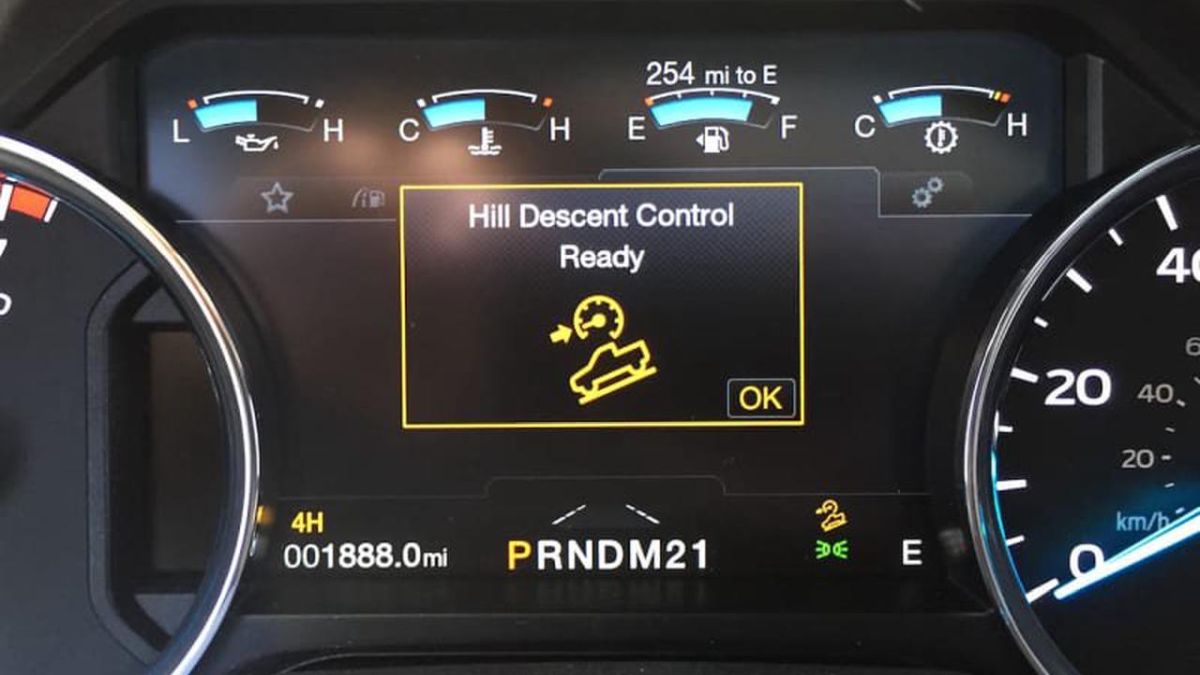
What Is Hill Descent Control (HDC) System?
Hill Descent Control, commonly abbreviated as HDC, is a driver assistance system designed to help control a vehicle's speed while descending steep slopes.
The system is particularly useful on steep, slippery, or uneven surfaces where maintaining a low and steady speed with the brake pedal can be difficult.
HDC is commonly found on SUVs, crossovers, pickups, and off-road vehicles, although some passenger cars are also equipped with similar systems.
Its primary purpose is to prevent the vehicle from accelerating excessively while going downhill, allowing the driver to concentrate more on steering and choosing the safest path.
How Does Hill Descent Control Work?
HDC works together with the vehicle's electronic control systems, particularly the ABS and ESC/ESP systems.
When the driver activates HDC, the system attempts to maintain a predetermined low vehicle speed.
If the vehicle begins to accelerate because of the slope, the system can automatically apply the brakes.
Depending on the vehicle, HDC may use information from:
-
Wheel speed sensors
-
Vehicle speed sensors
-
Accelerator pedal position
-
Brake pedal position
-
Steering angle sensor
-
Vehicle inclination information
-
ABS/ESC system
-
Engine control system
-
Transmission control system
The control unit continuously monitors the vehicle's behavior and applies braking force when necessary.
What Is the Purpose of HDC?
The main purpose of HDC is to help the driver maintain a controlled and low speed while descending a steep slope.
For example, imagine driving down a steep gravel, muddy, snowy, or rocky road.
Without HDC, the vehicle may naturally accelerate because of gravity, forcing the driver to repeatedly apply the brakes.
HDC can reduce this workload by automatically controlling the vehicle's speed.
It can help the driver:
-
Maintain a low downhill speed
-
Concentrate on steering
-
Reduce continuous brake pedal input
-
Control acceleration caused by gravity
-
Maintain a more consistent speed
-
Improve control on certain low-grip surfaces
HDC is therefore especially useful when precise low-speed control is more important than maintaining normal road speed.
At What Speed Does HDC Operate?
There is no single HDC operating speed that applies to every vehicle.
Some systems operate automatically within a very low-speed range, while others allow the driver to select or adjust the target speed.
Depending on the vehicle, the system may operate at only a few miles per hour or allow a somewhat higher downhill speed.
The available speed range depends on:
-
Vehicle manufacturer
-
ABS/ESC system
-
Transmission
-
Drivetrain
-
Driving mode
-
Vehicle design
-
Off-road capabilities
Therefore, the HDC speed range should always be considered specific to the vehicle.
How Does HDC Use the Brakes?
One of the most important features of HDC is its ability to use the vehicle's braking system automatically.
The system can monitor individual wheel speeds through the ABS wheel speed sensors.
If one or more wheels begin rotating faster than expected, the control system can apply braking force as necessary.
In many vehicles, brake pressure can be controlled very precisely.
The objective is not normally to bring the vehicle to a complete stop. Instead, HDC attempts to maintain a controlled downhill speed.
This is particularly useful when descending uneven terrain where vehicle speed can change quickly.
What Is the Difference Between HDC and ABS?
HDC and ABS are different systems, although HDC commonly relies on ABS hardware and control capabilities.
ABS, or Anti-lock Braking System, primarily prevents the wheels from locking during heavy braking.
HDC, or Hill Descent Control, is designed to control vehicle speed during a steep downhill descent.
In simple terms, ABS helps maintain wheel rotation during braking, while HDC uses controlled braking to help maintain a low downhill speed.
The two systems can therefore work together.
How Is HDC Related to ESC/ESP?
HDC is closely integrated with the vehicle's electronic stability system on many modern vehicles.
ESC/ESP can monitor:
-
Wheel speeds
-
Steering angle
-
Vehicle yaw
-
Lateral acceleration
-
Vehicle movement
-
Individual wheel behavior
HDC can use this electronic information to determine when braking intervention is necessary.
Because of this integration, a fault in the ABS or ESC system can also disable HDC.
This is an important diagnostic point.
If HDC stops working, the problem may not actually be inside the HDC system itself.
Where Is HDC Useful?
HDC can be particularly useful on:
-
Very steep downhill roads
-
Gravel tracks
-
Rocky terrain
-
Muddy surfaces
-
Snow-covered slopes
-
Loose dirt
-
Sandy terrain
-
Wet and slippery surfaces
-
Off-road trails
The system is most useful when the vehicle needs to move slowly and predictably rather than quickly.
However, HDC does not make every surface safe. Tire grip and road conditions remain extremely important.
Should HDC Be Used on Every Downhill Road?
No.
HDC is not normally necessary on ordinary city streets or gently sloping paved roads.
It is designed primarily for situations where a low, controlled downhill speed is required.
Using HDC unnecessarily on normal roads can result in additional brake intervention without providing a meaningful advantage.
The driver should also remember that activating HDC does not mean that steering, braking, and vehicle control can be completely delegated to the system.
What Happens When HDC Fails?
If the HDC system detects a problem, the vehicle may display an HDC warning light or a message on the instrument cluster.
Depending on the vehicle, the HDC symbol may illuminate continuously, flash, or appear together with another warning.
Possible causes include:
-
Faulty wheel speed sensor
-
Damaged ABS sensor wiring
-
ABS control unit fault
-
ESC/ESP fault
-
Brake pressure problem
-
Steering angle sensor fault
-
Inclination sensor problem
-
Low battery voltage
-
Charging system problem
-
Wiring or connector failure
-
CAN-Bus communication problem
-
Electronic parking brake fault
-
Brake system malfunction
-
HDC software or control-module problem
An important point is that an HDC warning does not automatically mean that the HDC system itself is defective.
For example, a faulty wheel speed sensor may prevent the vehicle from accurately determining its speed. As a result, the system may disable HDC even though the HDC function itself is operating correctly.
Why Does HDC Not Activate?
If you press the HDC button but nothing happens, several possibilities should be considered.
For example:
-
The vehicle may not meet the required operating conditions.
-
Vehicle speed may be too high.
-
The selected transmission position may not be suitable.
-
The accelerator pedal may be pressed.
-
ABS or ESC may have a fault.
-
A wheel speed sensor may be defective.
-
Battery voltage may be too low.
-
The selected driving mode may not support HDC.
-
HDC may have been electronically disabled.
Some vehicles only allow HDC to operate in certain driving modes.
Depending on the vehicle, HDC may be associated with an off-road mode, low-range gearing, four-wheel drive, or a specific transmission setting.
Why Does the HDC Warning Light Come On?
The meaning of an HDC warning depends on the vehicle and the behavior of the indicator.
A steady HDC light
On some vehicles, this may simply indicate that the system is active.
A flashing HDC light
This may indicate that HDC is currently intervening, attempting to activate, or that the required operating conditions have not been met.
A yellow HDC warning
This may indicate a system malfunction or that HDC has been temporarily disabled.
The exact interpretation should always be checked against the vehicle's warning-light information because manufacturers use different symbols and warning strategies.
Can an HDC Fault Be Diagnosed With an OBD Scanner?
Yes, in many modern vehicles.
However, scanning only the engine ECU may not be sufficient.
HDC is often integrated with the ABS, ESC, electronic parking brake, transmission, and other control modules.
A proper diagnostic procedure may therefore require scanning:
-
ABS module
-
ESC/ESP module
-
Electronic parking brake module
-
Transmission control module
-
Engine control module
-
Body control module
For example, a faulty wheel speed sensor may generate a fault in the ABS system and simultaneously cause HDC to become unavailable.
This is why replacing an HDC component simply because an HDC warning appears is not always the correct approach.
Does HDC Wear Out the Brake Pads?
HDC can contribute to brake wear because the system uses the brakes to control vehicle speed.
This is normal operation.
When HDC is used during long and steep descents, the brakes may operate repeatedly.
As a result, the brake pads and discs can experience additional heat and wear.
This is one reason why drivers should not depend exclusively on HDC during very long downhill sections.
Using an appropriate low gear and engine braking can reduce the amount of work required from the friction brakes.
Can HDC Prevent the Brakes From Overheating?
No.
HDC can control brake application, but it cannot eliminate the physical heat generated by braking.
During a long, steep descent, the brakes may still become very hot.
If the vehicle relies heavily on the friction brakes for an extended period, brake temperatures can rise significantly.
Engine braking can help reduce brake load.
Depending on the vehicle, the driver may use:
-
A lower gear in a manual transmission
-
A lower transmission range in an automatic transmission
-
A suitable off-road mode
-
Low-range gearing on vehicles equipped with it
The exact procedure depends on the vehicle.
Does HDC Use Engine Braking?
This depends on the vehicle's design.
Some advanced HDC systems can work together with the engine and transmission control systems.
The vehicle may use engine braking, transmission control, and automatic brake application as part of its overall downhill speed strategy.
However, HDC does not operate identically in every vehicle.
Some systems rely primarily on the friction brakes, while others integrate several drivetrain and braking functions.
Can You Descend a Steep Hill Without HDC?
Yes.
HDC is a driver assistance system, not a requirement for descending a hill.
An experienced driver can control a vehicle on a steep descent by selecting an appropriate low gear, using engine braking, maintaining a suitable speed, and applying the brakes carefully when necessary.
However, HDC can make low-speed downhill control easier, particularly on uneven or low-grip surfaces.
The system reduces the amount of continuous brake modulation required from the driver.
Does HDC Guarantee Safety?
No.
HDC cannot overcome the laws of physics.
If the tires do not have sufficient grip, the vehicle can still slide even when HDC is operating correctly.
For example, a very steep icy slope may have so little traction that automatic braking cannot prevent the vehicle from sliding.
HDC also cannot compensate for:
-
Severely worn tires
-
Incorrect tire type
-
Excessive speed
-
Excessive vehicle weight
-
Extreme slopes
-
Very low traction
-
Mechanical brake faults
-
Unsafe driving conditions
The driver must always consider road, weather, tire, and vehicle conditions.
Is HDC the Same as Hill Start Assist?
No.
Although their names are similar, they perform opposite functions.
Hill Descent Control (HDC) helps control the vehicle while traveling downhill.
Hill Start Assist (HSA) helps prevent the vehicle from rolling backward when starting uphill.
Hill Start Assist typically holds brake pressure for a short period after the driver releases the brake pedal, giving the driver time to apply the accelerator.
HDC, on the other hand, is designed to manage speed during a downhill descent.
Can HDC Be Added to a Vehicle Later?
HDC is not simply a button that can be installed in the dashboard.
The vehicle normally needs compatible:
-
ABS/ESC hardware
-
Wheel speed sensors
-
Control modules
-
Software
-
Communication systems
-
Brake control functions
Simply installing an HDC switch does not give a vehicle a functioning Hill Descent Control system.
On some vehicles, the necessary hardware may already be installed and certain functions can potentially be enabled through coding or software configuration.
However, this depends entirely on the vehicle manufacturer's design and available hardware.
Conclusion
Hill Descent Control (HDC) is a driver assistance system designed to help maintain a controlled and low speed while descending steep slopes.
It commonly works together with ABS and ESC/ESP systems and uses information from wheel speed sensors and other vehicle systems to determine when braking intervention is required.
HDC can be particularly useful on steep, rocky, muddy, snowy, sandy, or slippery terrain where maintaining a very low speed is important.
However, HDC does not replace proper driving technique, suitable tires, engine braking, or careful judgment.
Most importantly, an HDC warning light does not necessarily mean that the HDC system itself has failed. A faulty wheel speed sensor, ABS/ESC problem, low battery voltage, wiring fault, communication problem, or another electronic issue can also disable HDC.
The correct approach is therefore to diagnose the complete system rather than replacing the HDC switch or another component based only on the warning light.