TR
TR EN
EN

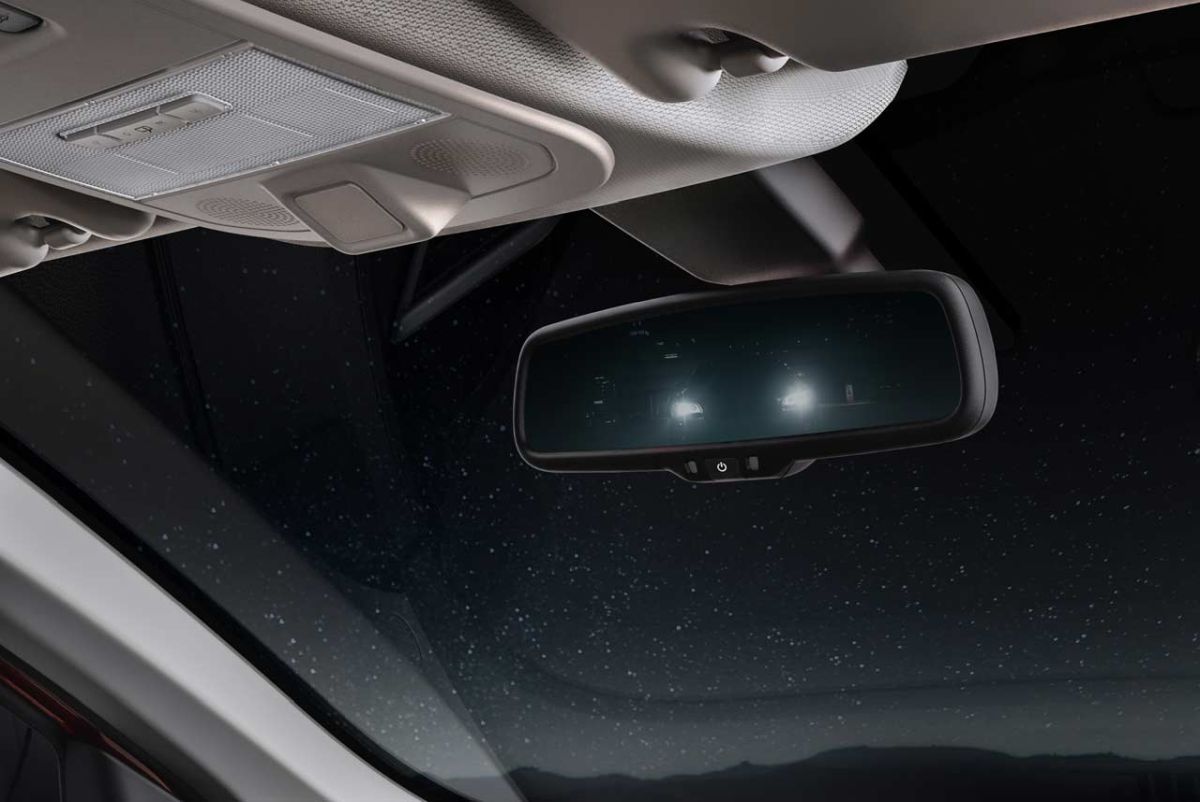
What Is an Auto-Dimming Rearview Mirror?
An auto-dimming rearview mirror is an electronically controlled mirror designed to automatically reduce the amount of reflected light reaching the driver's eyes from headlights behind the vehicle.
Traditional rearview mirrors usually have a small mechanical tab that allows the driver to switch between the normal and night positions manually. An auto-dimming mirror performs this function automatically.
The system detects the intensity of light coming from behind the vehicle and changes the mirror's reflectivity accordingly. This reduces glare and makes nighttime driving more comfortable.
In some vehicles, only the interior rearview mirror has this feature, while more advanced systems may also include auto-dimming exterior side mirrors.
How Does an Auto-Dimming Mirror Work?
An auto-dimming rearview mirror generally consists of several key components:
-
Light sensors
-
Electronic control circuitry
-
Electrochromic mirror glass
-
Electrical power supply
-
Ground connection
-
Vehicle control-module or reverse-gear input on some models
The mirror normally contains one or more light sensors. Some systems use two sensors.
One sensor can monitor ambient light in front of the vehicle, while another detects bright light coming from behind.
The system compares these light levels to determine whether the mirror needs to dim.
For example, during daylight, the mirror generally remains in its normal state because there is usually no need to reduce glare.
At night, when strong headlights from a vehicle behind are detected, the system activates the electrochromic glass and gradually reduces its reflectivity.

What Is Electrochromic Mirror Glass?
The most important component of an auto-dimming mirror is the electrochromic glass.
Electrochromic material can change its optical properties when an electrical voltage is applied.
When the control electronics detect strong light from behind, they send an electrical signal to the electrochromic layer.
The mirror then becomes darker, reducing the intensity of reflected light reaching the driver's eyes.
When the light level decreases, the mirror gradually returns toward its normal, brighter state.
Unlike a conventional night/day mirror, this system provides variable automatic dimming rather than simply switching between two mechanical positions.
When Does an Auto-Dimming Mirror Darken?
The system normally becomes active at night or whenever ambient light is low.
However, detecting bright headlights from behind is not necessarily the only condition required. The system may also evaluate the surrounding ambient light.
For example:
During the day:
Strong light from behind → low need for glare reduction → mirror remains mostly clear.
At night:
Strong headlights from behind → rear light sensor detects the glare → mirror darkens.
Vehicle behind moves away:
Light intensity decreases → mirror gradually returns toward its normal state.
The amount of dimming may also vary according to the intensity of the detected light.
What Are the Symptoms of a Faulty Auto-Dimming Mirror?
The symptoms depend on which part of the system has failed.
Common symptoms include:
-
Mirror does not dim at all
-
Mirror remains dark all the time
-
Mirror becomes excessively dark
-
Mirror does not darken enough
-
Dimming takes too long
-
Mirror darkens too quickly
-
Random or inconsistent dimming
-
Dimming works only intermittently
-
Indicator LED does not operate
-
Dark spots or discoloration appear inside the mirror
-
Bubbles or cloudy areas develop in the glass
-
Electrical connection problems
However, a mirror not darkening by itself does not automatically mean that the mirror is defective.
Ambient lighting, sensor operation, vehicle conditions, and system design should also be considered.
What If the Mirror Never Dims?
Several problems can prevent an auto-dimming mirror from operating.
Possible causes include:
-
Faulty light sensor
-
Electrical power supply problem
-
Poor ground connection
-
Blown fuse
-
Broken wire
-
Poor connector contact
-
Electrochromic glass failure
-
Internal electronic circuit failure
-
Incorrect reverse-gear signal
-
Body control module or related control-module problem
The electrical supply and connections should normally be checked before replacing the mirror.
What If the Mirror Stays Dark All the Time?
A mirror that remains dark during daylight may also indicate a problem.
Possible causes include:
-
Incorrect sensor readings
-
Blocked or contaminated sensor
-
Sensor circuit failure
-
Electrochromic glass failure
-
Faulty control electronics
-
Electrical connection problems
-
Control-module or software-related issues
If the mirror remains noticeably dark even under bright daylight, the sensors and electrochromic glass should be inspected.
What If There Are Spots or Bubbles Inside the Mirror?
This is particularly important with electrochromic mirrors.
You may notice:
-
Dark patches
-
Bubbles
-
Liquid-like areas
-
Uneven darkening
-
Localized discoloration
-
Dimming that starts around the edges
These symptoms can indicate physical deterioration of the electrochromic layer.
When the electrochromic material itself has deteriorated, cleaning or electrical repairs usually cannot restore the mirror. The electrochromic glass or the complete mirror assembly may need to be replaced.
Why Does an Auto-Dimming Mirror Fail?
The problem is not necessarily caused by the electronic circuit itself.
Common causes include:
Light sensor failure
If the sensor cannot correctly detect light intensity, the mirror may dim at the wrong time or fail to dim.
Electrical connection problems
Loose connectors, corroded terminals, damaged wiring, or a poor ground can prevent the system from working correctly.
Electrochromic glass deterioration
The electronics may function normally while the electrochromic layer inside the glass has failed.
Excessive heat
High temperatures over many years can eventually affect both the electronic components and electrochromic material.
Moisture
Water or moisture entering the mirror housing or electrical connections can cause corrosion and electronic faults.
Physical damage
Impact or damage to the mirror can affect the electrochromic structure or its electrical connections.
Can a Dirty Sensor Prevent the Mirror From Dimming?
Yes.
If dust, dirt, an accessory, or another object blocks the sensor, the system may receive an incorrect light reading.
The sensor area should therefore be kept clean and unobstructed.
However, cleaning the sensor will only help if the problem is actually caused by contamination or an obstruction. It will not repair a failed electronic circuit or damaged electrochromic glass.
Does Reverse Gear Affect the Auto-Dimming Mirror?
On some vehicles, yes.
Many auto-dimming mirror systems are designed to reduce or disable dimming when reverse gear is selected.
The purpose is to give the driver a clearer view behind the vehicle during reversing.
Depending on the vehicle, this function may be controlled by electronics inside the mirror or by a signal from the vehicle's control modules.
Therefore, the exact behavior when reverse gear is selected varies between vehicle manufacturers and models.
Auto-Dimming Mirror vs. Conventional Rearview Mirror
A conventional rearview mirror has a fixed reflective characteristic. The driver may manually switch it to a night position to reduce glare.
An auto-dimming mirror uses electronic sensors and electrochromic glass to automatically change its reflectivity.
This means the driver does not need to manually adjust the mirror whenever a vehicle approaches from behind with bright headlights.
How Do You Test an Auto-Dimming Mirror?
The exact testing procedure depends on the vehicle, but several basic checks can be performed.
Start by checking:
-
Whether the light sensors are clean
-
The relevant fuse
-
The mirror's electrical connector
-
Power supply voltage
-
Ground connection
-
Wiring for opens or shorts
-
Sensor condition
-
The mirror glass for physical deterioration
On some vehicles, a diagnostic scan tool can also be used to check the body control module or mirror-related system for fault codes and live data.
However, a conventional auto-dimming mirror does not necessarily generate an OBD fault code for every failure.
Will an Auto-Dimming Mirror Fault Show Up on an OBD Scanner?
Not necessarily.
On simpler systems, the mirror may have its own electronic circuit and may not be directly monitored by the engine ECU.
On more advanced vehicles, the mirror may communicate with the BCM (Body Control Module) or another vehicle control module.
In that case, diagnostic trouble codes may be related to:
-
Sensor circuits
-
Power supply
-
Communication
-
Mirror module
-
Control signals
Therefore, the absence of an OBD fault code does not necessarily mean that the mirror is functioning correctly.
Should an Auto-Dimming Mirror Be Replaced?
It depends on the cause of the failure.
If the problem is a wiring or connector issue, the connection can often be repaired.
If the light sensor is separately replaceable, only the sensor may need to be replaced.
If the electrochromic glass itself has failed, the practical solution on many vehicles is replacement of the mirror glass or the complete auto-dimming mirror assembly.
It is important to use a replacement component compatible with the vehicle's equipment level.
Some rearview mirrors may also contain additional features such as:
-
Rain sensor
-
Compass
-
Automatic lighting functions
-
Camera
-
Alarm or security sensors
-
Garage-door transmitter
-
Microphone
-
Other vehicle communication electronics
Therefore, two mirrors that look identical from the outside may not be electronically interchangeable.
Final Thoughts
An auto-dimming rearview mirror is an electronic and electrochromic mirror system designed to reduce glare from headlights behind the vehicle during nighttime driving.
Light sensors monitor the surrounding light conditions and detect strong light from behind. The mirror then changes the optical properties of its electrochromic glass to reduce reflected glare.
Failure symptoms can include no dimming, permanent darkening, inconsistent operation, or visible spots and bubbles inside the glass.
For accurate diagnosis, the mirror itself should not be blamed immediately. The sensors, power supply, ground, wiring, connectors, control module, and electrochromic glass should all be considered before replacing the assembly.