TR
TR EN
EN

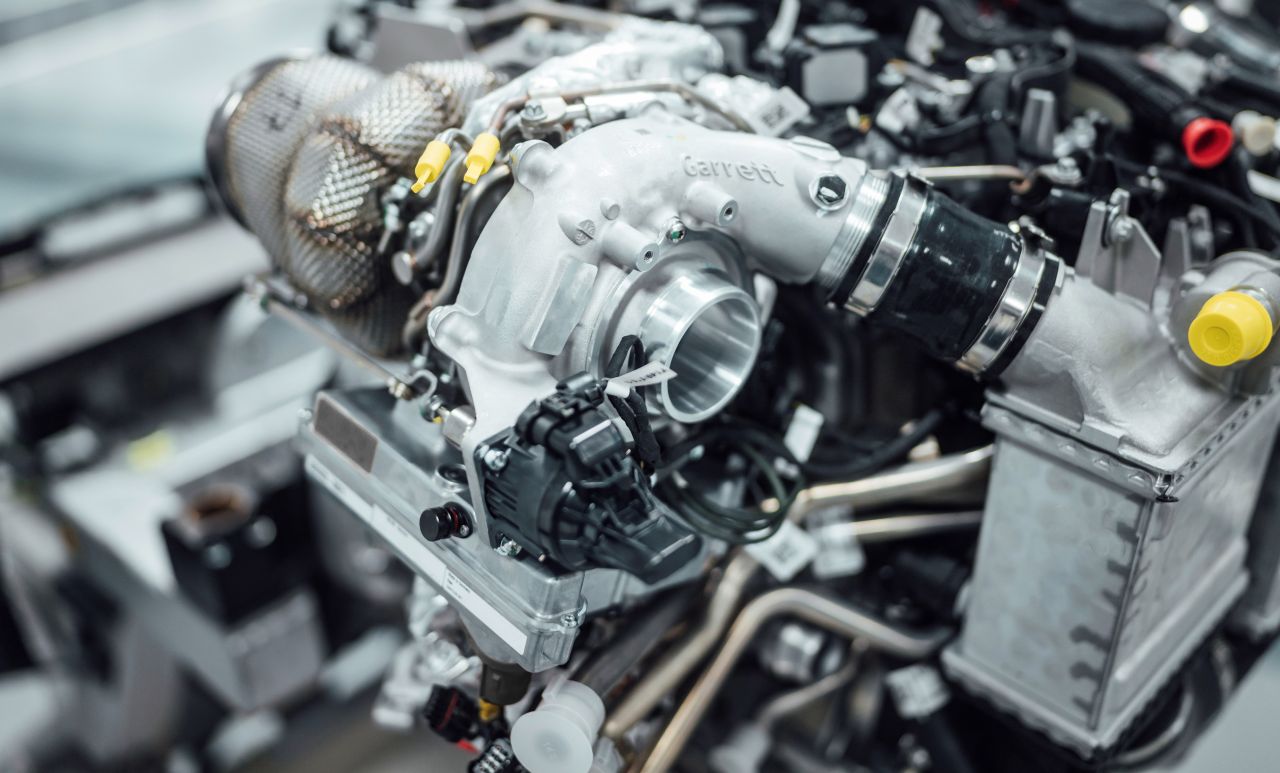
What Is a Turbocharger? What Are the Symptoms of Turbocharger Failure?
A turbocharger is a forced-induction system used to increase an engine's power and efficiency by forcing more air into the combustion chambers.
An engine needs three basic things to produce power: air, fuel, and an ignition or combustion process. In a naturally aspirated engine, air enters the engine primarily because of the pressure difference created when the piston moves downward.
A turbocharged engine uses a different approach.
The turbocharger compresses intake air and sends a greater amount of oxygen into the engine. Because more oxygen is available, the engine can burn an appropriate additional amount of fuel and produce more power from a given engine displacement.
This is why a relatively small turbocharged engine can produce power comparable to or greater than a larger naturally aspirated engine.
Turbocharging is widely used in gasoline and diesel engines, from small passenger cars to high-performance vehicles and commercial vehicles.
How Does a Turbocharger Work?
A turbocharger uses energy contained in the engine's exhaust gases.
The basic turbocharger consists of two main sides:
Turbine side
Exhaust gases leaving the engine flow through the turbine housing and spin the turbine wheel.
Compressor side
The turbine is connected to a compressor wheel through a common shaft. As the turbine spins, the compressor wheel also rotates and compresses incoming air.
The compressed air is then sent toward the engine.
The basic energy path is:
Exhaust gases → Turbine → Shaft → Compressor → Pressurized intake air → Engine
The turbocharger therefore recovers energy from exhaust gases that would otherwise largely leave the engine through the exhaust system.
What Are the Main Parts of a Turbocharger?
Although turbocharger designs vary, the main components generally include:
-
Turbine wheel
-
Compressor wheel
-
Common shaft
-
Center housing
-
Journal or ball bearings
-
Turbine housing
-
Compressor housing
-
Wastegate or variable-geometry mechanism
-
Oil supply passage
-
Oil drain passage
-
Sealing components
-
Actuator
Some modern turbochargers also incorporate electronically controlled actuators and additional sensors.
What Is the Turbine Wheel?
The turbine wheel is located on the exhaust side of the turbocharger.
Hot exhaust gases enter the turbine housing and accelerate through its passages. This gas flow causes the turbine wheel to rotate.
The turbine wheel transfers this rotational energy through the turbocharger shaft to the compressor wheel.
Because the turbine is exposed to extremely high exhaust temperatures, it must be manufactured from materials capable of operating reliably under severe thermal conditions.
What Is the Compressor Wheel?
The compressor wheel is located on the intake side.
As it rotates, it draws air into the compressor housing and accelerates the air outward.
The compressor housing converts part of this air velocity into increased pressure.
The result is compressed intake air that can be delivered to the engine.
A damaged or contaminated compressor wheel can significantly affect turbocharger performance.
What Is the Turbocharger Shaft?
The shaft connects the turbine wheel and compressor wheel.
When exhaust gases spin the turbine, the shaft transfers that rotational energy to the compressor.
The shaft operates at extremely high rotational speeds.
Depending on the turbocharger design and operating conditions, turbocharger shaft speeds can reach well over 100,000 rpm, with some modern units capable of substantially higher speeds.
This is one reason why proper lubrication and clean engine oil are critical.
Why Does a Turbocharger Need Engine Oil?
Turbochargers operate under extreme mechanical and thermal conditions.
The shaft and bearings require lubrication to reduce friction and remove heat.
Engine oil is supplied to the center housing through an oil feed line.
After passing through the bearing system, the oil returns to the engine through an oil drain passage.
A restricted oil feed line, incorrect oil, contaminated oil, low oil pressure, or insufficient oil level can cause severe turbocharger damage.
Can a Turbocharger Run Without Oil?
It should never be operated without proper lubrication.
Even a short period of inadequate lubrication can damage the turbocharger bearings and shaft.
Because the turbocharger rotates at extremely high speed, lubrication failure can cause rapid wear.
A turbocharger that has suffered oil starvation may develop shaft play, bearing damage, overheating, and eventually catastrophic mechanical failure.
What Is Turbo Boost Pressure?
Turbo boost is the increase in intake manifold pressure created by the turbocharger.
When the compressor forces additional air into the engine, intake pressure rises above the pressure that would normally be available from atmospheric air alone.
The engine control system monitors and controls this pressure to keep the engine operating within its designed limits.
Boost pressure varies according to engine design, load, speed, turbocharger type, and control strategy.
What Controls Turbocharger Boost?
Turbocharger boost is controlled in different ways depending on the turbocharger design.
A conventional turbocharger may use a wastegate.
A variable-geometry turbocharger changes the effective geometry of the turbine side.
Modern systems can use electronic actuators and feedback from sensors to precisely control turbocharger operation.
The engine ECU may monitor parameters such as:
-
Intake manifold pressure
-
Turbocharger pressure
-
Air mass
-
Engine speed
-
Throttle position
-
Exhaust-related parameters
-
Temperature
-
Accelerator position
The ECU then adjusts the turbocharger control system as necessary.
What Is a Wastegate?
A wastegate is a mechanism used to control turbocharger boost pressure.
When boost reaches the desired level, the wastegate can divert some exhaust gases away from the turbine.
This limits turbine speed and prevents excessive boost pressure.
A wastegate can be operated by a pneumatic actuator or an electronically controlled actuator, depending on the vehicle.
A wastegate problem can cause either insufficient boost or excessive boost.
What Is a Variable Geometry Turbocharger?
A variable geometry turbocharger, often abbreviated VGT or VNT depending on the manufacturer, uses adjustable vanes around the turbine.
These vanes change the way exhaust gases flow toward the turbine wheel.
At low engine speed, the vanes can help increase exhaust gas velocity and improve turbocharger response.
At higher engine speeds, the geometry can change to control airflow and prevent excessive boost.
Variable-geometry turbochargers are particularly common in modern diesel engines, although variable-geometry technology is also used in some gasoline applications.
What Is Turbo Lag?
Turbo lag is the delay between requesting increased engine power and the turbocharger producing the desired boost.
Some degree of response delay is normal in many turbocharged engines.
Turbo lag can be influenced by:
-
Turbocharger size
-
Engine speed
-
Exhaust gas energy
-
Turbocharger inertia
-
Intake system design
-
Exhaust system design
-
Boost control strategy
However, a sudden increase in turbo lag compared with the vehicle's normal behavior can indicate a problem.
Symptoms of Turbocharger Failure
A failing turbocharger can produce several warning signs.
The symptoms depend on whether the problem affects the turbine, compressor, bearings, lubrication system, boost control system, or surrounding intake and exhaust components.
Loss of Engine Power
One of the most noticeable symptoms is reduced engine performance.
The vehicle may feel significantly weaker during acceleration, especially when the turbocharger should normally produce substantial boost.
The driver may notice that the vehicle no longer accelerates as strongly as it used to.
A loss of power does not automatically mean that the turbocharger itself is defective.
Boost leaks, faulty sensors, actuator problems, EGR issues, fuel-system problems, and exhaust restrictions can produce similar symptoms.
Slow Acceleration
A vehicle with a turbocharger problem may accelerate slowly.
The engine may feel normal at low load but become weak when the driver demands more power.
This can be especially noticeable during:
-
Overtaking
-
Climbing hills
-
High-speed acceleration
-
Heavy vehicle loading
-
Rapid acceleration from low engine speed
If the turbocharger cannot generate the required airflow and pressure, engine output can decrease significantly.
Excessive Turbo Lag
If the turbocharger takes much longer than normal to build boost, there may be a problem with the turbocharger or its control system.
Possible causes include:
-
Sticking variable-geometry vanes
-
Wastegate problems
-
Boost leaks
-
Damaged turbocharger components
-
Exhaust restrictions
-
Faulty boost control solenoid
-
Sensor problems
-
Intake restrictions
Turbo lag should therefore be evaluated together with other symptoms.
Whining Noise From the Turbocharger
A healthy turbocharger can produce a noticeable high-frequency sound during acceleration.
However, a new or increasingly loud whining sound can indicate a problem.
A damaged bearing, shaft, compressor wheel, or other internal component may produce abnormal noise.
A sound that becomes progressively louder should not be ignored.
Siren-Like Turbo Noise
A particularly concerning symptom is a siren-like or police-siren-like sound coming from the turbocharger area.
This can occur when the turbocharger's shaft, bearings, or rotating components develop excessive wear.
The sound may change with engine speed and boost pressure.
If such a noise suddenly appears, the vehicle should be inspected promptly.
Grinding or Rattling Noise
Grinding, metallic scraping, or rattling sounds are more serious warning signs.
Possible causes include:
-
Bearing failure
-
Shaft damage
-
Compressor wheel contact
-
Turbine wheel damage
-
Foreign object damage
-
Loose components
-
Wastegate mechanism problems
If a rotating turbocharger component contacts its housing, continuing to operate the engine can cause severe damage.
Blue Smoke From the Exhaust
Blue or blue-gray exhaust smoke can indicate that engine oil is entering the combustion process.
A damaged turbocharger seal system can contribute to oil entering the intake or exhaust side.
However, blue smoke does not prove that the turbocharger is faulty.
Worn piston rings, valve stem seals, crankcase ventilation problems, and other engine faults can also cause oil consumption and blue smoke.
A complete diagnosis is therefore necessary.
Black Smoke From a Diesel Engine
A diesel engine that produces excessive black smoke may have an air supply problem.
If the turbocharger is not providing enough air, the engine may receive insufficient oxygen for the commanded amount of fuel.
Possible causes include:
-
Turbocharger failure
-
Boost leak
-
Restricted air filter
-
Stuck VGT vanes
-
Faulty boost control
-
Faulty airflow sensor
-
EGR problems
Black smoke should therefore be considered together with boost pressure and air-flow measurements.
White Smoke and Turbocharger Problems
White or light-colored smoke is not normally the classic symptom of turbocharger failure.
Depending on the engine and the nature of the fault, oil or coolant entering the combustion or exhaust system can produce different smoke characteristics.
A proper diagnosis should distinguish between coolant vapor, unburned fuel, and oil-related smoke.
Increased Engine Oil Consumption
A damaged turbocharger can contribute to increased engine oil consumption.
If the turbocharger's internal sealing system is compromised, engine oil may enter the intake or exhaust side.
However, increased oil consumption can also originate from the engine itself.
If oil consumption suddenly increases together with turbocharger noise, loss of power, or smoke, the turbocharger should be inspected.
Oil in the Intercooler or Intake System
A small amount of oil residue in a turbocharged intake system can be normal because of crankcase ventilation and oil vapor.
However, a significant accumulation of liquid oil may indicate a problem.
If a turbocharger is leaking excessive oil into the intake system, oil may accumulate in the intercooler and intake pipes.
The complete system should be inspected before concluding that the turbocharger has failed.
Check Engine Light
Turbocharger-related problems can trigger the Check Engine Light.
The ECU continuously compares expected and actual engine operating parameters.
If the measured boost pressure does not correspond to the commanded pressure, a diagnostic trouble code may be stored.
Depending on the vehicle, faults may relate to:
-
Turbocharger boost pressure
-
Boost control
-
Overboost
-
Underboost
-
Turbocharger actuator position
-
MAP sensor
-
Airflow measurement
-
Wastegate operation
-
Variable-geometry control
Overboost Condition
Overboost occurs when the actual boost pressure becomes higher than the system expects.
Possible causes include:
-
Wastegate stuck closed
-
Variable-geometry vanes stuck
-
Faulty actuator
-
Boost control problems
-
Incorrect modifications
-
Sensor errors
Excessive boost can place additional stress on the engine and turbocharger.
Modern ECUs may respond by reducing engine power or entering a protective operating mode.
Underboost Condition
Underboost occurs when the turbocharger cannot produce the requested boost pressure.
Possible causes include:
-
Boost hose leak
-
Intercooler leak
-
Damaged turbocharger
-
Wastegate stuck open
-
VGT vane problems
-
Faulty actuator
-
Exhaust restriction
-
Intake restriction
-
Faulty boost control solenoid
-
Sensor problems
Underboost is one of the most common turbocharger-related diagnostic conditions.
Engine Goes Into Limp Mode
A vehicle may enter limp mode when the ECU detects a potentially harmful boost-control problem.
The ECU can deliberately reduce engine power to protect the engine, turbocharger, emissions system, or drivetrain.
The driver may suddenly notice that the vehicle has much less power than normal.
Turning the engine off and restarting it may temporarily restore performance in some cases.
However, if the underlying fault remains, limp mode may return.
Turbocharger Actuator Problems
The actuator controls a wastegate or variable-geometry mechanism.
If the actuator cannot move correctly, the turbocharger may not produce the expected boost.
Possible causes include:
-
Electrical actuator failure
-
Vacuum problems
-
Sticking mechanical linkage
-
Corrosion
-
Carbon deposits
-
Damaged actuator mechanism
-
Wiring problems
A faulty actuator does not necessarily mean that the turbocharger itself must be replaced.
Boost Hose Leaks
A boost leak is one of the most common causes of apparent turbocharger problems.
The turbocharger may generate pressure normally, but the pressurized air escapes through a damaged hose, loose clamp, intercooler, or connection.
Possible signs include:
-
Loss of power
-
Hissing noise
-
Underboost
-
Increased smoke on diesel engines
-
Poor acceleration
-
Check Engine Light
A boost leak should always be checked before condemning the turbocharger.
Intercooler Problems
The intercooler reduces the temperature of compressed intake air.
If the intercooler is cracked or a connection is leaking, boost pressure can escape.
A damaged intercooler can therefore produce symptoms that look like turbocharger failure.
Oil residue around intercooler connections may also help identify a boost leak, although oil residue alone does not prove that the intercooler is damaged.
Restricted Air Filter
A severely restricted air filter can reduce the amount of air entering the turbocharger.
This can affect turbocharger performance and engine power.
An inexpensive and simple inspection of the air filter should therefore be performed before replacing a turbocharger.
Exhaust Restriction
A restricted exhaust system can interfere with turbocharger operation.
A blocked catalytic converter, diesel particulate filter, or other exhaust restriction can increase exhaust backpressure.
This can reduce turbocharger efficiency and cause poor engine performance.
A turbocharger should not automatically be blamed when exhaust backpressure is excessive.
Can a Turbocharger Cause Engine Damage?
Yes.
A severe turbocharger failure can cause significant engine damage.
For example, if a turbocharger bearing fails and allows a large amount of oil into the intake system, the engine may consume that oil.
In some diesel engines, uncontrolled oil consumption can potentially cause the engine to accelerate without normal accelerator control.
This is commonly referred to as a diesel runaway.
A severely damaged turbocharger can also release metallic debris into the intake or exhaust system.
For these reasons, serious turbocharger symptoms should be investigated quickly.
How Is a Turbocharger Diagnosed?
A professional diagnosis should begin with the complete system rather than immediately removing the turbocharger.
The diagnostic process may include:
Read diagnostic trouble codes
A scan tool can identify boost-control and related faults.
Check requested and actual boost pressure
Comparing commanded boost with measured boost can provide valuable information.
Inspect intake and boost hoses
Look for cracks, loose clamps, disconnected pipes, and damaged intercooler connections.
Inspect the turbocharger
The compressor wheel, shaft, housing, and surrounding components can be inspected where access permits.
Check shaft play
Some turbocharger designs naturally have a small amount of movement, particularly with certain bearing arrangements.
The important factor is whether the movement is within the manufacturer's specifications and whether the compressor or turbine wheel is contacting the housing.
Check the actuator
The wastegate or VGT actuator should move correctly and respond to the control system.
Check lubrication
Oil feed and drain passages should be inspected when turbocharger damage is suspected.
Check the air filter
A restricted air filter can create airflow problems.
Check exhaust backpressure
Excessive exhaust restriction can mimic turbocharger failure.
Can a Turbocharger Be Repaired?
In some cases, yes.
Turbocharger repair can involve replacing damaged bearings, seals, shafts, wheels, or other components.
However, turbocharger rebuilding requires specialized equipment.
A professional rebuild may require balancing the rotating assembly to extremely tight tolerances.
Simply replacing a bearing without correctly balancing the turbocharger is not an adequate repair.
In some cases, replacing the complete turbocharger is the more appropriate solution.
Can a Turbocharger Be Cleaned?
Some turbocharger-related problems can be improved by cleaning, particularly when variable-geometry mechanisms become restricted by carbon deposits.
However, cleaning cannot repair a physically damaged shaft, bearing, turbine wheel, compressor wheel, or housing.
The cause of the problem should be identified before attempting any cleaning procedure.
How Long Does a Turbocharger Last?
There is no universal turbocharger replacement interval.
A turbocharger can last for many years and hundreds of thousands of kilometers when the engine is properly maintained.
Its lifespan depends heavily on:
-
Engine oil quality
-
Oil change intervals
-
Oil pressure
-
Air filtration
-
Engine operating temperature
-
Driving conditions
-
Turbocharger design
-
Cooling system condition
-
Maintenance quality
-
Previous overheating
-
Foreign object contamination
Poor lubrication is one of the most important causes of premature turbocharger failure.
How Can Turbocharger Life Be Extended?
Proper engine maintenance is essential.
Use the oil specification recommended by the vehicle manufacturer and change the oil at the correct intervals.
Keep the air filter clean and correctly installed.
Inspect intake and boost hoses regularly.
Do not ignore unusual turbocharger noises.
Allow the engine to warm up before demanding heavy boost, particularly in cold conditions.
After severe high-load operation, follow the vehicle manufacturer's recommendations regarding cooldown. Modern vehicles with water-cooled turbochargers and sophisticated engine management may manage thermal protection automatically, so an old-fashioned extended idle period is not universally required.
Most importantly, address oil pressure, cooling, intake, and exhaust problems before they damage the turbocharger.
Turbocharger vs. Supercharger
Both systems increase the amount of air entering the engine, but they obtain their driving energy differently.
A turbocharger is powered primarily by exhaust gas energy.
A supercharger is mechanically or electrically driven by the engine or an electric motor.
Turbochargers can provide significant efficiency advantages because they recover energy from exhaust gases.
Superchargers can provide very fast response because they are directly driven rather than waiting for exhaust gas energy to build.
Some modern powertrains can combine different forced-induction technologies to achieve both strong response and high efficiency.
Can a Turbocharger Increase Fuel Consumption?
A turbocharger does not automatically increase fuel consumption.
In fact, turbocharging can allow manufacturers to reduce engine displacement while maintaining useful performance, a strategy often called downsizing.
Fuel consumption depends on engine design, calibration, vehicle weight, driving style, boost strategy, and operating conditions.
However, if a turbocharger or its control system is malfunctioning, fuel consumption may increase.
For example, an air-flow problem, boost leak, or incorrect sensor reading can affect the engine's fuel and air control.
Turbocharger Maintenance Mistakes to Avoid
Several mistakes can shorten turbocharger life.
Using the wrong engine oil
Turbocharger bearings depend heavily on proper lubrication.
Extending oil change intervals excessively
Old or contaminated oil can increase wear.
Ignoring oil pressure problems
A turbocharger can be damaged even if the engine itself continues running.
Using a damaged or poor-quality air filter
Foreign particles entering the compressor can damage the compressor wheel.
Ignoring boost leaks
A leak can cause the turbocharger to work harder while the engine still fails to achieve the desired boost.
Replacing the turbocharger without fixing the root cause
If the original turbocharger failed because of oil starvation, contamination, or a blocked oil drain, installing another turbocharger without correcting the cause can result in another failure.
Is Turbocharger Whistle Always a Sign of Failure?
No.
Some turbochargers naturally produce a noticeable whistle or spool sound.
The important factor is a change from the vehicle's normal sound.
A sudden increase in whistle, combined with power loss, smoke, oil consumption, or unusual boost behavior, is much more concerning than a normal turbocharger sound.
Can You Drive With a Failing Turbocharger?
It depends on the severity of the problem.
A minor control-system issue may allow the vehicle to operate temporarily, but serious mechanical symptoms should not be ignored.
Driving should be avoided or minimized if there is:
-
Severe turbocharger noise
-
Significant oil consumption
-
Heavy smoke
-
Major loss of power
-
Oil leaking into the intake
-
Evidence of compressor or turbine damage
-
Uncontrolled engine acceleration
-
Severe overboost or underboost
Continuing to drive a vehicle with a severely damaged turbocharger can turn a relatively expensive turbocharger repair into a much more serious engine repair.
Final Thoughts
A turbocharger is a sophisticated component that uses exhaust gas energy to compress intake air and increase engine performance.
Its operation depends on several systems working together, including the turbine, compressor, bearings, lubrication system, boost-control mechanism, intake system, exhaust system, sensors, and engine ECU.
Turbocharger failure does not always mean that the turbocharger itself is damaged.
A boost leak, faulty actuator, restricted air filter, exhaust restriction, sensor problem, lubrication issue, or intake problem can create symptoms that look very similar to turbocharger failure.
Loss of power, excessive turbo lag, abnormal whining, smoke, increased oil consumption, Check Engine Light, overboost, underboost, and limp mode are important warning signs.
The correct approach is to diagnose the entire air, exhaust, lubrication, and boost-control system before replacing the turbocharger.
Because turbochargers operate at extremely high speed and temperature, proper engine oil, clean air filtration, correct maintenance, and early diagnosis are essential for long service life.