TR
TR EN
EN

What Are the Advantages of CNG Compared With Gasoline, Diesel, and LPG?
CNG, or Compressed Natural Gas, is an alternative fuel used particularly in buses, commercial vehicles, fleet vehicles, and high-mileage applications.
Its main component is methane, and unlike LPG, CNG is stored in the vehicle as a compressed gas rather than as a liquefied fuel.
When comparing CNG with gasoline, diesel, and LPG, fuel price is only one factor. Emissions, combustion characteristics, engine operation, maintenance, storage, driving range, and refueling infrastructure should also be considered.
Advantages of CNG Compared With Gasoline
Lower particulate emissions
CNG combustion can produce very low particulate emissions, particularly when compared with conventional gasoline and diesel applications.
The actual emissions advantage depends on the engine design and emissions-control system, but CNG's gaseous nature and methane-based composition can provide a clean combustion profile.
Clean combustion characteristics
Methane has a relatively simple chemical structure compared with gasoline, which contains many different hydrocarbons.
When the engine and fuel system are properly designed and calibrated for CNG, this can contribute to clean and efficient combustion.
High octane rating
CNG has a high octane rating and strong resistance to knock.
This can be a significant advantage in engines specifically designed or optimized for natural gas. Higher compression ratios and combustion strategies optimized for CNG can potentially improve thermal efficiency.
However, this advantage is much more relevant to an engine designed for CNG than to a basic gasoline engine simply converted to CNG.
Advantages of CNG Compared With Diesel
One of the most important advantages of CNG over diesel is its very low particulate emissions.
Modern diesel engines have become much cleaner thanks to technologies such as diesel particulate filters and advanced exhaust aftertreatment. Nevertheless, particulate control remains an important part of diesel emissions management.
CNG engines generally produce significantly less particulate matter.
Lower particulate emissions
This is particularly valuable for city buses, municipal vehicles, and commercial vehicles operating in heavily populated areas.
Quieter operation
CNG engines can operate more quietly and with less vibration than comparable diesel engines.
This can be particularly noticeable in urban buses and commercial vehicles that operate close to residential areas.
Potentially lower NOx emissions
With appropriate engine design and calibration, CNG can achieve relatively low nitrogen oxide emissions.
However, CNG should not automatically be considered a zero-NOx fuel. Actual emissions depend on combustion temperature, engine design, air-fuel ratio, and the exhaust aftertreatment system.
No diesel particulate filter regeneration
A conventional CNG engine does not require the type of DPF regeneration process used by diesel engines to burn accumulated soot.
This can be an advantage for vehicles that frequently operate at low speeds, idle for long periods, or travel short urban routes.
Advantages of CNG Compared With LPG
CNG and LPG are both alternative gaseous fuels, but they have different chemical compositions and storage methods.
CNG is primarily methane, while LPG mainly consists of propane and butane.
Lower carbon intensity
Methane contains a higher hydrogen-to-carbon ratio than propane and butane. As a result, CNG can have lower CO₂ emissions per unit of energy under appropriate operating conditions.
The actual advantage depends on engine efficiency and, importantly, methane leakage throughout the natural-gas supply chain.
Very low particulate formation
CNG can produce extremely low particulate emissions because of its methane-based composition and gaseous fuel delivery.
LPG is also a relatively clean-burning fuel, but CNG can offer an additional particulate-emission advantage in suitable engines.
High octane characteristics
CNG's high octane rating provides strong resistance to knock.
This allows engines specifically designed for natural gas to use combustion strategies that may improve efficiency.
Can CNG Provide a Fuel-Cost Advantage?
CNG can provide a significant operating-cost advantage in some markets and applications, but this depends heavily on local fuel prices.
The advantage is particularly relevant to vehicles that travel high annual mileages, such as:
-
City buses
-
Municipal vehicles
-
Delivery vehicles
-
Fleet vehicles
-
Commercial vans
-
High-mileage passenger vehicles
However, comparing only the price of one kilogram of CNG with the price of one liter of gasoline or diesel is not enough.
The proper comparison should consider energy consumption per 100 km and the total cost of ownership.
Maintenance, tank capacity, vehicle weight, refueling availability, and conversion costs can all affect the final result.
Does CNG Have an Advantage for Engine Oil?
The clean combustion characteristics of CNG can help reduce certain combustion-related contaminants entering the engine oil.
This can be particularly relevant when CNG is compared with older diesel applications where soot and combustion by-products can place a greater burden on engine oil.
However, this does not mean that CNG vehicles can automatically use longer oil-change intervals.
Oil-change intervals should always follow the vehicle or engine manufacturer's specifications.
Advantages of CNG in Urban Driving
CNG can be particularly attractive for urban transportation.
In buses and commercial fleets, some of its potential advantages include:
-
Very low particulate emissions
-
Quieter operation
-
Lower vibration
-
Lower exhaust odor
-
Potentially lower NOx emissions
-
Predictable fuel consumption
-
Easier centralized fleet fuel management
For these reasons, CNG has been adopted for public transportation and commercial fleets in many countries.
Does CNG Have a Safety Advantage?
CNG and LPG behave differently in the event of a gas leak.
Methane is lighter than air, so in an open or well-ventilated environment it tends to rise and disperse.
LPG is heavier than air and can accumulate near the ground when released.
However, this does not mean that CNG leaks are harmless.
CNG is stored at very high pressure, so the condition of the tanks, valves, high-pressure lines, and safety devices is extremely important.
A properly designed and maintained CNG system can be used safely, but it must be treated as a high-pressure fuel system.
What Are the Biggest Advantages of CNG Over All Three Fuels?
The main advantages can be summarized as follows.
Compared with gasoline:
-
Very low particulate emissions
-
Clean combustion characteristics
-
High octane rating
-
Strong knock resistance
-
Potentially lower emissions under suitable conditions
Compared with diesel:
-
Significantly lower particulate emissions
-
Quieter operation
-
Lower vibration potential
-
Potentially lower NOx emissions
-
No conventional diesel DPF regeneration
Compared with LPG:
-
Methane-based fuel composition
-
Lower carbon intensity under suitable conditions
-
Very low particulate emissions
-
High octane rating
-
Strong knock resistance
Is CNG Better for Every Vehicle?
No.
CNG's advantages do not automatically make it the best fuel for every vehicle.
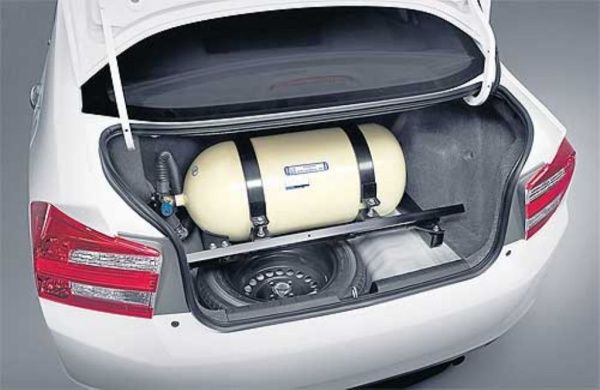
One of its biggest disadvantages is the need to store the fuel at very high pressure. This requires specialized tanks and can consume a considerable amount of vehicle space.
CNG infrastructure is another important factor. In many areas, CNG stations are much less common than gasoline, diesel, or LPG stations.
Before choosing CNG, it is therefore important to consider:
-
Availability of CNG stations
-
Annual mileage
-
Driving range
-
Tank capacity
-
Space occupied by the tanks
-
Conversion cost
-
Maintenance cost
-
Local fuel prices
-
Vehicle weight
-
Intended usage
Which Vehicles Benefit Most From CNG?
CNG tends to make the most sense for vehicles with predictable routes and high annual fuel consumption.
Examples include city buses, municipal fleets, delivery vehicles, commercial fleets, and other high-mileage vehicles.
The advantage is not only related to fuel cost. Fleet operators can also benefit from centralized refueling, predictable operating patterns, lower particulate emissions, and potentially lower maintenance requirements for certain applications.
For private passenger vehicles, the decision requires a more careful comparison because tank space, driving range, refueling infrastructure, and conversion costs can have a much greater impact.
The Main Advantage of CNG
CNG offers a combination of high octane resistance, very low particulate emissions, relatively clean combustion, and potentially lower operating emissions.
Its advantages are particularly strong when compared with diesel in terms of particulate emissions and noise, while its high octane characteristics distinguish it from conventional gasoline and LPG applications.
However, CNG is not automatically the most economical or environmentally friendly choice in every situation. The real benefit depends on the engine, vehicle type, fuel prices, CNG infrastructure, methane supply chain, and how the vehicle is used.
For high-mileage commercial and fleet applications, however, these advantages can make CNG a very practical alternative to gasoline, diesel, and LPG.