TR
TR EN
EN

What Is an Engine Oil Level Sensor? What Are the Symptoms of Failure?
The engine oil level sensor is an electrical component that monitors the amount of oil inside the engine and warns the driver when the oil level falls below a predetermined limit.
Engine oil is essential for lubricating moving engine components, reducing friction and wear, helping transfer heat, and keeping internal engine components clean. If the oil level becomes too low, the engine may not receive adequate lubrication, potentially causing severe and expensive damage.
The oil level sensor helps the driver detect a low oil level before it develops into a more serious problem.
However, it is important to understand that the engine oil level sensor and engine oil pressure sensor are not the same component. They perform completely different functions.
What Does an Engine Oil Level Sensor Do?
The primary function of the oil level sensor is to determine how much engine oil is present or whether the oil level is above or below a specific threshold.
Depending on the vehicle, information from the sensor may be sent to:
-
The instrument cluster
-
Engine Control Module (ECM/ECU)
-
Body Control Module (BCM)
-
Central electronic control system
If the oil level becomes too low, the vehicle can display a warning message or indicator to alert the driver.
Some vehicles only perform an electronic oil-level measurement under specific conditions. The engine may need to be switched off, the vehicle may need to be parked on level ground, and sufficient time may need to pass for the oil to drain back into the oil pan.
These conditions are important for obtaining an accurate reading.
Where Is the Engine Oil Level Sensor Located?
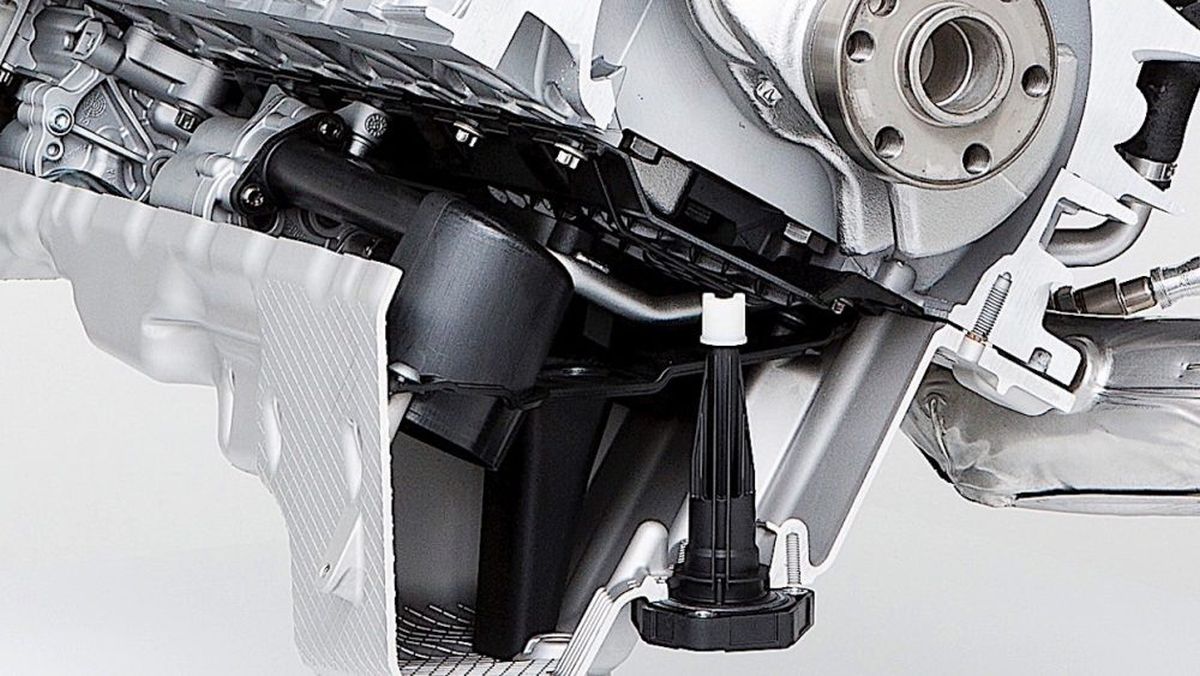
In many vehicles, the engine oil level sensor is mounted in the lower section of the engine oil pan.
The sensor is positioned so that it can detect the oil level inside the pan.
Depending on the engine design, it may be installed:
-
Directly in the oil pan
-
On the lower part of the oil pan
-
Near the bottom of the oil reservoir
-
Through a dedicated mounting point with an electrical connector
The exact location varies between engines.
Some vehicles also combine oil-level measurement with other oil-monitoring functions in the same sensor assembly.
How Does an Engine Oil Level Sensor Work?
The operating principle varies depending on the vehicle and sensor design.
Some oil level sensors use electrical properties to determine the oil level. Other systems use a combination of electrical measurement and oil temperature.
More advanced sensors can provide the vehicle's electronic control system with information that is used to calculate the actual oil level rather than simply indicating "low" or "normal."
This is why there is no universal resistance or voltage value that applies to every engine oil level sensor.
The manufacturer's service specifications should always be used when testing the sensor.
What Are the Symptoms of a Bad Engine Oil Level Sensor?
A faulty oil level sensor can produce several different symptoms.
Common symptoms include:
-
Low oil warning when the oil level is normal
-
No warning when the oil level is actually low
-
Oil level warning appearing on the instrument cluster
-
Oil level measurement not being available
-
Incorrect oil level readings
-
Oil level readings changing unexpectedly
-
Oil level warning appearing immediately after starting the engine
-
An oil level sensor-related diagnostic trouble code
-
Electronic oil level measurement becoming unavailable
Depending on the vehicle, the instrument cluster may display messages such as "Check Oil Level," "Oil Level Sensor Fault," or another manufacturer-specific warning.
The exact warning message varies between vehicles.
Why Does the Low Oil Warning Appear When the Oil Level Is Normal?
This can be one of the clearest indications of a possible oil level sensor problem.
However, the sensor should not immediately be blamed.
Possible causes include:
-
Faulty oil level sensor
-
Corroded sensor connector
-
Damaged wiring
-
Loose electrical terminal
-
Poor ground connection
-
Contamination around the sensor
-
Incorrect oil level measurement
-
Vehicle parked on an incline
-
Incorrect amount of engine oil
-
Electronic control system problems
On vehicles with electronic oil level measurement, the conditions under which the measurement is taken are particularly important.
What Happens If the Oil Level Is Low but No Warning Appears?
This situation can be more serious.
If the sensor fails to detect a low oil level, the driver may not realize that the engine is running with insufficient oil.
If the actual oil level becomes too low, lubrication may become inadequate.
This can result in:
-
Increased engine wear
-
Main or connecting rod bearing damage
-
Camshaft wear
-
Turbocharger damage
-
Timing chain and tensioner problems
-
Excessive friction
-
Severe engine damage
For this reason, an oil level sensor should not be considered an unimportant electrical component.
Is the Oil Level Sensor the Same as the Oil Pressure Sensor?
No.
These two sensors perform different functions.
The oil level sensor monitors the amount of oil in the engine.
The oil pressure sensor or oil pressure switch monitors the pressure in the engine's lubrication system.
For example, the engine may have a normal oil level but still have low oil pressure because of:
-
Oil pump problems
-
Excessive bearing clearance
-
Blocked oil passages
-
Oil filter problems
-
Internal engine wear
The opposite situation is also possible. The oil level may be low while the oil pressure has not yet fallen below the critical threshold.
Therefore, oil level warnings and oil pressure warnings should always be diagnosed separately.
Does a Red Oil Warning Light Mean the Oil Level Sensor Is Faulty?
Not necessarily.
This distinction is extremely important.
A red oil pressure warning light generally indicates a potentially serious lubrication-system problem.
If the red oil pressure warning remains illuminated while the engine is running, simply replacing the oil level sensor is not an appropriate diagnosis.
Possible causes include:
-
Extremely low oil level
-
Low oil pressure
-
Oil pump failure
-
Oil filter problems
-
Blocked lubrication passages
-
Faulty oil pressure sensor
-
Internal engine wear
If the oil pressure warning comes on while the engine is running, the vehicle should not continue to be driven until the cause has been properly investigated.
Can an Oil Level Sensor Turn On the Check Engine Light?
It depends on the vehicle.
Modern vehicles may monitor the oil level sensor electronically and store a diagnostic trouble code when a problem is detected in the sensor circuit.
Depending on the vehicle, the driver may see:
-
Check Engine Light
-
Service warning
-
Oil level warning
-
Electronic system fault message
However, not every vehicle monitors the oil level sensor through the engine control module in the same way.
Therefore, the absence of a diagnostic trouble code does not automatically prove that the sensor is functioning correctly.
How Do You Test an Engine Oil Level Sensor?
The correct testing procedure depends on the sensor type and the vehicle's electronic architecture.
The first step is to verify the actual oil level.
Follow the manufacturer's procedure for checking the oil. Some vehicles use a conventional dipstick, while others use an electronic measurement system.
After confirming the oil level, inspect:
-
Sensor connector
-
Wiring harness
-
Electrical terminals
-
Ground connection
-
Power supply
-
Sensor signal
-
Oil pan mounting area
-
Physical condition of the sensor
-
Engine oil condition
On modern vehicles, diagnostic equipment can also be used to check live oil level data and related fault codes.
Can You Test an Oil Level Sensor With a Multimeter?
In some cases, yes.
Depending on the sensor design, a multimeter can be used to check:
-
Supply voltage
-
Ground
-
Signal voltage
-
Resistance
-
Wiring continuity
-
Open circuits
-
Short circuits
However, the correct specifications vary considerably between vehicles.
A resistance value found online should not be automatically applied to another vehicle.
Some sensors use temperature-dependent measurements or electronic calculations, meaning a simple resistance test may not be sufficient to determine whether the sensor is operating correctly.
Can an OBD Scanner Check the Oil Level Sensor?
On modern vehicles, diagnostic equipment can provide useful information.
Depending on the vehicle, a scan tool may display:
-
Diagnostic trouble codes
-
Oil level data
-
Sensor values
-
Sensor circuit faults
-
Control module errors
-
Communication problems
However, an oil level sensor-related diagnostic code does not automatically prove that the sensor itself is defective.
A damaged wire, poor connector, missing power supply, poor ground, or control module problem can produce similar faults.
The diagnostic code should therefore be treated as a starting point rather than a final diagnosis.
What Causes an Engine Oil Level Sensor to Fail?
Several factors can cause an oil level sensor to malfunction.
Internal electronic failure
The electronic components inside the sensor can deteriorate over time.
Wiring damage
Because the sensor is often located underneath the engine, its wiring can be exposed to heat, vibration, road debris, water, and oil.
Connector corrosion
Moisture, dirt, and oil contamination can affect the electrical connection.
Mechanical damage
A damaged oil pan can also damage the sensor.
Oil contamination
Sludge or deposits in the engine oil can interfere with some sensor designs.
Excessive heat
The sensor operates in a high-temperature environment for long periods, which can eventually affect its internal components.
Incorrect engine oil
Using oil that does not meet the manufacturer's specifications can contribute to deposits and may affect the sensor's operating environment.
Does Excessive Engine Oil Mean the Sensor Is Faulty?
No.
An excessively high oil level does not automatically indicate a sensor problem.
Too much engine oil may simply have been added during servicing.
Overfilling the engine can itself cause problems. Excessive oil can come into contact with the crankshaft, potentially causing aeration or foaming of the oil.
In some engines, excessive oil can also contribute to problems involving the turbocharger or crankcase ventilation system.
Therefore, an electronic warning indicating an excessively high oil level should not simply be ignored.
Why Does the Oil Level Seem to Change?
Different oil level readings do not necessarily mean that the sensor is defective.
Electronic oil level measurements can be affected by:
-
Engine temperature
-
Time since the engine was switched off
-
Oil draining back into the oil pan
-
Vehicle position
-
Oil temperature
-
Measurement procedure
If the vehicle is parked on an incline, the oil inside the pan may move away from the sensor or dipstick measurement area.
This can produce an inaccurate reading.
The manufacturer's specified measurement conditions should therefore be followed carefully.
Can an Oil Level Sensor Be Cleaned?
Depending on the design, cleaning may help if contamination is interfering with the sensor.
However, cleaning is not a guaranteed repair.
If the electronic portion of the sensor has failed, external cleaning will not restore it.
In addition, many oil level sensors are installed in the oil pan. Accessing the sensor may require draining the engine oil and, on some engines, removing the oil pan.
The cause of the problem should therefore be identified before attempting to clean or replace the component.
Can You Drive With a Faulty Oil Level Sensor?
Driving with a faulty oil level sensor can be risky, especially if the vehicle relies heavily on electronic oil level information.
If the sensor is providing incorrect information, the driver may fail to notice a genuine loss of engine oil.
The sensor should therefore be repaired as soon as reasonably possible.
However, a red oil pressure warning is a different situation.
If the red oil pressure warning appears while the engine is running, the vehicle should not continue to be driven until the lubrication system has been checked.
What Should You Check Before Replacing the Oil Level Sensor?
The sensor should not be replaced immediately without performing basic diagnostic checks.
First, verify the actual engine oil level.
Follow the manufacturer's recommended procedure.
Check for oil leaks.
Inspect the oil pan, drain plug, oil filter, seals, and other possible leak points.
Inspect the sensor connector.
Look for corrosion, loose terminals, oil contamination, or physical damage.
Inspect the wiring.
Check for broken, crushed, damaged, or shorted wires.
Read the diagnostic trouble codes.
Determine which circuit or system has reported the problem.
Check live data if available.
Compare the displayed oil level information with the actual oil level.
Test the sensor according to manufacturer specifications.
Only after these checks should the sensor be replaced.
Is the Oil Level Sensor the Same as an Oil Dipstick?
No.
An oil dipstick is a mechanical method of checking the engine oil level.
An oil level sensor performs the measurement electronically and sends the information to the vehicle's electronic system.
Some modern vehicles do not have a conventional dipstick and rely entirely on electronic oil level measurement.
When a vehicle has an electronic system, the manufacturer's recommended measurement procedure becomes especially important.
Why Is the Engine Oil Level Sensor Important?
The oil level sensor is a relatively small component, but it can play an important role in protecting the engine.
A slow oil leak may not always be immediately noticeable to the driver.
The sensor can warn the driver when the oil level reaches a critical point, allowing the problem to be investigated before serious engine damage occurs.
At the same time, an oil level warning should never be dismissed simply because the sensor is suspected of being faulty.
The actual oil level should always be verified.
Conclusion
The engine oil level sensor monitors the amount of oil inside the engine and warns the driver when the oil level falls below a predetermined limit.
It is commonly installed in the lower section of the oil pan and may use different technologies depending on the engine and vehicle manufacturer.
The most common symptoms of an oil level sensor problem include a low oil warning when the oil level is normal, no warning when the oil level is actually low, incorrect oil level readings, and failure of the electronic oil level measurement system.
However, an oil level warning does not automatically mean that the sensor has failed. Oil leaks, incorrect measurement conditions, damaged wiring, corroded connectors, poor grounds, contamination, and control module problems can produce similar symptoms.
The most reliable approach is to verify the actual oil level first, inspect for leaks, check the sensor and wiring, read diagnostic data, and test the sensor according to the manufacturer's specifications before replacing it.
Most importantly, the oil level sensor must not be confused with the oil pressure sensor. A red oil pressure warning while the engine is running can indicate a serious lubrication problem and should never be treated as a simple oil level sensor fault.