TR
TR EN
EN

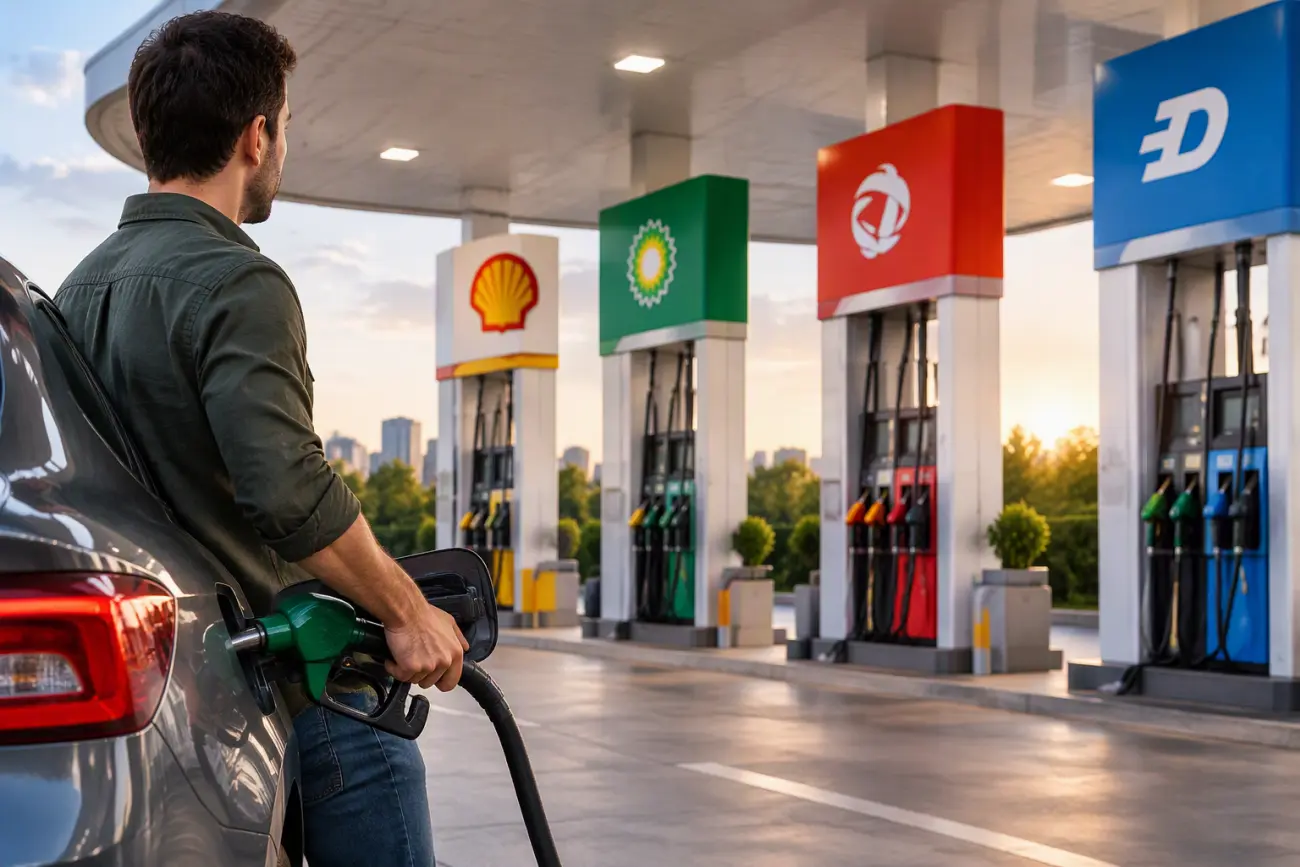
Does the Fuel Brand I Use in My Car Matter?
How much attention do you pay to the fuel station you use? If two gasoline or diesel fuels have the same basic specifications, does that mean they are exactly the same?
The answer is a little more complicated than simply looking at the brand name on the station.
Fuel quality can be affected by several factors, including the source of the fuel, storage conditions, the condition of the station's tanks, how long the fuel has been stored, and the additive package used by the fuel supplier.
So, does the fuel brand really matter? Yes, but the brand itself is only one part of the picture.
Does the Fuel Brand Really Make a Difference?
Fuel sold for road vehicles must meet the applicable technical and legal requirements. Therefore, fuels of the same type from different major brands are not completely different products.
For example, if your vehicle is designed to run on a particular unleaded gasoline specification, using fuel that meets that specification from another reputable station does not automatically mean that the fuel will harm the engine.
However, this does not mean that every fuel station provides exactly the same conditions.
The important differences can occur in areas such as fuel storage, tank maintenance, contamination control, fuel turnover, and additive packages.
Why Can Fuel Differ Between Brands?
The basic fuel product has to comply with the required specifications. Fuel companies can then use different additive packages designed to provide additional characteristics.
Depending on the product, additives may be intended to:
-
Help keep fuel injectors clean
-
Reduce deposit formation
-
Support fuel-system cleanliness
-
Provide corrosion protection
-
Improve fuel-system cleanliness over time
However, a fuel advertised as premium, enhanced, or specially formulated does not automatically mean that it will produce significantly more power.
The effect of a particular additive package can vary depending on the engine, its condition, the fuel already present in the system, and the vehicle's operating conditions.
Fuel Storage Is Extremely Important
A well-known fuel brand does not automatically guarantee that every individual station is operating under perfect conditions.
Fuel is stored in underground or above-ground tanks, and the condition of those tanks matters.
Over time, tanks can accumulate:
-
Water
-
Sediment
-
Rust
-
Sludge
-
Other particles
Under normal conditions, material accumulated at the bottom of a tank may not reach the vehicle. However, poor tank maintenance or disturbances inside the tank can increase the possibility of contamination.
Fuel deliveries can also disturb sediment that has accumulated at the bottom of a storage tank. Proper tank maintenance and fuel-handling procedures are therefore important.
Does Fuel Storage Time Matter?
Yes.
Fuel that remains stored for a long period can undergo changes, particularly when storage conditions are not ideal.
Gasoline can undergo oxidation over time, which can affect its properties. Diesel fuel can also experience problems during prolonged storage, particularly when water contamination or microbial growth is involved.
This is one reason why fuel turnover can matter. A busy station where fuel is regularly replenished may have a different storage pattern from a station where fuel remains in the tanks for long periods.
This does not mean that a busy station is automatically better. It simply means that fuel turnover is one of the factors that can influence fuel condition.
Why Does Station Maintenance Matter?
Fuel quality is not determined only by the fuel itself.
The condition of the dispensing equipment, storage tanks, filters, fuel pumps, and general station infrastructure can also matter.
If water or particulate contamination enters the fuel system, the vehicle's fuel filter may catch some of it, but excessive contamination can still create problems.
Modern engines can be particularly sensitive to fuel-system contamination. High-pressure direct-injection gasoline engines and common-rail diesel engines operate with highly precise fuel systems, making cleanliness especially important.
Why Does Octane Matter in Gasoline?
For gasoline engines, one of the most important fuel characteristics is octane rating.
Octane rating describes a gasoline's resistance to auto-ignition under the pressure and temperature conditions inside an engine.
For example, it is not technically correct to say that 98-octane fuel is simply "better" than 95-octane fuel in every vehicle.
If an engine is designed to operate properly on 95-octane gasoline, using 98-octane fuel does not automatically produce a noticeable increase in power.
Some modern engines can adjust ignition timing according to the fuel's octane characteristics. In such cases, the engine may be able to take advantage of higher-octane fuel under certain operating conditions.
However, the actual benefit depends entirely on the engine's design and calibration.
Higher octane does not automatically mean more horsepower.
What Matters in Diesel Fuel?
Diesel fuel is evaluated using different characteristics from gasoline.
One important parameter is cetane number, which is related to the fuel's ignition characteristics under compression.
For diesel engines, factors such as:
-
Cetane characteristics
-
Cleanliness
-
Water contamination
-
Filterability
-
Additive package
-
Storage conditions
can all be important.
Modern common-rail diesel systems are particularly sensitive to fuel contamination because the high-pressure pump and injectors operate under demanding conditions and very tight tolerances.
Is More Expensive Fuel Always Better?
No.
A higher price alone does not prove that a particular fuel is better for your engine.
Premium fuels may contain different additive packages and may be marketed with additional performance or cleanliness benefits. However, there is no universal rule that every vehicle will experience a significant improvement simply by switching to a more expensive fuel.
Some engines may respond differently to different fuel formulations, while other vehicles may show virtually no noticeable difference in everyday driving.
Can Additive-Enhanced Fuel Clean the Engine?
Fuel additives can help reduce certain types of deposits and support fuel-system cleanliness, but expectations should remain realistic.
A fuel additive cannot be expected to completely clean an engine that has accumulated serious deposits over a long period.
Different parts of an engine can develop deposits for different reasons. Fuel injectors, intake valves, combustion chambers, and other components may require different maintenance procedures.
Therefore, claims that a particular fuel will "completely clean your engine" should be treated cautiously.
What If the Car Develops a Problem After Refueling?
Sometimes a driver notices a change in vehicle behavior shortly after refueling.
Possible symptoms can include:
-
Engine hesitation
-
Rough idling
-
Loss of power
-
Difficult starting
-
Check engine light
-
Increased fuel consumption
-
Fuel-pressure-related problems
-
Injector-related symptoms
Poor or contaminated fuel can be one possible cause.
However, timing alone does not prove that the fuel caused the problem.
The same symptoms can be caused by ignition problems, air-fuel mixture issues, sensors, injectors, fuel-pressure problems, or other mechanical and electronic faults.
Proper diagnosis is therefore important.
What Should You Do If a Problem Starts After Refueling?
If a problem begins immediately after refueling, keep the fuel receipt if possible.
It is useful to record:
-
The fuel station
-
The pump used
-
The type of fuel
-
The time of refueling
-
The amount of fuel purchased
If the engine is running very poorly, is difficult to start, or shows serious fuel-system symptoms, continuing to drive the vehicle may not be advisable.
A workshop can inspect the vehicle and, when necessary, take a fuel sample for further analysis.
Why Is the Fuel Filter So Important?
The fuel filter protects the fuel system by trapping particles and, depending on the design, separating water from the fuel.
This is particularly important on diesel vehicles.
A severely contaminated or overdue fuel filter can:
-
Restrict fuel flow
-
Affect fuel pressure
-
Reduce engine performance
-
Cause difficult starting
-
Increase the stress on fuel-system components
For this reason, maintaining the fuel filter is just as important as choosing a reputable fuel source.
Do I Need to Always Use the Same Fuel Brand?
No.
If the fuel meets the specification required by your vehicle manufacturer, changing from one reputable fuel brand to another does not normally create a problem simply because the brand is different.
However, consistently using a reliable station can make it easier to monitor your vehicle.
If you normally refuel at the same station and suddenly notice an unusual change in engine behavior or fuel consumption, you have a clearer reference point for investigating the problem.
The important factors are not simply the logo on the station. Reliable fuel handling, proper storage, correct fuel specification, and good vehicle maintenance are more important.
Can the Wrong Fuel Be Put Into a Station's Tank?
Fuel stations use separate storage systems for different fuel products. However, operational mistakes can occur, such as putting the wrong product into the wrong storage tank.
Mixing gasoline and diesel can have serious consequences for vehicles.
This is another reason why proper fuel handling and station operating procedures matter.
Why Can a Car Feel Different After Changing Fuel Brands?
Some drivers report that their vehicle feels smoother, quieter, or more responsive after changing fuel brands.
There can be several possible explanations.
Different fuels may have different additive packages or slightly different characteristics within the applicable specification. However, driving conditions can have an equally significant effect on how a vehicle feels.
Traffic, ambient temperature, tire pressure, engine temperature, driving style, road conditions, and even the amount of fuel in the tank can influence fuel consumption and perceived performance.
For this reason, comparing one tank of fuel with another does not necessarily provide a reliable conclusion.
A meaningful comparison requires similar driving conditions over a sufficiently long distance.
Which Fuel Is Best for Your Car?
The best starting point is always the vehicle manufacturer's recommendation.
The owner's manual should be checked for the required fuel type and specification.
For gasoline engines, this may include the minimum recommended octane rating. For diesel engines, the manufacturer may specify particular fuel standards or requirements.
Using a fuel that meets the manufacturer's requirements is more important than choosing a fuel simply because it has a higher advertised specification.
What Should You Look for When Choosing a Fuel Station?
Instead of focusing only on the price per liter or the brand name, consider several factors together.
Choose stations that appear well maintained and have good fuel turnover.
Use the fuel type and specification recommended for your vehicle.
Be cautious about stations where fuel storage and general maintenance conditions appear questionable.
If the vehicle develops unusual symptoms immediately after refueling, do not ignore them.
Keep fuel receipts, particularly if you suspect a fuel-related problem.
On diesel vehicles, do not neglect fuel-filter maintenance.
Most importantly, do not assume that changing fuel brands is a substitute for proper diagnosis when the vehicle has a mechanical or electronic fault.
So, Does Fuel Brand Matter?
The fuel brand does matter to some extent, but focusing only on the brand name gives an incomplete picture.
Fuel sold by reputable companies must meet applicable fuel standards, while differences can exist in additive packages, station maintenance, tank condition, storage time, and contamination control.
For most drivers, the more useful question is not simply "Which fuel brand is the best?"
A better question is:
"Am I using the correct fuel specification for my vehicle and buying it from a reliable, properly maintained station?"
If your vehicle consistently operates normally with fuel from a reputable station and the fuel meets the manufacturer's requirements, there is usually no need to change brands simply because another company sells a more expensive or more heavily advertised product.
When it comes to fuel, three things matter most: using the correct fuel, buying it from a reliable source, and maintaining the vehicle's fuel system properly.