TR
TR EN
EN

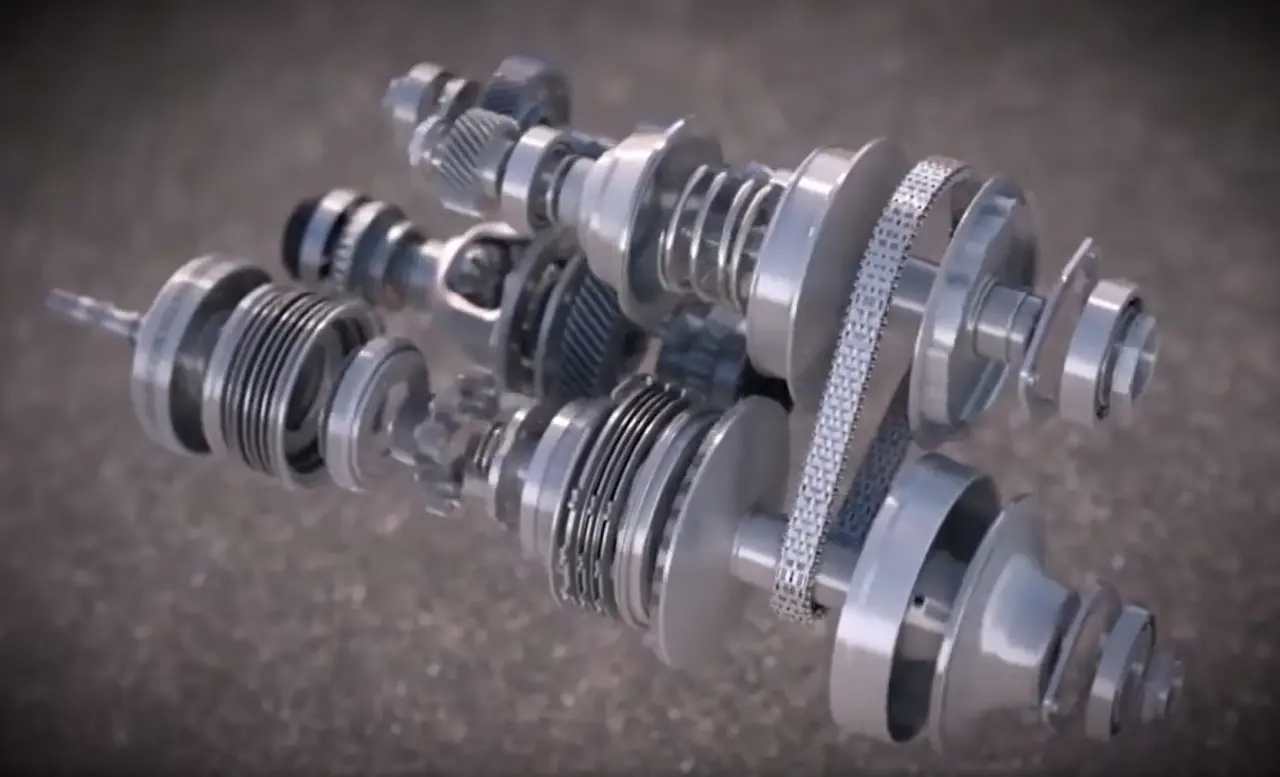
What Is an IVT (Intelligent Variable Transmission)?
Automatic transmission technology has developed significantly over the years. One of the technologies designed to eliminate traditional fixed gear changes is the continuously variable transmission, commonly known as CVT.
IVT stands for Intelligent Variable Transmission. It can be described as an intelligent continuously variable transmission system that uses continuously changing transmission ratios together with advanced electronic control strategies.
The basic mechanical principle of an IVT is closely related to CVT technology. Instead of shifting between fixed gears such as first, second, third and fourth gear, the transmission can continuously adjust the ratio between the engine and the driven wheels.
The objective is to keep the engine operating at an appropriate speed according to the driving conditions.
The transmission can consider factors such as vehicle speed, accelerator-pedal position, engine speed, engine load and road conditions when determining the appropriate transmission ratio.
For this reason, an IVT should not simply be thought of as an automatic transmission without gears. It is a continuously variable transmission system whose behavior is controlled electronically according to driving conditions.
How Does an IVT Transmission Work?
To understand an IVT, it is useful to first understand the basic principle behind a CVT.
A conventional automatic transmission uses a number of fixed gear ratios. When the vehicle accelerates, the transmission changes from one gear ratio to another.
An IVT works differently.
Instead of relying on a limited number of fixed ratios, it can continuously change the transmission ratio between the engine and the wheels.
For example, when the vehicle is cruising at a steady speed, the system can select a ratio that allows the engine to operate at a relatively low and efficient RPM.
When the driver presses the accelerator more aggressively, the transmission can change the ratio and allow the engine to move into a higher RPM range where it can produce more power.
The ratio can then continue to change as the vehicle accelerates.
What Is the Difference Between IVT and CVT?
IVT and CVT are closely related technologies.
CVT is the general term used for a continuously variable transmission. IVT, or Intelligent Variable Transmission, refers to a continuously variable transmission system combined with specific control strategies and software.
The main difference is therefore not necessarily a completely different mechanical transmission design.
Instead, the way the transmission is controlled can be different.
Hyundai and Kia, for example, have used the IVT designation for their continuously variable transmission systems and have developed specific software and control strategies to influence the transmission's behavior.
For this reason, it would be misleading to describe every IVT as a completely separate transmission technology unrelated to CVT.
The IVT concept is fundamentally based on continuously variable transmission technology.
Does an IVT Transmission Have Gears?
An IVT does not need traditional fixed gears in the same way as a conventional automatic transmission.
There is no need for the transmission to mechanically shift from first gear to second gear, then third gear and so on.
Instead, the transmission ratio changes continuously.
However, some IVT systems can simulate gear changes electronically.
The transmission may be programmed with virtual ratio steps to create a more familiar driving sensation.
In that situation, the driver may feel what appears to be a gear change during acceleration.
These simulated steps should not be confused with the fixed mechanical gears used in a traditional automatic transmission.
How Do the Pulleys and Belt Work in an IVT?
The basic mechanical system of an IVT commonly includes two variable-diameter pulleys connected by a high-strength steel belt or similar metallic transmission element.
One pulley is connected to the engine side, while the other transfers power toward the driven wheels.
The effective diameter of each pulley changes as the transmission operates.
By changing these diameters, the transmission can continuously change the ratio between engine speed and wheel speed.
At low vehicle speeds, the system can select a ratio that provides stronger acceleration.
As the vehicle accelerates, the ratio can gradually change to reduce engine RPM while allowing vehicle speed to continue increasing.
This is one of the fundamental characteristics that separates an IVT from a conventional stepped automatic transmission.
How Does an IVT Behave When Starting From a Stop?
When a vehicle is stationary, the engine and wheels are operating at very different speeds.
The transmission therefore needs a mechanism that allows the vehicle to start moving smoothly while controlling the transfer of engine torque.
Depending on the particular design, an IVT can use a torque converter or another starting mechanism.
When the driver releases the brake and applies the accelerator, the system gradually transfers torque to the drivetrain.
This is one reason why the initial driving sensation of an IVT can feel different from that of a traditional automatic transmission.
What Is the Main Advantage of an IVT?
One of the main advantages of an IVT is its ability to keep the engine operating within a suitable RPM range.
With a conventional automatic transmission, the available gear ratios determine how engine speed changes as the vehicle accelerates.
An IVT has much greater freedom to adjust the transmission ratio.
During steady-speed driving, for example, it can reduce engine RPM when high engine speed is no longer necessary.
This can improve efficiency and potentially reduce fuel consumption.
Does an IVT Improve Fuel Economy?
Improving efficiency is one of the main reasons continuously variable transmission technology is used.
When the vehicle is cruising, an IVT can select a transmission ratio that allows the engine to operate at an efficient speed.
Instead of being limited by a fixed gear ratio, the transmission can continuously adjust the ratio as road and load conditions change.
However, fuel economy does not depend on the transmission alone.
Engine design, vehicle weight, aerodynamics, tires, driving style, traffic and road conditions all have a significant influence on fuel consumption.
Therefore, it would be incorrect to assume that every vehicle equipped with an IVT will automatically consume less fuel than every conventional automatic vehicle.
How Does an IVT Accelerate?
The acceleration behavior of an IVT can feel unusual to someone who has only driven conventional automatic transmissions.
When the driver presses the accelerator firmly, the transmission can allow the engine to move quickly into a higher RPM range where it can produce more power.
Instead of immediately shifting through a series of fixed gears, the transmission continuously changes its ratio while the vehicle keeps accelerating.
As a result, the engine RPM can remain relatively stable for a period while vehicle speed continues to increase.
This is sometimes described by drivers as the engine "holding its RPM."
In reality, the transmission is continuously changing its ratio rather than shifting between traditional gears.
Why Does the Engine RPM Sometimes Stay Nearly Constant?
This is a normal characteristic of continuously variable transmission technology.
With a conventional automatic transmission, engine RPM rises during acceleration until the transmission shifts into a higher gear. Engine RPM then drops before rising again.
An IVT can instead keep the engine near a particular operating point while continuously changing the transmission ratio.
For example, when the driver presses the accelerator, the engine may quickly rise to a certain RPM and remain there while the vehicle continues to accelerate.
The engine sound can therefore change differently from the vehicle's actual speed.
This behavior can feel strange at first, but it is a direct result of the transmission's continuously variable design.
What Are the Advantages of an IVT Transmission?
IVT technology offers several potential advantages.
Continuously variable transmission ratio
Instead of being limited to a small number of fixed gears, the transmission can select a wide range of ratios continuously.
Lower engine RPM during cruising
The system can reduce engine speed when high RPM is unnecessary, particularly during steady-speed driving.
Potential fuel-efficiency benefits
Keeping the engine closer to an efficient operating range can help reduce fuel consumption under suitable driving conditions.
Smooth acceleration
Because there are no conventional gear changes, acceleration can feel smoother and more continuous.
Comfortable city driving
The absence of frequent traditional gear changes can make stop-and-go driving feel smoother.
Are There Any Disadvantages to an IVT?
Like every transmission technology, IVT also has some characteristics that may not appeal to every driver.
The most noticeable difference is often the driving sensation.
A driver accustomed to a conventional automatic transmission may find it unusual when the engine RPM rises and then remains relatively steady while the vehicle continues accelerating.
The mechanical and hydraulic components also require proper maintenance.
Depending on the specific design, the system can include pulleys, a steel belt, bearings, hydraulic pressure controls, valve components and electronic control systems.
Wear or failure in any of these areas can affect transmission operation.
Is an IVT Transmission Reliable?
The reliability of an IVT cannot be determined simply by looking at the transmission type.
Its durability depends on factors such as component design, manufacturing quality, engine torque, software calibration, operating conditions and maintenance history.
Using the correct transmission fluid and following the manufacturer's maintenance procedures are particularly important.
Excessive heat, severe operating conditions, incorrect fluid and neglecting scheduled maintenance can increase the risk of transmission problems.
Does an IVT Need Transmission Fluid Changes?
The correct transmission fluid is extremely important in an IVT system.
The fluid does more than lubricate the transmission.
It also contributes to hydraulic control and helps the transmission maintain the appropriate friction characteristics between the pulleys and the belt.
For this reason, conventional automatic transmission fluid should not automatically be considered suitable for an IVT.
Using the wrong fluid can affect hydraulic pressure control and the way power is transferred through the pulley-and-belt system.
The exact fluid specification recommended by the vehicle manufacturer should always be followed.
What Are the Symptoms of an IVT Transmission Problem?
An IVT transmission problem can produce several different symptoms.
Shuddering or vibration during acceleration
Vibration during takeoff or at low speeds can indicate a problem that requires further inspection.
Engine RPM rising without a corresponding increase in speed
If engine speed increases significantly while vehicle acceleration is weak, the transmission should be checked.
Delayed vehicle movement
A noticeable delay between selecting a driving position and the vehicle beginning to move can indicate a transmission-related problem.
Unusual whining or mechanical noises
New or abnormal sounds coming from the transmission should not be ignored.
Excessive transmission temperature
Abnormally high transmission temperatures can be associated with fluid, cooling or internal transmission problems.
Warning lights
If the control system detects a fault, the vehicle may illuminate a warning light and store diagnostic trouble codes.
These symptoms do not automatically mean that the entire transmission needs to be replaced. Proper diagnosis should be carried out before expensive repairs are considered.
How Should You Drive an IVT Vehicle?
Proper driving habits can help reduce unnecessary stress on the transmission.
The vehicle should be brought to a complete stop before changing between forward and reverse.
For example, selecting reverse while the vehicle is still moving forward can place unnecessary stress on the drivetrain.
When stopped on an incline, the brake should be used to hold the vehicle rather than using the accelerator to keep it stationary.
Heavy loads, extreme temperatures and prolonged severe driving conditions can also increase the importance of transmission temperature and maintenance.
The manufacturer's procedure should always be followed when checking transmission fluid level or condition.
Why Is IVT Maintenance Important?
An IVT contains several components that have to work together precisely.
Degraded fluid, incorrect hydraulic pressure or wear in the pulley-and-belt system can gradually develop into more serious problems.
Maintenance therefore involves more than simply replacing fluid.
Depending on the vehicle, technicians may also need to inspect fluid leaks, operating temperature, stored diagnostic trouble codes and hydraulic system performance.
When purchasing a used IVT vehicle, maintenance records and transmission history can provide valuable information about how the transmission has been treated.
Is an IVT Difficult to Get Used To?
Drivers switching from a traditional automatic transmission usually notice the different acceleration behavior immediately.
A conventional automatic transmission typically feels like this:
Acceleration → engine RPM rises → transmission shifts → engine RPM drops → acceleration continues
An IVT behaves more like this:
Accelerator input → engine moves to an appropriate RPM → transmission ratio changes continuously → vehicle continues accelerating
Because of this, the engine sound may change in a way that does not correspond directly to vehicle speed.
After some time behind the wheel, most drivers can become familiar with this characteristic.
Who Is an IVT Suitable For?
IVT technology can be particularly useful in vehicles designed for everyday driving, urban traffic and comfort.
The ability to continuously adjust the transmission ratio can provide smooth acceleration and allow the engine to operate efficiently under many driving conditions.
However, vehicles that are regularly subjected to heavy loads, high temperatures or demanding driving conditions must still be operated within the transmission's specified limits.
The most important thing to understand about IVT is that it is not simply a traditional automatic transmission with a different name.
Its mechanical principle is based on continuously variable transmission technology, while its electronic controls and software determine how the system responds to different driving situations.
Rather than thinking of an IVT as a transmission that constantly "changes gears," it is more accurate to think of it as an intelligent automatic transmission that continuously adjusts the relationship between engine speed and wheel speed.
That ability allows the engine to operate closer to an appropriate efficiency or power range while the transmission continuously adapts to vehicle speed, accelerator input and driving conditions.
This is the fundamental idea behind the Intelligent Variable Transmission.