TR
TR EN
EN

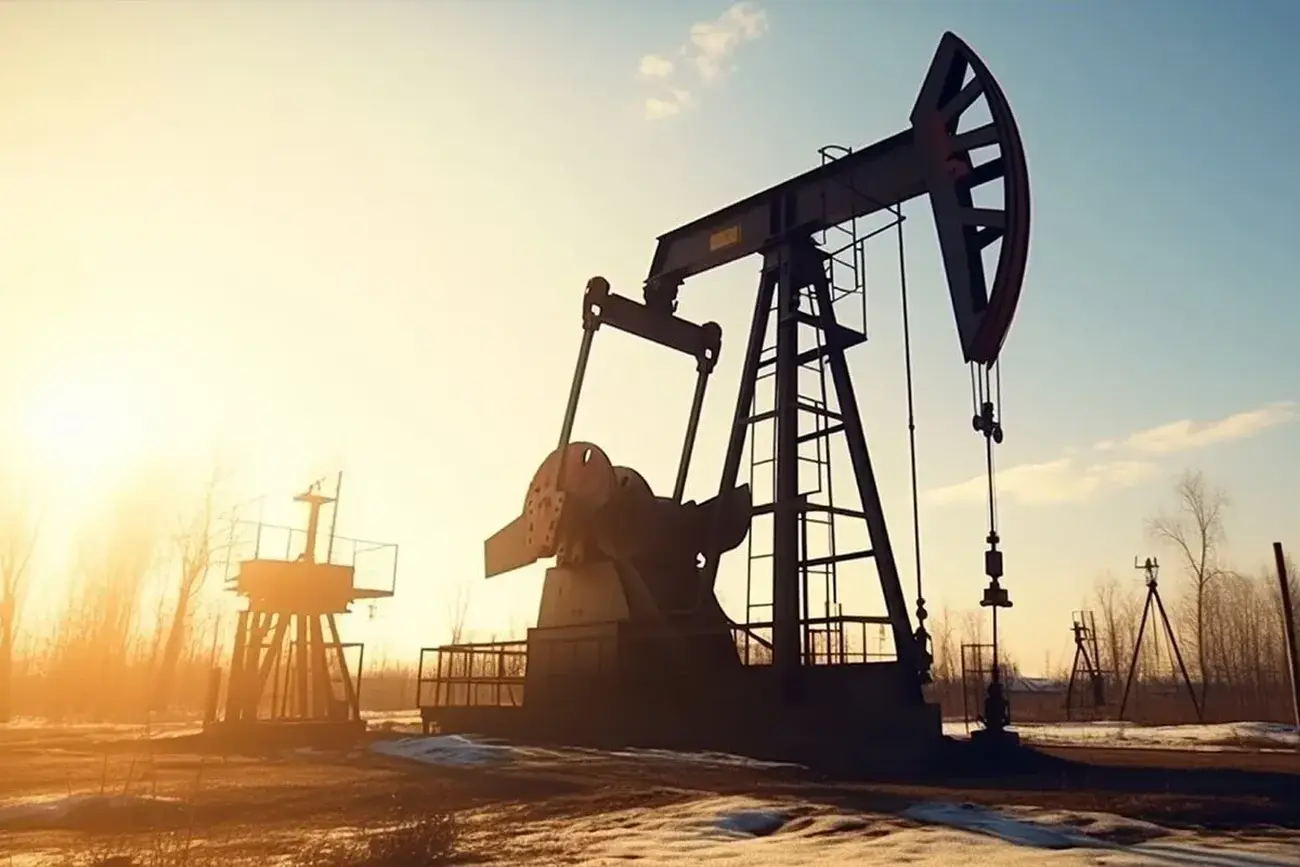
The Discovery and History of Oil Around the World
Today, oil is part of almost every aspect of modern life. It powers cars, trucks, ships and aircraft, provides raw materials for countless industrial products, and plays an important role in the production of plastics, chemicals, lubricants and asphalt.
Yet oil is not a resource that humanity discovered only a few centuries ago.
People have known about naturally occurring oil and bitumen for thousands of years. In some parts of the world, crude oil naturally seeped to the surface, where ancient civilizations collected and used it for construction, waterproofing, lighting, medicine and even warfare.
What changed during the 19th century was not the discovery of oil itself, but the development of methods to drill for it, produce it commercially, refine it and transport it on a large scale.
From that point onward, oil gradually became one of the most important resources in human history.
What Is Oil and Why Did It Become So Important?
Crude oil is a naturally occurring mixture of hydrocarbons formed over millions of years from ancient organic matter subjected to heat and pressure beneath the Earth's surface.
Crude oil is not normally used in its raw form. It is transported to refineries, where it is separated and processed into different products.
These include gasoline, diesel fuel, jet fuel, fuel oil, lubricants, asphalt and numerous petrochemical feedstocks.
This ability to produce many different products from a single raw material is one of the main reasons oil became so valuable.
Its importance, however, did not appear overnight.
For thousands of years, oil was simply a naturally occurring substance that people collected where it emerged from the ground.
The Earliest Uses of Oil
The history of oil begins long before the modern petroleum industry.
Natural oil and bitumen seepages existed in several parts of the ancient world. One of the most important regions was Mesopotamia, particularly the area around present-day Iraq.
Ancient civilizations used bitumen because of its waterproofing and adhesive properties. It could be used in construction, on boats and in other applications where resistance to water was important.
The ancient world also discovered another useful property of petroleum: it could burn.
Naturally occurring oil therefore became useful as a fuel and as a component of combustible materials.
At this stage, however, nobody was drilling thousands of meters into the ground looking for underground reservoirs. People simply collected what nature exposed at the surface.
Oil in Ancient China
Ancient China was another important part of the early history of petroleum.
Chinese engineers developed remarkably advanced drilling techniques for their time. They drilled wells to access underground resources, particularly saltwater and natural gas, and eventually petroleum as well.
Bamboo was used in some of these systems to transport fluids and gases from underground.
Historical evidence shows that China was producing and using petroleum and natural gas centuries before the beginning of the modern petroleum industry.
These developments are important because they demonstrate that drilling for underground resources did not begin in the 19th century.
What changed later was the scale, technology and economic purpose of drilling.
Oil in the Middle East and Mesopotamia
The Middle East has been associated with petroleum for thousands of years.
Natural oil and bitumen seepages were common in parts of the region, particularly around Mesopotamia and Persia.
Because bitumen could be used for waterproofing and construction, it had considerable practical value.
Oil was also used in various military applications. Naturally occurring petroleum could be incorporated into incendiary materials, and petroleum-based substances became associated with some of the combustible weapons used in the ancient and medieval world.
The region's geological wealth would eventually become one of the most important factors in the development of the modern global oil industry.
The Oil Fields of Baku
One of the oldest and most historically significant oil-producing regions in the world is Baku, on the Absheron Peninsula near the Caspian Sea.
Oil and natural gas naturally reached the surface in this region, creating unusual landscapes and even naturally burning areas.
For centuries, local populations collected and used the petroleum that emerged from the ground.
By the 19th century, Baku was developing into one of the world's major oil-producing centers.
This is an important part of petroleum history because it shows that the development of the modern oil industry was not limited to the United States.
Large-scale petroleum production was developing in several parts of the world at roughly the same time.
The Rise of Modern Oil Production
The transformation of petroleum from a naturally occurring material into a global industry accelerated during the 18th and 19th centuries.
The Industrial Revolution dramatically increased the world's demand for energy.
Factories expanded, railways spread, cities grew and industrial production required increasingly reliable sources of fuel.
At the same time, there was a growing demand for better lighting.
One of the most important products obtained from petroleum during this period was kerosene.
Kerosene could be used in lamps and became an important alternative to traditional lighting fuels.
This created a growing commercial demand for petroleum.
Oil was no longer simply something people collected from natural seepages. It had become a valuable industrial raw material.
The Development of Oil Drilling
The next major challenge was obvious: if oil existed underground, could people deliberately drill for it?
Different attempts were made during the 19th century.
Some early oil wells were relatively shallow, and drilling techniques originally developed for salt wells were adapted for petroleum exploration.
The development of drilling technology changed everything.
Instead of waiting for oil to appear naturally at the surface, companies could search for underground deposits and drill wells directly into them.
This made large-scale production possible.
Edwin Drake and the 1859 Oil Well
One of the most famous events in petroleum history occurred in 1859 in Pennsylvania, United States.
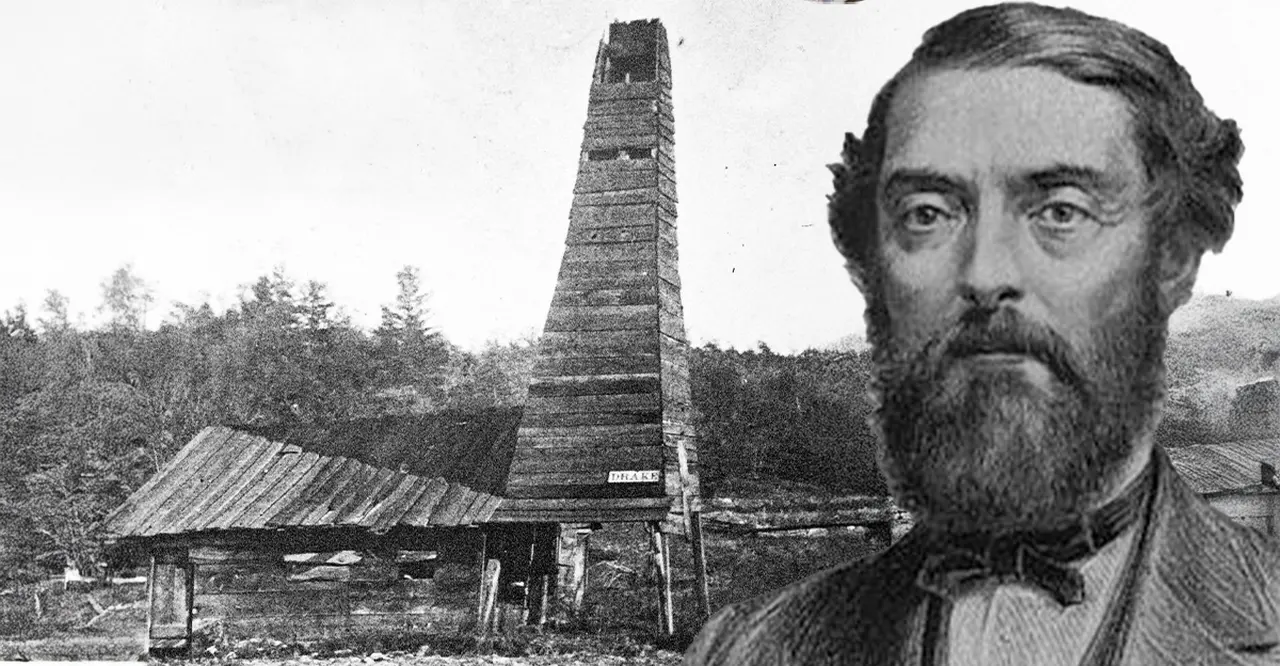
Edwin L. Drake was involved in an effort to find and produce oil near Titusville.
Drake did not discover petroleum itself. People already knew that oil existed in the area.
His historical importance comes from the successful use of drilling to reach underground petroleum and produce it commercially.
On August 27, 1859, Drake's well reached oil at a depth of roughly 69 feet, or about 21 meters.
The success of the well demonstrated that petroleum could be deliberately extracted from underground formations using drilling technology.
The result was enormous.
Oil exploration expanded rapidly throughout Pennsylvania and eventually across the United States.
For this reason, the Drake well is often regarded as one of the founding events of the modern petroleum industry.
The Birth of the Petroleum Industry
Once commercial drilling proved successful, an entirely new industry began to develop.
Oil wells multiplied.
Refineries were built.
Transportation systems were created.
Companies began investing in exploration, production, refining and distribution.
The petroleum business was no longer simply about finding oil. It was becoming an integrated industrial system.
The ability to refine crude oil was particularly important because different fractions could be turned into products with different uses.
At first, kerosene was one of the most valuable petroleum products.
Later, gasoline would become much more important.
John D. Rockefeller and Standard Oil
As the American oil industry expanded, some companies became extremely powerful.
One of the most famous was Standard Oil, associated with John D. Rockefeller.
Standard Oil grew by investing not only in refining but also in transportation, storage and distribution.
The company became one of the most powerful businesses in the American petroleum industry.
Its enormous market influence eventually led to legal and political opposition.
In 1911, the U.S. Supreme Court ruled that Standard Oil violated antitrust laws, leading to its breakup into several separate companies.
The descendants of some of those companies later became major names in the global petroleum industry.
The Automobile Changes Everything
The petroleum industry was already growing before the automobile became widespread.
But the automobile transformed the oil business on an entirely different scale.
The development of the internal combustion engine created a huge new market for gasoline.
As automobile production expanded, so did fuel consumption.
Henry Ford's use of mass production and the success of the Model T helped make automobiles accessible to a much larger portion of the population.
More cars meant more gasoline.
This gradually changed the structure of the petroleum industry.
Kerosene had once been one of the industry's most important products because of its use in lighting.
Now gasoline was becoming increasingly valuable because it powered the rapidly expanding automobile industry.
Spindletop and the Texas Oil Boom
Another major turning point occurred in Texas.
On January 10, 1901, the Spindletop oil field near Beaumont produced a spectacular oil gusher.
The discovery demonstrated that Texas possessed enormous petroleum resources and triggered a massive expansion of oil exploration.
New companies were established, new wells were drilled and new infrastructure was built.
Texas eventually became one of the world's most important oil-producing regions.
The discovery also contributed to the rapid development of the American petroleum industry during the early 20th century.
Oil Becomes a Strategic Resource
By the beginning of the 20th century, oil was no longer simply an industrial commodity.
It was becoming a strategic resource.
The growing use of automobiles, trucks, ships and aircraft meant that modern economies and militaries increasingly depended on petroleum products.
This became especially clear during the First World War.
Armies were becoming increasingly mechanized, and fuel was essential for tanks, trucks, aircraft and naval vessels.
The strategic importance of petroleum continued to grow during the Second World War.
Control over oil supplies and transportation routes became an important element of national security and international politics.
The Beginning of the Middle Eastern Oil Era
While the American petroleum industry was expanding, another major transformation was taking place in the Middle East.
Large oil reserves were discovered in Persia, later Iran, during the early 20th century.
A major commercial discovery was made at Masjed Soleyman in 1908.
This discovery marked the beginning of a new era for the region.
Oil exploration expanded into Iraq, Kuwait, Saudi Arabia and other parts of the Persian Gulf.
The enormous reserves discovered in these areas would eventually make the Middle East the center of the global petroleum system.
Oil in Saudi Arabia
Saudi Arabia became one of the most important oil-producing countries in the world after commercial quantities of oil were discovered in 1938.
The discovery transformed the country's economy.
Over the following decades, increasingly large oil fields were developed, turning Saudi Arabia into one of the world's leading oil producers and exporters.
Oil revenues helped finance enormous changes in infrastructure, urban development and industrialization.
The economic transformation of Saudi Arabia is one of the clearest examples of how petroleum could reshape an entire country.
Oil and the Second World War
By the time of the Second World War, petroleum had become essential to modern warfare.
Aircraft needed aviation fuel.
Tanks and military vehicles needed gasoline and diesel.
Naval fleets increasingly relied on petroleum-based fuels.
As a result, access to oil supplies became an important strategic consideration during the war.
The conflict demonstrated something that would remain true for decades afterward: a modern industrial economy could not easily operate without a reliable energy supply.
The Growth of Global Oil Companies
After the Second World War, global petroleum consumption increased dramatically.
Automobile ownership expanded.
Air travel grew rapidly.
Road networks expanded.
Industrial production increased.
Petroleum companies consequently expanded their operations around the world.
Large companies became involved in exploration, drilling, production, refining, transportation and marketing.
Pipelines connected oil fields with refineries and ports.
Large tankers transported crude oil across oceans.
The petroleum industry had become truly global.
The Creation of OPEC
As petroleum-producing countries became more aware of the economic importance of their natural resources, they sought greater control over the oil industry.
In 1960, Iran, Iraq, Kuwait, Saudi Arabia and Venezuela established the Organization of the Petroleum Exporting Countries, known as OPEC.
The organization gave major oil-producing countries a mechanism for coordinating their petroleum policies.
Over time, OPEC became one of the most influential organizations in the global oil market.
The balance of power in the petroleum industry was changing.
Oil-producing governments were becoming increasingly important alongside the large international oil companies.
The 1973 Oil Crisis
One of the most important events in modern oil history occurred in 1973.
Arab oil-producing countries imposed an oil embargo on countries supporting Israel during the Yom Kippur War.
The disruption caused a major shock to the global oil market.
Oil prices rose sharply, and many oil-importing countries experienced serious economic difficulties.
The crisis demonstrated just how dependent modern economies had become on petroleum.
It also encouraged governments to reconsider energy security, fuel efficiency and alternative energy sources.
Strategic petroleum reserves became more important, and many countries began looking for ways to reduce their dependence on imported oil.
Oil Prices and Market Volatility
Oil has always been a volatile commodity.
Its price can be influenced by many different factors, including global economic growth, production levels, wars, political decisions, technological developments and changes in demand.
During periods of strong economic growth, demand for oil can increase rapidly.
On the other hand, economic recessions can reduce demand.
Supply disruptions can have an equally dramatic effect.
This is why the history of oil is also a history of boom-and-bust cycles.
The Development of Offshore Oil
As easily accessible oil fields became increasingly developed, the industry began looking for petroleum in more challenging environments.
One of the most important developments was offshore drilling.
Oil companies learned how to explore beneath the seabed and construct large offshore production platforms.
These systems allowed petroleum to be extracted from fields located far from land.
Offshore production eventually became an important part of global oil supply.
At the same time, improvements in seismic exploration, drilling equipment and reservoir engineering made it possible to locate and produce oil more efficiently.
Horizontal Drilling and Hydraulic Fracturing
Another major technological change occurred with the development of horizontal drilling and hydraulic fracturing.
These techniques made it possible to economically produce oil and natural gas from certain rock formations that had previously been considered difficult or uneconomical to exploit.
The United States experienced a particularly significant increase in oil and natural gas production as these technologies improved.
The resulting growth in U.S. production had major effects on global energy markets.
It was another reminder that technological innovation can change the economics of natural resources.
Oil Is More Than Gasoline
When people hear the word “oil,” they often think about gasoline or diesel.
But the importance of petroleum goes far beyond transportation.
Refineries produce a wide range of products from crude oil.
These include gasoline, diesel, jet fuel, lubricants, asphalt and various petrochemical feedstocks.
Petroleum and natural gas are also important raw materials for the petrochemical industry.
Many plastics, synthetic materials, chemicals, paints, solvents, synthetic rubber products and industrial materials are produced using petroleum- or natural-gas-derived feedstocks.
This is why oil remains important even as transportation gradually begins to move toward other energy technologies.
Major Oil Spills and Environmental Concerns
The growth of the petroleum industry has also created significant environmental challenges.
Oil spills from tankers, pipelines and offshore platforms can cause serious damage to marine and coastal ecosystems.
Some accidents have become major historical events.
The 1989 Exxon Valdez spill in Alaska and the 2010 Deepwater Horizon disaster in the Gulf of Mexico are two of the most widely known examples.
These incidents increased public attention to oil industry safety, environmental protection and emergency response systems.
At the same time, the combustion of petroleum products produces greenhouse gas emissions and other pollutants, making the environmental impact of fossil fuels an increasingly important global issue.
Oil and Geopolitics
It is almost impossible to understand modern oil history without considering geopolitics.
Petroleum reserves are not evenly distributed around the world.
Some countries possess enormous reserves, while others depend heavily on imports.
This creates strategic relationships between producing countries, consuming countries and transportation hubs.
Oil pipelines, ports, shipping routes and strategic waterways can therefore be just as important as the oil fields themselves.
Throughout the 20th and 21st centuries, oil has influenced economic policies, international relations and strategic planning in many parts of the world.
The 21st Century and the Changing Role of Oil
The oil industry entered the 21st century facing a different energy landscape.
Renewable energy technologies began expanding rapidly.
Solar and wind power became increasingly competitive.
Electric vehicles started to gain market share.
Battery technology improved.
Governments and industries began paying greater attention to carbon emissions and energy efficiency.
These developments have created questions about the future role of petroleum.
However, the transition away from fossil fuels is not simply a matter of replacing gasoline-powered cars with electric vehicles.
Petroleum is also used in aviation, shipping, petrochemicals, plastics, lubricants, asphalt and numerous industrial applications.
For this reason, the future of oil is likely to involve a gradual change in its role rather than an immediate disappearance.
Was Oil Really Discovered in 1859?
The answer is no.
This is one of the most common misunderstandings about petroleum history.
Oil was known and used thousands of years before 1859.
Ancient civilizations collected natural oil and bitumen.
China developed early drilling techniques.
Baku had a long history of petroleum production.
Petroleum was being commercially produced in different regions before Drake's famous well.
What made 1859 so important was the successful demonstration that oil could be deliberately reached through drilling and produced commercially on a scale that could support a modern industry.
In other words, Edwin Drake did not discover oil.
His well became one of the key milestones in the birth of the modern petroleum industry.
The Long Journey of Petroleum
The history of oil is therefore much older and more complicated than a single discovery.
It began with natural oil seeps that ancient people noticed and used.
It continued with early drilling techniques in places such as China and the development of petroleum production in regions such as Baku.
During the 19th century, improvements in refining, drilling and transportation transformed petroleum into a commercial industry.
The 1859 Drake well helped demonstrate the potential of systematic oil production.
The rise of the automobile created an enormous market for gasoline.
The discovery of giant reserves in the Middle East changed the global balance of petroleum production.
Wars, economic crises and political decisions demonstrated that oil was not simply a commodity but a strategic resource.
Technological developments later allowed the industry to reach deeper, farther offshore and into increasingly complex geological formations.
The Future of an Industry That Changed the World
Oil has played an extraordinary role in shaping the modern world.
It helped transform transportation, accelerated industrial development, supported aviation and maritime trade, and became one of the most important raw materials of modern manufacturing.
At the same time, dependence on petroleum created economic, geopolitical and environmental challenges that continue today.
The world is now moving toward a more diversified energy system in which electricity, renewable energy, batteries and other technologies are becoming increasingly important.
But the history of oil will not simply disappear as the energy system changes.
The roads, vehicles, aircraft, industrial facilities, chemical products and countless technologies that shaped the modern world were all influenced in some way by the age of petroleum.
From ancient oil seeps to modern offshore platforms and advanced drilling systems, the story of oil is ultimately a story of how humanity learned to find, extract, process and use one of the most influential natural resources on Earth.