TR
TR EN
EN

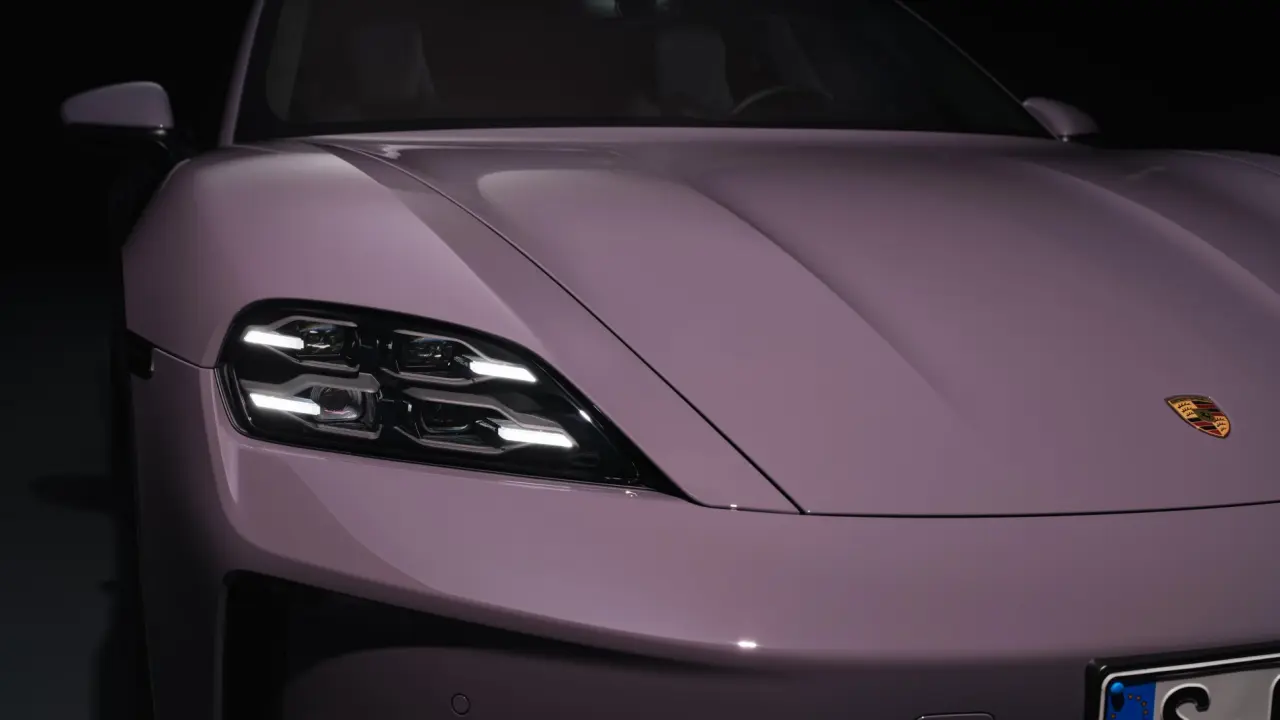
What Is a Matrix LED Headlight?
A Matrix LED headlight is an advanced automotive lighting system designed to provide strong road illumination while automatically controlling different sections of the light beam according to traffic and road conditions.
Unlike a conventional headlight, where the light output is generally controlled as a single beam, a Matrix LED system divides the light into multiple independently controlled LED segments.
This allows the vehicle to illuminate a large portion of the road with high-beam intensity while reducing or switching off the light directed toward specific areas where other vehicles are detected.
In simple terms, the system tries to provide maximum useful illumination with minimum unnecessary glare for other road users.
How Does a Matrix LED Headlight Work?
A Matrix LED headlight contains multiple LED light sources or LED groups. Each segment can be controlled independently or in groups, depending on the design of the system.
When driving on a dark road, the system can activate the high beam.
If the vehicle detects an oncoming car, for example, it can reduce the light output in the area occupied by that vehicle while keeping the high beam active in other parts of the road.
The basic operating sequence can be summarized as:
Camera → Image processing → Detection of vehicles and road conditions → LED segment control → Dynamic light distribution
All of this happens automatically while the vehicle is moving.
What Components Are Used in a Matrix LED System?
A Matrix LED headlight is more than a collection of LEDs. It combines lighting, electronics, optics, software, and vehicle information.
Depending on the vehicle, the system may include:
-
LED light sources
-
LED driver circuits
-
Headlight control modules
-
Forward-facing camera
-
Optical lenses
-
Reflectors or light-guiding elements
-
Cooling components
-
Headlight leveling mechanisms
-
Vehicle network communication
-
Software and control algorithms
The exact configuration differs between manufacturers and models.
Some systems use many individual LEDs to create separate lighting zones, while others use sophisticated optical elements to distribute the light produced by the LEDs.
What Is the Difference Between a Regular LED Headlight and a Matrix LED Headlight?
A regular LED headlight and a Matrix LED headlight are not necessarily the same thing.
LED headlights already provide several advantages over older halogen systems. They can offer efficient illumination, fast response, compact packaging, and greater freedom in headlight design.
However, a conventional LED headlight may have limited control over different areas of the beam.
A Matrix LED system divides the light output into multiple controllable sections.
For example, a conventional automatic high-beam system may switch the entire high beam off when it detects an approaching vehicle.
A Matrix LED system can instead darken only the area occupied by that vehicle while continuing to illuminate the rest of the road with high-beam intensity.
This is one of the defining characteristics of Matrix LED technology.
How Does a Matrix LED Headlight Detect Other Vehicles?
A forward-facing camera is usually one of the most important components of the system.
The camera continuously monitors the road ahead and the electronic control system analyzes the captured images.
Depending on the vehicle, the system may identify:
-
Oncoming vehicles
-
Vehicles traveling in the same direction
-
Road conditions
-
Road geometry
-
Street lighting
-
Other relevant objects
The exact detection algorithms vary between manufacturers.
Some vehicles can also use information from other systems, such as vehicle speed, steering angle, navigation data, or other driver-assistance systems.
Does a Matrix LED Headlight Turn the High Beam Off Completely?
One of the major advantages of Matrix LED technology is that it does not necessarily need to turn the entire high beam off.
Imagine an oncoming vehicle approaching on a dark road.
Instead of switching off the entire high beam, the Matrix LED system can reduce or disable the LED segments covering the area occupied by the approaching vehicle.
The remaining sections of the road can continue to receive strong illumination.
This allows the driver to retain much of the benefit of high-beam lighting while reducing the amount of light directed toward the other driver.
What Is the Main Advantage of Matrix LED Headlights?
The main advantage is the ability to manage road illumination and glare control at the same time.
During nighttime driving, the driver benefits from having as much of the road illuminated as possible.
However, a continuously active high beam can cause significant glare for oncoming traffic or vehicles ahead.
Matrix LED technology attempts to solve this problem by dynamically changing the shape and intensity of the light beam.
The basic principle is:
Illuminate as much of the road as possible + reduce light in areas occupied by other road users.
How Do Matrix LED Headlights Work in Curves?
More advanced Matrix LED systems can also modify the light distribution when the vehicle enters a curve.
The system can use information such as steering angle, vehicle speed, and vehicle movement to adjust the illuminated area.
For example, when the vehicle turns into a right-hand curve, the system may increase illumination toward the area further along the curve.
Some vehicles also use physically movable headlight mechanisms in addition to electronically controlled LED segments.
It is important to understand that not every Matrix LED system has exactly the same cornering-lighting capability.
Some systems change the light distribution electronically, while more advanced systems may also physically redirect part of the headlight.
Can Matrix LED Headlights Still Cause Glare?
The purpose of Matrix LED technology is to reduce unnecessary glare, but it cannot guarantee that glare will never occur.
Performance depends on several factors, including:
-
Camera visibility
-
Weather
-
Road geometry
-
Position of other vehicles
-
Headlight condition
-
Software algorithms
-
Vehicle speed
-
Detection accuracy
Heavy rain, fog, snow, a dirty camera, a dirty headlight lens, sharp curves, hills, and strong roadside lighting can make object detection more difficult.
Therefore, Matrix LED headlights are an advanced driver-assistance system, not a substitute for the driver's attention.
What Sensors Are Used by Matrix LED Headlights?
The exact sensor configuration depends on the manufacturer and vehicle.
The forward-facing camera is usually one of the most important components.
The system may also use information from other vehicle systems, including:
-
Vehicle speed
-
Steering angle
-
Vehicle movement
-
Navigation data
-
Yaw information
-
Brake system information
-
Vehicle network data
Not every Matrix LED system uses all of these inputs.
Are Matrix LED and Adaptive LED Headlights the Same?
These terms are often used interchangeably in everyday conversation, but technically they can describe different things.
Adaptive lighting is a broader concept. It refers to a lighting system capable of changing its light distribution according to driving conditions.
Matrix LED is a specific technology that achieves advanced light control by using multiple LED segments that can be controlled individually or in groups.
Therefore, a Matrix LED headlight can be an adaptive lighting system, but not every adaptive headlight necessarily uses Matrix LED technology.
Why Are Matrix LED Headlights More Expensive?
Matrix LED headlights can be considerably more expensive than conventional lighting systems.
The cost is not simply related to the number of LEDs.
A modern Matrix LED system can contain:
-
Numerous LED elements
-
LED driver electronics
-
Control modules
-
Cameras
-
Specialized optical components
-
Cooling systems
-
Headlight leveling mechanisms
-
Software
-
Complex headlight housings
As a result, replacing a complete Matrix LED headlight after an accident or major failure can be expensive.
What Happens When a Matrix LED Headlight Fails?
Because Matrix LED systems contain numerous electronic and optical components, failures can occur in different ways.
Possible symptoms include:
-
Individual LED segments not working
-
High-beam function becoming unavailable
-
Adaptive lighting function being disabled
-
Headlight leveling problems
-
Communication errors
-
Headlight control module faults
-
Wiring problems
-
Power supply problems
-
Cooling system faults
-
Moisture or water inside the headlight
A failure in a single LED segment may affect only one section of the lighting pattern.
On the other hand, a control module or communication problem may disable a much larger part of the system.
Can a Matrix LED Headlight Be Repaired?
That depends on the design of the vehicle and the manufacturer's service procedures.
Some manufacturers allow individual LED modules, control units, or electronic components to be replaced separately.
Other systems may require replacement of the complete headlight assembly.
For this reason, replacing the entire headlight should not always be the first diagnostic step.
The source of the problem should first be identified.
The fault could originate from:
-
LED module
-
Control module
-
Wiring
-
Power supply
-
Ground connection
-
Communication network
-
Camera
-
Software
-
Internal electronics
Proper diagnosis can prevent an unnecessarily expensive headlight replacement.
Why Do Matrix LED Headlights Need Cooling?
LEDs are generally more efficient than traditional incandescent light sources, but they still generate heat.
The LED chips and electronic driver circuits produce heat during operation.
Excessive temperature can negatively affect LED performance, service life, and electronic reliability.
For this reason, advanced LED headlights can use:
-
Heat sinks
-
Metal heat spreaders
-
Cooling structures
-
Fans
-
Other thermal management solutions
The exact cooling method depends on the headlight design.
A cooling problem can become particularly important during prolonged operation because thermal stress can affect both the LEDs and their electronic control components.
Why Is Headlight Cleanliness Important?
Matrix LED headlights rely on precise optical control.
Dirt, mud, ice, or water droplets on the outer lens can distort the light distribution and reduce the amount of useful light reaching the road.
Moisture or water entering the headlight can also damage optical and electronic components.
If the vehicle uses a camera that monitors the road ahead, keeping the camera area clean is equally important.
A contaminated camera can make it more difficult for the system to correctly identify vehicles and other objects.
Advantages of Matrix LED Headlights
The main advantages include:
-
Improved nighttime road illumination
-
More effective use of high-beam lighting
-
Reduced light directed toward detected vehicles
-
Dynamic illumination of the road ahead
-
Improved lighting through curves on compatible systems
-
Fast LED response
-
Precise control of different lighting zones
-
Efficient use of electrical power
-
Flexible and compact headlight design
The exact benefits depend on the specific Matrix LED system used by the vehicle.
Disadvantages of Matrix LED Headlights
Matrix LED technology also has some disadvantages.
The biggest concern for many vehicle owners is cost.
A complete Matrix LED headlight assembly can be expensive, especially after collision damage.
The system is also considerably more complex than a basic halogen headlight.
Diagnosis may involve electronic control modules, communication networks, cameras, software, LED drivers, and power circuits.
Therefore, troubleshooting a Matrix LED system cannot always be reduced to checking a bulb or fuse.
Can Matrix LED Headlights Be Retrofitted?
In some vehicles, it may technically be possible to retrofit Matrix LED headlights.
However, the process is often much more complicated than simply replacing the headlights.
Depending on the vehicle, the retrofit may require:
-
Compatible headlights
-
Forward-facing camera
-
Wiring
-
Control modules
-
Software
-
Coding
-
Headlight leveling
-
Vehicle network integration
A vehicle that was not originally equipped with Matrix LED headlights may therefore require significant electrical and software modifications.
Headlight calibration is also extremely important.
Incorrect installation or coding can result in an incorrect light pattern and potentially cause excessive glare for other road users.
How Is Matrix LED Technology Evolving?
Matrix LED technology is an important example of how automotive lighting is becoming increasingly software-controlled.
As manufacturers increase the number of independently controlled lighting zones, they can achieve more precise control over the shape and distribution of the light beam.
Newer systems can dynamically modify illumination according to the road, traffic, vehicle movement, and detected objects.
This means the headlight is no longer simply a device that produces light.
It has become an electronically controlled system that works together with cameras, vehicle networks, control modules, and driver-assistance technologies.
Is Matrix LED Technology Worth Having?
The fundamental purpose of Matrix LED technology is to provide strong nighttime illumination while controlling the light directed toward other road users.
Its effectiveness does not depend solely on the number of LEDs. The camera, optical design, software, control algorithms, LED drivers, and mechanical construction all contribute to the final result.
For this reason, evaluating a Matrix LED headlight should involve more than asking how many LEDs it contains.
The more important question is how precisely the system can control and distribute the available light on the road.
A properly functioning Matrix LED system can make nighttime driving more comfortable by maintaining useful high-beam illumination over much of the road while reducing unnecessary light in areas occupied by other vehicles.