TR
TR EN
EN

The History of the Automatic Transmission
The first automobiles offered only manual transmissions that, in principle, were similar to those found in modern vehicles. These cars had two forward gears and one reverse gear, connected to the engine through a series of pedals. However, as automobiles became more common and traffic congestion worsened, engineers began searching for a way to shift gears automatically, and they spent decades working toward this goal.
The First Automatic Transmission
The inventor of the first automatic transmission was Alfred Horner Munro, a steam engineer. Alfred Horner Munro was born in Regina, the capital of Saskatchewan, a province in Western Canada. He invented the first automatic transmission in 1921 and patented it in 1923 under the name Automatic Safety Transmission (AST).
The transmission had four forward gears but no reverse or park gear. Instead of hydraulic fluid, it used compressed air to operate. General Motors used the transmission in Oldsmobile, Buick, and Cadillac vehicles between 1937 and 1938.
Munro's use of compressed air instead of hydraulic fluid reduced the transmission's efficiency and power, and the system was never commercially developed on a large scale.
The Invention of the Hydraulic Automatic Transmission
The first hydraulic transmission was invented in 1932 by Brazilian engineers Fernando Lehly Lemos and José Braz Araripe. General Motors purchased the prototype and introduced it under the name Hydra-Matic in 1939.
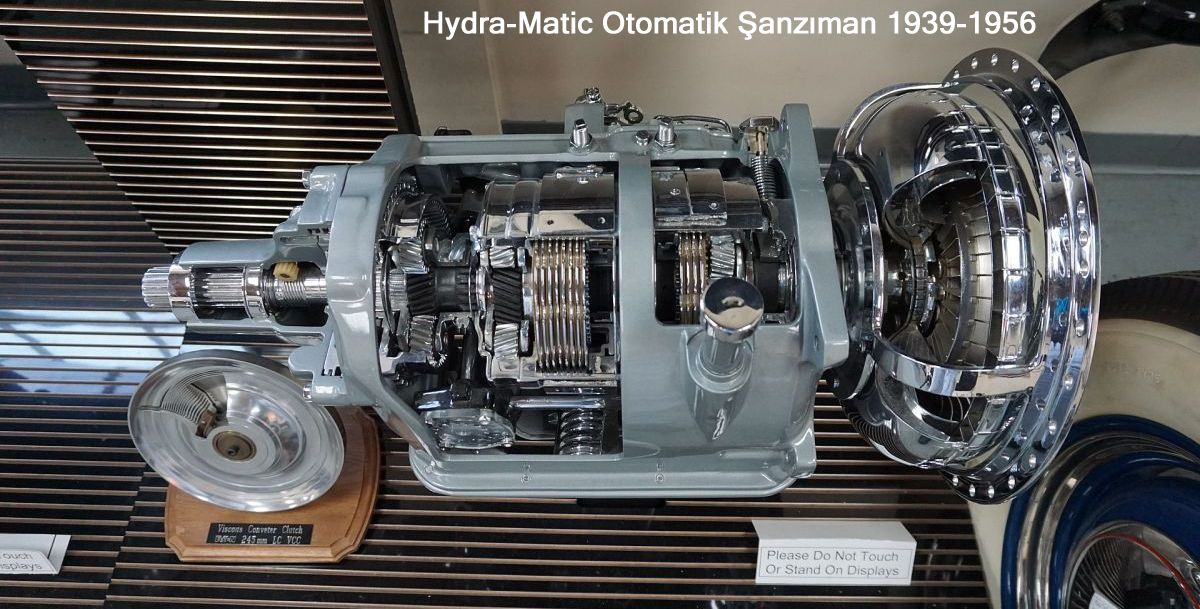
The transmission entered mass production in 1940 in Oldsmobile vehicles and changed the direction of the automotive industry.
Hydra-Matic was one of the most important innovations in automotive history. It was not the first automatic transmission ever developed, but it was the first one that proved to be genuinely practical and commercially successful. Its enormous success paved the way for the automatic transmissions that followed.With the outbreak of World War II in 1942, automobile factories stopped producing civilian cars and began manufacturing tanks and military vehicles for the war effort.
These tanks were equipped with Hydra-Matic transmissions. After the war, GM marketed the system with the slogan “Tested in Battle.”
Demand for Hydra-Matic-equipped vehicles was extremely high during this period, and approximately three-quarters of General Motors automobiles were offered with the Hydra-Matic automatic transmission option.
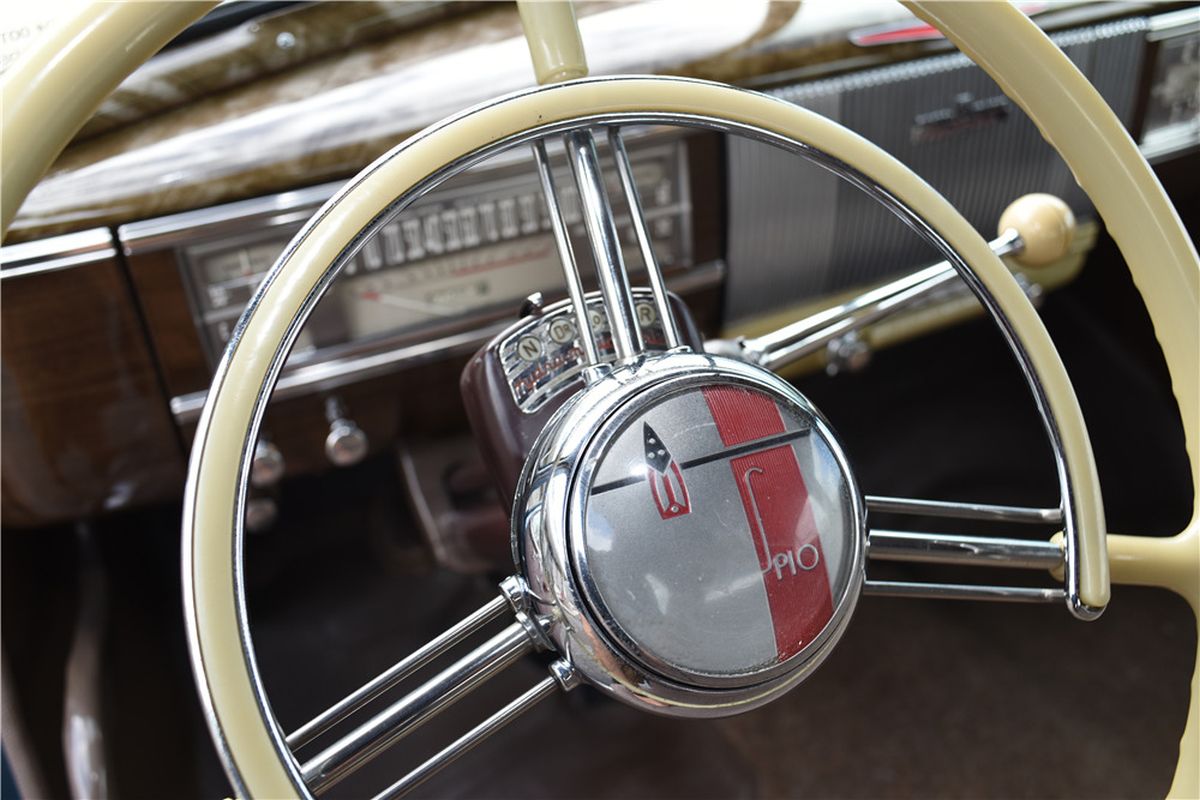
The 1948 Oldsmobile was among the early production models to use a true fully automatic transmission. Developed by GM engineer Earl Thompson, the Hydra-Matic was reintroduced with the slogan “The greatest advancement since the self-starter.”
The transmission underwent continuous updates and improvements through 1955, while the basic design and operating principles remained remarkably consistent for many years.
General Motors replaced Hydra-Matic with Jetaway in 1956. Also known as the “Jet,” the Jetaway was not particularly successful and was eventually replaced by the Turbo Hydra-Matic in 1969.
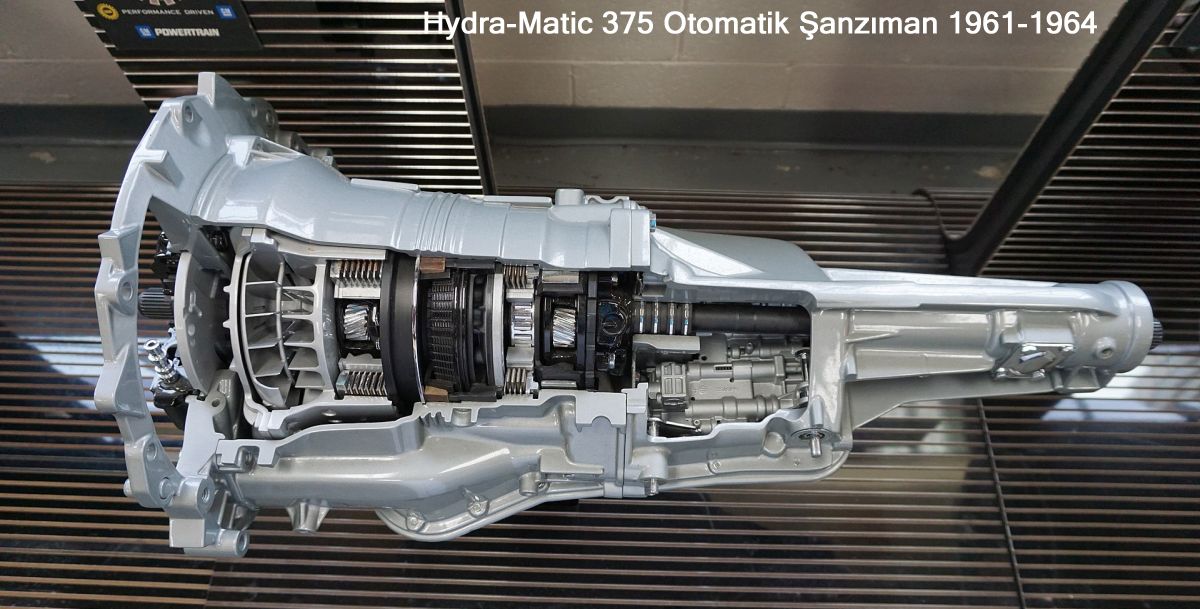
Hydra-Matic featured four forward gears and reverse. The transmission responded to throttle position and road speed, providing fully automatic upshifts and downshifts according to operating conditions.
It also incorporated a parking pawl that engaged when the selector was moved into reverse while the engine was switched off. Unlike modern transmissions, however, it did not have a separate Park position.
Note: More than 200,000 Hydra-Matic transmissions were sold during the war period.
The Torque Converter Automatic Transmission
The first hydraulic transmission to use a torque converter was the Dynaflow, introduced by Buick in 1948.
Dynaflow had only two forward gears and reverse. The torque converter multiplied torque and power, allowing the transmission to provide greater flexibility in gear ratios and vehicle speeds. This contributed significantly to Dynaflow's success.
In 1949, the former American luxury automaker Packard Motor Car Company developed the two-speed Ultramatic, a fully automatic transmission.
In 1950, General Motors introduced the two-speed Powerglide, which became one of the most successful automatic transmissions of its era. Although some Pontiac models began using Powerglide after a fire at the Hydra-Matic plant in 1953, the transmission was used extensively in Chevrolet vehicles from 1950 through 1973 and became particularly well known for its affordability.
Powerglide transmissions are still used today in certain racing applications.
Borg-Warner further developed the use of torque converters and introduced one of the first three-speed automatic transmissions with a lock-up torque converter in the early 1950s.
By the middle of the 1950s, almost all major automobile manufacturers, including Bentley, Lincoln, Ford, and Studebaker, were using similar automatic transmission technology in their vehicles.
Note: The use of whale sperm oil in automatic transmission lubrication was discontinued during the 1960s.
Overdrive Transmissions
Four-speed automatic transmissions with lock-up torque converters and overdrive gears were introduced in the late 1970s.
Because they provided higher gear ratios at highway speeds, they offered improved fuel economy compared with earlier transmissions.
Ford began using this technology in its vehicles in 1980, followed by General Motors and Chrysler.
Overdrive allowed automatic transmissions to use four or more forward gears, and almost every major manufacturer eventually introduced transmissions with this feature.
Four-speed overdrive transmissions remained common for many years, although they have gradually been replaced by transmissions with more gears in newer vehicles.
The Development of Modern Automatic Transmissions
Modern automatic transmissions increasingly rely on a greater number of forward gears and sophisticated electronic control systems.
Five- and six-speed automatic transmissions became common during the 1990s, while seven- and eight-speed designs began appearing in the 2000s.
Today, some automatic transmissions can offer as many as 11 forward gears and up to three clutches, depending on the transmission design.
Modern transmissions are controlled by computers using electronic control solenoids, speed sensors, pressure sensors, and other inputs.
Having more gears allows the engine to operate within a more efficient rpm range while still providing higher vehicle speeds. This can help reduce fuel consumption and lower noise levels inside the vehicle.
Electronically controlled transmissions also provide more precise gear changes, continuous system monitoring, and the ability to adapt transmission behavior to different driving conditions.
These improvements help reduce unnecessary transmission slip and heat generation.
Communication between the transmission control system, the engine control unit, and other electronically controlled components has also become increasingly sophisticated. This allows the vehicle to coordinate its systems more effectively, contributing to improved efficiency, drivability, reliability, and overall performance.