TR
TR EN
EN

The Check Engine Light Is On but No Fault Code Appears
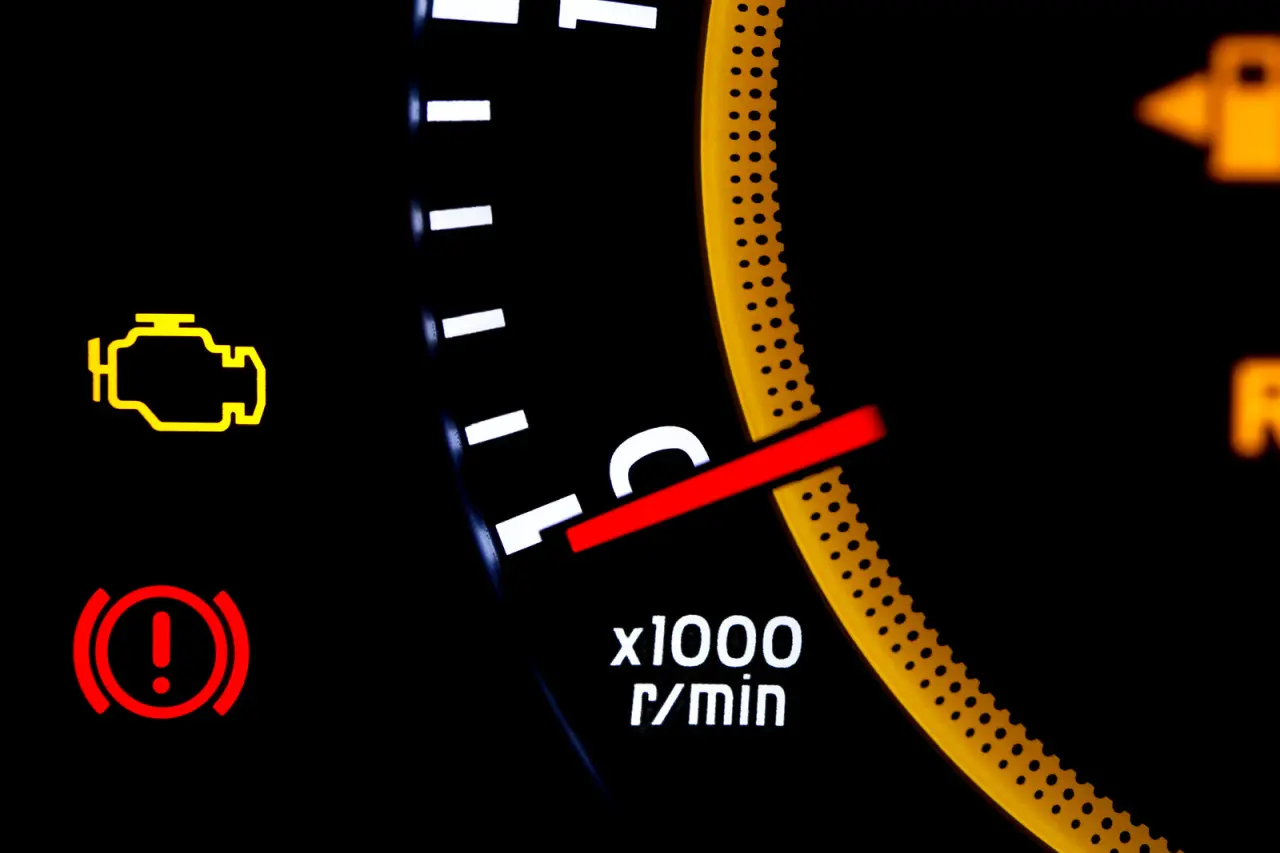
Seeing the check engine light illuminate on the dashboard usually leads to one obvious question: What fault code caused it?
In many cases, connecting an OBD-II scanner immediately reveals a diagnostic trouble code such as P0300, P0171, P0420, or another code related to the engine or emissions system. However, there are situations where the check engine light is illuminated but the diagnostic scanner shows no fault code.
At first, this can seem contradictory. If the warning light is on, why is there no code?
The explanation is that the dashboard warning light, the engine control module, the diagnostic scanner, and the vehicle's fault memory do not always behave in exactly the same way. A problem may be temporary, stored as a pending fault, recorded in another control module, inaccessible to a basic scanner, or related to a communication or diagnostic problem.
Understanding these possibilities is important before replacing sensors, ignition components, the throttle body, ECU, or other expensive parts.
What Does the Check Engine Light Actually Mean?
The check engine light, also known as the Malfunction Indicator Lamp (MIL), is controlled by the vehicle's electronic control system.
Its main purpose is to inform the driver that the engine management or emissions system has detected an abnormal condition that may require attention.
The light does not identify a specific component by itself.
For example, an illuminated check engine light does not automatically mean that:
-
The oxygen sensor is defective.
-
The catalytic converter has failed.
-
The throttle body is faulty.
-
The ECU is defective.
-
The ignition system has a problem.
The warning light is simply an indication that the vehicle's diagnostic system has detected a condition outside its expected operating range.
The actual reason must be determined through proper diagnosis.
Why Can the Check Engine Light Be On Without a Visible Fault Code?
There are several possible explanations.
The most common ones include:
-
The scanner is not reading the correct diagnostic module.
-
The fault is stored as a pending code.
-
The fault is stored as a manufacturer-specific code.
-
The scanner has limited diagnostic capability.
-
The fault occurred temporarily.
-
The code has already been erased but the warning light has not yet disappeared.
-
There is a communication problem between the scanner and the vehicle.
-
The vehicle has multiple control modules and the scanner only checks the engine ECU.
-
The warning light is being triggered by a fault that the particular scanner cannot display correctly.
-
The diagnostic system has not completed its required monitoring cycle.
-
There is an electrical or power-supply problem affecting the ECU or diagnostic system.
Therefore, "no code found" does not necessarily mean "no problem exists."
The Scanner May Not Be Reading All Available Codes
One of the most common reasons for this situation is the use of a basic OBD-II scanner.
A basic scanner may be able to read standard emissions-related diagnostic trouble codes from the engine control module, but modern vehicles often contain many different electronic control units.
Depending on the vehicle, there may be separate modules for:
-
Engine management
-
Transmission
-
ABS
-
Airbags
-
Body control
-
Instrument cluster
-
Electric power steering
-
Climate control
-
Parking assistance
-
Hybrid systems
-
Battery management
-
Driver assistance systems
A generic scanner may not communicate with all of them.
This becomes particularly important when a warning displayed on the dashboard is being interpreted as a simple engine fault even though the underlying problem is related to another control system or a communication network.
Pending Codes May Explain the Problem
A diagnostic system does not always immediately store every detected abnormality as a confirmed fault code.
Many OBD-II systems use different fault statuses.
One important category is the pending code.
A pending code means that the control module has detected a condition that may represent a fault, but the required criteria for confirming and permanently storing the fault have not yet been met.
Depending on the fault and the vehicle's diagnostic strategy, the check engine light may behave differently from what the driver expects.
A scanner that only displays confirmed or stored codes may therefore give the impression that there is no fault.
For this reason, a proper diagnostic scan should include:
-
Stored codes
-
Pending codes
-
Permanent codes, where supported
-
Freeze-frame data
-
Live data
-
Readiness monitors
Permanent Diagnostic Trouble Codes Are Different
Some OBD-II systems can retain permanent diagnostic trouble codes even after a conventional code-clearing procedure.
Permanent codes are particularly relevant to emissions-related faults.
They are not necessarily erased simply because someone clears the ECU's stored fault memory.
Instead, the vehicle must generally complete the appropriate diagnostic tests and demonstrate that the problem has been resolved before the permanent code is removed according to the applicable diagnostic strategy.
A scanner with limited capabilities may not display permanent codes correctly.
The Fault Code May Be Manufacturer-Specific
Not every diagnostic code behaves like a simple generic OBD-II code.
Some faults use manufacturer-specific diagnostic information.
The vehicle manufacturer may have additional codes, extended descriptions, manufacturer-specific data, or proprietary diagnostic routines that are not available through a basic generic scanner.
A scanner may therefore report something like:
No fault codes found
even though the manufacturer's diagnostic equipment can identify a stored fault.
This is one reason dealer-level or manufacturer-capable diagnostic equipment can be important when a generic scanner cannot explain an illuminated warning light.
The Fault May Have Been Temporary
Modern ECUs continuously monitor sensors and operating conditions.
A temporary abnormal reading can sometimes trigger a diagnostic event.
For example, a sensor signal may briefly become implausible because of:
-
A loose electrical connection
-
Temporary voltage fluctuation
-
Low battery voltage
-
Moisture in a connector
-
A momentary sensor dropout
-
Fuel pressure fluctuation
-
Temporary misfire
-
CAN communication interruption
-
Extreme temperature
-
A transient wiring problem
Depending on the system, the event may not remain available in the same form when the vehicle is scanned later.
This is why when the warning appeared can be just as important as the code itself.
The Code May Have Been Cleared Before the Scan
Another possibility is that the fault memory was erased before the vehicle was scanned.
This can happen intentionally or unintentionally.
For example, someone may have:
-
Cleared the codes during maintenance.
-
Disconnected the battery.
-
Used a diagnostic device to reset the ECU.
-
Reprogrammed the vehicle.
-
Performed an adaptation reset.
-
Replaced or disconnected a component.
When fault memory is cleared, the scanner may show no stored codes even though the underlying problem has not actually been repaired.
This is particularly important when buying a used vehicle.
A recently cleared ECU does not prove that the vehicle has no faults.
Battery Disconnection Can Affect Diagnostic Information
Disconnecting the battery can change the diagnostic state of some vehicle systems.
Depending on the vehicle, it may erase stored fault information, reset learned values, reset readiness monitors, or interrupt certain diagnostic processes.
This does not mean battery disconnection is always the cause of an illuminated check engine light with no code.
However, if the battery was recently disconnected, replaced, or discharged, it is worth considering as part of the diagnostic history.
Low Battery Voltage Can Create Strange Diagnostic Symptoms
A weak vehicle battery can cause surprisingly complicated electronic problems.
Modern vehicles contain numerous control modules that depend on stable electrical voltage.
During starting, battery voltage can temporarily fall significantly.
If the voltage becomes too low, some modules may behave abnormally or temporarily lose communication.
This can result in:
-
Warning lights
-
Communication errors
-
False sensor faults
-
Multiple unrelated diagnostic events
-
Difficulty communicating with the scanner
-
Temporary ECU errors
Therefore, battery and charging-system voltage should be checked before assuming that an expensive electronic component has failed.
The alternator should also be checked because an abnormal charging voltage can create its own set of electronic problems.
The Scanner Itself Can Be the Problem
Not every OBD scanner is equally capable.
There is a major difference between a simple code reader and a professional diagnostic system.
A basic reader may only:
-
Read generic engine codes
-
Clear codes
-
Display limited data
A more advanced diagnostic platform may provide:
-
Manufacturer-specific codes
-
Full module scanning
-
Live data
-
Freeze-frame information
-
Actuator tests
-
ECU identification
-
Adaptation values
-
Coding functions
-
Communication diagnostics
-
Network information
-
Service procedures
If the check engine light is on but a basic scanner reports nothing, trying another diagnostic system is often a sensible next step.
Check Whether the Scanner Can Communicate With the ECU
Before interpreting a "no codes" result, the technician should confirm that the scanner has actually established proper communication with the relevant control module.
The scanner should be able to identify information such as:
-
ECU identification
-
Software information
-
Calibration information
-
Communication status
-
Diagnostic protocol
If the scanner cannot properly communicate with the engine ECU, "no fault codes" is not a meaningful diagnostic conclusion.
There is a big difference between:
ECU connected and no stored codes found
and:
Scanner could not properly access the ECU.
The second situation requires communication diagnosis rather than parts replacement.
OBD Communication Problems Can Be Misleading
The OBD connector provides access to the vehicle's diagnostic network.
Problems involving the connector, wiring, power supply, ground, or communication lines can interfere with diagnostic scanning.
Potential causes include:
-
Damaged OBD connector
-
Poor electrical contact
-
Blown diagnostic fuse
-
Poor ground
-
CAN bus communication problem
-
Damaged wiring
-
Incorrect scanner protocol
-
Control-module communication failure
If the scanner repeatedly fails to communicate correctly, the technician should investigate the diagnostic network instead of simply concluding that the vehicle has no stored faults.
The Fault May Be Stored in Another Control Module
Modern vehicles do not have one computer responsible for everything.
A vehicle can have many interconnected control modules.
For example, a fault involving the electronic throttle, accelerator pedal, transmission, or vehicle stability system may involve communication between several modules.
A generic engine scan may not reveal all of the relevant information.
A complete vehicle scan can provide a much clearer picture because it checks multiple control units and their communication status.
Live Data Can Be More Useful Than a Fault Code
Sometimes the most important information is not a stored code but the behavior of the system while the fault occurs.
For example, if the engine warning appears when the accelerator is pressed hard, the technician can examine live data during that exact condition.
Depending on the problem, useful parameters may include:
-
Engine RPM
-
Accelerator pedal position
-
Throttle position
-
Throttle commanded position
-
Throttle actual position
-
Airflow
-
Intake pressure
-
Fuel pressure
-
Fuel trims
-
Oxygen sensor readings
-
Ignition timing
-
Battery voltage
-
Engine temperature
This can reveal a sensor signal that becomes abnormal even if the fault code is not currently stored.
Freeze-Frame Data Can Reveal When the Fault Happened
When a diagnostic fault is stored, the ECU may record freeze-frame data.
This information can show operating conditions at the time the fault was detected.
Depending on the system, it may include:
-
Engine speed
-
Vehicle speed
-
Coolant temperature
-
Load
-
Throttle position
-
Fuel-system information
-
Intake pressure
-
Electrical voltage
This information can help determine whether the problem occurred during cold starting, acceleration, high RPM, idle, cruising, or another specific condition.
Readiness Monitors Are Also Important
OBD systems use readiness monitors to determine whether various emissions-related diagnostic tests have been completed.
These monitors may include systems related to:
-
Misfire
-
Fuel system
-
Oxygen sensors
-
Catalytic converter
-
EVAP system
-
EGR system
-
Secondary air injection
-
Other emissions-related components
If the battery has recently been disconnected or the diagnostic memory has been cleared, some monitors may show as incomplete.
Therefore, a vehicle showing no stored code immediately after a reset should not automatically be considered fully diagnosed.
Why Does the Light Sometimes Turn Off by Itself?
If the ECU no longer detects the condition that originally triggered the warning, the check engine light may eventually turn off automatically.
This does not necessarily mean that the fault never existed.
Some diagnostic systems require several successful monitoring cycles before the warning light is switched off.
The fault may also remain stored in memory even after the light turns off.
Therefore, an intermittent warning should not simply be ignored.
An Intermittent Fault Can Be Hard to Diagnose
Intermittent faults are among the most difficult automotive electrical problems to identify.
A vehicle may operate normally when it arrives at the repair shop.
The technician connects the scanner and sees no active fault.
Then, during real-world driving, the problem appears again.
This is why the conditions under which the warning occurs should be recorded.
Useful information includes:
-
Engine temperature
-
RPM
-
Vehicle speed
-
Accelerator position
-
Road conditions
-
Weather
-
Fuel level
-
Whether the engine was cold or hot
-
Whether the problem occurred during acceleration or cruising
-
Whether restarting the engine temporarily solved the problem
This information can significantly narrow down the possible causes.
Why You Should Not Immediately Replace Parts
An illuminated check engine light can tempt drivers and technicians to replace the most obvious component.
For example, if a throttle-related symptom occurs, someone may immediately recommend replacing the throttle body.
If a sensor-related symptom appears, the sensor may be blamed.
However, the actual problem could be:
-
Wiring
-
Connector corrosion
-
Power supply
-
Ground connection
-
Fuse
-
Relay
-
CAN communication
-
Software
-
Sensor calibration
-
Mechanical interference
-
Another component affecting the same signal
Replacing parts without confirming the cause can become expensive very quickly.
A diagnostic code, when available, identifies a monitored abnormal condition. It does not automatically identify the failed component.
What Should You Do If the Check Engine Light Is On but No Code Appears?
A systematic diagnostic procedure is more useful than repeatedly scanning and clearing the vehicle.
A technician should generally:
First, confirm the warning.
Determine whether the check engine light is actually illuminated and whether any other warning lights are present.
Then check the scanner.
Confirm that the diagnostic device can communicate correctly with the engine ECU.
Read all available code categories.
Check stored, pending, and permanent codes where supported.
Perform a full vehicle scan.
Do not limit the diagnosis to the engine module if the vehicle's architecture allows faults to be stored elsewhere.
Check freeze-frame and live data.
If information is available, determine under which operating conditions the problem occurred.
Check battery and charging voltage.
Electrical instability can create multiple misleading symptoms.
Inspect wiring and connectors.
A visual and electrical inspection should not be skipped simply because no code is visible.
Test the vehicle under the conditions that trigger the warning.
If the fault occurs during high RPM, heavy acceleration, cold starting, or another specific condition, the diagnostic procedure should reproduce that condition when possible.
Can a Check Engine Light Be Caused by a Loose Fuel Cap?
On some vehicles, yes.
A fuel cap that does not seal properly can allow the evaporative emissions system to detect a leak.
Depending on the vehicle and the severity of the leak, the system may eventually illuminate the check engine light.
However, if the warning light is already on and no code is visible, the fuel cap should not automatically be blamed.
The EVAP system needs to be tested properly if an emissions-related fault is suspected.
Can a Sensor Fail Without Showing a Code?
A sensor can behave abnormally without immediately generating an obvious diagnostic code.
For a diagnostic code to be generated, the ECU needs to detect a condition that meets its programmed criteria.
A sensor can sometimes produce a signal that is technically within an acceptable voltage range but still incorrect for the actual operating conditions.
For example, a sensor may become inaccurate rather than completely fail.
This is why comparing live data with expected operating values can be more useful than simply asking whether a sensor has a fault code.
What If the Check Engine Light Is Flashing?
A flashing check engine light should be taken more seriously than a continuously illuminated one.
On many vehicles, a flashing MIL can indicate a severe misfire condition that may damage the catalytic converter.
If the check engine light is flashing, especially when the engine is running roughly, losing power, or shaking, continued driving should be minimized until the vehicle is properly diagnosed.
The exact meaning can vary by manufacturer, but a flashing engine warning should generally be treated as an urgent diagnostic situation.
Can an OBD Scanner Clear the Problem?
Clearing a code does not repair the underlying fault.
If the condition remains present, the ECU can detect it again and store the fault again.
Repeatedly clearing the warning can also erase useful diagnostic information.
For this reason, fault codes should normally be recorded and investigated before they are cleared.
When Should You Visit a Repair Shop?
Professional diagnosis is recommended when:
-
The check engine light remains on.
-
The warning returns repeatedly.
-
The engine loses power.
-
The engine runs roughly.
-
Fuel consumption increases noticeably.
-
The vehicle enters limp mode.
-
Multiple warning lights appear.
-
The scanner cannot communicate properly.
-
No code appears despite a persistent warning.
-
The problem occurs intermittently and is difficult to reproduce.
A technician with manufacturer-level diagnostic equipment can often access information that a basic OBD reader cannot.
Final Thoughts
A check engine light with no visible fault code does not mean that the vehicle has no problem.
The first step is to determine whether the scanner is actually communicating with the correct ECU and whether it is capable of reading all relevant diagnostic information. Pending, permanent, manufacturer-specific, and module-specific faults can all complicate a simple OBD scan.
Intermittent faults can be even more difficult because the vehicle may behave normally when it is connected to the scanner.
For that reason, proper diagnosis should combine fault-code scanning, live data, freeze-frame information, electrical testing, wiring inspection, and real-world testing when necessary.
Most importantly, an illuminated warning light should not automatically lead to a parts replacement. The correct approach is to identify what condition caused the ECU to activate the warning, determine why that condition occurred, and then repair the actual cause.