TR
TR EN
EN

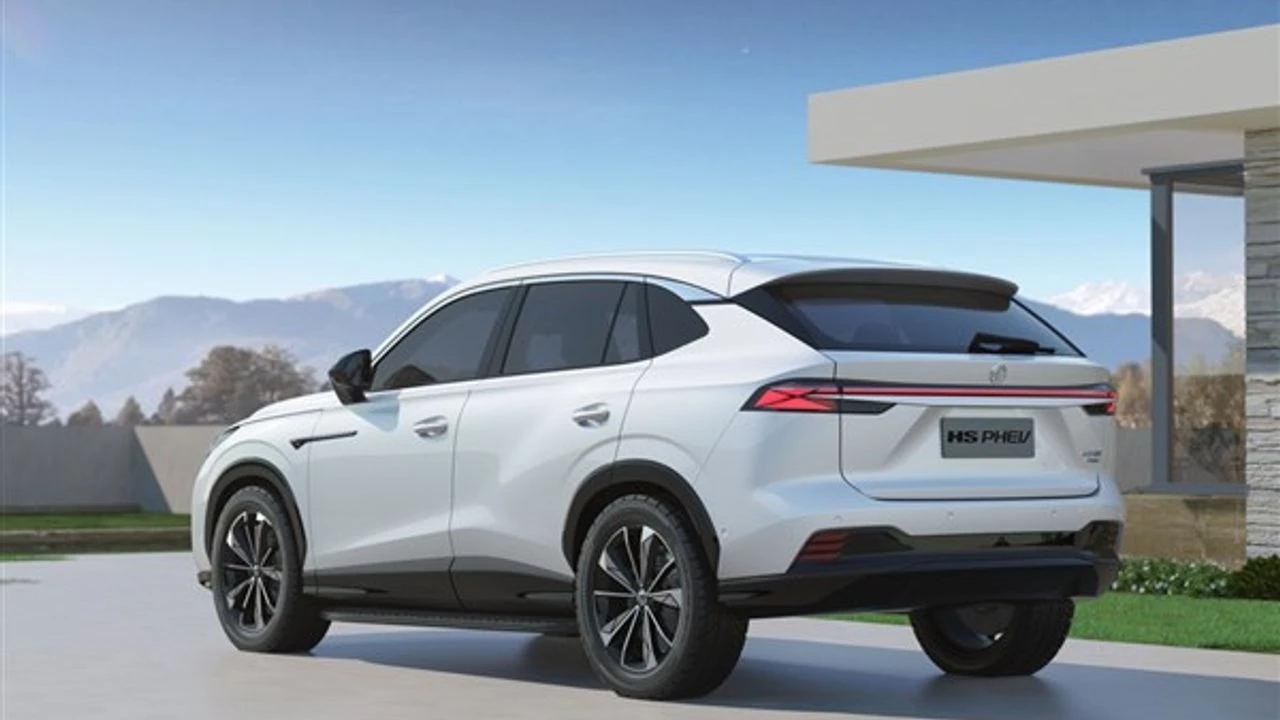
What Are Mild Hybrid and Full Hybrid Vehicles?
Hybrid technology has become one of the most important developments in the modern automotive industry. As manufacturers work to reduce fuel consumption and emissions without completely abandoning internal combustion engines, different types of hybrid systems have emerged.
Two of the most common terms are mild hybrid and full hybrid. Although both systems combine an internal combustion engine with electric technology, they operate in significantly different ways.
A mild hybrid system primarily assists the combustion engine and improves efficiency, while a full hybrid system can use the electric motor to drive the vehicle on its own under certain conditions.
Understanding this difference is important when comparing modern vehicles, because the word "hybrid" does not necessarily mean that every hybrid car can drive electrically.
What Is a Mild Hybrid?
A mild hybrid, often abbreviated as MHEV (Mild Hybrid Electric Vehicle), is a vehicle equipped with an internal combustion engine and a relatively small electric motor-generator.
Unlike a full hybrid, a mild hybrid generally cannot propel the vehicle using electric power alone.
The electric system is mainly used to assist the combustion engine during acceleration, recover energy during deceleration, and operate or support certain vehicle systems.
The main purpose is not to replace the engine with electric propulsion but to make the engine work more efficiently.
How Does a Mild Hybrid System Work?
A typical mild hybrid system uses an electric motor-generator connected to the engine through a belt or another mechanical arrangement. The system also includes a battery, power electronics, and a control unit.
During deceleration, the motor-generator can operate as a generator. Instead of allowing all of the vehicle's kinetic energy to be lost as heat through the brakes, some of that energy is converted into electricity and stored in the battery.
When the driver accelerates again, the stored electrical energy can be used to provide additional assistance to the combustion engine.
This process can reduce the amount of work the engine needs to perform, particularly during conditions where the engine normally consumes more fuel.
What Is the Purpose of the Mild Hybrid Battery?
The battery in a mild hybrid vehicle is generally much smaller than the high-voltage battery found in a full hybrid or electric vehicle.
Depending on the vehicle design, mild hybrid systems commonly use a higher-voltage electrical architecture than conventional 12-volt systems, with 48-volt systems being particularly common.
The battery stores energy recovered during braking and supplies it back to the electric motor-generator when assistance is required.
The battery is therefore constantly being charged and discharged as the vehicle accelerates and decelerates.
Mild Hybrid Assistance During Acceleration
One of the most important functions of an MHEV system is electric assistance during acceleration.
When the driver presses the accelerator, the combustion engine normally needs to produce additional torque. The electric motor can provide some of this torque, reducing the amount of work required from the engine.
This can be especially useful during:
Starting from a stop
The electric motor can help the engine overcome the initial load.
Acceleration at low engine speeds
Electric motors can produce torque quickly, helping compensate for the weaker response of a combustion engine at certain RPM ranges.
Stop-and-go traffic
The system can reduce the fuel consumed during repeated acceleration and deceleration.
The result is usually improved efficiency rather than a dramatic change in the vehicle's driving characteristics.
What Is a Full Hybrid?
A full hybrid, commonly referred to as an HEV (Hybrid Electric Vehicle), combines an internal combustion engine with one or more electric motors and a significantly larger high-voltage battery.
The major difference from a mild hybrid is that a full hybrid can, under suitable conditions, drive the vehicle using electric power alone.
The combustion engine does not have to operate continuously.
Depending on vehicle speed, battery charge, accelerator position, temperature, road conditions, and the hybrid system's control strategy, the vehicle can switch between electric propulsion, engine propulsion, or a combination of both.
How Does a Full Hybrid Work?
A full hybrid system continuously determines the most efficient way to provide the required driving force.
When the vehicle starts moving, the electric motor may provide most or all of the propulsion if conditions allow.
As the driver demands more power, the gasoline or diesel engine can start and work together with the electric motor.
At higher speeds or under sustained loads, the combustion engine may become the primary source of propulsion.
During deceleration, the electric motor can again operate as a generator and recover energy.
The control system coordinates these different operating modes automatically.
Can a Full Hybrid Drive Without the Engine?
Yes.
This is one of the most important differences between a full hybrid and a mild hybrid.
A full hybrid can generally move the vehicle using electric power alone for short periods, although the exact conditions and duration depend on the vehicle.
Electric-only operation is particularly useful at low speeds and during gentle acceleration.
However, a full hybrid should not be confused with a plug-in hybrid.
A conventional HEV normally does not need to be connected to an external charger. Its battery is charged primarily through regenerative braking and by the combustion engine when necessary.
Mild Hybrid vs. Full Hybrid: The Main Difference
The simplest way to understand the difference is to look at the role of the electric motor.
In a mild hybrid, the electric motor primarily assists the combustion engine.
In a full hybrid, the electric motor can assist the engine or drive the vehicle by itself under appropriate conditions.
This difference also affects the size of the battery, the complexity of the drivetrain, the amount of electric power available, and the overall fuel-saving potential.
Regenerative Braking in Hybrid Vehicles
Regenerative braking is an important feature of both mild and full hybrid systems.
In a conventional vehicle, braking converts the vehicle's kinetic energy into heat through friction between the brake pads and discs.
A hybrid vehicle can recover some of this energy.
During deceleration, the electric motor changes its operating mode and acts as a generator. The rotating wheels drive the motor, and the generator converts part of the vehicle's kinetic energy into electrical energy.
The electricity is then stored in the hybrid battery.
When the driver accelerates again, this stored energy can be used by the electric motor.
This process improves overall energy efficiency.
Mild Hybrid and Full Hybrid in City Driving
The differences between the two systems become particularly noticeable in urban traffic.
City driving involves frequent:
-
Stops
-
Starts
-
Low-speed acceleration
-
Deceleration
-
Traffic-light stops
-
Short periods of idling
These conditions create many opportunities for energy recovery and electric assistance.
A mild hybrid can reduce engine load and improve the efficiency of start-stop operation.
A full hybrid can go further by using electric propulsion during some low-speed situations.
This is one reason full hybrid vehicles can achieve particularly good fuel economy in urban environments.
What Happens When You Stop at a Traffic Light?
In a conventional vehicle, the engine may continue running while the car is stationary, unless a conventional start-stop system shuts it down.
In a mild hybrid, the engine can be switched off and restarted more smoothly because the electric motor-generator assists the restart process.
In a full hybrid, the combustion engine can also shut down while the vehicle is stationary. Depending on the battery state and operating conditions, the car may remain ready to move using the electric motor.
The driver generally does not need to manually control these processes.
Mild Hybrid vs. Conventional Start-Stop
A mild hybrid system should not be considered simply a more complicated start-stop system.
A conventional start-stop system primarily shuts the engine off when the vehicle is stationary and restarts it when movement is required.
A mild hybrid system can do considerably more.
It can recover braking energy, provide torque assistance, support smoother engine restarts, and sometimes allow the combustion engine to be switched off during certain driving situations.
The electric motor-generator therefore plays an active role in the vehicle's energy management.
Full Hybrid vs. Plug-In Hybrid
A full hybrid and a plug-in hybrid may appear similar because both can use electric propulsion, but their battery systems are significantly different.
A conventional HEV has a relatively smaller battery and normally relies on regenerative braking and the combustion engine for battery charging.
A PHEV (Plug-in Hybrid Electric Vehicle) has a much larger battery that can be charged from an external power source.
As a result, a plug-in hybrid can usually travel much farther using electricity alone.
A conventional full hybrid is designed to recharge itself during normal operation.
Fuel Consumption Differences
Both mild and full hybrids can reduce fuel consumption compared with similar conventional vehicles.
However, the potential savings are not identical.
A mild hybrid typically offers more modest efficiency improvements because the electric motor is mainly an assistance system.
A full hybrid can achieve greater savings because it can:
-
Recover more braking energy
-
Shut the engine off more frequently
-
Drive electrically at low loads
-
Use the electric motor for acceleration
-
Optimize engine operating conditions
-
Reduce fuel consumption during urban driving
Actual fuel consumption still depends heavily on vehicle weight, engine design, aerodynamics, driving style, climate, traffic, and road conditions.
Which System Is More Efficient?
There is no single answer for every driving situation.
A mild hybrid can be highly effective when combined with an efficient modern combustion engine and a well-designed transmission.
However, a full hybrid generally has a greater potential for fuel savings because the electric motor can perform a larger share of the vehicle's propulsion work.
The difference tends to be more noticeable in city driving, where repeated braking and acceleration provide more opportunities for energy recovery.
On long highway journeys at relatively constant speed, the advantage of a full hybrid may be smaller because there is less braking energy available to recover.
What Happens to the Combustion Engine in a Full Hybrid?
One of the main advantages of a full hybrid system is that the combustion engine does not always have to operate under inefficient conditions.
The hybrid control system can shut the engine down when its power is not required.
It can also restart the engine when additional power is needed or when the battery requires charging.
Under some conditions, the system can use the electric motor to maintain vehicle movement while the engine remains off.
This ability allows the hybrid system to optimize the engine's operating range.
Hybrid Transmission Systems
Hybrid vehicles can use different drivetrain architectures.
Some systems use a conventional automatic transmission combined with an electric motor, while others use specialized hybrid transmissions.
Toyota's hybrid systems, for example, are widely associated with power-split technology using planetary gearsets.
Other manufacturers use different approaches, including dual-motor systems, belt-driven starter-generators, integrated electric motors, and various forms of electronically controlled transmissions.
The exact architecture varies significantly from one manufacturer and model to another.
Is a Mild Hybrid Still a Hybrid?
Yes.
A mild hybrid is technically a hybrid vehicle because it combines two forms of propulsion or energy conversion: an internal combustion engine and an electric motor-generator system.
However, the term "hybrid" covers a broad range of technologies.
A mild hybrid, full hybrid, and plug-in hybrid should not be treated as identical systems.
Their battery capacity, electric motor power, charging methods, and ability to drive electrically can be very different.
Maintenance of Mild Hybrid Vehicles
Mild hybrid vehicles still have an internal combustion engine, so many traditional maintenance requirements remain.
Depending on the engine, this can include:
-
Engine oil and filter replacement
-
Air filter replacement
-
Spark plug replacement in gasoline engines
-
Cooling system maintenance
-
Transmission maintenance
-
Brake system inspection
-
Conventional 12-volt electrical system checks
The additional hybrid components also require attention.
The 48-volt battery, motor-generator, power electronics, wiring, and control systems need to remain in good condition.
Maintenance of Full Hybrid Vehicles
Full hybrid vehicles contain more complex electrical and electronic systems.
In addition to conventional engine maintenance, technicians may need to diagnose:
-
High-voltage battery systems
-
Battery management systems
-
Inverters
-
DC-DC converters
-
Electric motors
-
Hybrid control units
-
High-voltage cables
-
Cooling systems
-
Regenerative braking systems
This does not necessarily mean that a full hybrid is unreliable or difficult to maintain. Modern hybrid systems are designed for long-term operation.
However, proper diagnostic equipment and trained technicians are important when dealing with high-voltage components.
Are Hybrid Batteries Reliable?
Modern hybrid batteries are designed to withstand repeated charging and discharging cycles.
Hybrid battery management systems carefully monitor voltage, temperature, current, and state of charge.
Cooling systems are also used in many hybrid vehicles to keep battery temperature within an appropriate range.
Battery lifespan varies according to chemistry, vehicle design, climate, usage, and thermal management.
When a hybrid battery eventually deteriorates, the vehicle's diagnostic system can detect abnormalities and report related fault codes.
Mild Hybrid or Full Hybrid: Which One Should You Choose?
The answer depends on how the vehicle will be used.
A mild hybrid may be a good choice for drivers who want improved efficiency without moving to a more complex full-hybrid drivetrain. It can provide smoother engine restarts, energy recovery, and electric assistance while retaining the familiar characteristics of a conventional combustion vehicle.
A full hybrid can be more attractive for drivers who spend significant time in urban traffic and want stronger fuel-saving benefits.
The ability to drive electrically for short periods also gives a full hybrid a major advantage in stop-and-go conditions.
Are Hybrid Vehicles Better Than Conventional Cars?
Hybrid technology can offer significant efficiency advantages, but the best choice depends on the driver's circumstances.
For predominantly urban use, a full hybrid can be particularly effective because regenerative braking and electric driving are used frequently.
For highway driving, a highly efficient conventional vehicle or mild hybrid may also perform well.
Vehicle weight, engine efficiency, aerodynamics, transmission design, maintenance, and driving style all influence the final result.
The Future of Hybrid Technology
Hybrid technology is likely to remain important even as the automotive industry moves toward fully electric vehicles.
Manufacturers continue to improve electric motors, batteries, power electronics, regenerative braking, and energy-management software.
Mild hybrid systems can help manufacturers reduce fuel consumption and emissions while maintaining relatively familiar combustion-engine platforms.
Full hybrids provide a greater degree of electrification without requiring the driver to recharge the vehicle externally.
At the same time, plug-in hybrids and battery-electric vehicles continue to expand the role of electrical propulsion.
Conclusion
Mild hybrid and full hybrid vehicles use the same basic concept—combining an internal combustion engine with electric technology—but they do not offer the same level of electrification.
A mild hybrid primarily assists the combustion engine. Its electric motor-generator recovers energy, provides additional torque, improves engine restarts, and helps reduce fuel consumption, but it generally cannot drive the vehicle independently.
A full hybrid goes a step further. Its electric motor can propel the vehicle on its own under suitable conditions, while the combustion engine takes over when additional power or sustained operation is required.
The key distinction is therefore simple: a mild hybrid assists the engine, while a full hybrid can also drive the vehicle electrically for short periods.
Both technologies represent important steps in the transition from conventional internal combustion vehicles toward increasingly electrified transportation.