TR
TR EN
EN


The Historical Journey of the Automobile: Innovations and Pioneering Inventors
The history of the automobile is a long process shaped by numerous important inventions and technological developments. Here are some of the key milestones and inventors in the history of the automobile.
1. The Early Period and First Experiments
The foundations of the automobile can be traced back to the late 19th century. Although several steam-powered vehicles were designed during the 18th century, they were not yet the direct ancestors of the modern automobile. The automobile truly emerged with the development and use of internal combustion engines.
The early period of automobile development was shaped by several important inventions and discoveries that laid the foundations for motorized transportation. This period began largely with experimental vehicles powered by steam and mechanical systems. Some of the most important developments in the early history of the automobile are described below.
a. The First Steam-Powered Vehicles
The earliest predecessors of the automobile were steam-powered vehicles. These machines attempted to use steam engines to turn wheels and move vehicles without animal power. However, they were not automobiles in the modern sense and were primarily experimental machines.
Nicolas-Joseph Cugnot (1769)
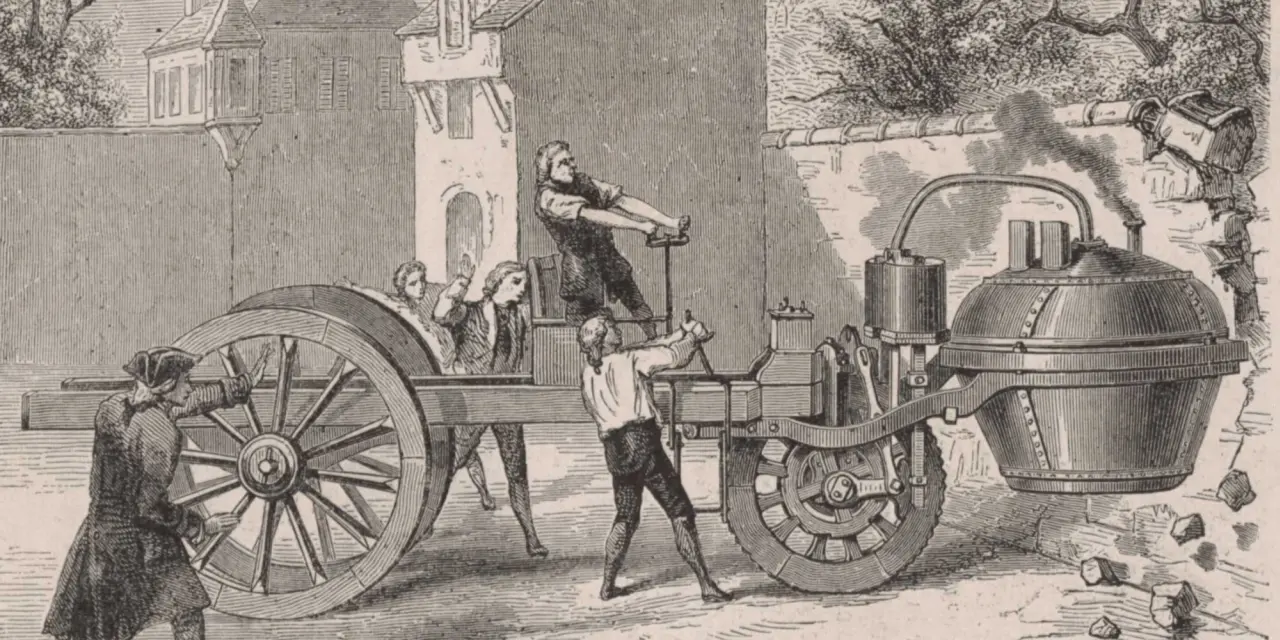
Nicolas-Joseph Cugnot was a French engineer who achieved an important engineering milestone by building an early self-propelled vehicle. His Fardier à vapeur, developed in 1769, was a steam-powered transport vehicle. It represented one of the earliest major steps toward the development of motorized road transportation.
Design and Technical Features of the Fardier à vapeur
-
Steam Engine: Cugnot's design used a steam engine to drive the wheels. The engine featured an externally mounted cylinder and operated using the pressure of steam.
-
Wheels: The vehicle had three wheels, with two large rear wheels and one front wheel.
-
Speed: The Fardier à vapeur was extremely slow and could travel at only around 4–5 km/h. Although this was very slow compared with modern vehicles, it represented a major innovation for transportation at the time.
-
Weight: The vehicle was extremely heavy, and its steam engine was also large and heavy. This significantly limited its efficiency.
Cugnot first tested the vehicle in France, near Paris. The purpose of the Fardier à vapeur was to transport materials and assist with the transportation of military equipment. However, the tests were unsuccessful because the engine overheated and frequently malfunctioned.
The first major test of the Fardier à vapeur took place on October 3, 1770. During this test, the vehicle operated for approximately 15 minutes before stopping because the engine overheated. This demonstrated the limitations of steam engines and the technological challenges of the period.
The Fardier à vapeur did not become a commercial success because of several technical limitations:
-
Inefficiency: Steam engines were not very efficient at the time and were prone to overheating. Steam-powered engines were also extremely large and heavy, which negatively affected the vehicle's speed and efficiency.
-
Heavy Construction: The Fardier à vapeur was a very large and heavy vehicle, making it difficult to operate. Maintaining sufficient traction at the rear wheels was also challenging.
-
Limitations of Steam Technology: Steam engines were not yet reliable enough for practical transportation. The stability and efficiency of steam-powered machines were considerably lower than those of engines developed in later periods.
Although the Fardier à vapeur was ultimately an unsuccessful project, it made an important contribution to the development of motorized transportation. Its importance can be summarized in several areas:
-
Steam-Powered Transportation: The Fardier à vapeur demonstrated the potential of steam power for transportation. However, its inefficiency prevented it from becoming a practical transportation solution.
-
Foundation of Motorized Transportation: Cugnot's vehicle represented an important early step toward the development of motorized road vehicles. Its limitations encouraged engineers to search for more efficient forms of propulsion.
-
Technological Development: The Fardier à vapeur was not simply a steam-powered vehicle; it was also an experiment demonstrating that steam power could be used for land transportation. This helped encourage the development of increasingly powerful and efficient engines.
The Fardier à vapeur was not the first prototype of the modern automobile, but it represented an important step toward the emergence of motorized transportation. By building this vehicle, Nicolas-Joseph Cugnot demonstrated the potential of steam-powered transportation and helped initiate the evolution of steam-powered vehicles.
Although the vehicle was not practical or efficient, these early experiments contributed to the technological foundation upon which later engineers such as Karl Benz and Gottlieb Daimler would develop internal combustion-powered vehicles.
Cugnot's invention is therefore regarded as an important milestone in the evolution of automotive engineering and steam-powered transportation technology.
James Watt and the Steam Engine
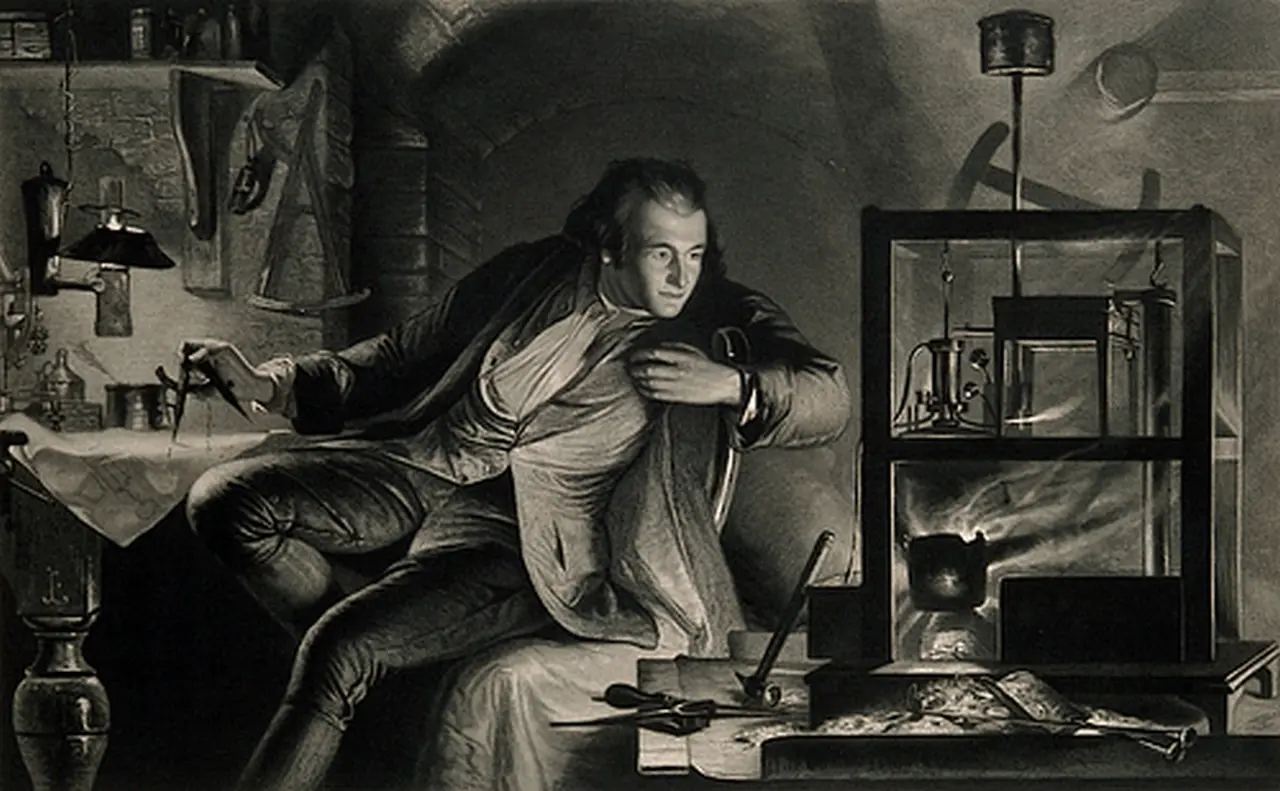
James Watt played a major role in the development of steam engines. During the 18th century, Watt significantly improved the efficiency of steam engines and increased their energy efficiency.
Although he was not the direct father of the automobile, Watt's improvements to steam-engine technology provided an important technological foundation for Cugnot and other engineers experimenting with steam-powered transportation.
b. The Development of Steam-Powered Automobile Designs
Steam-powered vehicles continued to develop during the early 19th century, but their engines were still inefficient, while their speed, reliability, and safety presented significant challenges. During this period, many engineers attempted to improve steam-powered road vehicles through different designs.
Richard Trevithick (1801)
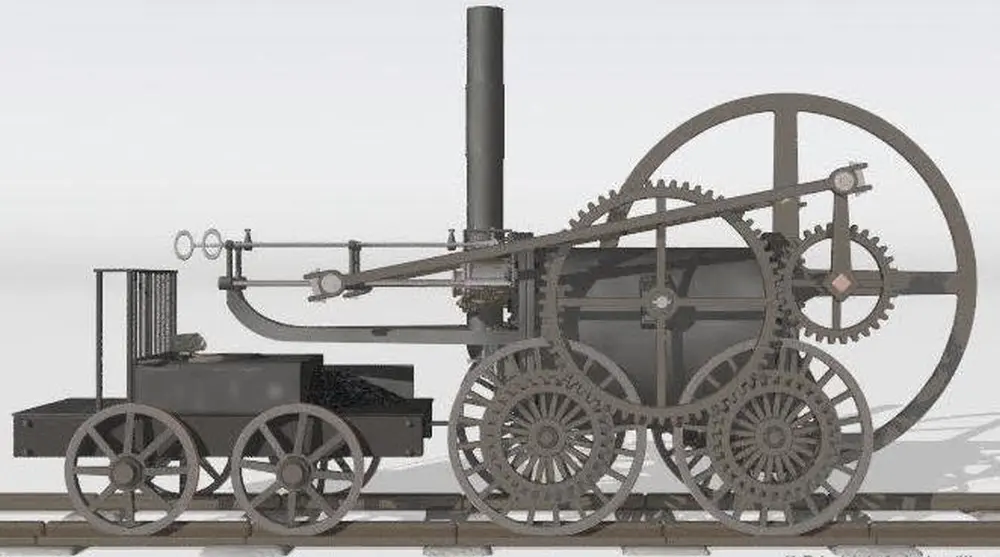
Richard Trevithick was an English engineer and mining expert who made important contributions to steam technology. In 1801, he developed the steam-powered vehicle known as the “Puffing Devil.”
The vehicle could move at approximately 8 km/h and was designed to transport people and materials using steam power. As a wheeled self-propelled vehicle, the Puffing Devil can be considered an important early experiment in the development of motorized transportation.
c. The Challenges of Steam-Powered Cars
Steam-powered road vehicles faced several major technical problems:
-
Speed: Steam engines were not fast enough to meet the practical transportation requirements of the period.
-
Fuel Efficiency: Coal-fired steam engines were inefficient and required frequent refueling.
-
Weight: Steam engines were extremely heavy, which negatively affected vehicle performance.
Because of these limitations, steam-powered road vehicles never achieved widespread use. Instead, engineers increasingly focused on applying steam power to railway transportation, where the heavy engines and fuel systems were more practical.
d. The Rise of the Internal Combustion Engine (Late 1800s)
Although the earliest experiments with steam-powered transportation were not commercially successful, they opened the way for a new era of motorized transportation.
During the second half of the 19th century, internal combustion engines became increasingly efficient and played a critical role in the development of the automobile. The spread of internal combustion engines represented a major turning point in automotive history.
These engines could operate on fuels such as gasoline or alcohol and were considerably lighter and more compact than traditional steam engines.
e. Internal Combustion-Powered Vehicles (1860–1880)
The transition from steam power to internal combustion engines represented one of the most important turning points in automobile history. By the middle of the 19th century, the foundations of practical motorized transportation were beginning to emerge.
Étienne Lenoir (1859)
The Belgian engineer Étienne Lenoir developed an early practical gas-powered internal combustion engine. In 1859, Lenoir designed an engine that operated on gas and represented one of the important early steps toward engines that could eventually be used in transportation.

Lenoir's engine initially had relatively low efficiency, but it provided an important foundation for the further development of internal combustion engine technology.
The Contributions of Jean-Joseph Étienne Lenoir and Nikolaus Otto
Lenoir's engine was later improved, and Nikolaus Otto developed the four-stroke internal combustion engine in 1876.
Otto's invention became one of the most important milestones in automobile history. His engine represented an early form of the basic engine principle still used in many modern gasoline-powered vehicles.
The Otto engine provided greater efficiency and made it possible to generate more usable power from a relatively compact engine.

During the early development of the automobile, many engineers and scientists worked on different types of engines and motorized vehicles, laying the foundations of the modern automobile.
These efforts focused primarily on steam power, internal combustion engines, and mechanical design. However, the automobile truly began to evolve into a practical vehicle when engineers such as Karl Benz and Gottlieb Daimler successfully developed and applied internal combustion engines to road vehicles.
2. Karl Benz and the Benz Patent-Motorwagen (1885)
Karl Benz and the Benz Patent-Motorwagen represent one of the most important milestones in automobile history. Karl Benz is widely regarded as the inventor of the modern practical internal combustion automobile, while the Benz Patent-Motorwagen is considered one of the earliest true automobiles.

Initially working on bicycles and machinery, Benz eventually focused his attention on the development of internal combustion engines.
At the time, the automobile was still largely a dream, but Benz's vision and engineering skills helped turn that dream into a functioning vehicle.
Technical Features of the Benz Patent-Motorwagen
-
Engine: The vehicle was powered by a single-cylinder, four-stroke internal combustion engine. It produced approximately 0.75 horsepower (around 0.55 kW) and operated at approximately 400 rpm.
-
Wheels: The original vehicle had three wheels. Although its design was primitive compared with modern four-wheeled vehicles, its overall concept was remarkably close to the automobile that would later become standard.
-
Fuel: The engine ran on gasoline. Benz's use of a gasoline-powered internal combustion engine was a revolutionary step in automobile development.
-
Steering System: The Benz Patent-Motorwagen featured an early steering mechanism that established the foundations for later automobile steering systems. However, it was considerably simpler than modern steering systems.
-
Speed: The vehicle could reach a speed of approximately 16 km/h, which was significant for a motor vehicle of the period.
The design of the vehicle required careful engineering. The engine was integrated into the vehicle so that it could operate as part of the overall structure. This established an important principle for later automobiles: the engine, chassis, and drivetrain needed to work together as an integrated system.
Karl Benz first tested his vehicle in Mannheim, Germany, in 1885. Although Benz initially considered the vehicle heavy and slow, he demonstrated that the mechanism could operate successfully.
The first demonstrations attracted limited public interest because the concept of a self-propelled automobile was still unfamiliar and difficult for people to accept.
3. Gottlieb Daimler and Wilhelm Maybach (1886)
One year later, Gottlieb Daimler and Wilhelm Maybach made another major contribution to automobile development in Germany.
In 1886, they successfully adapted an internal combustion engine for use in a vehicle. Their work represented another important step in the evolution of the automobile.
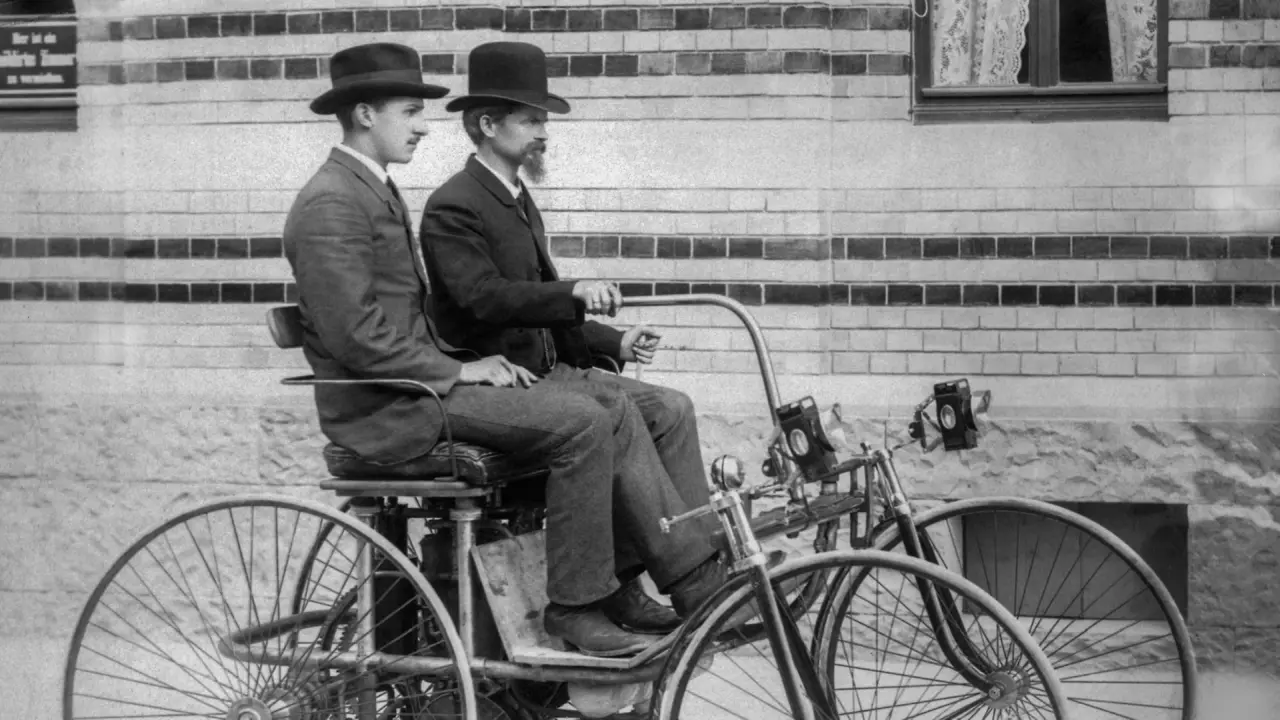
The compact high-speed engine developed by Daimler and Maybach provided a new approach to automotive propulsion and became an important foundation for the development of modern vehicle powertrains.
4. Henry Ford and Mass Production (1908)
Henry Ford was one of the most influential figures in the development of mass automobile production.
In 1908, Ford introduced the Model T, which helped make automobiles accessible to a much larger section of society.

However, Ford's greatest contribution was not simply the Model T itself. His use of mass-production techniques made it possible to manufacture automobiles more quickly and at a lower cost.
The moving assembly line and standardized production methods transformed automobile manufacturing. Cars that had previously been expensive products built in relatively small numbers could now be produced on a much larger scale.
This approach fundamentally changed the automotive industry and helped turn the automobile from a luxury product into a form of transportation available to millions of people.
5. The Evolution of the Automobile and Developing Technologies
From the middle of the 20th century onward, automobile technology continued to advance rapidly.
Innovations such as electrical systems, more powerful engines, advanced suspension systems, and improved safety technologies made vehicles more efficient, comfortable, and reliable.
Automobile design also evolved considerably over time. Manufacturers began paying greater attention not only to mechanical performance but also to aerodynamics, passenger comfort, fuel economy, safety, and visual design.
Technologies such as electric starters, hydraulic braking systems, automatic transmissions, fuel injection, electronic engine management, airbags, anti-lock braking systems, electronic stability control, turbocharging, and advanced emissions-control systems gradually transformed the automobile.
6. The Modern Automobile
Today, automobiles are equipped with highly advanced technologies and continue to evolve through electric vehicles, hybrid powertrains, advanced driver-assistance systems, and autonomous driving technologies.
Companies such as Tesla, Toyota, Volkswagen, BMW, and Mercedes-Benz have played important roles in this transformation.
Modern automobiles are no longer simply mechanical machines. They combine mechanical engineering, electronics, software, sensors, communication systems, artificial intelligence, battery technology, and advanced manufacturing.
The transition from internal combustion engines to electrification is now one of the most important developments in the history of the automobile.
Important Inventors and Their Contributions
-
Nicolas-Joseph Cugnot: Developed one of the earliest self-propelled steam-powered road vehicles.
-
James Watt: Made major improvements to steam-engine efficiency and helped advance steam technology.
-
Richard Trevithick: Pioneered high-pressure steam engines and early steam-powered transportation.
-
Étienne Lenoir: Developed an early practical gas-powered internal combustion engine.
-
Nikolaus Otto: Developed the four-stroke internal combustion engine, establishing a fundamental engine principle.
-
Karl Benz: Developed one of the earliest practical gasoline-powered automobiles.
-
Gottlieb Daimler and Wilhelm Maybach: Advanced compact high-speed gasoline engine technology and its application to vehicles.
-
Henry Ford: Revolutionized automobile manufacturing through mass production and assembly-line techniques.
-
Nikola Tesla: Made important contributions to electrical engineering and technologies that later influenced electric transportation.
-
Ferdinand Porsche: Made major contributions to automotive engineering and established the Porsche brand.
The history of the automobile has been shaped by innovative ideas, engineering breakthroughs, and the work of countless inventors and manufacturers.
What began as experiments with steam engines eventually evolved into gasoline-powered automobiles, mass-produced vehicles, electronic systems, hybrid powertrains, and fully electric cars.
Today, the automobile is much more than a means of transportation. It has become a symbol of technological progress, engineering innovation, personal mobility, and modern lifestyle.