TR
TR EN
EN

Armand Peugeot and the Birth of the Peugeot Brand
Armand Peugeot (1849–1915) is known as a French industrialist and automobile manufacturer who made a major contribution to the development of Peugeot as an automobile brand. As a member of the Peugeot family, Armand Peugeot left a lasting mark on the automotive world from the earliest years in which the foundations of the brand were being established.
The Life of Armand Peugeot
Armand Peugeot was born on March 26, 1849, in Hérimoncourt, France. The Peugeot family had been active in the metalworking industry since the early 19th century. Armand, who received an engineering education at a young age, joined the family business and began developing Peugeot’s potential in the industrial field.
During this period, when the Industrial Revolution was gaining momentum, Armand Peugeot was particularly interested in transportation. In the 1880s, Peugeot began producing bicycles, transferring its expertise in metalworking to this new field. However, the company’s most important step came with the development of automobiles.
The Birth of the Peugeot Brand
Peugeot began operating as a family business in 1810, initially focusing on metal production. The company first manufactured products such as saw blades, springs, and coffee mills, but over time it expanded into bicycle and automotive manufacturing. In 1889, Armand Peugeot produced his first steam-powered three-wheeled vehicle. However, after realizing that this vehicle was not practical, he turned his attention toward internal combustion engine technology.
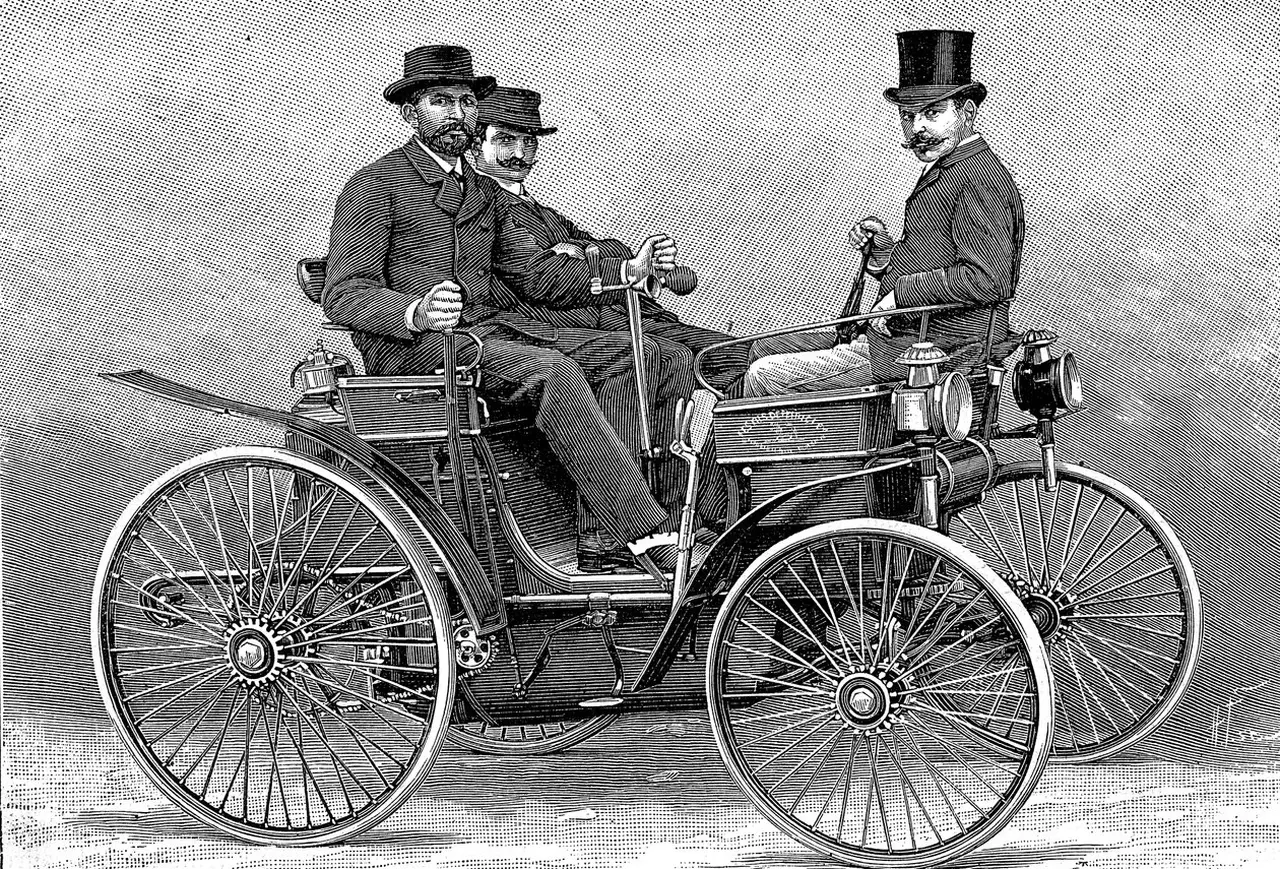
In 1891, Peugeot produced its first gasoline-powered automobile. This vehicle was equipped with Daimler engines from Germany and was one of the early automobiles that helped establish the foundations of the modern automobile. Under Armand Peugeot’s leadership, Peugeot grew rapidly and became one of France’s most important automobile manufacturers.
The First Peugeot Automobiles
Peugeot Type 1 (1886–1890)
The Peugeot Type 1 was a small steam-powered three-wheeled vehicle produced by Peugeot in 1886. It is considered one of the first steps taken by the brand into the automobile industry and an important milestone in automotive history.

At the time, the steam-powered three-wheeled vehicle designed by Léon Serpollet was one of the first motor vehicles to be produced using an industrial manufacturing process. Serpollet’s steam-powered design therefore holds an important place in the early history of motorized transportation.
Peugeot Type 2 (1890–1891)
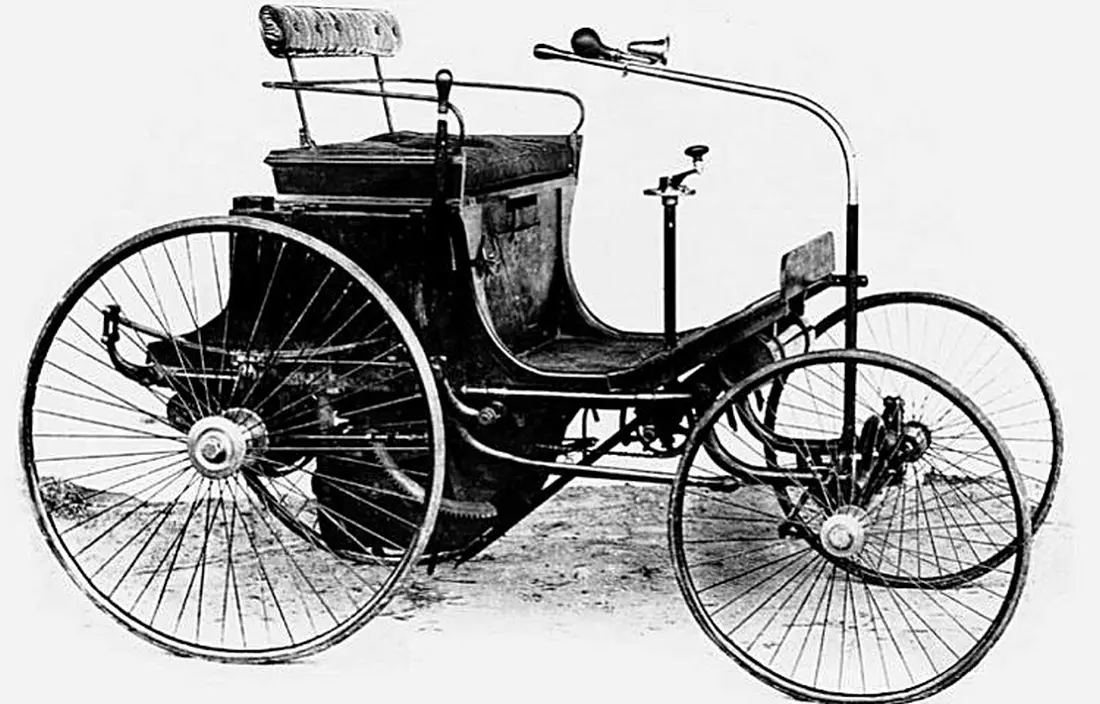
The Peugeot Type 2 was one of Peugeot’s first motorized vehicles and was powered by a Daimler engine imported from Germany. This four-wheeled vehicle used a 2-horsepower engine and could reach a maximum speed of 18 km/h. By using some of the most advanced technology available at the time, it offered an alternative form of transportation to traditional horse-drawn carriages. Only four examples were produced.
Engine and Performance
-
Engine: The Type 2 used a two-cylinder, four-stroke V-twin gasoline engine produced under a Daimler license. It had a displacement of 565 cc.
-
Power: The engine produced 2 horsepower (hp). Although this was relatively low by modern standards, it was appropriate for the vehicle’s technology and intended performance.
-
Top Speed: The Type 2 could reach a maximum speed of 18 km/h (11 mph), which was a respectable speed for an early automobile.
Cooling System
Cooling internal combustion engines was a major challenge during this period. The Peugeot Type 2 used a water-cooling system to address this issue. The engine was cooled through tubes containing water, an approach that contributed to the development of the radiator-based cooling systems that would later become common in automobiles.
Design and Construction
-
Wheelbase: 1,400 mm, giving the vehicle a relatively compact and maneuverable layout.
-
Length: The total length of the vehicle was 2,300 mm, making it small and practical by the standards of the period.
-
Suspension: The Type 2 featured a primitive suspension system. Suspension technology was still in its early stages at the time, but this represented another step toward the development of more advanced automotive suspension systems.
Design and Comfort
The engine was positioned directly beneath the seat and connected to the rear axle through a chain-drive system. This layout was characteristic of many early automobiles and provided a relatively simple method of transferring power to the wheels.
Although the overall design was quite basic, features such as its wide wheels and lightweight body helped provide suitable performance and road handling for the period.
Production and Historical Context
-
The Peugeot Type 2 was produced between 1890 and 1891 at Peugeot’s facilities in Valentigney, France.
-
Armand Peugeot began reshaping Peugeot toward automobile production in 1889, moving the company beyond its traditional businesses in cutlery and wire products.
-
The Type 2, which used a Daimler engine, represented one of Peugeot’s earliest major steps into automobile manufacturing.
-
It was also one of the early automobiles produced using technology developed under a Daimler license, demonstrating the potential of the internal combustion engine and establishing a foundation for Peugeot’s future development.
Peugeot Type 3 (1891–1894)
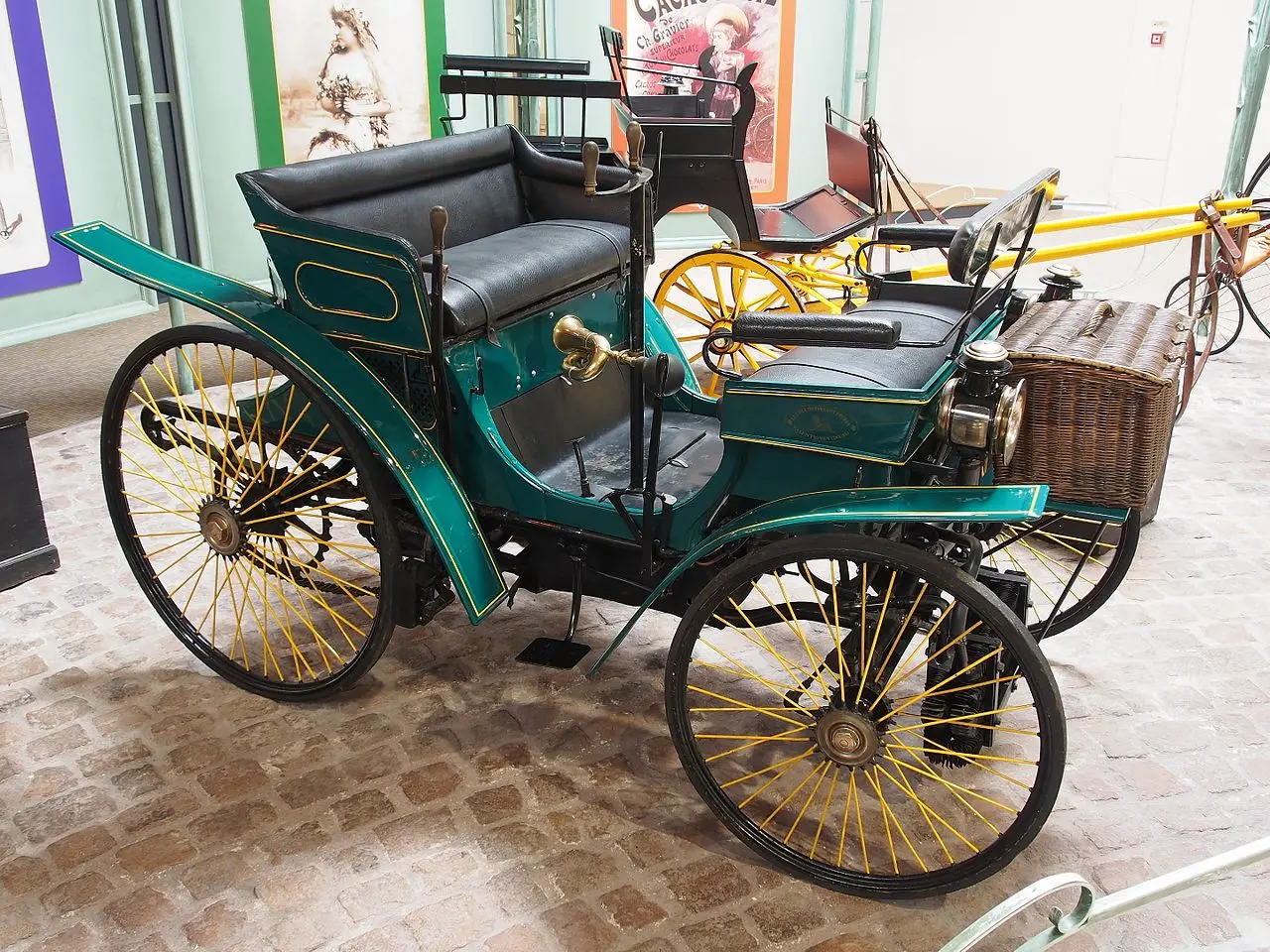
The Peugeot Type 3 was Peugeot’s first commercially produced gasoline-powered automobile. Although its engine had been designed by Daimler, it was manufactured in France by Panhard et Levassor, which had obtained the license to produce Daimler engines, and was then supplied to Peugeot.
The vehicle used a 15-degree V-twin engine producing 2 horsepower and could reach a maximum speed of approximately 18 km/h (11 mph). The Type 3 is widely regarded as one of the earliest series-produced automobiles in France. The first example was delivered in 1891, and a total of 64 units were produced.
Engine and Performance
-
Engine: The Peugeot Type 3 used a 15-degree V-twin engine designed by Daimler. Panhard et Levassor produced the engine under license before supplying it to Peugeot.
-
Power: The engine produced 2 horsepower (bhp).
-
Maximum Speed: The Type 3 could reach approximately 18 km/h (11 mph), which was a respectable speed for one of the first automobiles of the period.
Design and Construction
The Peugeot Type 3 featured a lightweight, practical, and relatively reliable design. These characteristics made it suitable for everyday use and gave it advantages over many early motor vehicles.
Production
The Type 3 entered broader production in 1891 and helped Peugeot reach a wider customer base as the company expanded its automobile manufacturing activities.
Racing and Demonstration Achievements
Paris–Brest–Paris Demonstration (1891)
Peugeot used a Type 3 as a demonstration vehicle in connection with the Paris–Brest–Paris cycling event to demonstrate the reliability and capabilities of the new automobile.
The demonstration vehicle traveled from Paris to Valentigney, home of Peugeot’s factory, and then returned to Paris, covering a total distance of approximately 2,045 km (1,271 miles). It completed the journey at an average speed of approximately 14.7 km/h (9.1 mph).
This was one of the longest journeys completed by a gasoline-powered automobile at the time and demonstrated the endurance and reliability of the Type 3. The achievement helped Peugeot establish credibility as a serious automobile manufacturer.
Paris–Bordeaux–Paris Race (1895)
A lightweight version of the Type 3 participated in the Paris–Bordeaux–Paris event and finished in second place.
During the event, the vehicle achieved an average speed of approximately 21.7 km/h (13.5 mph), further demonstrating the capabilities of Peugeot’s early automobiles.
Production in Italy
In 1891, Costruzioni Meccaniche di Saronno in Varese, Italy, began assembling the Peugeot Type 3 under license. This marked an early step in Peugeot’s international expansion in automobile production and marketing.
The Peugeot Type 3 represents an important milestone in Peugeot’s history as an automobile manufacturer. Its combination of practicality, durability, and participation in early motoring events helped establish the foundations of Peugeot’s future success. Peugeot’s early adoption of internal combustion engine technology would become one of the most important factors in the company’s subsequent development.
Peugeot Type 4 (1892)
The Peugeot Type 4 was a special automobile produced by Peugeot in 1892. Only one example was built, specifically for Ali Muddat ibn al-Husayn, the Bey of Tunis.

The Type 4 was designed with a more powerful engine than some of the earlier Peugeot models. Its bodywork was styled in a manner resembling the traditional horse-drawn carriages of the period, reflecting the transitional nature of early automobile design.
Peugeot Type 5 (1893–1896)
The Peugeot Type 5 was a small automobile produced and sold by Peugeot between 1893 and 1896. Mechanically, it was not radically different from the Type 3, but it had a more compact and lightweight structure.
This reduced weight helped improve the vehicle’s agility, although its performance was less impressive than that of some of Peugeot’s larger models. A total of 14 examples were produced and sold.

Engine and Performance
-
Engine Power: The Type 5 was equipped with an engine producing 2 horsepower.
-
Design and Weight: Compared with the Type 3, the Peugeot Type 5 was shorter and lighter, which made it more agile.
Racing Participation and Historical Importance
Paris–Rouen 1894
The Peugeot Type 5 participated in the famous 1894 Paris–Rouen event, one of the earliest major motoring competitions. The event was organized by Le Petit Journal and became an important moment in the early history of automobile competition.
Peugeot drivers such as Albert Lemaître and Louis Rigoulot participated. Albert Lemaître finished among the leading competitors with a Peugeot Type 5, marking one of Peugeot’s earliest major successes in organized motoring.
However, some historical accounts and exhibition labels have described the event as the first motor race won by a Peugeot Type 5. The historical interpretation is somewhat more complicated because the organizers did not formally define the event purely as a race, and some claims concerning the finishing positions of individual Type 5 examples differ between sources.
Nevertheless, the participation of the Peugeot Type 5 was an important moment in Peugeot’s early involvement in motor sport and demonstrated the company’s growing interest in using competition to prove the capabilities of its automobiles.
The Peugeot Type 5 was produced and sold between 1893 and 1896. Its participation in one of the earliest major automobile events gave it an important place in the history of motoring. With its 2-horsepower engine and compact design, the model contributed to the development of early automobile technology, even though its performance was relatively modest compared with some larger Peugeot models.
Peugeot Type 6 (1894)
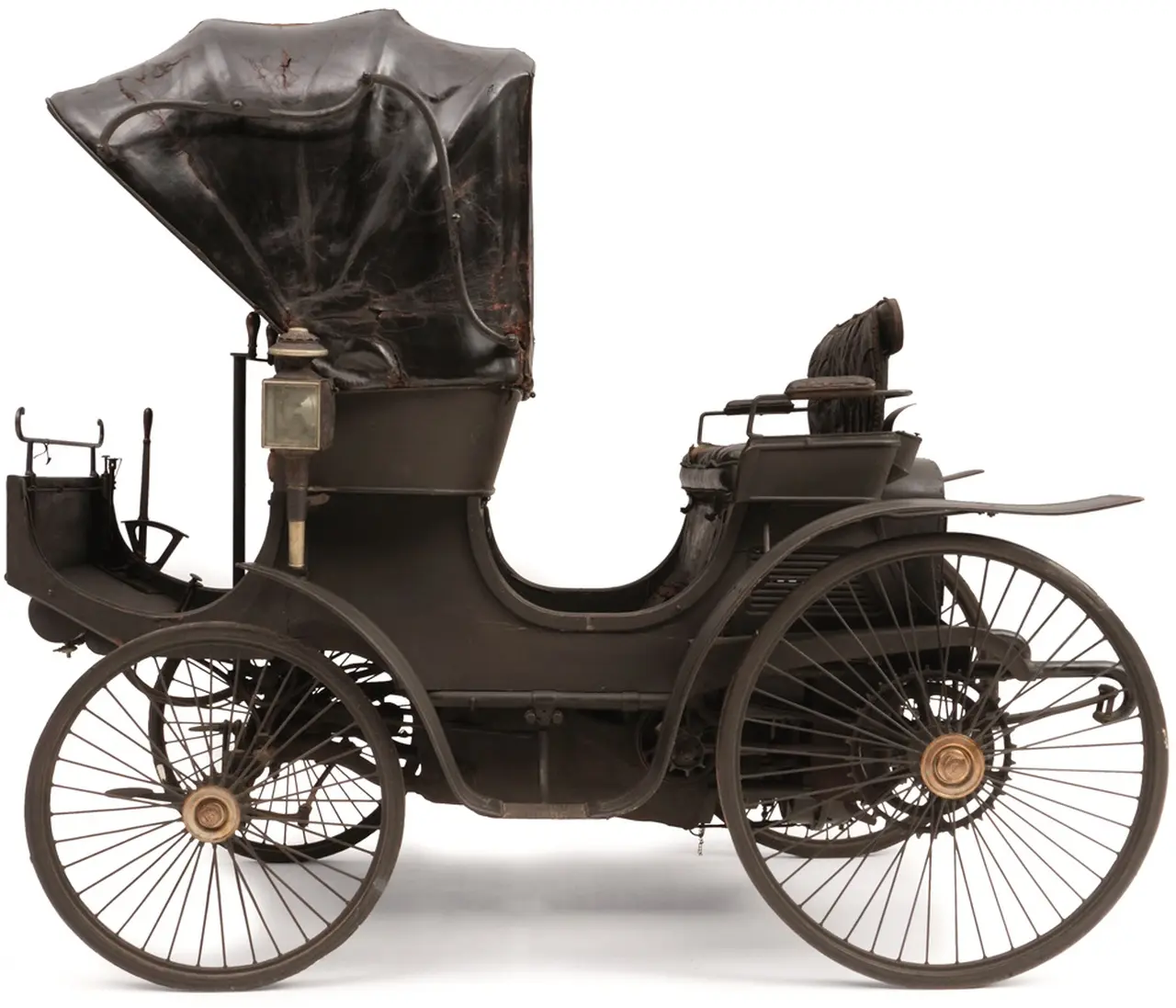
The Peugeot Type 6 was an automobile produced by Peugeot in 1894. Production was extremely limited, with only seven examples built and sold. One of these vehicles is preserved and displayed at the Louwman Museum in the Netherlands.
The Type 6 represents another important example of Peugeot’s early automobile engineering and provides a glimpse into the technological development of motor vehicles during the 1890s.
Engine and Performance
-
Engine Type: The Peugeot Type 6 used a two-cylinder, four-stroke engine produced under a Daimler license.
-
Engine Displacement: The engine had a displacement of 565 cc and produced approximately 2 horsepower.
-
Drive System: Power was transferred to the rear wheels through a chain-drive system, a common solution in early automobiles.
Design and Construction
The Peugeot Type 6 was larger than the Type 5 and featured a broader overall structure. Its engine was positioned at the rear, where it drove the rear wheels through chains.
Production and Preservation
Only seven Type 6 vehicles were produced. This extremely limited production makes the model particularly rare and historically significant. The surviving example displayed at the Louwman Museum provides an opportunity to see Peugeot’s early automotive engineering in preserved form.
The Type 6, with its 565 cc engine, 2 horsepower output, rear-mounted engine, and chain-driven rear wheels, illustrates the experimental nature of automobile design during the early 1890s. During this period, Peugeot was rapidly establishing itself as one of Europe’s emerging automobile manufacturers.
Peugeot Type 7 (1894–1897)
The Peugeot Type 7 was produced between 1894 and 1897. It shared its chassis and many mechanical components with the Peugeot Type 6, but featured a significantly more powerful engine.
The Type 7 used an engine roughly twice the size and power of the Type 6’s engine, making it a more capable automobile.

Engine and Performance
-
Engine: A 1,282 cc V-twin Daimler engine was used.
-
Power: The engine produced approximately 3.7 horsepower.
-
Engine Location: The engine was mounted at the rear of the vehicle.
-
Cooling: A radiator was positioned at the front of the vehicle, while coolant circulated through tubes incorporated into the chassis before reaching the engine.
-
Top Speed: The Type 7 could reach approximately 18–20 km/h.
Design and Construction
The Peugeot Type 7 shared the chassis of the Type 6 and many of its mechanical components, but its larger engine gave it significantly greater performance.
The vehicle featured a four-passenger phaeton-style body, giving it a practical layout for transporting several occupants.
Depending on the version, the wheels could feature rubber-covered steel-spoke construction or wooden wheels.
The Type 7 also used a four-speed transmission with a cone clutch, while power was delivered to the rear wheels through chains.
Production and Development
The Type 7 was produced between 1894 and 1897, with production numbers remaining limited. The 1,282 cc V-twin engine used in the Type 7 was also used in the subsequent Peugeot Type 8, demonstrating the importance of this engine design in Peugeot’s early development.
The Peugeot Type 7 was an important example of the company’s rapid progress during the 1890s. Its larger engine, four-passenger body, radiator cooling, multi-speed transmission, and chain drive demonstrated how quickly Peugeot was moving beyond the earliest experimental automobiles toward more practical vehicles.
Peugeot’s Important Innovations and Milestones
Peugeot played an important role in the early development of the automobile industry and introduced or adopted several significant innovations throughout its history:
-
1889 – Peugeot produced its first steam-powered automobile.
-
1891 – Peugeot introduced its first internal-combustion gasoline-powered automobile.
-
1905 – Peugeot began producing light commercial vehicles.
-
1910 – The company overcame internal divisions within the family and consolidated its operations under a single structure.
-
1929 – The Peugeot 201 was introduced. It became an important model in the company’s history and was among the early French automobiles to feature advanced suspension technology.
-
1955 – The Peugeot 403 was introduced with a diesel engine option, becoming one of the first French passenger cars to offer diesel power.
-
1979 – Peugeot acquired Chrysler’s European operations, significantly expanding its international automotive presence.
-
1983 – The Peugeot 205 was launched and became one of the most iconic models in the company’s history.
Peugeot’s Position Today
Today, Peugeot operates as part of the Stellantis group. The brand continues to develop electric and hybrid vehicles while investing in new technologies and lower-emission mobility solutions.
The company’s transformation from a 19th-century metalworking business into an international automobile manufacturer was closely connected to the vision of figures such as Armand Peugeot. His willingness to move into new technologies and transportation helped Peugeot establish itself in the rapidly developing automobile industry.
Armand Peugeot’s entrepreneurial spirit and willingness to invest in emerging technology played a major role in shaping Peugeot’s identity as an automobile manufacturer. The early Type models, despite their primitive technology and very limited production numbers, formed the foundation for a brand that would eventually become one of the best-known names in the global automotive industry.