TR
TR EN
EN

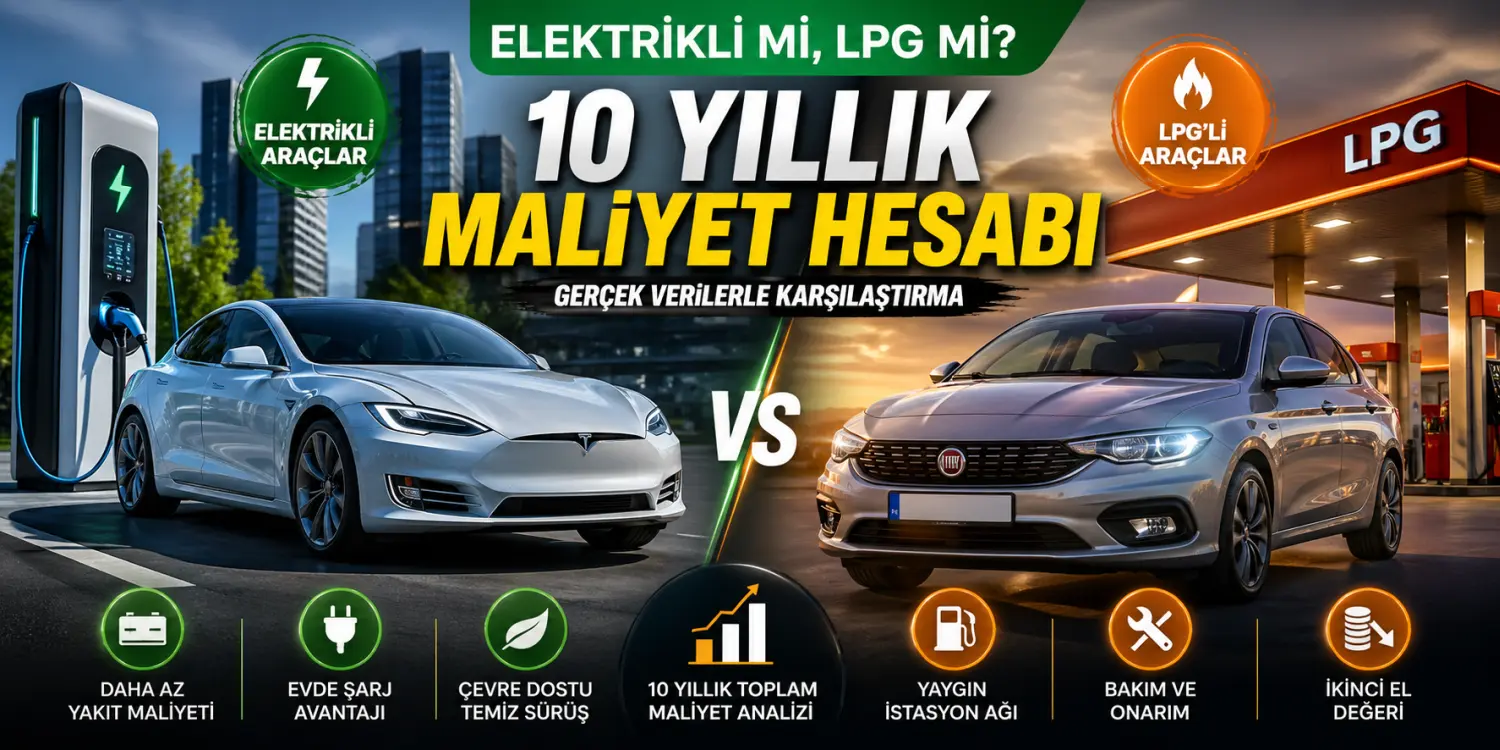
LPG vs Electric Cars: The Real 10-Year Cost Comparison in Europe (2026)
Choosing between an LPG-powered car and an electric vehicle (EV) is no longer just about fuel prices. In Europe, the real cost of ownership includes energy costs, maintenance, depreciation, charging habits, and potential battery replacement expenses.
While electricity is generally much cheaper than LPG on a per-kilometer basis, the overall financial picture depends on how and where you charge, how much you drive, and how long you plan to keep the vehicle.
This guide uses typical European market averages for 2026 to compare the long-term costs of owning an LPG vehicle versus an electric car.
Note: Energy prices vary between European countries. The figures below are representative averages designed for comparison rather than exact local costs.
Assumptions Used in This Comparison
To keep the comparison realistic, we'll use the following assumptions:
-
Annual driving distance: 15,000 km
-
Ownership period: 10 years
-
Total distance: 150,000 km
-
Average LPG consumption: 9 L/100 km
-
Average EV consumption: 18 kWh/100 km
Average LPG Costs in Europe (2026)
Although LPG remains significantly cheaper than gasoline or diesel in many European countries, prices differ considerably.
Average European LPG price (2026):
-
€0.95–€1.20 per litre
-
Average used in this comparison: €1.05/L
Average vehicle consumption:
-
9 litres per 100 km
Estimated fuel cost:
9 × €1.05 = €9.45 per 100 km
Average cost:
-
100 km: approximately €9.45
-
1 km: approximately €0.095
LPG continues to be an economical option, particularly for drivers covering long annual distances.
Electric Vehicle Charging Costs in Europe (2026)
Charging costs depend almost entirely on where you charge your vehicle.
Typical European charging prices:
-
Home charging: €0.25–€0.35 per kWh
-
Public AC charging: €0.40–€0.60 per kWh
-
DC fast charging: €0.60–€0.85 per kWh
For this comparison we'll use:
-
Home: €0.30/kWh
-
Public AC: €0.50/kWh
-
DC Fast Charging: €0.70/kWh
Average EV consumption:
-
18 kWh per 100 km
Estimated charging costs:
Home Charging
18 × €0.30 = €5.40 per 100 km
Public AC Charging
18 × €0.50 = €9.00 per 100 km
DC Fast Charging
18 × €0.70 = €12.60 per 100 km
Average cost per kilometre:
-
Home: €0.054/km
-
Public AC: €0.090/km
-
DC Fast Charging: €0.126/km
Drivers who primarily charge at home generally enjoy the lowest running costs.
Cost Comparison Per 100 km
| Vehicle | Cost per 100 km |
|---|---|
| Electric (Home Charging) | €5.40 |
| Electric (Public AC) | €9.00 |
| Electric (DC Fast Charging) | €12.60 |
| LPG Vehicle | €9.45 |
Cost Comparison Per Kilometre
| Vehicle | Cost per km |
|---|---|
| Electric (Home Charging) | €0.054 |
| Electric (Public AC) | €0.090 |
| Electric (DC Fast Charging) | €0.126 |
| LPG Vehicle | €0.095 |
Energy Cost Over 10 Years
Assuming a total driving distance of 150,000 km:
Electric Vehicle (Mostly Home Charging)
150,000 × €0.054
Total electricity cost: approximately €8,100
Electric Vehicle (Mixed Charging)
Assuming an average of €0.09/km
150,000 × €0.09
Total electricity cost: approximately €13,500
Electric Vehicle (Mostly DC Fast Charging)
150,000 × €0.126
Total electricity cost: approximately €18,900
LPG Vehicle
150,000 × €0.095
Total LPG cost: approximately €14,175
What About Battery Replacement?
Battery replacement is one of the biggest concerns for potential EV buyers, but it is also one of the most misunderstood topics.
Modern EV batteries are designed to last much longer than many people assume.
Typical battery warranty:
-
8 years or 160,000 km (manufacturer dependent)
Many batteries continue operating well beyond 250,000 km while retaining most of their original capacity.
If replacement eventually becomes necessary, costs vary significantly depending on the vehicle.
Typical replacement cost (2026):
-
Small EVs: €5,000–€8,000
-
Mid-size EVs: €8,000–€15,000
-
Premium models: €15,000–€25,000 or more
It's important to note that most owners never replace the battery during normal ownership, especially if they sell the vehicle within 8–10 years.
Battery prices have also been declining steadily over the past decade.
Maintenance Costs
Energy costs are only one part of vehicle ownership.
Electric Vehicles
Generally require:
-
No engine oil changes
-
No spark plugs
-
No timing belts
-
No exhaust system repairs
-
No clutch replacement (for most models)
-
Less brake wear due to regenerative braking
Typical maintenance costs are generally lower than those of internal combustion vehicles.
LPG Vehicles
Still require:
-
Engine oil changes
-
Air and fuel filters
-
Spark plug replacement
-
Cooling system maintenance
-
Exhaust repairs
-
Clutch maintenance (manual vehicles)
-
LPG system inspections and servicing
Maintenance costs are typically higher than for electric vehicles, although they remain relatively affordable compared with gasoline or diesel cars.
Which Option Makes More Sense?
Choose an Electric Vehicle if you:
-
Have access to home charging
-
Primarily drive in urban areas
-
Cover predictable daily distances
-
Want lower maintenance costs
-
Plan to benefit from local EV incentives where available
Choose an LPG Vehicle if you:
-
Frequently drive long distances without reliable charging infrastructure
-
Need quick refueling
-
Already own an LPG-equipped vehicle
-
Live in an area where charging infrastructure is still limited
Final Thoughts
The comparison between LPG and electric vehicles has become much more balanced in 2026.
For drivers who can charge at home, electric vehicles generally offer the lowest energy costs and reduced maintenance expenses.
However, drivers who rely heavily on expensive public fast chargers may see much of that financial advantage disappear.
LPG remains an attractive option because of its widespread availability, relatively low fuel costs, and familiar ownership experience.
Rather than asking "Which is cheaper?", the better question is:
"Which one best matches how and where I drive?"
For many European drivers, the answer depends less on the vehicle itself and more on daily driving habits, charging access, and long-term ownership plans.
Frequently Asked Questions
Is an electric car always cheaper to run than an LPG car?
Not necessarily. Home charging is usually the most economical option, but frequent reliance on public DC fast chargers can significantly increase operating costs.
How long do EV batteries usually last?
Most manufacturers provide warranties of around 8 years or 160,000 km, and many batteries continue performing well for much longer with gradual capacity loss rather than sudden failure.
Is LPG still popular in Europe?
Yes. LPG remains widely used in countries such as Poland, Italy, Turkey, and several Central and Eastern European markets due to its relatively low fuel costs.
Which vehicle has lower maintenance costs?
Electric vehicles generally require less routine maintenance because they have fewer moving mechanical parts and no conventional engine servicing requirements.
Is battery replacement inevitable after 10 years?
No. While battery degradation occurs over time, many EV batteries remain perfectly usable well beyond ten years, and complete battery replacement is far less common than many people assume.