TR
TR EN
EN

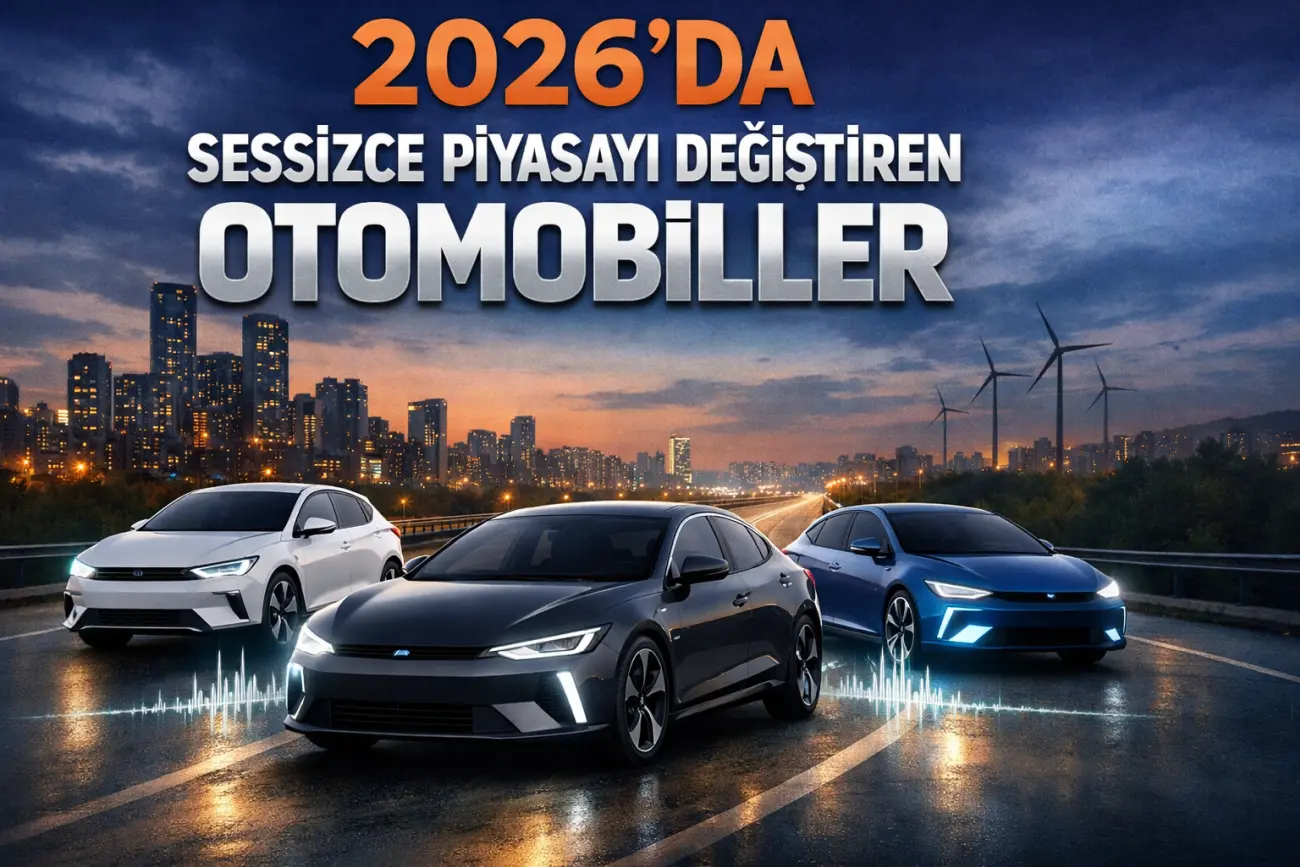
Cars Quietly Reshaping the Automotive Market in 2026
The automotive industry in 2026 is undergoing one of its biggest transformations in decades—but not through dramatic product launches or overnight disruptions. Instead, the market is evolving through gradual changes in consumer behavior, technology adoption, and economic priorities.
Electric vehicles are becoming mainstream, hybrid models continue to bridge the gap between traditional and electric mobility, SUVs remain the dominant body style, and Chinese manufacturers are expanding rapidly into global markets. These developments are reshaping the industry in ways that many drivers may not immediately notice.
This article explores the vehicles and market trends that are quietly changing the automotive landscape in 2026.
A Market Transformation Happening Behind the Scenes
Major shifts in the automotive industry rarely happen overnight.
Instead of sudden revolutions, markets typically evolve through gradual changes in:
-
Consumer preferences
-
Government regulations
-
Technology improvements
-
Manufacturing strategies
-
Ownership costs
The transition away from traditional internal combustion engines is a perfect example. Rather than replacing gasoline vehicles instantly, the market is slowly adapting to new forms of mobility.
Many vehicles influencing this change are not necessarily the best-selling or most talked-about models. Instead, they are quietly changing how people think about owning and using a car.
Electric Vehicles Are Becoming the New Normal
Electric vehicles (EVs) are no longer viewed as experimental technology or niche products.
For many buyers, especially in urban areas, they have become practical everyday vehicles.
Several factors are driving this shift:
-
Lower operating costs
-
Reduced maintenance requirements
-
Expanding charging infrastructure
-
Government incentives in many countries
-
Improved driving range
Popular models such as the Tesla Model Y, Tesla Model 3, and Togg T10X demonstrate how electric vehicles are changing ownership expectations.
Instead of focusing solely on horsepower or acceleration, buyers increasingly compare:
-
Charging costs
-
Battery warranty
-
Total ownership expenses
-
Software features
-
Charging convenience
For many drivers, fuel stations are gradually becoming less central to daily life.
Hybrids Continue to Play a Key Role
Although fully electric vehicles continue gaining popularity, hybrid vehicles remain one of the most practical solutions for many consumers.
Hybrid technology allows drivers to enjoy:
-
Better fuel economy
-
Lower emissions
-
Reduced fuel costs
-
Familiar driving habits
-
No dependence on public charging
Vehicles such as the Toyota Corolla Hybrid and Toyota C-HR Hybrid continue attracting buyers who want improved efficiency without changing their daily routines.
For many markets, hybrids serve as a transition toward full electrification rather than a competing technology.
Chinese Manufacturers Are Changing Global Competition
One of the biggest automotive stories of recent years has been the rapid expansion of Chinese automakers.
Initially, many consumers viewed these brands primarily as affordable alternatives.
Today, companies such as BYD Atto 3 and BYD Seal are competing through technology, equipment levels, battery innovation, and software integration rather than simply offering lower prices.
Many Chinese manufacturers now compete by providing:
-
Advanced infotainment systems
-
High equipment levels
-
Competitive electric driving range
-
Modern battery technology
-
Attractive pricing
Their growing presence is increasing competition across nearly every vehicle segment.
SUVs Continue Their Dominance
Another trend showing no signs of slowing is the popularity of SUVs and crossover vehicles.
Consumers continue choosing SUVs because they offer:
-
Higher seating positions
-
Easier entry and exit
-
Flexible cargo space
-
Comfortable family transportation
-
Strong resale demand
While sedans remain important in many regions, SUVs now represent the preferred body style for a significant portion of new-car buyers.
Manufacturers are responding by expanding SUV lineups while gradually reducing investment in traditional passenger cars.
Buying Decisions Are Becoming More Financial
One of the biggest changes in 2026 isn't technological—it's psychological.
Car buyers increasingly evaluate vehicles based on long-term financial considerations rather than brand image alone.
Today's consumers often compare:
-
Total cost of ownership (TCO)
-
Fuel or electricity costs
-
Maintenance expenses
-
Insurance premiums
-
Resale value
-
Availability of replacement parts
-
Financing options
As vehicle prices continue rising, practical ownership costs have become just as important as performance or styling.
Software Is Becoming Just as Important as Hardware
Modern vehicles are increasingly defined by software.
Many new cars receive:
-
Over-the-air (OTA) updates
-
Improved driver assistance features
-
Navigation enhancements
-
Battery management improvements
-
Infotainment upgrades
This represents a major shift from previous decades, when vehicle features remained largely unchanged after leaving the factory.
Today's vehicles continue evolving throughout their ownership life through software updates.
Consumers Are Prioritizing Efficiency Over Performance
For many years, horsepower was one of the biggest selling points.
Today, buyers are asking different questions:
-
How much does it cost to drive?
-
How expensive is maintenance?
-
How long will the battery last?
-
What is the resale value?
-
How reliable is the manufacturer?
Performance remains important, but efficiency and long-term affordability increasingly influence purchasing decisions.
Sustainability Is Influencing Design
Environmental regulations continue shaping vehicle development worldwide.
Manufacturers are focusing on:
-
Lower CO₂ emissions
-
Improved fuel economy
-
Battery recycling
-
Sustainable manufacturing
-
Lightweight construction
These priorities affect everything from engine design to interior materials and production methods.
As a result, many new vehicles emphasize efficiency over traditional notions of mechanical robustness.
What Defines Success in 2026?
The vehicles quietly changing the market are not necessarily the fastest or most luxurious.
Instead, successful models tend to combine:
-
Affordable ownership costs
-
Strong efficiency
-
Modern technology
-
Reliable software
-
Practical everyday usability
-
Good resale value
Consumers increasingly value vehicles that simplify ownership rather than simply offering more power or premium features.
Final Thoughts
The automotive market in 2026 is experiencing a transformation that is gradual rather than dramatic.
Electric vehicles continue expanding into the mainstream, hybrid technology remains an important transition solution, SUVs dominate consumer demand, and Chinese manufacturers are becoming major global competitors.
Perhaps the biggest change is not the vehicles themselves, but the way people choose them.
For many buyers, a car is no longer simply a means of transportation or a symbol of status—it has become a carefully calculated financial decision based on long-term value, efficiency, technology, and practicality.
The quiet changes happening today are likely to shape the automotive industry for many years to come.