TR
TR EN
EN

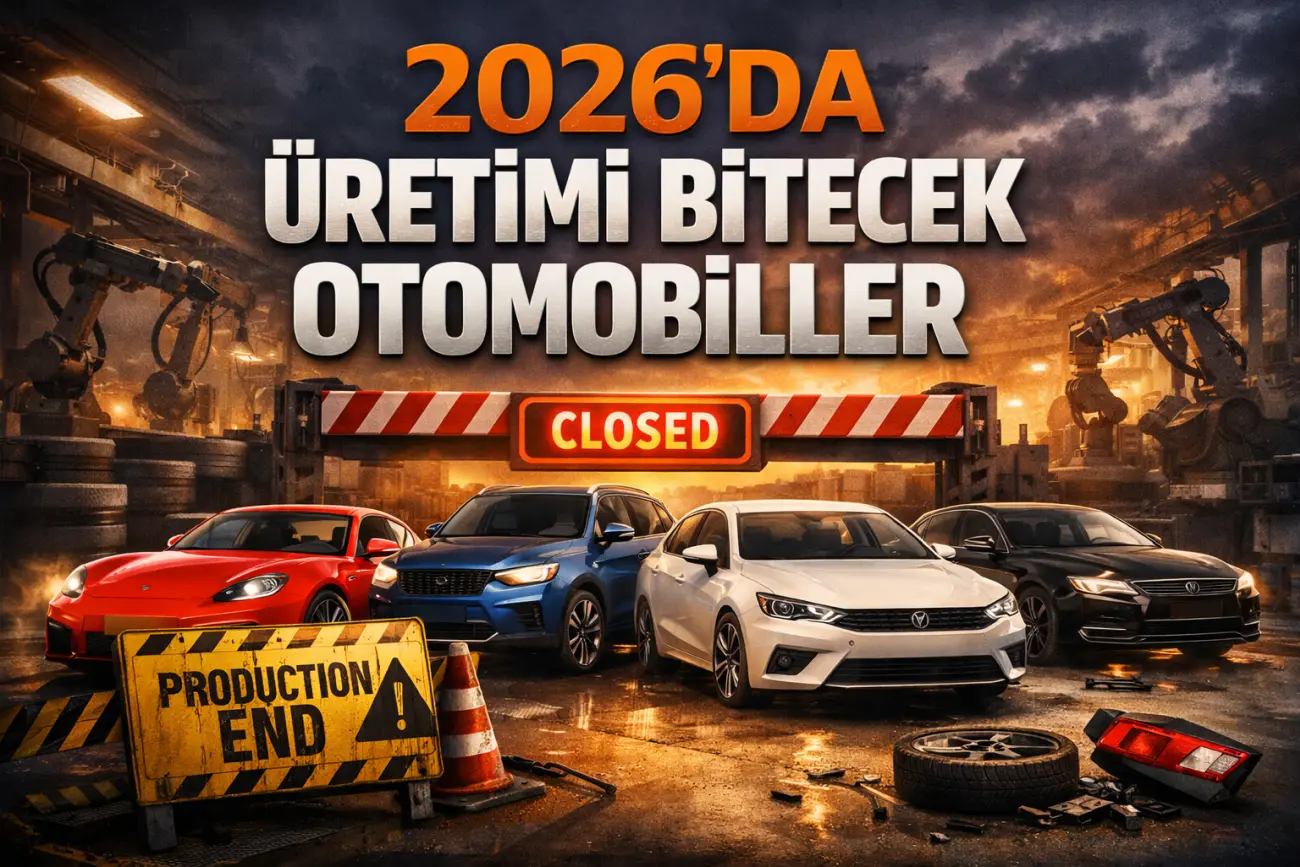
Which Cars Are Being Discontinued in 2026?
The automotive industry is changing faster than ever. Stricter emissions regulations, electrification, rising production costs, and new vehicle platforms are forcing manufacturers to retire many familiar models. As a result, 2026 will be a significant transition year for the European automotive market.
Some iconic cars will leave production permanently, while others will be replaced by new electric or hybrid successors. Here's a look at some of the most notable vehicles that are ending production in or around 2026.
Alpine A110: The End of a Lightweight Sports Car
The Alpine A110 revived the legendary French sports car with its lightweight design and excellent driving dynamics. After nearly a decade on the market, production is coming to an end.
Its successor is expected to be a fully electric sports coupe, marking Alpine's transition toward an all-electric future.
Production: 2017–2026
Audi Retires Several Popular Models
Audi is streamlining its lineup as it shifts its focus toward electric mobility.
Models reaching the end of production include:
-
Audi A1
-
Audi Q2
-
Audi A7 Sportback
The company plans to concentrate on larger premium models and new electric SUVs under its expanding EV strategy.
Production years:
-
Audi A1: 2018–2026
-
Audi Q2: 2016–2026
-
Audi A7 Sportback: 2017–2026
BMW Says Goodbye to Several Iconic Models
BMW is also reducing its traditional combustion-engine lineup.
Models leaving production include:
-
BMW Z4 Roadster
-
BMW 8 Series Coupe
-
BMW X4
BMW's future development is increasingly centered around its Neue Klasse electric platform.
Production years:
-
BMW Z4: 2018–2026
-
BMW 8 Series: 2018–2025
Ford Focus Leaves the European Market
One of Europe's most recognizable hatchbacks is reaching the end of its journey.
The Ford Focus has been a best-selling family car for decades, but changing consumer preferences toward SUVs and crossovers have brought its production to an end.
Production: 2018–2025
Fiat Tipo (Egea) Nears the End of Production
Known as the Fiat Tipo across Europe (and Fiat Egea in Türkiye), this affordable family car has been one of Fiat's most successful recent models.
Production is expected to conclude as Stellantis prepares new compact crossover and electrified models.
Production: 2015–2026
Honda Civic Type R Exits Europe
The latest Honda Civic Type R represents one of the last high-performance front-wheel-drive hot hatches.
However, increasingly strict European emissions regulations make its future difficult, and production for Europe is expected to end.
Production: 2022–2026
Jeep Renegade Makes Way for New SUVs
The Jeep Renegade, one of the brand's smallest SUVs, is being discontinued as Jeep focuses on newer electrified models such as the Avenger.
Production: 2014–2025
Mercedes-Benz Restructures Its Lineup
Mercedes-Benz is simplifying its portfolio while preparing its next generation of electric vehicles.
Several models are expected to disappear or undergo major replacement, including:
-
EQE
-
EQE SUV
-
B-Class (future uncertain)
-
EQB (future uncertain)
The company is increasingly focusing on flexible electric and hybrid vehicle platforms.
Mitsubishi Space Star Ends Production
Small city cars continue disappearing across Europe due to tighter regulations and lower profitability.
The Mitsubishi Space Star is among the latest casualties.
Production: 2012–2025
Porsche Ends the Gasoline Era for the 718
The current Porsche 718 Cayman and 718 Boxster represent the final generation powered exclusively by internal combustion engines.
Future versions are expected to adopt fully electric powertrains.
Production years:
-
Porsche 718 Cayman: 2016–2025
-
Porsche 718 Boxster: 2016–2025
Renault Arkana Leaves Production
The Renault Arkana helped popularize the affordable coupe-SUV segment in Europe.
As Renault updates its SUV lineup, the Arkana is expected to be phased out.
Production: 2021–2026
Toyota GR Supra Nears the Finish Line
Toyota's modern sports coupe is also approaching the end of its current production cycle.
Industry reports suggest that a future Supra may be developed entirely by Toyota rather than through a partnership.
Production: 2019–2026
Volkswagen Touareg Faces Retirement
Volkswagen's flagship combustion-powered SUV is expected to leave production as the company expands its electric ID family.
The Touareg has served as Volkswagen's premium SUV for over two decades, but the future belongs to electric alternatives.
Current generation: 2018–2026
Volvo V90 Marks the Decline of Traditional Wagons
The Volvo V90 has been one of the last premium station wagons available in Europe.
As Volvo accelerates its electrification strategy, production is coming to an end.
Production: 2016–2025
Why Are So Many Cars Being Discontinued?
Several industry trends are driving these decisions:
-
Stricter European emissions regulations
-
Rapid expansion of electric vehicles
-
Higher development and production costs
-
Declining demand for sedans and hatchbacks
-
Growing popularity of SUVs and crossovers
-
Manufacturers simplifying their product portfolios
Many companies are choosing to invest in fewer models with greater technological capabilities rather than maintaining extensive combustion-engine lineups.
What Does This Mean for Buyers?
If you're considering one of these vehicles, there are both advantages and disadvantages.
Potential benefits:
-
Attractive discounts before production ends
-
Proven mechanical reliability
-
Availability of replacement parts for many years
-
Strong value for buyers seeking traditional combustion vehicles
Things to consider:
-
Depreciation may vary depending on demand
-
Some models may lose factory option support over time
-
Future generations are likely to be electrified rather than gasoline-powered
Final Thoughts
The list of discontinued vehicles for 2026 highlights a major transformation across the automotive industry. Long-standing hatchbacks, sedans, roadsters, and sports cars are gradually disappearing as manufacturers prioritize electric mobility, software-defined vehicles, and crossover SUVs.
For enthusiasts, this marks the end of an era. For the industry, it represents the beginning of a new chapter where software, electrification, and connectivity will shape the future of driving.
In short: 2026 isn't just about saying goodbye to individual models—it signals a fundamental shift in how cars are designed, built, and experienced.