TR
TR EN
EN

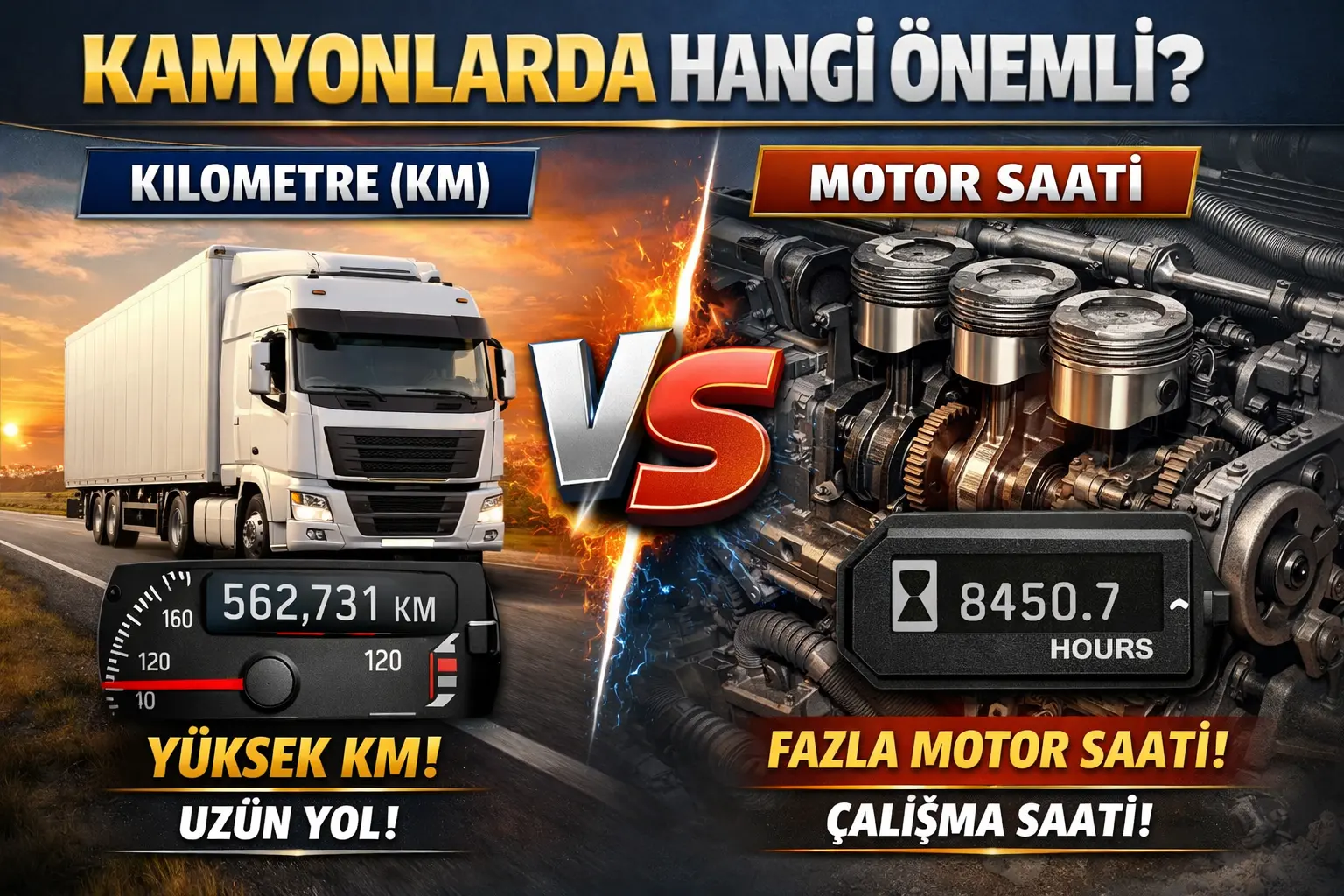
Which Is More Important in Trucks: Mileage or Engine Hours?
One of the most important factors when buying a truck or other heavy commercial vehicle is understanding how intensively it has actually been used. Many buyers focus only on the vehicle's mileage, but heavy-duty vehicles are different from passenger cars. In addition to mileage, the engine hour reading—which shows how long the engine has been running—is also a crucial indicator. In many cases, engine hours are considered even more important than mileage.
So, when evaluating a truck, which matters more: mileage or engine hours?
What Are Engine Hours?
Engine hours represent:
-
The total amount of time the engine has been running.
In other words:
-
Whether the vehicle is moving or stationary
-
As long as the engine is running
the engine hour counter continues to increase.
Engine hours are especially important for trucks used in:
-
Long idle operation
-
Construction sites
-
Freight transportation
-
Refrigerated logistics
What Does Mileage Show?
Mileage indicates:
-
The total distance traveled by the vehicle.
However, in heavy commercial vehicles, high mileage does not always mean excessive wear.
For example:
-
Trucks used mainly for long-distance highway driving
-
Vehicles operating at steady engine speeds
may experience less wear than expected.
Why Can Engine Hours Be More Important?
Truck engines often:
-
Run for long periods while idling.
This is especially common in:
-
Refrigerated trucks
-
Construction trucks
-
Dump trucks
In these situations:
-
The mileage may remain relatively low
-
But the engine may have accumulated many operating hours
Is Low Mileage Always an Advantage?
No.
Some trucks may have:
-
Low mileage
-
High engine hours
This may indicate:
-
Extensive engine use
-
Long periods of idling
rather than light usage.
Are Long-Haul Trucks Usually in Better Condition?
In many cases, yes.
Trucks that operate mainly on highways often benefit from:
-
Consistent engine operating temperatures
-
Fewer sudden load changes
-
Less stress on the transmission
As a result:
-
A high-mileage long-haul truck may actually be in better mechanical condition than a low-mileage truck used mainly for city driving.
How Should Engine Hours Be Interpreted?
Although there is no universal standard:
-
Average vehicle speed can be estimated.
For example:
-
500,000 km
-
10,000 engine hours
equals an average operating speed of approximately 50 km/h (31 mph).
However:
-
A very low average speed
may indicate extensive city driving or prolonged idling.
What Are the Effects of High Engine Hours?
A high engine-hour reading can increase the risk of:
-
Turbocharger wear
-
General engine wear
-
Fuel system deterioration
-
Injector wear
Can Engine Hours Be Manipulated?
In many modern trucks:
-
Engine hours are stored in the vehicle's ECU (Engine Control Unit).
However:
-
Just like mileage, engine-hour data may be altered through unauthorized professional modifications.
For this reason, buyers should always verify:
-
Service records
-
ECU diagnostic reports
-
Maintenance history
before purchasing a vehicle.
What Should You Check When Buying a Truck?
Neither:
-
Mileage
nor
-
Engine hours
should be considered alone.
You should also inspect:
-
Transmission condition
-
Differential noise
-
Turbocharger health
-
Oil leaks
-
Chassis condition
-
Service and maintenance history
What Is the Best Way to Evaluate a Truck?
The most accurate assessment comes from analyzing:
-
Mileage together with engine hours.
For example:
-
Very low mileage + unusually high engine hours → extensive idling or low-speed operation
-
High mileage + balanced engine hours → primarily long-distance highway driving
These combinations provide a much clearer picture of how the vehicle has actually been used.
Conclusion
Evaluating a truck based solely on its mileage can be misleading. For heavy commercial vehicles, engine hours are often one of the best indicators of the vehicle's actual workload and operating history.
In some cases:
-
A low-mileage truck with very high engine hours
may be more worn than
-
A high-mileage truck that has spent most of its life on long highway routes.
Therefore, when purchasing a truck, you should evaluate:
-
Mileage
-
Engine hours
-
Maintenance history
-
Overall mechanical condition
together to make a well-informed decision.