TR
TR EN
EN

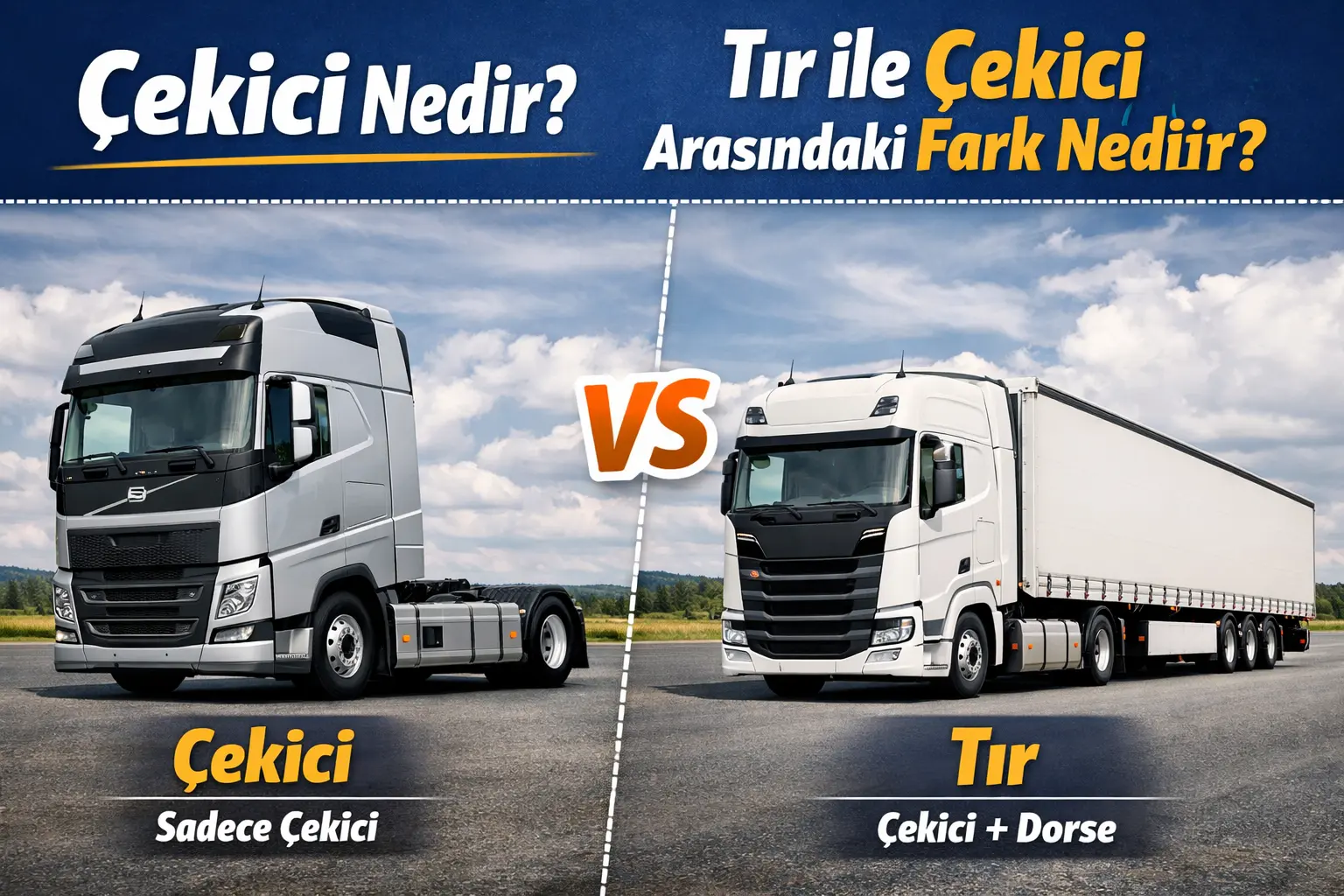
What Is a Tractor Unit? What Is the Difference Between a Truck Tractor and a Semi-Truck?
Large commercial vehicles are often referred to as "trucks" by the general public. However, in the heavy-duty transport industry, not every large vehicle is technically the same. One of the most commonly misunderstood terms is the tractor unit, which plays a vital role in freight transportation.
So, what exactly is a tractor unit, and how does it differ from what many people call a truck or semi-truck?
What Is a Tractor Unit?
A tractor unit (also known as a truck tractor or prime mover) is a motorized heavy-duty vehicle specifically designed to pull semi-trailers.
The tractor unit contains the vehicle's:
-
Engine
-
Transmission
-
Driver's cab
-
Drive axle and drivetrain
However, it does not carry cargo itself.
Instead, the cargo is transported in the semi-trailer attached to the rear of the tractor.
What Is a Semi-Truck?
In everyday language, many people refer to the entire vehicle as a truck or semi-truck.
Technically, a semi-truck consists of:
-
A tractor unit
-
A semi-trailer
working together as one complete combination vehicle.
Note: In Europe, the word TIR is commonly used in everyday speech for these vehicles, although it originally refers to the Transports Internationaux Routiers (TIR) international customs transit system rather than the vehicle itself.
Difference Between a Tractor Unit and a Semi-Trailer
Tractor Unit
The tractor unit is the powered section of the vehicle.
Its job is to:
-
Pull the trailer
-
Provide engine power
-
Control steering and braking
Semi-Trailer
The semi-trailer is the non-powered cargo section.
Its purpose is to:
-
Carry freight
-
Be towed by the tractor unit
Can a Tractor Unit Drive Without a Trailer?
Yes.
A tractor unit can operate independently without a trailer attached.
However, without a trailer, it cannot transport cargo.
Popular Tractor Unit Models
Some of the most widely used heavy-duty tractor units include:
-
Volvo FH
-
Scania R Series
-
DAF XF
-
MAN TGX
-
Mercedes-Benz Actros
These models are commonly used in long-distance freight transportation around the world.
Why Are Tractor Units Used?
Tractor units offer several important advantages:
-
Capable of hauling very heavy loads
-
Different trailers can be connected quickly
-
Ideal for long-distance transportation
-
Increased operational flexibility
For example, the same tractor unit can tow different trailer types, including:
-
Curtain-side trailers
-
Refrigerated (reefer) trailers
-
Tanker trailers
-
Lowboy (low-loader) trailers
This flexibility makes tractor units extremely efficient for logistics companies.
Difference Between a Tractor Unit and a Rigid Truck
Rigid Truck
-
Cargo body is permanently attached.
-
Vehicle consists of a single unit.
-
Trailer changes are generally not possible.
Tractor Unit
-
Cargo is carried on a detachable semi-trailer.
-
The trailer can easily be disconnected and replaced.
-
Offers much greater versatility.
What Features Are Important in a Tractor Unit?
For long-haul transportation, key considerations include:
-
Fuel efficiency
-
Engine performance
-
Retarder braking system
-
Transmission type
-
Driver comfort
-
Cabin space and ergonomics
These factors have a significant impact on operating costs and driver productivity.
What License Is Required to Drive a Tractor Unit?
License requirements vary by country.
In Türkiye, operating a tractor-trailer combination generally requires:
-
A Category CE driver's license
-
An SRC Professional Driver Certificate
-
A Psychotechnical Assessment Certificate for commercial transport
Drivers should always comply with the licensing and certification requirements applicable in their own country.
Conclusion
A tractor unit is the powered vehicle designed specifically to pull semi-trailers.
Although many people casually refer to the entire combination as a truck or semi-truck, the technical terminology is:
-
Front powered vehicle: Tractor unit (truck tractor)
-
Rear cargo section: Semi-trailer
-
Combined vehicle: Tractor-trailer or semi-truck
Understanding these terms is especially important in the logistics and transportation industry, where each component serves a distinct purpose and plays a critical role in efficient freight movement.