TR
TR EN
EN

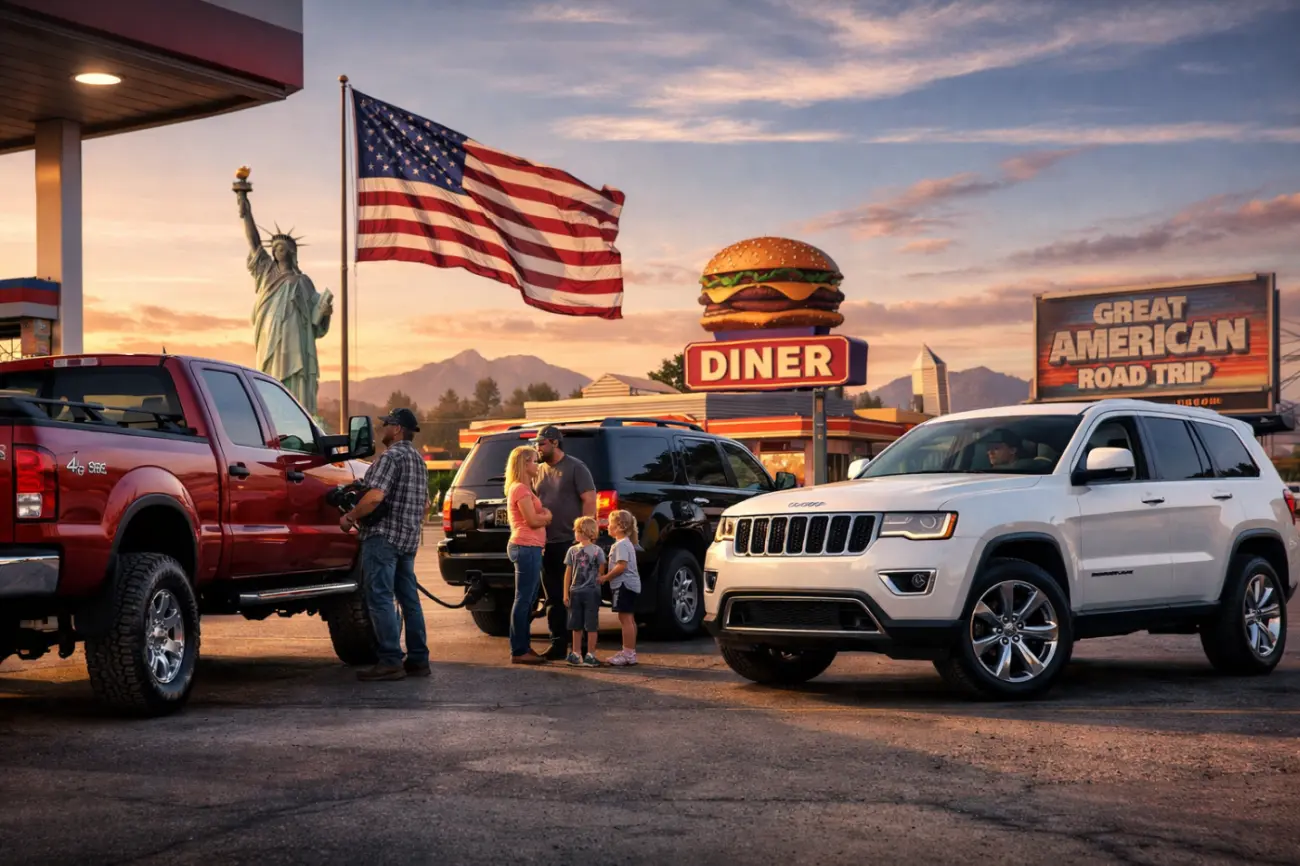
Why Do Americans Drive Huge Vehicles?
When people think of America, one of the first things that comes to mind is massive pickup trucks, full-size SUVs, and long-bodied vehicles. While compact hatchbacks dominate European roads, American highways are filled with large trucks and SUVs. But why do Americans love big vehicles so much? Is it simply a matter of preference, or are there economic, cultural, and geographical reasons behind it? Let's take a closer look.
America's Geography Favors Large Vehicles
The United States is one of the largest countries in the world by land area. Distances between cities can be enormous.
For example:
-
Traveling from one state to another can take several hours.
-
Long-distance highway driving is very common.
-
A significant portion of the population lives in rural areas.
As a result, many Americans prefer vehicles that are:
-
More comfortable
-
More spacious
-
Better suited for long-distance travel
While smaller cars are practical in urban environments, America's wide roads and long travel distances make larger vehicles far more convenient.
Fuel Was Affordable for Many Years
One of the biggest reasons behind America's large-engine vehicle culture is fuel prices.
For decades:
-
Gasoline was much cheaper than in Europe.
-
There were no heavy taxes based on engine displacement.
-
Engines as large as 5.0L, 6.2L, or even 7.0L were considered perfectly normal.
As a result, American consumers never felt pressured to buy small-engine economy cars.
While 1.0-liter engines became increasingly popular across Europe, Americans continued driving:
-
V6 engines
-
V8 engines
-
Large-displacement pickup truck engines
for many years.
Pickup Truck Culture Is Part of American Life
In the United States, pickup trucks are not viewed solely as commercial vehicles. They are an essential part of everyday life.
This is especially true in states such as:
-
Texas
-
Arizona
-
Montana
-
Wyoming
where owning a pickup truck is considered part of the local lifestyle.
People use pickup trucks for:
-
Towing campers
-
Hauling boats
-
Farm and ranch work
-
Long-distance travel
-
Family transportation
This is why vehicles like the Ford F-150, Chevrolet Silverado, and RAM 1500 have consistently ranked among America's best-selling vehicles.
Safety Perception Encourages Bigger Vehicles
Many American drivers believe larger vehicles provide better protection in an accident.
Features such as:
-
Higher seating position
-
Stronger body structure
-
Larger bumpers
-
Heavy-duty chassis
give drivers and passengers a stronger sense of security.
Because of this, many families choose large SUVs.
Popular examples include:
-
Chevrolet Tahoe
-
Ford Expedition
-
Cadillac Escalade
These full-size SUVs remain extremely popular throughout the United States.
Roads and Parking Spaces Are Much Larger
Unlike many European cities with narrow streets and limited parking, the United States offers infrastructure that easily accommodates larger vehicles.
American roads typically feature:
-
Wide highways
-
Larger traffic lanes
-
Spacious parking lots
-
Extensive suburban neighborhoods
Many homes also include:
-
Large garages
-
Private driveways
This makes owning and parking a large vehicle far more practical.
American Car Culture Values Power and Presence
For decades, American automotive culture has emphasized:
-
Powerful engines
-
Large vehicle bodies
-
High performance
-
Bold styling
The muscle car era of the 1960s and 1970s played a major role in shaping this culture.
Legendary models such as:
-
Ford Mustang
-
Dodge Charger
-
Chevrolet Camaro
became symbols of American performance and freedom.
Over time, this appreciation for size and power naturally extended to pickups and SUVs.
Family Life and Suburban Living Play a Major Role
Suburban living is extremely common in the United States. Many families live outside city centers and commute daily.
This lifestyle creates a greater need for vehicles that can handle:
-
Long daily commutes
-
Carrying large amounts of cargo
-
Transporting children and family members comfortably
SUVs and pickup trucks provide:
-
Spacious cargo areas
-
Large interiors
-
Comfortable long-distance travel
making them ideal family vehicles.
RV and Trailer Culture Is Extremely Popular
Americans frequently enjoy:
-
RV vacations
-
Boat ownership
-
Trailer towing
These activities require vehicles with high towing capacities.
Large pickups are preferred because they offer:
-
Excellent towing performance
-
Long-distance durability
-
Strong off-road capability
Automakers Also Promote Larger Vehicles
American manufacturers have long earned higher profits from larger vehicles.
Segments such as:
-
Pickup trucks
-
Full-size SUVs
-
Large-engine models
generate significantly higher profit margins.
For this reason, companies like Ford Motor Company, General Motors, and Stellantis continue investing heavily in these vehicle categories.
Even the Electric Vehicle Era Favors Large Vehicles
The shift toward electric vehicles has not changed America's preference for larger automobiles.
Examples include:
-
Tesla Cybertruck
-
Ford F-150 Lightning
-
Rivian R1T
These models demonstrate that even electric pickups remain extremely popular among American consumers.
Why Are Smaller Cars More Popular in Europe and Turkey?
Several factors explain the difference:
-
Higher fuel prices
-
Engine-displacement taxes
-
Narrow streets
-
Smaller parking spaces
-
Heavy urban traffic
As a result, vehicles such as:
-
Hatchbacks
-
Sedans
-
Compact SUVs
are far more common throughout Europe and Turkey.
Conclusion
Americans do not choose large vehicles simply for appearance or status. Their preference is influenced by geography, long-distance travel, relatively affordable fuel (historically), pickup truck culture, family-oriented lifestyles, and decades of automotive tradition.
While driving a large pickup or SUV has become a natural part of everyday life in the United States, economic conditions and urban infrastructure make smaller vehicles a more practical choice in Europe and Turkey.
In short, America's massive pickups and SUVs are more than just automobiles—they represent a lifestyle shaped by the country's geography, culture, and transportation needs.