TR
TR EN
EN

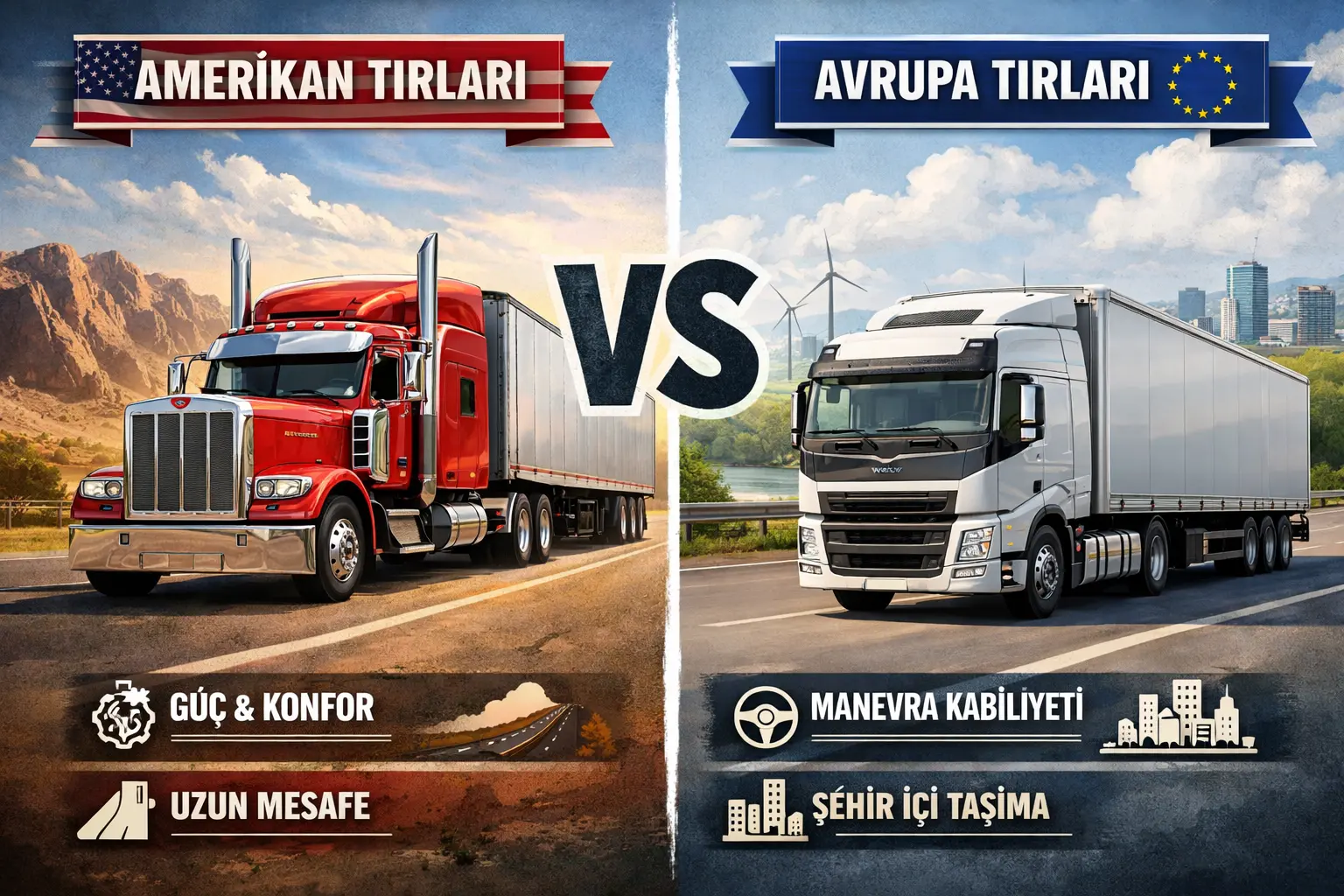
Why Do American Trucks Have Long Noses While European Trucks Have Flat Fronts?
One of the most noticeable differences between American and European trucks is their design. The massive long-nose tractors commonly seen on American highways look completely different from the flat-front, cab-over trucks that dominate European roads.
So why are long-nose trucks popular in the United States while cab-over trucks are the standard in Europe? Is it simply a design preference, or is it the result of road infrastructure, regulations, transportation culture, and economic factors? Let's take a closer look.
Why Are American Trucks Built with Long Noses?
In American trucks, the engine is positioned in front of the driver. As a result, the vehicle features a long hood (bonnet).
The main reasons behind this design include:
-
Long interstate highways
-
Wide roads
-
Large, powerful engines
-
Long-distance transportation
-
Driver comfort
-
American trucking culture
In the United States, trucks often travel thousands of miles across different states. Therefore, driver comfort is a major priority.
Some of the most iconic long-nose American trucks include:
-
Peterbilt 389
-
Kenworth W900
-
Freightliner Classic XL
Why Do European Trucks Have Flat Fronts?
In European trucks, the engine is located beneath the driver's cab. This configuration is known as a cab-over-engine (COE) design.
The primary reason for this layout is Europe's road and city infrastructure.
Compared to the United States, Europe has:
-
Narrower streets
-
More frequent urban maneuvering
-
Smaller parking areas
-
Tighter turning spaces
As a result, reducing the vehicle's overall length provides a significant advantage.
Popular European cab-over trucks include:
-
Mercedes-Benz Actros
-
Scania R Series
-
Volvo FH
-
MAN TGX
The Biggest Difference: Vehicle Length Regulations
One of the most important distinctions between American and European truck design comes from legal length restrictions.
In the United States
In many U.S. states:
-
Trailer length is the primary legal limitation.
-
Tractor length is much more flexible.
This allows manufacturers to build trucks with:
-
Larger engines
-
Bigger sleeper cabins
-
Longer hoods
As a result, the long-nose design creates few legal challenges.
In Europe
In Europe, regulations generally limit the combined length of the tractor and trailer.
This means:
-
The shorter the tractor,
-
The longer the trailer can be.
For logistics companies, maximizing trailer length means increasing cargo capacity, making cab-over trucks the preferred choice.
Why Do American Trucks Look More Comfortable?
American tractors typically offer:
-
Larger cabins
-
Spacious sleeper compartments
-
Higher rooflines
-
More living space
This is because many American truck drivers:
-
Spend several consecutive days on the road
-
Operate long-haul routes
-
Live inside their trucks while traveling
As a result, many American trucks are designed almost like small apartments.
Some models even include:
-
Large beds
-
Microwave ovens
-
Mini refrigerators
-
Televisions
Maneuverability Is More Important in Europe
European roads are generally much more complex than American highways.
Common conditions include:
-
Narrow city streets
-
Historic town centers
-
Sharp corners
-
Busy ports and industrial areas
These environments make cab-over trucks much more practical.
A shorter tractor provides:
-
A tighter turning radius
-
Easier maneuverability
-
Better urban driving performance
For these reasons, long-nose trucks have never become common in Europe.
How Does Engine Placement Affect Performance?
Long-Nose American Trucks
The engine is located in front of the cab.
Advantages include:
-
Easier engine access for maintenance
-
Simpler servicing
Additionally:
-
Heat and engine noise remain farther from the driver
-
Long-distance comfort may improve
European Cab-Over Trucks
The engine is positioned beneath the cab.
Advantages include:
-
Shorter overall vehicle length
-
Better maneuverability
-
More available cargo space
Disadvantages include:
-
Engine access can be more difficult
-
The driver may experience slightly more engine heat and noise
Fuel Economy and Aerodynamics
Modern European trucks are generally designed to be:
-
More aerodynamic
-
More compact
-
More fuel-efficient
Since fuel costs are relatively high in Europe, maximizing efficiency is a top priority.
In contrast, the traditional long-nose truck has remained a cultural icon in the United States for decades.
However, aerodynamic truck designs have also become increasingly popular in America.
Examples include:
-
Freightliner Cascadia
-
Volvo VNL
These models combine improved fuel efficiency with modern aerodynamic styling.
Why Do American Trucks Look More Powerful?
American trucks often feature:
-
Large chrome components
-
Long chassis
-
Tall exhaust stacks
-
Massive engines
This is largely a reflection of American trucking culture.
In the United States, a truck is often viewed not only as a commercial vehicle but also as a symbol of:
-
Prestige
-
Power
-
Freedom
For this reason, the classic long-nose design continues to be highly valued.
Were Long-Nose Trucks Ever Used in Europe?
Yes. In the past, some long-nose trucks were used in Europe.
However, due to:
-
Reduced maneuverability
-
Overall length disadvantages
-
Lower cargo capacity
cab-over designs gradually became the industry standard.
Today, long-nose trucks are extremely rare on European roads.
Conclusion
The reason American trucks have long noses while European trucks have flat fronts goes far beyond styling. It is the result of differences in road infrastructure, transportation systems, regulations, and trucking culture.
In the United States:
-
Long highways
-
Wide roads
-
Comfort-focused long-haul transportation
-
Flexible vehicle-length regulations
make conventional long-nose tractors an ideal choice.
In Europe:
-
Narrow roads
-
Frequent urban driving
-
Greater maneuverability requirements
-
Strict overall length regulations
have made cab-over trucks the preferred design.
Ultimately, this difference is not simply about appearance—it reflects two very different engineering philosophies and transportation cultures that have evolved to meet the unique needs of each continent.