TR
TR EN
EN

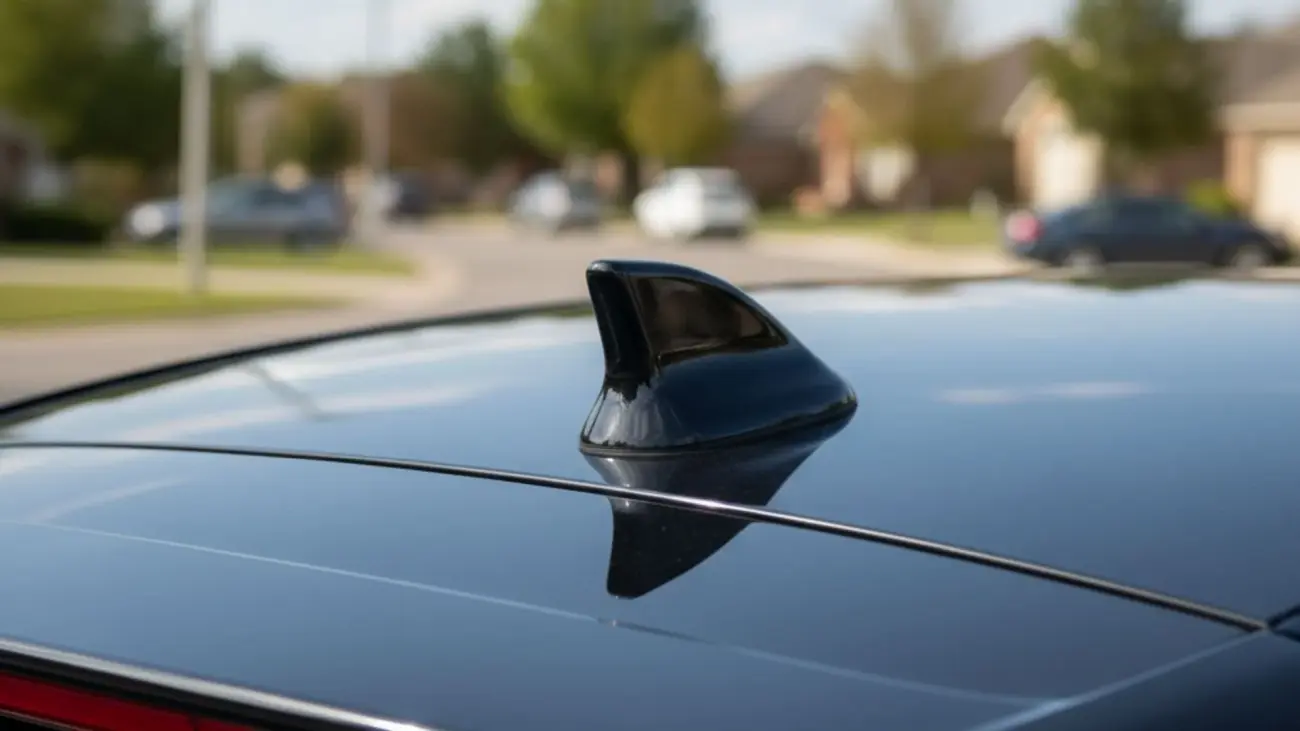
What Is a Car Antenna? How Does It Work and What Types Are There?
When people hear the word "car antenna," they often picture the thin, long metal rod mounted on the fender or another part of the vehicle. However, automotive antennas have evolved considerably over the years. The traditional metal whip antenna has increasingly been replaced by compact antennas integrated into the vehicle's body or housed inside the familiar shark-fin-shaped unit.
Modern vehicles may also have more than one antenna. Different antenna systems can be used for AM/FM radio, GPS, cellular communication, satellite radio, Wi-Fi, and other connected-car functions.
So, what exactly does a car antenna do, how does it work, and why do some vehicles still have long metal antennas while others have nothing more than a small shark-fin unit on the roof?
What Does a Car Antenna Do?
The primary purpose of a car antenna is to receive radio-frequency or other wireless electromagnetic signals and convert them into electrical signals that the vehicle's electronic systems can process.
Traditional automotive antennas are mainly associated with AM and FM radio.
In modern vehicles, however, antennas can serve many different purposes. Depending on the vehicle's equipment, antenna systems may be used for:
-
AM/FM radio broadcasts
-
Digital radio broadcasts
-
Satellite radio
-
GPS/GNSS positioning
-
Cellular communication
-
Wi-Fi connectivity
-
Other wireless communication systems
For this reason, the term "car antenna" no longer necessarily refers to a single component. It can describe an entire antenna system designed to handle several wireless communication functions.
How Does a Car Antenna Receive a Radio Signal?
A radio station sends electromagnetic waves through the air using a transmitter. These waves travel through the surrounding environment and eventually reach vehicles within the broadcast area.
When a radio wave reaches a metal antenna, it causes very small electrical changes within the conductor. The resulting electrical signal is then carried through an antenna cable to the vehicle's radio receiver.
The radio system processes the incoming signal, selects the desired frequency, and converts the information into sound.
In other words, the antenna is one of the first stages in the process of turning electromagnetic energy traveling through the air into something the vehicle's electronic system can use.
Why Does Antenna Length Matter?
Antenna design is closely related to the frequency and wavelength of the signal it is intended to receive.
For example, an FM signal around 100 MHz has a wavelength of approximately 3 meters. Obviously, using a 3-meter-long antenna on a passenger car would not be practical.
Automotive antennas therefore use specific electrical lengths and designs rather than simply matching the entire wavelength physically.
The electrical length of an antenna can also differ from its physical length. Modern antenna technology, amplifiers, electronic components, and optimized designs allow relatively short antennas to receive signals effectively.
This is one reason why modern vehicles can use compact antennas without necessarily sacrificing radio performance.
Why Did Older Cars Have Long Whip Antennas?
As car radios became increasingly common, antenna technology was much less sophisticated than it is today.
During the 1930s, some automotive radio systems used antenna arrangements that were integrated into or closely associated with the radio system rather than the external whip antennas that later became familiar.
As FM broadcasting became more popular, external antennas became increasingly common.
By the 1940s and later decades, long flexible whip antennas were a familiar feature on many vehicles.
There was not always a universal mounting location. Depending on the manufacturer and vehicle design, the antenna could be installed on the front fender, front bodywork, or another suitable location.
The placement was influenced by both vehicle styling and the technical requirements of the antenna system.
What Is a Whip Antenna?
A whip antenna is one of the most recognizable traditional automotive antenna designs.
It usually consists of a relatively thin and flexible metal rod or series of telescoping metal sections.
Despite its simple appearance, several factors can influence its performance, including its length, diameter, material, mounting position, and relationship with the vehicle's metal body.
Some whip antennas are fixed in place, while others can be manually extended and retracted. Older vehicles also used power-operated antennas.
When the radio was switched on, the antenna would automatically extend. When the radio was turned off, an electric motor would retract it into the fender.
These systems are relatively uncommon today, but they remain a recognizable feature of older vehicles.
What Are the Spiral Grooves on Some Antennas For?
Some traditional whip antennas have a spiral or grooved pattern along their surface.
This may look like a decorative feature, but the shape can have an aerodynamic and acoustic purpose.
When a vehicle is moving, the antenna is exposed directly to the airflow. An unsuitable surface can create turbulence and increase wind noise.
A grooved or specially shaped antenna can help influence the airflow around the antenna and reduce unwanted aerodynamic effects.
Therefore, the surface pattern on some antennas is more than just a styling detail.
Why Were Windshield Antennas Developed?
Automakers also looked for ways to eliminate the long external antenna.
One solution was to integrate antenna elements into the vehicle's glass.
Thin conductive elements can be incorporated into a windshield or rear window and used as part of the radio antenna system.
This approach has an obvious advantage: there is no long external rod sticking out from the body.
It can also improve the appearance of the vehicle and reduce the possibility of an external antenna being bent or broken.
However, integrated glass antennas can make certain repairs more complicated. If the glass needs to be replaced, the antenna elements may also need to be considered.
What Is a Shark-Fin Antenna?
The shark-fin antenna is one of the most recognizable antenna designs on modern vehicles.
As the name suggests, the exterior housing resembles a small shark fin mounted on the roof, usually toward the rear of the vehicle.
Although the housing is relatively small, it can contain several different antenna elements.
Depending on the vehicle and equipment level, a shark-fin housing may contain antennas for:
-
AM/FM radio
-
GPS/GNSS
-
Cellular communication
-
Satellite radio
-
Wi-Fi or other wireless communication systems
This means that a shark-fin antenna is not necessarily a single antenna. It can be a compact housing containing several antennas serving different purposes.
What Are the Advantages of a Shark-Fin Antenna?
One of the main advantages is its compact and aerodynamic design.
Unlike a long whip antenna, the shark-fin unit sits close to the vehicle's body. This can help reduce wind resistance and wind noise, particularly at higher speeds.
It is also less exposed to mechanical damage than a long external rod.
Another important advantage is the ability to combine several antenna systems in one location.
The vehicle can therefore maintain a clean exterior design while still providing the antennas required for radio, navigation, cellular communication, and other connected features.
Why Do Some Pickup Trucks Still Have Long Antennas?
Long whip antennas can still be found on some pickup trucks and commercial vehicles.
One reason is the operating environment.
Vehicles used in rural areas or locations far from radio transmitters may benefit from antenna systems designed to provide reliable reception under difficult conditions.
The vehicle's body design and intended use can also influence antenna selection.
Some commercial vehicles may even use multiple antennas. With suitable electronic processing, multiple antennas can help improve reception in certain conditions.
However, antenna length is only one factor. Antenna design, mounting location, receiver sensitivity, signal processing, and the surrounding environment can all affect reception.
Can a Standard Antenna Receive HD Radio?
HD Radio broadcasts can be received by suitable AM/FM antenna systems because HD Radio transmissions are carried within the existing AM and FM broadcast bands.
The antenna's basic job remains the same: receive the radio-frequency signal.
The digital information contained within that signal is processed later by the radio receiver.
Therefore, a vehicle does not necessarily need a completely different type of external antenna simply because the broadcast uses digital technology.
Satellite radio is different. Satellite radio services operate at different frequencies and require appropriate antenna hardware.
Is a GPS Antenna the Same as a Radio Antenna?
No.
A GPS/GNSS antenna and an AM/FM radio antenna are designed for different frequency ranges and different purposes.
A GPS antenna is designed to receive very weak, high-frequency signals transmitted by navigation satellites.
An AM/FM antenna, on the other hand, is designed to receive terrestrial radio broadcasts.
However, both types of antennas can be installed inside the same shark-fin housing.
This is why a component that looks like a single antenna from the outside may actually contain several independent antennas and electronic components.
What Happens When a Car Antenna Fails?
An antenna problem does not always mean that the radio will stop working completely.
For example, a damaged antenna connection may still allow the radio to operate while significantly reducing reception quality.
Radio stations may disappear more frequently, reception may become weak, or interference may become more noticeable, particularly when the vehicle travels away from strong transmitters.
A faulty antenna amplifier can produce similar symptoms.
Common signs of an antenna-related problem include:
-
Difficulty finding radio stations
-
Frequent loss of reception
-
Weak radio signals
-
Increased static or interference
-
Some stations not being received at all
-
A power antenna that does not extend or retract
In modern vehicles, antenna problems can potentially affect more than the radio.
If the same housing contains GPS or cellular communication antennas, navigation or connected-car functions may also be affected.
What Can Damage a Car Antenna?
Traditional external whip antennas are particularly vulnerable to automatic car washes.
Rotating brushes and mechanical washing equipment can catch the antenna, bend it, or even break it.
For this reason, removable or telescoping antennas should be properly secured or removed before entering an automatic car wash when necessary.
Corrosion is another potential problem, especially with exposed metal antennas.
Vehicles operated in coastal areas can be exposed to salt and moisture, which may accelerate corrosion. Corrosion around the antenna base can also create electrical contact problems.
Other possible causes of antenna problems include damaged cables, loose connectors, water intrusion, and faulty antenna amplifiers.
Is Replacing the Antenna Rod Enough?
That depends on the design of the vehicle's antenna system.
On some vehicles, only the external antenna rod can be replaced.
On others, the antenna base, amplifier, cable, or complete antenna assembly may need to be replaced.
Modern vehicles require particular attention because the antenna system may be integrated with several electronic functions.
Choosing a replacement based only on its appearance is therefore not enough.
The replacement antenna must be compatible with the vehicle's model, production year, equipment level, and communication systems.
How Automotive Antennas Are Changing
As vehicles become increasingly connected, antennas are not becoming less important. In many ways, they are becoming more important than ever.
The antenna on an older vehicle might have had one primary job: receiving radio broadcasts.
A modern vehicle may need multiple wireless connections for navigation, emergency communication, cellular services, internet connectivity, remote vehicle functions, satellite services, digital radio, and other connected features.
As a result, future vehicles are likely to have fewer visible external antennas while using more antennas integrated into the body, glass, roof, mirrors, and other vehicle components.
That small shark-fin-shaped unit on the roof may look simple from the outside, but inside it can represent a significant part of the vehicle's communication infrastructure.