TR
TR EN
EN

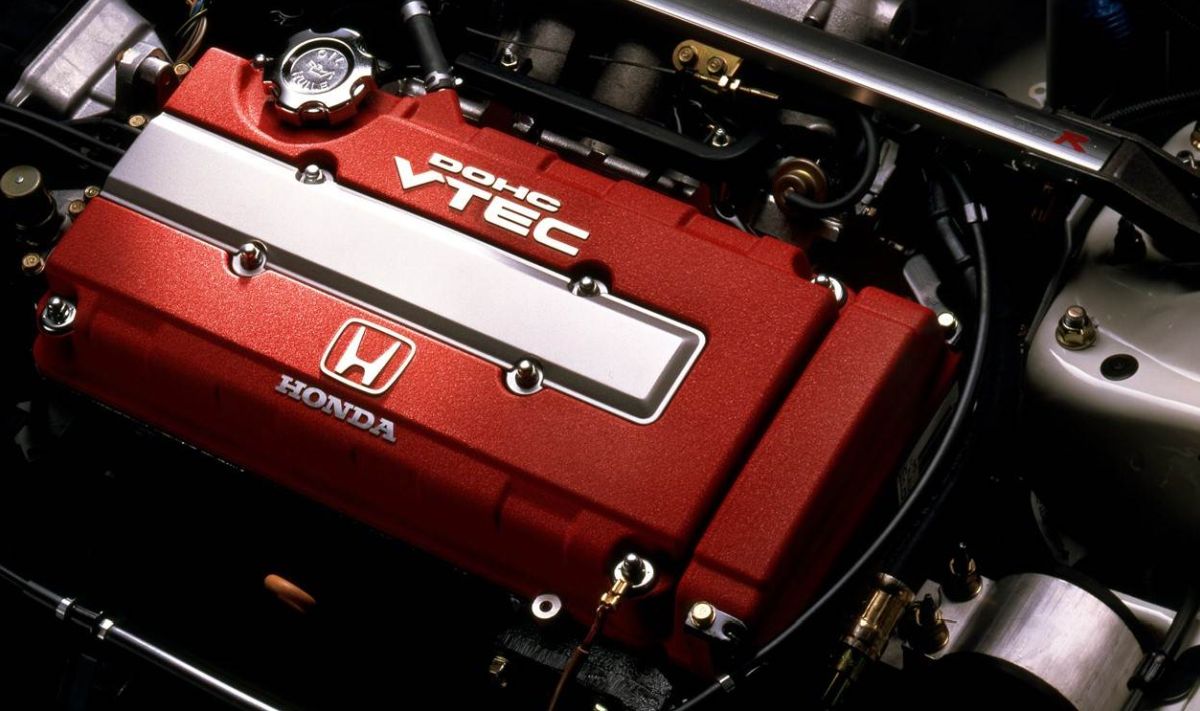
What Are VTEC and i-VTEC? How Does a VTEC Engine Work?
When talking about Honda engines, one of the technologies that stands out is VTEC. It became particularly well known for allowing naturally aspirated engines to deliver strong high-rpm performance while remaining practical and relatively efficient during normal driving.
However, VTEC is more than simply a system that “kicks in” at high rpm. Its main purpose is to change the way the engine's valves operate according to engine speed and operating conditions.
The later i-VTEC system takes this concept further by combining VTEC technology with variable valve timing, allowing the engine to adjust its valve operation over a wider range of conditions.
What Does VTEC Mean?
VTEC stands for Variable Valve Timing and Lift Electronic Control.
It is a technology developed by Honda to control valve operation according to engine operating conditions.
To understand why this is useful, it is important to look at how an engine breathes.
The intake valves allow air into the cylinders, while the exhaust valves allow combustion gases to leave. The camshaft determines when these valves open, how far they open, and how long they remain open.
The ideal valve behavior is not the same at low rpm and high rpm.
VTEC was developed to allow the engine to use different valve characteristics depending on the conditions.
Why Does an Engine Need Different Valve Profiles?
At low engine speeds, the air moving through the intake system behaves differently than it does at high rpm.
A valve profile that works well at 2,000 rpm may not be ideal at 7,000 rpm.
At low rpm, relatively conservative valve operation can help provide:
-
Stable idle quality
-
Better low-speed drivability
-
Useful low-rpm torque
-
Improved fuel efficiency
-
Lower emissions
At high rpm, however, the engine needs to move a much larger amount of air in a short period of time.
More aggressive valve operation can allow the valves to open farther and remain open for a different period of time, improving airflow and helping the engine produce more power at higher rpm.
VTEC is designed around this basic compromise.
How Does a VTEC Engine Work?

The VTEC mechanism works through the relationship between the camshaft and the valve train.
In a conventional engine, each valve is generally controlled by a fixed cam profile. That means the engine has to use essentially the same valve behavior throughout its operating range.
A VTEC engine can use different cam profiles for the same group of valves.
One profile can be optimized for lower engine speeds, while another can provide more aggressive valve movement at higher rpm.
The engine control system monitors conditions such as engine speed, load, throttle position, and temperature.
When the required conditions are met, engine oil pressure is used to activate a hydraulic mechanism inside the valve train.
Locking pins can connect the relevant rocker arms or other valve-train components, allowing the more aggressive cam profile to control the valves.
The result is a change in valve lift and duration.
What Happens When VTEC Engages?
When VTEC switches to its more aggressive operating mode, the engine's valve behavior changes.
This can produce a noticeable change in the way the engine accelerates, particularly in older high-performance Honda engines.
The change is not caused by an electronic switch suddenly creating extra power.
Instead, the mechanical relationship between the camshaft and valves changes.
The more aggressive cam profile can allow the valves to open farther and operate differently, improving the engine's ability to move air at higher rpm.
That additional airflow can allow the engine to produce more power as engine speed increases.
The exact rpm at which VTEC activates depends on the particular engine, its camshaft design, ECU calibration, engine load, and other operating conditions.
VTEC Is Not Simply a High-RPM Switch
One of the most common descriptions of VTEC is that it is a system that “kicks in” at high rpm.
There is some truth to this because many performance-oriented Honda engines became famous for their noticeable high-rpm transition.
However, that description oversimplifies the technology.
VTEC is fundamentally a valve-control system designed to give the engine different valve characteristics under different operating conditions.
Some VTEC applications are focused strongly on performance, while others place greater emphasis on fuel economy, emissions, and everyday drivability.
The exact behavior therefore depends heavily on the particular Honda engine.
What Is i-VTEC?
i-VTEC stands for Intelligent Variable Valve Timing and Lift Electronic Control.
It builds on the VTEC concept by adding variable valve timing control.
This distinction is important because valve lift and valve timing are not exactly the same thing.
Valve lift refers to how far a valve opens.
Valve timing refers to when the valve opens and closes in relation to the engine's crankshaft position.
A VTEC mechanism can change valve lift and valve duration by switching between different cam profiles.
An i-VTEC system can additionally adjust the timing of the camshaft according to engine operating conditions.
This gives the engine greater control over its valve operation.
How Does i-VTEC Work?
The exact design varies between Honda engines, but i-VTEC systems generally use electronic control together with hydraulic oil pressure.
The engine control unit evaluates information from various sensors, including engine speed, load, throttle position, temperature, and other parameters.
Based on these conditions, the system can adjust camshaft timing through a hydraulic mechanism.
This allows the engine to use different valve timing under different conditions.
For example, the timing that works well during low-speed driving does not necessarily provide the best airflow at high rpm.
By adjusting the camshaft position, the engine can optimize valve opening and closing events for the current operating condition.
Is VTEC the Same as Variable Valve Timing?
No.
Although they are closely related, variable valve timing and variable valve lift describe different aspects of valve operation.
Variable valve timing changes when the valves open and close.
Variable valve lift changes how far the valves open.
VTEC can use different cam profiles to alter valve lift and duration, while i-VTEC applications can also incorporate variable camshaft timing.
Different Honda engines use these technologies in different combinations, so not every engine carrying the VTEC or i-VTEC name operates in exactly the same way.
What Are the Advantages of VTEC?
The biggest advantage of VTEC is its ability to provide different valve characteristics for different engine speeds and loads.
Depending on the specific engine, this can help provide:
-
Better low-speed drivability
-
Improved high-rpm airflow
-
Higher peak power
-
Better fuel efficiency
-
Reduced emissions
-
A broader useful power band
This was particularly valuable for naturally aspirated engines, where improving airflow is one of the key ways to increase power.
VTEC allowed Honda engineers to avoid choosing one fixed camshaft profile that would have to compromise between low-rpm behavior and high-rpm performance.
Does VTEC Have Any Disadvantages?
A VTEC system is mechanically more complex than a simple fixed-profile valve train.
It can involve additional rocker arms, locking mechanisms, oil passages, solenoids, and hydraulic control components.
Because the system relies on engine oil pressure, oil condition can also become important.
Low oil level, unsuitable oil, contaminated oil, or restricted oil passages can interfere with the operation of the VTEC mechanism.
Depending on the engine design, problems with the VTEC solenoid, oil pressure, sensors, or camshaft control system can lead to poor performance or fault codes.
What Happens When VTEC Fails?
A VTEC-related problem can affect the way the engine behaves, particularly at the rpm range where the system is expected to change its operating mode.
Possible symptoms include:
-
Reduced high-rpm power
-
Poor acceleration
-
Increased fuel consumption
-
Engine hesitation
-
Rough running
-
Check engine light
-
Failure of the VTEC transition to occur
-
Reduced overall engine performance
However, these symptoms do not automatically mean that the VTEC mechanism itself is defective.
Ignition problems, fuel-system faults, intake problems, sensor failures, and other engine-management issues can produce similar symptoms.
A proper diagnosis should therefore be performed before replacing VTEC components.
Why Is Engine Oil Important for VTEC?
Engine oil is particularly important in systems that use hydraulic pressure to control valve mechanisms.
Oil does much more than lubricate the engine. In VTEC and variable valve timing systems, oil pressure can be used to operate control mechanisms and change the behavior of the valve train.
Low oil level, degraded oil, incorrect viscosity, or restricted oil passages can affect the system's operation.
For this reason, using the correct oil specification and maintaining the engine according to the manufacturer's recommended service intervals is important.
Why Does the Engine Sound Change When VTEC Engages?
One of the reasons VTEC became so popular among performance enthusiasts is the noticeable change in engine character at higher rpm.
When the more aggressive cam profile becomes active, the valves operate differently and the engine's airflow characteristics change.
As engine speed continues to rise, intake and exhaust airflow also become more pronounced.
The combination can produce a noticeable change in engine sound and acceleration.
This effect is especially recognizable in high-revving naturally aspirated Honda engines.
However, the sound itself is not what VTEC is designed to create. It is a result of the engine operating with different valve characteristics.
VTEC and Turbocharged Engines
VTEC is strongly associated with naturally aspirated Honda engines, but variable valve technologies can also be useful in turbocharged engines.
A turbocharger forces additional air into the engine, but the valves still determine how efficiently that air enters and leaves the cylinders.
Variable valve timing and lift can therefore help optimize airflow under different conditions.
Depending on the engine design, this can contribute to:
-
Better low-rpm response
-
Improved turbocharger behavior
-
More efficient combustion
-
Better high-rpm breathing
-
Improved fuel economy
The fundamental idea remains the same: the engine does not need identical valve behavior at every rpm.
VTEC vs. Other Variable Valve Technologies
VTEC is Honda's approach to variable valve control, but other manufacturers have developed their own systems.
Toyota, for example, uses technologies such as VVT-i, while BMW has systems such as VANOS and Valvetronic.
These systems are not identical, but they are based on a similar engineering principle: controlling valve operation more precisely so the engine can adapt to different operating conditions.
The important difference is that each manufacturer uses its own mechanical design and control strategy.
Why Did VTEC Become So Important to Honda?
VTEC became particularly significant because it helped Honda achieve a combination that was difficult to obtain with a conventional fixed camshaft.
An engine needs stable, efficient operation at low rpm, but it also needs strong airflow at high rpm if it is expected to produce high specific power.
A fixed cam profile has to compromise between these requirements.
VTEC provided a way to change the valve behavior instead of accepting the same compromise across the entire rev range.
This helped Honda develop naturally aspirated engines that could remain usable in everyday driving while also delivering impressive high-rpm performance.
The Basic Idea Behind VTEC
The easiest way to understand VTEC is to think of it as a system that allows the engine to change how it breathes.
At low rpm, the engine benefits from valve operation suited to low-speed airflow and drivability.
At higher rpm, the engine needs greater airflow capacity.
VTEC can switch between different valve profiles to address these changing requirements, while i-VTEC adds variable valve timing to provide even more control.
That is why VTEC is more than a system that simply “activates” at a certain rpm. Its real purpose is to make the valve train better suited to what the engine is doing at that moment.