TR
TR EN
EN

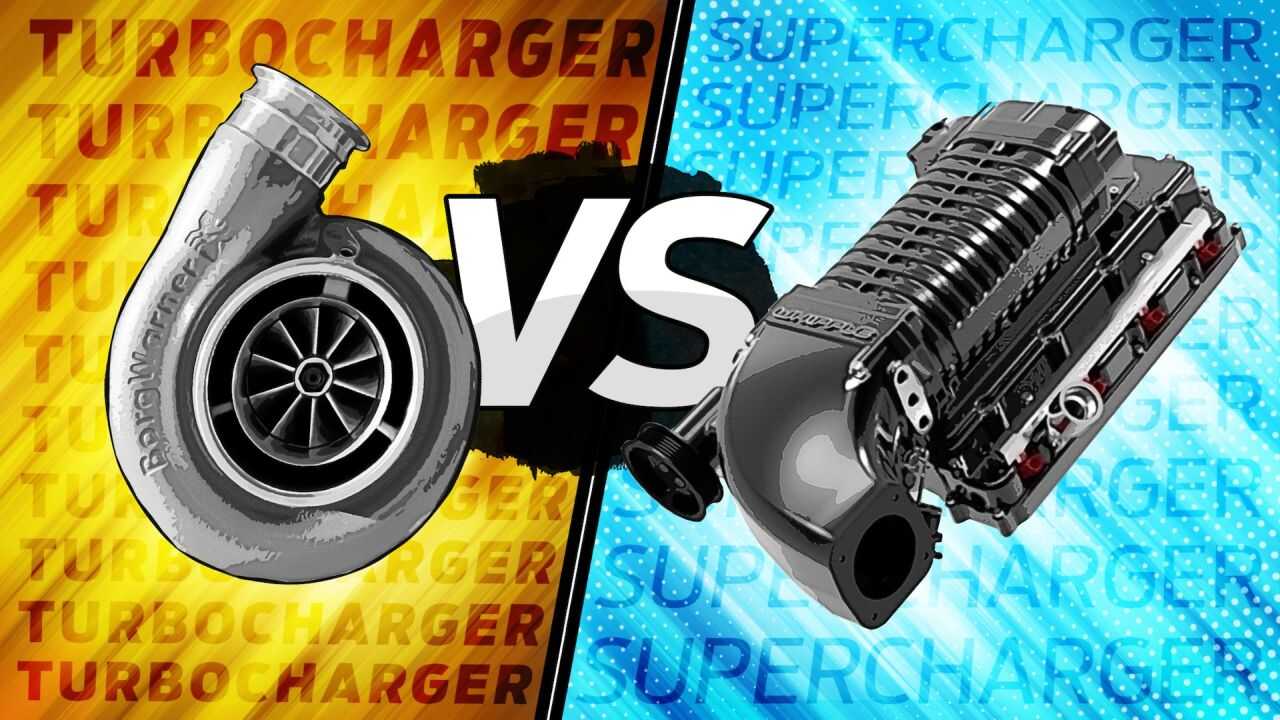
Supercharger or Turbocharger? What Are Their Advantages and Disadvantages?
A naturally aspirated engine gets its intake air primarily from atmospheric pressure. A supercharged or turbocharged engine, on the other hand, deliberately forces more air into the combustion chambers.
More air allows the engine to burn more fuel while maintaining the correct air-fuel ratio. The result can be significantly higher power from the same engine displacement.
The basic objective of both systems is similar, but the way they achieve it is very different.
A supercharger is mechanically driven by the engine, while a turbocharger uses exhaust gases to spin a turbine. That fundamental difference affects response, efficiency, power delivery, heat management, maintenance, and even the character of the engine.
How Does a Supercharger Work?
A supercharger is an air compressor connected mechanically to the engine.
The engine drives the supercharger through a belt, chain, gears, or another mechanical arrangement. As the engine speed increases, the supercharger can spin faster and force more air into the intake system.
There are several types of superchargers, including:
-
Roots-type superchargers
-
Twin-screw superchargers
-
Centrifugal superchargers
Although their internal designs differ, their purpose is the same: increase the amount of air entering the engine.
Because the supercharger is directly connected to the engine, it can begin producing boost very quickly.
This is one of its biggest characteristics.
How Does a Turbocharger Work?
A turbocharger also forces additional air into the engine, but it gets its energy from the exhaust.
Exhaust gases leaving the engine spin a turbine wheel. That turbine is connected by a shaft to a compressor wheel on the intake side.
As the turbine spins, the compressor forces more air into the engine.
The basic energy path is:
Exhaust gases → turbine → shaft → compressor → compressed intake air
This allows the turbocharger to recover some of the energy contained in exhaust gases that would otherwise leave through the exhaust system.
That is one reason turbocharging can offer an efficiency advantage over a mechanically driven supercharger.
The Biggest Difference Between Them
The simplest way to distinguish the two is to ask:
Where does the compressor get its energy?
A supercharger takes power directly from the engine.
A turbocharger primarily uses energy from the exhaust gases.
This difference has important consequences.
A supercharger consumes some of the engine's own mechanical power to produce boost. A turbocharger uses energy that would otherwise largely be wasted through the exhaust.
This does not mean that turbochargers are always better. It means the two systems make different compromises.
Why Does a Supercharger Respond So Quickly?
Because the supercharger is mechanically connected to the engine, there is no need to wait for exhaust flow to build up before the compressor can operate.
When the driver presses the accelerator, the supercharger can immediately increase the amount of air being supplied.
This creates a very direct relationship between engine speed, throttle input, and boost.
For the driver, this can produce a strong and predictable response.
There is little or no traditional turbo lag.
What Is Turbo Lag?
Turbo lag refers to the delay between requesting significant acceleration and the turbocharger producing the desired boost pressure.
A turbocharger needs sufficient exhaust energy to accelerate its turbine.
At low engine speeds, exhaust flow may not be strong enough to spin the turbocharger rapidly.
As engine speed and load increase, more exhaust energy becomes available and the turbocharger can build boost.
Modern turbocharged engines have reduced turbo lag considerably through technologies such as smaller turbochargers, variable geometry, twin-scroll designs, improved engine management, and electric assistance in some applications.
Nevertheless, the basic characteristic remains: a turbocharger depends on exhaust energy.
Which One Produces More Power?
There is no universal winner.
Both systems can produce substantial increases in power.
A supercharger can deliver strong low-speed response and predictable boost characteristics. A turbocharger can produce very high power while taking advantage of exhaust energy.
The final result depends on:
-
Engine displacement
-
Compressor size
-
Boost pressure
-
Intercooling
-
Fuel system
-
Engine design
-
Exhaust system
-
Intake system
-
Engine management
-
Compression ratio
-
Cooling capacity
A properly designed turbocharged engine can produce enormous power, while a well-designed supercharged engine can also deliver impressive performance.
The hardware and calibration matter more than the name of the forced-induction system alone.
Supercharger Advantages
One of the biggest advantages of a supercharger is immediate response.
Because it is mechanically driven, boost can be available very quickly.
This can make the engine feel more linear and predictable.
Another advantage is the characteristic power delivery. Many supercharged engines provide a strong connection between accelerator input and engine response.
Superchargers can also be attractive in applications where immediate torque is more important than maximum efficiency.
For performance vehicles, that instant response can be a major part of the driving experience.
Supercharger Disadvantages
The biggest drawback is that the supercharger requires engine power to operate.
The engine has to turn the compressor.
This creates a parasitic loss.
In simple terms, some of the power produced by the engine is used to drive the device that is helping the engine produce more power.
The system can also generate considerable heat when producing high boost levels.
Depending on the design, the supercharger may require additional cooling, specialized lubrication, stronger engine components, and careful calibration.
The mechanical drive system is another component that must be maintained.
Turbocharger Advantages
The turbocharger's biggest advantage is its ability to use exhaust energy.
Instead of mechanically taking all of its driving power directly from the crankshaft, it extracts energy from the exhaust stream.
This can make turbocharging very attractive for improving engine efficiency and power density.
A relatively small engine can produce the power of a much larger naturally aspirated engine when equipped with an appropriately designed turbocharging system.
Turbochargers can also provide excellent high-rpm power and can be optimized for different operating ranges.
This is one reason turbocharging has become extremely common in modern passenger vehicles.
Turbocharger Disadvantages
The most obvious disadvantage is the complexity of managing exhaust-driven boost.
The turbocharger operates in an extremely hot environment and spins at very high speeds.
Lubrication is therefore critical.
Engine oil quality, oil temperature, correct oil pressure, and proper maintenance can all have a major effect on turbocharger life.
Turbocharged engines can also experience turbo lag, although modern designs have reduced this substantially.
Heat management is another major challenge.
The exhaust side of a turbocharger can become extremely hot, and that heat must be managed carefully to protect surrounding components and maintain consistent performance.
What About Fuel Economy?
This is where turbocharging can have an important advantage.
A turbocharger can allow a manufacturer to use a smaller engine while still producing the power expected from a larger engine.
For example, a smaller turbocharged engine can produce strong power when needed while operating with relatively low displacement during lighter loads.
This concept is often called downsizing.
However, real-world fuel economy depends heavily on how the vehicle is driven.
If the driver frequently demands maximum boost, the engine may consume substantial amounts of fuel.
A small turbo engine is therefore not automatically economical under every driving condition.
Does a Supercharger Consume More Fuel?
It can, particularly when the engine is operating under boost.
The supercharger consumes mechanical energy from the engine, and the engine must produce that energy.
This creates an additional load.
That does not mean every supercharged engine has poor fuel economy. The final result depends on the engine and vehicle design.
But compared with a turbocharger, the supercharger's mechanical power requirement is an inherent disadvantage.
Heat Is a Major Consideration
Both systems can increase intake-air temperature.
Compressing air raises its temperature, and the surrounding engine compartment can also become very hot.
Hot intake air is less dense than cooler air, meaning that temperature management is important when trying to maintain power.
This is why forced-induction engines often use an intercooler.
The intercooler reduces the temperature of compressed intake air before it reaches the engine.
Lower intake temperatures can improve air density and help reduce the risk of abnormal combustion.
Which System Has Better Throttle Response?
Generally, the supercharger has the advantage when immediate response is the primary objective.
The compressor is mechanically connected to the engine, so there is a direct relationship between engine speed and compressor speed.
Turbocharger response depends more heavily on exhaust energy.
However, modern turbocharged engines can have remarkably quick response.
Twin-scroll turbochargers, variable turbine geometry, electronic wastegates, advanced engine control, and carefully matched compressor and turbine sizes can significantly reduce the delay that older turbocharged engines were known for.
So the difference is no longer as dramatic as it once was.
Which One Is More Reliable?
Neither system is automatically more reliable.
Reliability depends on the specific design, operating conditions, maintenance schedule, lubrication, cooling, and engine calibration.
Turbochargers operate under very high temperatures and rotational speeds, making proper lubrication particularly important.
Superchargers have their own mechanical components, bearings, gears, belts, or other drive mechanisms that can wear.
A poorly maintained forced-induction engine can develop problems regardless of whether it uses a turbocharger or supercharger.
What Happens When Something Goes Wrong?
Turbocharger problems can produce symptoms such as:
-
Loss of power
-
Excessive exhaust smoke
-
Unusual whistling or siren-like noises
-
Increased oil consumption
-
Boost pressure problems
-
Poor acceleration
-
Check engine warning
-
Intercooler or intake-system oil contamination
However, these symptoms do not automatically prove that the turbocharger itself has failed.
A boost leak, faulty wastegate, damaged hose, sensor problem, vacuum issue, or engine-management fault can create similar symptoms.
Supercharger problems can also cause power loss, unusual noises, belt-related problems, boost pressure issues, or abnormal bearing and pulley sounds.
Proper diagnosis is therefore more important than simply replacing the forced-induction unit.
Can You Have Both a Supercharger and a Turbocharger?
Yes.
Some engine designs have used both systems.
This approach is sometimes called twincharging.
The idea is to use the supercharger to provide strong low-speed response and the turbocharger to provide efficient high-load or high-speed boost.
At certain operating conditions, the systems can work together or transition between one another.
The concept is technically impressive, but it also adds considerable complexity.
More components mean more control strategies, more plumbing, more heat management, and more potential failure points.
Which One Is Better for a Daily Driver?
There is no universal answer.
For a daily driver, a turbocharger is often attractive because it can combine strong power with good efficiency and relatively compact engine packaging.
A supercharger can be preferable when immediate response and linear power delivery are more important.
The best choice depends on what the vehicle is designed to achieve.
A small turbocharged engine may be ideal for someone who wants good fuel economy and strong mid-range torque.
A supercharged engine may appeal more to someone who values predictable throttle response and a naturally progressive increase in power.
Which One Is Better for Performance?
Again, it depends on the type of performance.
If the goal is immediate throttle response and strong low-rpm behavior, a supercharger has obvious advantages.
If the goal is high power with good efficiency and the ability to extract substantial energy from the exhaust system, a turbocharger can be extremely effective.
For modern performance engines, turbocharging has become particularly popular because manufacturers can combine high power density with relatively small engine displacement.
The Choice Is Really About How the Engine Should Behave
Superchargers and turbochargers solve the same basic problem—getting more air into an engine—but they approach it from completely different directions.
A supercharger effectively says:
“Use some of the engine's power to force more air into the engine.”
A turbocharger says:
“Use exhaust energy to drive a compressor and increase the amount of air entering the engine.”
The supercharger's strengths are responsiveness, predictable boost, and strong low-speed characteristics. Its disadvantages include parasitic power consumption and the additional mechanical load.
The turbocharger's strengths are efficiency, power density, and the ability to recover exhaust energy. Its challenges include heat, lubrication requirements, boost control, and potential turbo lag.
Neither system is universally superior. The better choice depends on whether the priority is efficiency, response, maximum power, packaging, reliability, or simply the way the engine feels behind the wheel.