TR
TR EN
EN

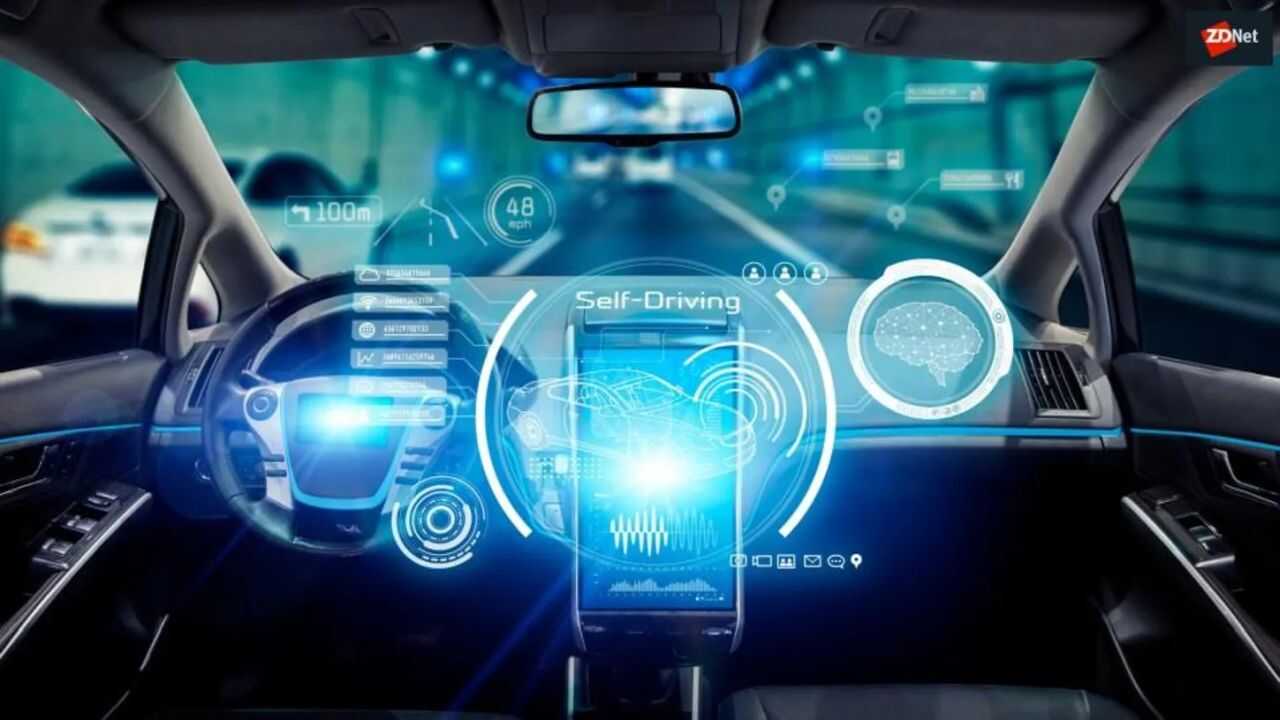
What Is an Autonomous Driving System?
For many years, driving meant that a person had to control every important part of the vehicle: steering, acceleration, braking, lane position, and reactions to other road users. Today, modern vehicles can perform some of these tasks automatically using cameras, radar, sensors, high-performance computers, and sophisticated software.
This technology is generally described as autonomous driving or automated driving.
However, autonomous driving is not a single technology or a simple feature that can be switched on and off. It is a combination of sensing, decision-making, vehicle control, communication, and safety systems working together.
The most important question is therefore not simply whether a car can “drive itself,” but how much of the driving task the vehicle can actually perform without human intervention.
How Does an Autonomous Driving System Work?
An autonomous driving system essentially has to perform several tasks that a human driver normally performs continuously.
It needs to understand what is happening around the vehicle, determine what should happen next, and then control the vehicle accordingly.
A simplified process looks like this:
Detect → Understand → Decide → Control
The vehicle first collects information from its surroundings. The system then interprets that information, predicts what other road users may do, determines a safe driving action, and sends commands to the steering, brakes, and powertrain.
All of this has to happen extremely quickly.
The Sensors That Allow a Car to “See”
An autonomous vehicle needs information about its environment.
Modern systems can use several types of sensors, including cameras, radar, ultrasonic sensors, and in some applications LiDAR.
Cameras can recognize road markings, traffic signs, traffic lights, vehicles, pedestrians, bicycles, and other visual information.
Radar can measure the distance and relative movement of objects. It can be particularly useful in situations involving poor visibility because radar is less dependent on visible light than a camera.
Ultrasonic sensors are commonly used for short-range detection, particularly during parking and low-speed maneuvers.
LiDAR, where used, creates a detailed three-dimensional representation of the surrounding environment by measuring reflected laser pulses.
Each sensor has strengths and weaknesses. This is why advanced systems often combine information from several sensors rather than relying on one source alone.
What Is Sensor Fusion?
One of the most important concepts in automated driving is sensor fusion.
Imagine a camera detects an object ahead. Radar also detects an object at approximately the same location and determines that it is moving.
The computer can combine this information to form a more reliable understanding of the situation.
Instead of asking one sensor to understand everything, the vehicle compares and combines multiple sources of information.
This can improve the system's ability to recognize objects, estimate distances, and determine how those objects are moving.
Sensor fusion becomes particularly valuable because no individual sensor performs perfectly in every environment.
The Vehicle's Computer Is the Decision Maker
Collecting sensor data is only the beginning.
The vehicle must process enormous amounts of information and decide what to do with it.
A central computer or group of electronic control systems can process information such as:
-
Vehicle speed
-
Road position
-
Lane markings
-
Nearby vehicles
-
Pedestrians
-
Traffic signs
-
Traffic lights
-
Road curvature
-
Obstacles
-
Navigation information
-
Weather and environmental conditions
The system then calculates an appropriate driving action.
For example, if a vehicle ahead suddenly slows down, the system may determine that the safest response is to reduce speed.
If a slower vehicle is detected in an adjacent lane, the system may determine whether a lane change is permitted and safe.
This is considerably more complicated than simply keeping the steering wheel straight.
Autonomous Driving Is More Than Adaptive Cruise Control
Adaptive cruise control is often confused with autonomous driving.
Adaptive cruise control can automatically maintain a selected speed and adjust that speed according to traffic ahead.
Lane keeping assistance can also make steering corrections to help keep the vehicle within its lane.
When these systems work together, the vehicle may appear highly automated.
However, many such systems still require the driver to continuously monitor the road and remain ready to take control.
An autonomous driving system goes much further by attempting to perform a broader set of driving tasks within a defined operating environment.
Different Levels of Driving Automation
Not all automated driving systems have the same capabilities.
The commonly used classification divides driving automation into six levels, from Level 0 to Level 5.
Level 0 means the driver performs the driving task. The vehicle may still have warning or emergency assistance systems, but they do not provide sustained automated driving.
Level 1 provides assistance with one aspect of vehicle control, such as steering or acceleration/braking under certain conditions.
Level 2 can control both steering and acceleration/braking simultaneously under specific conditions. The driver remains responsible for monitoring the driving environment.
Level 3 represents a significant change. Under defined conditions, the automated system can perform the driving task, but the human driver may still be required to take over when the system requests it.
Level 4 allows the vehicle to perform the driving task without human intervention within a defined operational area or set of conditions.
Level 5 represents full driving automation. The system would be capable of driving under essentially all conditions in which a human driver could operate the vehicle.
Most consumer vehicles available today do not provide unrestricted Level 5 autonomous driving.
Why Can't a Car Simply Drive Everywhere?
The real world is extremely unpredictable.
A road can have faded lane markings, temporary construction zones, unusual traffic behavior, unexpected pedestrians, emergency vehicles, debris, heavy rain, fog, snow, or poorly maintained infrastructure.
A human driver can use general knowledge and experience to make judgments in situations that may not have been explicitly programmed.
An automated system must instead interpret the environment using its sensors and software.
This is one of the biggest challenges in autonomous driving.
The system doesn't just need to recognize what is happening. It needs to determine what is likely to happen next.
Predicting Other Road Users
Suppose a pedestrian is standing near a crosswalk.
The system needs to determine whether the person is simply waiting, preparing to cross, or about to step into the road.
Similarly, a vehicle in an adjacent lane may suddenly move toward the vehicle's lane.
An autonomous driving system therefore needs prediction capabilities in addition to object detection.
It has to estimate how nearby objects may move over the next few seconds and select an appropriate response.
This is one reason why autonomous driving involves artificial intelligence and machine-learning techniques in addition to traditional vehicle control systems.
How Does the Vehicle Steer and Brake?
Once the system has decided what it wants to do, it needs to physically control the vehicle.
Electronic systems can communicate with the steering, braking, throttle, transmission, and other vehicle systems.
For example, the computer may determine that the vehicle is approaching a slower car and needs to reduce speed.
It can request a specific braking action.
If the vehicle needs to remain centered within its lane, the steering system can make small corrections.
These actions are continuously adjusted according to new sensor information.
The process is therefore a continuous feedback loop rather than a single command.
What Happens If a Sensor Stops Working?
Safety is a major part of autonomous driving design.
If a camera becomes blocked by dirt or snow, the system may have difficulty interpreting its surroundings.
If a radar sensor fails, the vehicle loses another important source of information.
Advanced systems therefore monitor their own sensors and electronic components.
If the system determines that it cannot safely perform the required driving task, it can issue a warning, reduce its capabilities, or disengage depending on the system's design and automation level.
Redundancy is particularly important in higher levels of automation. Critical functions may need alternative ways of detecting the environment or controlling the vehicle.
Why Weather Is Such a Difficult Problem
Weather can significantly affect automated driving.
Heavy rain can interfere with cameras and reduce visibility. Snow can cover lane markings and sensors. Fog can reduce visual information.
Even sunlight can create difficult conditions when it shines directly into a camera.
This is one reason autonomous driving systems have to be tested under many different environmental conditions.
A system that performs exceptionally well on a clear, dry day may behave differently during heavy rain or snow.
What About GPS and Maps?
Navigation information can be an important part of autonomous driving.
High-definition maps can provide information about road geometry, lanes, intersections, speed limits, and other features.
However, the vehicle cannot simply rely on a map.
Roads change.
Construction can alter lane layouts, temporary signs can appear, and traffic conditions can change from one moment to another.
The vehicle therefore needs to combine map information with what its sensors are detecting in real time.
If the map says one thing but the camera detects something different, the system needs to determine which information is relevant to the current situation.
Is Autonomous Driving Safe?
Safety is one of the most complicated questions surrounding autonomous driving.
Automation has the potential to reduce certain types of human error, particularly errors related to distraction, fatigue, or delayed reactions.
At the same time, automated systems have their own limitations.
A system can misinterpret an unusual object, misunderstand road conditions, or encounter a situation outside the environment for which it was designed.
This means that the safety of an autonomous system cannot be judged simply by asking whether it is better or worse than a human driver.
The real question is under which conditions, at which automation level, and with what safeguards does the system operate?
The Driver Still Matters in Many Modern Systems
One of the biggest misunderstandings about advanced driver assistance is assuming that the vehicle is completely autonomous.
A car may automatically steer, accelerate, and brake while still requiring the driver to monitor the road.
Taking your hands off the wheel or looking away from the road does not automatically turn an assistance system into an autonomous driving system.
The driver's responsibilities depend on the automation level and the specific system.
This distinction is extremely important because misunderstanding the capabilities of a vehicle can itself create a safety risk.
Where Is Autonomous Driving Most Useful?
Fully autonomous driving is particularly attractive in environments where routes and conditions can be controlled or clearly defined.
Examples include:
-
Robotaxi services operating within specific areas
-
Autonomous shuttles
-
Controlled industrial facilities
-
Mining operations
-
Warehouses and logistics centers
-
Highway automation under suitable conditions
-
Automated parking systems
A controlled environment reduces the number of unpredictable situations that the vehicle needs to handle.
Public roads are much more difficult because every trip can involve completely different combinations of people, vehicles, weather, road layouts, and unexpected events.
What Will Autonomous Driving Change?
If highly automated driving becomes widespread, its impact could extend far beyond convenience.
People who cannot drive because of age or disability could potentially gain greater mobility.
Long-distance driving could become less demanding.
Commercial transportation could become more automated.
Parking could become easier, and vehicles could potentially spend less time searching for parking spaces.
At the same time, autonomous driving raises difficult questions about liability, cybersecurity, infrastructure, regulation, insurance, data collection, and the interaction between human-driven and automated vehicles.
Technology alone cannot answer all of these questions.
Autonomous Driving Is a Process, Not a Single Feature
The phrase “self-driving car” makes the technology sound much simpler than it really is.
An automated vehicle has to perceive the environment, understand what it sees, predict what other road users may do, plan a safe path, control the vehicle, monitor its own systems, and respond when something goes wrong.
Cameras, radar, LiDAR, computers, artificial intelligence, electronic control systems, navigation data, and vehicle hardware all have to work together.
That is why autonomous driving is better understood as an entire vehicle-control ecosystem rather than a single feature.
The technology is progressing toward vehicles that can take over increasingly large portions of the driving task, but the level of automation matters enormously. A system that can assist a driver on a highway is very different from a vehicle capable of operating without a human driver in every possible road and weather condition.