TR
TR EN
EN

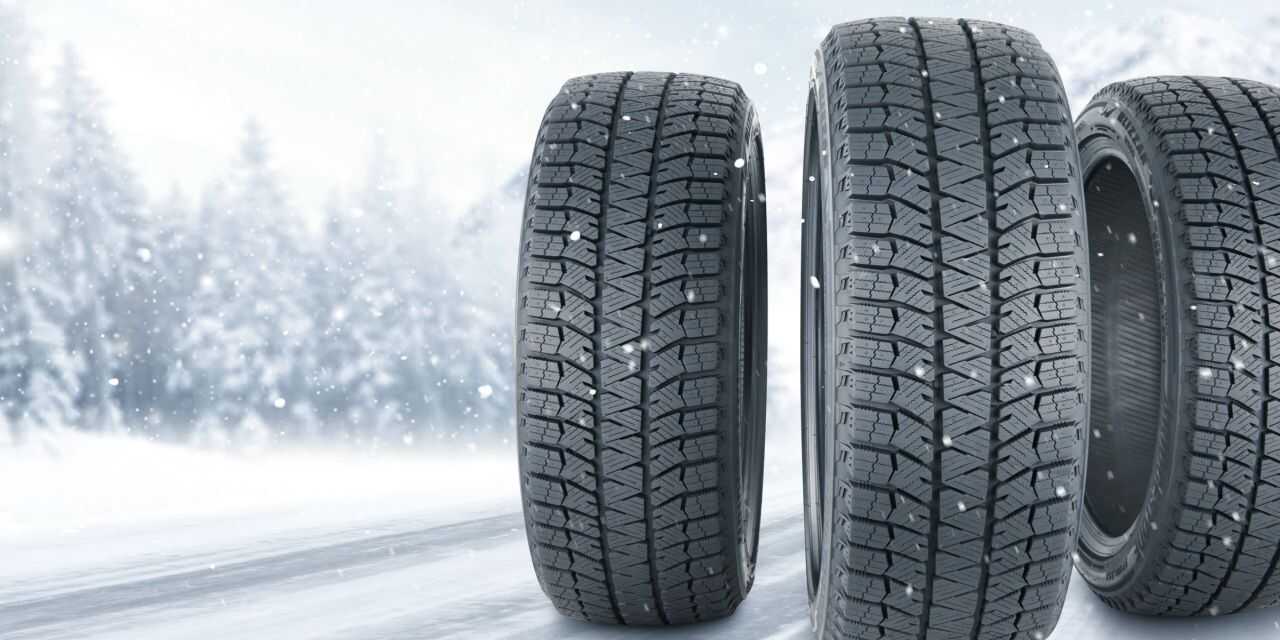
What Are Winter Tires? Their Advantages and Disadvantages
Winter tires are specifically designed to maintain grip and flexibility when temperatures drop and driving conditions become difficult. Unlike all-season or summer tires, their design focuses on cold-weather performance, particularly on cold asphalt, snow, slush, and in some cases ice.
Many drivers think winter tires are only necessary when there is heavy snow. In reality, their biggest advantage begins well before a road becomes covered in snow. Temperature has a major effect on tire rubber, and a tire that performs very well in warm weather can become significantly harder and less effective in cold conditions.
Choosing winter tires therefore isn't simply about preparing for snowfall. It is about matching the tire to the temperatures and road conditions the vehicle will actually encounter.
How Is a Winter Tire Different?
The most important difference is the rubber compound.
Winter tires are formulated to remain more flexible at low temperatures. Summer tires use compounds optimized for warmer conditions, and these compounds become progressively harder as temperatures fall.
A winter tire also has a tread pattern designed to work in snow and cold, wet conditions. It typically contains many small grooves and biting edges that help the tire grip the road surface.
This combination of rubber compound, tread design, and internal construction allows a winter tire to maintain useful traction when a conventional summer tire starts losing effectiveness.
Winter Tires Are Not Just “Snow Tires”
The term “snow tire” can be misleading.
Snow is certainly one of the conditions where winter tires are useful, but their purpose is broader.
A quality winter tire is designed to perform in a range of cold-weather conditions, including:
-
Cold and dry asphalt
-
Cold and wet roads
-
Snow
-
Slush
-
Light ice conditions
-
Roads with freezing temperatures
This means that a vehicle can benefit from winter tires even when there is no visible snow on the road.
What Happens to Summer Tires in Cold Weather?
A summer tire is designed around a warmer operating environment.
As the temperature drops, its rubber compound becomes harder. The tread therefore loses some of the flexibility required to conform to the road surface.
This can reduce traction during acceleration, cornering, and braking.
A winter tire remains more flexible under the same conditions. Its tread can continue to interact effectively with the road surface.
This difference becomes increasingly important as temperatures fall.
Why Do Winter Tires Have So Many Grooves?
Look closely at a winter tire and you will notice a large number of fine cuts across the tread blocks. These are called sipes.
Sipes create additional biting edges that help the tread interact with slippery surfaces.
They also help the tread blocks deform and adapt to irregularities in snow and cold road surfaces.
The tread pattern is also designed to evacuate water and slush while maintaining traction.
This is one reason a winter tire can behave very differently from a summer tire even when both have similar tread depth.
What Does the 3PMSF Symbol Mean?
One of the markings drivers may encounter on winter-oriented tires is the Three-Peak Mountain Snowflake (3PMSF) symbol.
It consists of a snowflake inside a three-peaked mountain.
This marking indicates that the tire has met defined performance requirements for severe snow conditions.
Another marking sometimes seen is M+S, meaning Mud and Snow. However, M+S by itself does not necessarily indicate the same level of tested snow performance as the 3PMSF designation.
When choosing tires for serious winter conditions, the actual tire specification matters more than simply seeing the words “winter” or “snow” in a product description.
The Biggest Advantage: Better Cold-Weather Grip
The main reason to use winter tires is improved traction when temperatures are low.
This affects much more than simply getting moving from a standstill.
A vehicle needs tire grip for:
-
Braking
-
Steering
-
Acceleration
-
Cornering
-
Emergency maneuvers
Even if the road looks completely dry, cold pavement can reduce the performance of a summer tire.
Winter tires are designed to retain their useful grip in these conditions.
Winter Tires Can Make a Major Difference on Snow
Snow is where their design becomes particularly obvious.
The tread blocks and sipes can help the tire generate traction in packed or loose snow. The softer compound also allows the tread to remain flexible rather than becoming excessively hard.
However, winter tires do not make a vehicle immune to slippery conditions.
There is still a limit to the available grip. Driving too quickly on snow or ice can overwhelm even an excellent winter tire.
The tire improves the vehicle's ability to deal with the conditions; it does not eliminate the conditions themselves.
What About Ice?
Ice is much more difficult.
Even specialized winter tires have limited grip on polished or heavily frozen surfaces. Studded winter tires can provide additional traction in regions where they are legal and appropriate, but ordinary non-studded winter tires cannot create unlimited grip on ice.
This is an important distinction because some drivers expect winter tires to solve every traction problem.
They don't.
Speed, road temperature, tire condition, vehicle weight, and driving technique still matter.
Better Braking in Cold Conditions
One of the most important benefits of winter tires is improved braking performance in cold weather.
The difference can become particularly important during an emergency stop.
A tire that maintains flexibility and grip can generate more usable traction while braking than a tire whose compound has become too hard for the conditions.
The exact braking difference varies depending on the tire, vehicle, temperature, road surface, and tire condition, but the principle is straightforward: the tire is the only part of the vehicle that actually touches the road.
A sophisticated braking system cannot compensate for inadequate tire grip.
Winter Tires Also Help With Steering
Grip isn't only about stopping.
If the front tires lose traction while entering a corner, the vehicle can understeer. If the rear tires lose grip, the vehicle can become unstable and oversteer.
Winter tires help maintain the tire-road connection in cold conditions, giving the steering system a better foundation to work with.
Electronic stability control and traction control can assist the driver, but these systems cannot manufacture physical grip where none exists.
One Important Rule: Use Four Winter Tires
Installing winter tires only on the driven axle is generally not a good solution for a modern passenger vehicle.
For example, fitting winter tires only to the front of a front-wheel-drive car may improve forward traction but create a significant difference in grip between the front and rear axles.
This can alter the vehicle's handling balance.
Using a complete set of four matching winter tires provides much more predictable behavior.
This applies even to vehicles with all-wheel drive.
All-wheel drive can help a vehicle accelerate on slippery surfaces, but it does not automatically provide better braking or cornering grip. The tires still determine how much traction is available.
Winter Tires and All-Wheel Drive Are Not the Same Thing
This is a common misunderstanding.
An all-wheel-drive vehicle can distribute engine torque to multiple wheels, which can be useful when accelerating on snow.
But four-wheel drive does not change the physical grip available between the tire and road.
If the tires cannot generate sufficient traction, the vehicle can still slide.
An all-wheel-drive vehicle with appropriate winter tires can therefore have a major advantage over an all-wheel-drive vehicle equipped with unsuitable tires for the conditions.
The Disadvantages of Winter Tires
Winter tires are not perfect.
Their biggest disadvantage is that they are specialized for cold conditions. Once temperatures become consistently warm, their softer compounds can wear more quickly.
They can also feel less precise than summer tires during warm-weather driving.
Depending on the model, drivers may notice:
-
More road noise
-
Softer steering response
-
Slightly different handling
-
Increased rolling resistance
-
Faster wear in warm temperatures
Fuel consumption can also increase slightly depending on the tire design, vehicle, tire pressure, and driving conditions.
Why Shouldn't You Use Winter Tires All Year?
It may seem convenient to install winter tires and leave them on the vehicle throughout the year.
This usually isn't a good idea.
When temperatures rise, the softer winter compound becomes less suitable for warm pavement. The tread can wear faster, steering response can change, and braking performance can become less appropriate for warm conditions compared with a good summer tire.
In addition, you are effectively using a tire outside the environment for which it was optimized.
Winter tires should therefore normally be treated as seasonal equipment.
When Should Winter Tires Be Installed?
There is no universal date that works perfectly for every region.
The more useful approach is to look at temperature and local weather conditions rather than waiting for the first snowfall.
When temperatures regularly fall into the range where summer tires begin losing their optimal performance, changing to winter tires becomes increasingly sensible.
Waiting until a major snowstorm arrives can also create practical problems because tire shops can become extremely busy and suitable tire sizes may become difficult to find.
Winter Tire Storage Matters Too
If you switch between summer and winter tires each year, storage conditions can affect their lifespan.
They should ideally be kept in a cool, dry environment away from direct sunlight, excessive heat, chemicals, and ozone-producing equipment.
Tires should also be stored in a way appropriate to whether they are mounted on wheels or stored separately.
Poor storage can accelerate rubber aging even when the tires are not being driven.
Tire Age Is Important
Tread depth is not the only factor that determines whether a winter tire is still suitable.
Rubber ages over time.
A winter tire may still have visible tread but have lost some of its original flexibility due to aging, environmental exposure, and repeated temperature cycles.
Cracks, hardening, deformation, and other signs of aging should therefore be taken seriously.
The manufacturing date marked on the tire can help determine its age.
Are Winter Tires Worth It?
For drivers who regularly experience cold temperatures, snow, slush, or icy roads, winter tires can provide a meaningful safety advantage.
For drivers in regions where winters remain consistently mild and temperatures rarely become low enough to affect summer-tire performance, the benefit may be smaller.
The important point is that winter tires are not simply a solution for snowy roads. They are a tire technology developed around cold-weather traction.
A good set of winter tires cannot prevent every accident, and they cannot overcome dangerous speeds or severe ice. But when the road and temperature conditions match their design, they give the vehicle a much better foundation for braking, steering, and maintaining control.
The best tire is ultimately the one suited to the conditions in which the vehicle is actually driven.