TR
TR EN
EN

Clear Coat and Paint Damage on Car Roofs: Causes and Solutions
The roof of a car is one of the areas most exposed to sunlight, heat, rain, dust, bird droppings, tree sap, and other environmental contaminants. Because it receives direct sunlight for long periods, paint and clear coat damage often becomes noticeable on the roof before it appears on other body panels.
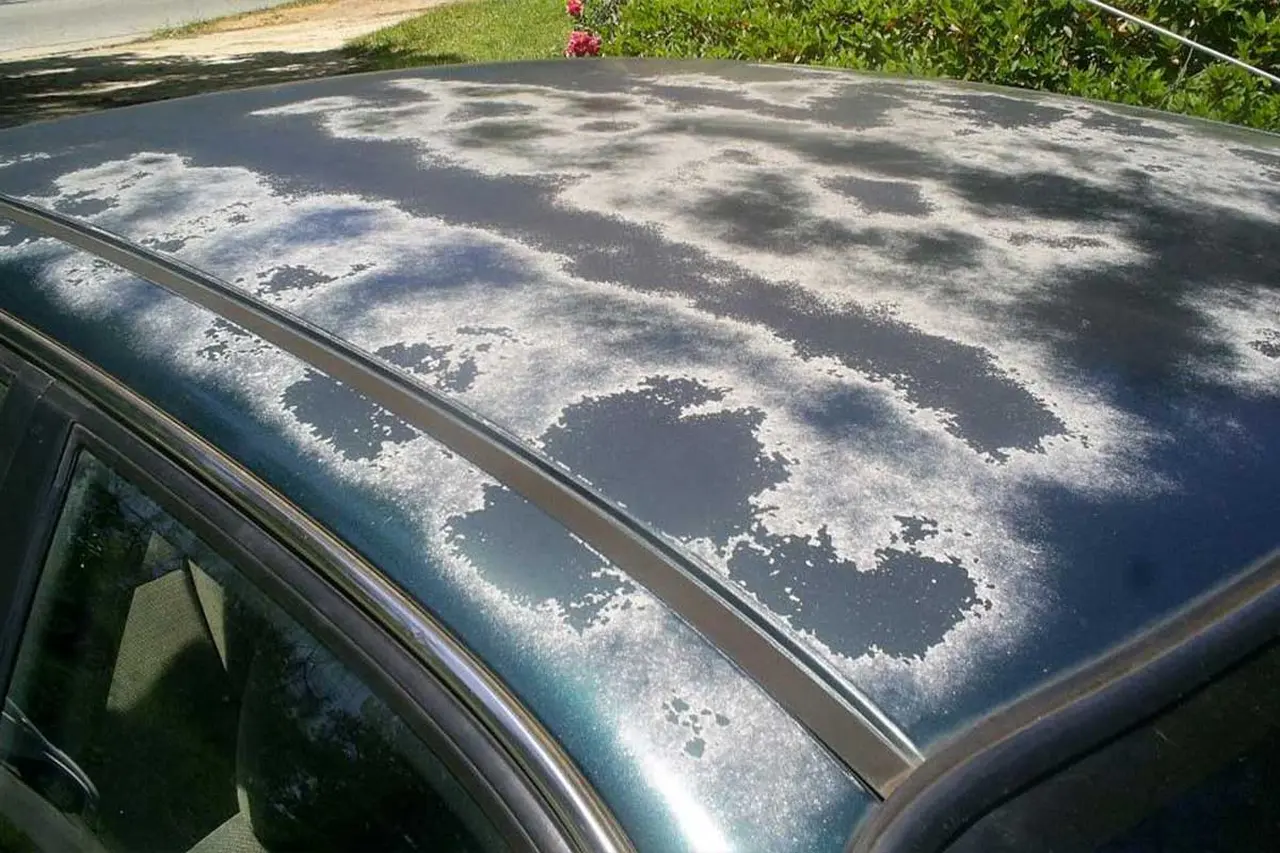
One of the most common problems is what is commonly called clear coat burning, paint burning, peeling clear coat, or roof paint deterioration. Depending on how advanced the damage is, the solution can range from polishing and paint correction to complete repainting of the roof.
Understanding the difference between surface oxidation, damaged clear coat, and actual paint failure is important because these problems may look similar at first but require completely different treatments.
Why Does the Car Roof Suffer So Much?
The roof has almost no protection from direct sunlight. Unlike doors or lower body panels, it is continuously exposed to ultraviolet radiation whenever the vehicle is parked outdoors.
UV radiation gradually breaks down the resins and protective components in automotive clear coat. Heat makes the situation worse because a dark-colored roof can become extremely hot under strong sunlight.
Over time, the clear coat can lose its gloss and become dull. In more advanced cases, it begins to crack, become cloudy, separate from the basecoat, and eventually peel away.
The problem is particularly noticeable on older vehicles that have spent years outdoors without adequate paint protection.
What Exactly Is “Clear Coat Burn”?
The term “clear coat burn” is often used for several different types of paint damage.
In some cases, the clear coat has simply become heavily oxidized. The surface looks faded and dull, but the protective layer is still largely intact.
In other cases, the clear coat has actually deteriorated. You may see cloudy areas, irregular patches, cracking, or peeling. This is much more serious because polishing cannot restore clear coat that has already separated from the paint.
There is also another type of damage that occurs during machine polishing. If too much heat is generated in one area, especially over a sharp body line or thinly painted panel, the clear coat can be removed or damaged. This is what professional detailers generally mean when they talk about burning through the clear coat.
These situations should not be confused with each other.
How Can You Tell How Serious the Damage Is?
The appearance of the roof gives some useful clues.
If the roof is simply dull but has a relatively smooth and uniform surface, the problem may be oxidation or surface degradation. A paint correction process may improve it considerably.
If the surface has a cloudy appearance but remains smooth to the touch, there may still be recoverable clear coat.
However, if you can see:
-
Peeling or lifting layers
-
Flaking clear coat
-
Cracks spreading across the surface
-
White or cloudy patches underneath damaged areas
-
Different layers becoming visible
-
Rough areas where the surface has separated
-
Large sections where the glossy finish has disappeared completely
then the damage is probably beyond what polishing can repair.
Once the clear coat has physically failed, polishing cannot recreate it.
Why Does Clear Coat Peel From the Roof?
There is rarely a single cause.
Long-term UV exposure is one of the biggest factors. Ultraviolet radiation gradually weakens the clear coat until it loses its ability to protect the underlying paint.
Excessive heat also accelerates deterioration. A vehicle that spends years parked outside can experience thousands of heating and cooling cycles.
Age is another major factor. Automotive paint systems are designed to withstand environmental conditions, but they are not immune to aging.
Poor previous paintwork can make the problem appear much earlier. If the roof has been repainted with incompatible materials, insufficient preparation, incorrect drying, or poor-quality clear coat, premature peeling can occur.
Environmental contaminants can contribute as well. Bird droppings, insects, tree sap, industrial fallout, and certain chemical contaminants can damage the surface if they remain on the paint for long periods.
Can Polishing Fix It?
This depends entirely on the condition of the clear coat.
If the problem is primarily oxidation, polishing may produce a dramatic improvement. A professional can remove a very thin layer of damaged surface material and restore some of the gloss.
But polishing has a limit.
A polishing compound does not add new clear coat to the vehicle. It removes a small amount of material to level imperfections. If the clear coat is already extremely thin or is peeling, aggressive polishing can actually make the situation worse.
For this reason, polishing a heavily damaged roof simply because the paint looks dull is not always the right approach.
When Sanding and Polishing Can Work
Moderate surface deterioration can sometimes be corrected through a controlled paint correction process.
A professional may first decontaminate the roof and inspect the paint under proper lighting. If enough clear coat remains, the surface can be carefully wet-sanded in selected situations and then progressively polished.
This can remove oxidation, shallow defects, and certain surface imperfections.
The important point is that this method works only when there is still a stable paint and clear coat layer underneath the damaged surface.
It cannot repair areas where the clear coat has already detached from the basecoat.
What Happens When the Clear Coat Is Already Peeling?
This is where many DIY attempts go wrong.
Someone may see a peeling edge and think that polishing or applying a new layer of wax will hide the problem. Unfortunately, once the clear coat begins separating from the basecoat, the damaged area normally continues to expand.
The loose material has to be removed, and the remaining surface must be properly prepared.
Depending on the extent of the damage, the repair may involve:
-
Removing the failed clear coat.
-
Sanding and leveling the damaged area.
-
Preparing the underlying paint.
-
Applying primer or sealer where necessary.
-
Reapplying the appropriate basecoat.
-
Applying new clear coat.
-
Curing and finishing the repaired surface.
-
Polishing the repaired area after the paint system has properly hardened.
If the damage covers most of the roof, repainting the entire roof is generally more sensible than attempting numerous small repairs.
Should You Repaint Only the Damaged Areas?
Sometimes, but not always.
A localized repair can be appropriate when the damaged area is small and the surrounding factory paint is still healthy.
However, clear coat failure often progresses beyond the area that is initially visible. The surrounding paint may already be significantly weakened even if it still looks acceptable.
A body repair specialist therefore needs to determine how far the damaged paint system extends before deciding where to stop the repair.
For a roof with widespread peeling, repainting the entire panel usually produces a more consistent and durable result.
What About Applying a New Clear Coat Over the Old One?
Simply spraying new clear coat over deteriorated clear coat is not a proper repair.
If the original clear coat is loose, cracked, or chemically degraded, the new material cannot reliably bond to it.
The damaged layer needs to be removed or properly stabilized before the new paint system is applied.
This is particularly important on roofs because the newly repaired surface will continue to receive intense UV exposure.
Can Ceramic Coating Prevent Roof Paint Damage?
Ceramic coatings can provide useful protection, but they are not a cure for damaged paint.
Applied to healthy paint, a quality coating can make the surface easier to clean and provide additional resistance against environmental contamination. It can also reduce the amount of direct exposure that reaches the underlying paint to some extent.
However, ceramic coating cannot replace a failed clear coat.
Applying a coating over peeling or severely deteriorated paint does not restore the original paint system. In fact, the coating may simply cover a problem that still exists underneath.
The paint should therefore be corrected or repaired first.
What Can Be Done to Prevent the Problem?
The best solution is to prevent the clear coat from reaching the point where it begins to fail.
Regular washing helps remove contaminants that can attack the surface. Bird droppings and tree sap should be removed relatively quickly rather than being left on the roof for days.
Parking in a garage or under a suitable carport can make a significant difference, particularly in areas with intense sunlight.
A good wax, sealant, or ceramic coating can also provide additional surface protection when applied to healthy paint.
But perhaps the simplest protection is reducing prolonged exposure to direct sunlight whenever practical.
A Roof That Has Lost Its Gloss Is Not Always Ready for Repainting
This distinction is important.
A faded-looking roof does not automatically mean that the entire panel needs to be painted. Sometimes the paint is still structurally sound and can be improved through proper correction.
On the other hand, trying to polish a roof with advanced clear coat failure can waste time and potentially remove even more of the remaining protective layer.
The key question is not simply “Does the roof look faded?”
The more useful question is:
“Is the clear coat still intact?”
If it is intact, restoration may be possible.
If it has begun to fail, the repair needs to address the paint system itself rather than simply making the surface shinier.
Why Professional Inspection Matters
The thickness and condition of automotive paint can vary considerably from one vehicle to another. Previous repairs can also make the situation difficult to judge visually.
A professional detailer or body repair specialist can inspect the surface, measure paint thickness when appropriate, and determine whether the roof has enough material for correction.
That assessment can prevent an expensive mistake: aggressively polishing a panel that actually needs repainting.
For a mildly oxidized roof, paint correction may be enough. For severe clear coat failure, proper preparation and repainting are usually the more reliable solution.
And when the damage is caught early, the repair is generally much simpler than waiting until large sections of the roof begin peeling.