TR
TR EN
EN

What Is a Hybrid Vehicle? How Does It Work? What Are Its Advantages?
A hybrid vehicle combines two different ways of producing power: an internal combustion engine and an electric motor. Instead of relying entirely on gasoline or diesel, a hybrid can use electric power in situations where the engine would be less efficient and use the combustion engine when more power or sustained driving is required.
This sounds simple, but there is quite a lot happening behind the scenes. The vehicle has to decide when to use the engine, when to use the electric motor, when both should work together, and when to recover energy that would otherwise be lost during braking.
That combination is what makes hybrid vehicles different from conventional gasoline or diesel cars.
What Does “Hybrid” Mean?
The word hybrid essentially means a combination of two different systems.
In a conventional gasoline vehicle, the engine is responsible for producing the power needed to move the vehicle. In a fully electric vehicle, an electric motor powered by a large battery performs that job.
A hybrid sits between these two concepts.
It has an internal combustion engine and an electric drive system. Depending on the type of hybrid and the driving conditions, the vehicle may operate using:
-
The combustion engine alone
-
The electric motor alone
-
Both systems simultaneously
-
Regenerated electrical energy stored in the battery
The vehicle's control system continuously manages this process without requiring the driver to manually switch between the two power sources.
What Parts Make Up a Hybrid System?
Although hybrid systems differ considerably between manufacturers, several major components are common.
Internal combustion engine
The gasoline engine remains an important part of most hybrid vehicles. It provides power when higher output is needed and can also operate as part of the system for maintaining battery charge.
Electric motor
The electric motor provides immediate torque and can move the vehicle by itself in certain hybrid designs.
High-voltage battery
This battery stores electrical energy used by the electric motor. It is considerably different from the small 12-volt battery found in conventional vehicles.
Power electronics
The inverter and related electronic components control the flow of electrical energy between the battery, electric motor, and other parts of the system.
Regenerative braking system
When the vehicle slows down, the electric motor can operate as a generator. Instead of allowing all the vehicle's kinetic energy to disappear as heat through the brakes, part of that energy can be converted into electricity and stored in the battery.
How Does a Hybrid Car Actually Work?
The easiest way to understand a hybrid is to follow what happens during different stages of driving.
Imagine starting the car and slowly moving through a city.
In a conventional vehicle, the engine may need to run even when only a small amount of power is required. A hybrid can sometimes use its electric motor instead.
At low speeds and under light loads, the electric motor may provide all the necessary propulsion. If the battery state of charge, temperature, speed, and other conditions are suitable, the gasoline engine can remain switched off.
As the driver accelerates harder, the system may start the combustion engine. The electric motor can then assist the engine, providing additional torque.
At cruising speeds, the engine may become the primary source of power because it can operate efficiently under a steady load.
When the driver releases the accelerator or applies the brakes, the system can use regenerative braking to recover energy.
This process happens automatically, often within fractions of a second.
Why Does a Hybrid Use an Electric Motor?
One of the biggest weaknesses of a conventional combustion engine is that it is not equally efficient under every operating condition.
Starting from a standstill requires significant energy. Repeated acceleration and braking in city traffic also create large energy losses.
An electric motor is particularly useful in these situations because it can produce strong torque immediately from very low speed.
Instead of asking the gasoline engine to handle every acceleration event by itself, the electric motor can provide assistance when it is most useful.
This allows the combustion engine to operate more efficiently over a wider range of conditions.
What Is Regenerative Braking?
Regenerative braking is one of the most important technologies behind hybrid efficiency.
Normally, when a vehicle slows down, its kinetic energy is converted primarily into heat through the brake system.
A hybrid can recover some of this energy.
During deceleration, the electric motor changes its operating mode and acts as a generator. The rotating wheels drive the motor, generating electrical energy.
That electricity is sent back to the high-voltage battery.
The process can be thought of as:
Vehicle movement → electric motor/generator → electrical energy → battery
The energy is not recovered completely, but recovering even part of it can significantly improve efficiency, especially during urban driving with frequent stops.
Do Hybrid Cars Need to Be Plugged In?
Not necessarily.
This depends on the type of hybrid.
A conventional hybrid, often called a full hybrid or self-charging hybrid, normally charges its battery through regenerative braking and the combustion engine's operation. It does not need to be connected to an external charger.
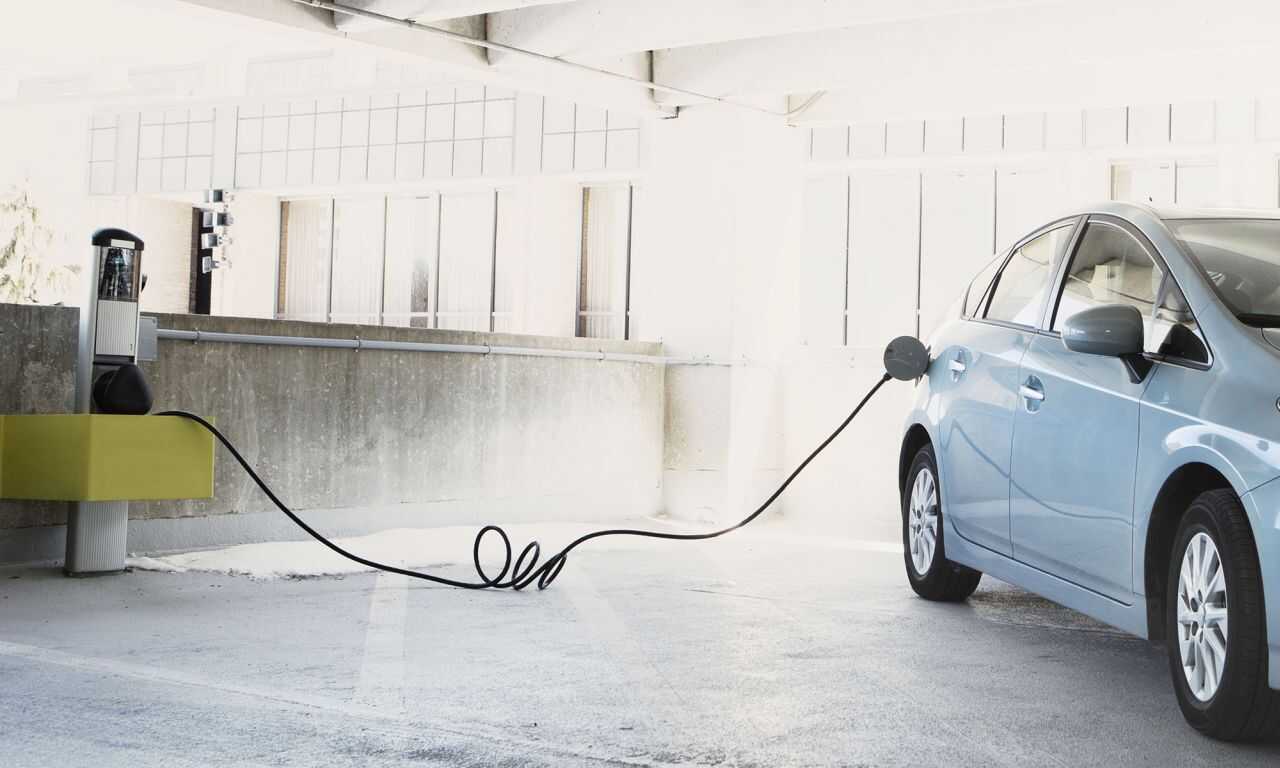
A plug-in hybrid, on the other hand, has a larger battery and can be connected to an external charging station or household charging equipment.
This gives a plug-in hybrid the ability to travel considerably farther using electricity alone before the combustion engine becomes necessary.
Mild Hybrid, Full Hybrid, and Plug-In Hybrid
Not every hybrid system works in the same way.
A mild hybrid uses a relatively small electrical system to assist the combustion engine. Depending on the design, the electric system may help during acceleration, support start-stop operation, and recover energy during deceleration.
A mild hybrid generally cannot drive the vehicle for long distances using electric power alone.
A full hybrid has a more capable electric drive system. It can sometimes move the vehicle using only the electric motor, particularly at low speeds and under light loads.
A plug-in hybrid has a much larger battery and can normally travel a meaningful distance using electric power alone. Once the battery's usable charge is depleted, the vehicle can continue operating using its combustion engine and hybrid system.
These differences are important because two vehicles advertised as “hybrid” can have very different driving characteristics.
What Happens When the Battery Gets Low?
This is a common question about hybrid vehicles.
In a conventional hybrid, the system does not normally allow the high-voltage battery to become completely empty during normal operation. Instead, the vehicle maintains the battery within a controlled state-of-charge range.
When the battery needs energy, the vehicle can recover it through regenerative braking or use the combustion engine and generator system depending on the vehicle's design.
The driver therefore does not normally need to think about battery charging.
In a plug-in hybrid, the situation is somewhat different. Once the externally charged portion of the battery has been used, the vehicle can continue operating as a hybrid, although its behavior and electric driving range will depend on the specific system.
Why Are Hybrids Particularly Efficient in City Traffic?
This is where hybrid technology can have one of its biggest advantages.
City driving involves frequent acceleration, deceleration, traffic lights, congestion, and periods of low-speed operation.
Every time the vehicle slows down, a conventional car generally loses much of its kinetic energy as heat through the brakes.
A hybrid can recover part of that energy.
It can also shut down the combustion engine when its operation is unnecessary and use electric propulsion under suitable conditions.
For this reason, the difference in fuel consumption between a hybrid and a conventional vehicle can be particularly noticeable in urban driving.
On a long, steady highway journey, however, the advantage may be smaller because there is less braking energy available to recover.
Does a Hybrid Have Better Acceleration?
It can.
Electric motors produce strong torque almost immediately, while an internal combustion engine generally needs to reach a particular operating range before producing its strongest output.
When the electric motor and combustion engine work together, the electric motor can fill in some of the gaps in the engine's power delivery.
This can make hybrid vehicles feel surprisingly responsive when accelerating from low speed.
However, acceleration performance depends on the specific hybrid system. A hybrid is not automatically faster simply because it has an electric motor.
What Are the Main Advantages of Hybrid Vehicles?
The biggest advantage is usually fuel efficiency.
Because the vehicle can recover braking energy, shut down the engine when appropriate, and use electric assistance during acceleration, it can consume less fuel than a comparable conventional vehicle.
Other advantages include:
Lower fuel consumption in urban driving
Frequent stops and starts give the hybrid system many opportunities to recover energy and operate electrically.
Reduced engine workload
The electric motor can assist the combustion engine during acceleration and other high-load situations.
Quiet operation
When the vehicle is operating electrically, the driving experience can be noticeably quieter.
Regenerative braking
Energy that would otherwise be lost as brake heat can partially return to the battery.
Reduced emissions
Lower fuel consumption generally means lower tailpipe carbon dioxide emissions compared with a comparable vehicle using only a combustion engine, although the overall environmental impact depends on the vehicle, energy sources, manufacturing, and driving conditions.
Are There Disadvantages?
Hybrid technology is not without compromises.
The system is more complicated than a conventional combustion powertrain because it combines mechanical, electrical, electronic, and software-controlled systems.
There is also a high-voltage battery, inverter, electric motor, and additional control hardware.
Battery replacement can be expensive when it eventually becomes necessary, although hybrid batteries are designed for long service life and should not be treated like ordinary disposable batteries.
The additional components can also increase vehicle weight.
A plug-in hybrid adds another consideration: it provides the greatest benefit when the owner regularly charges it. If a plug-in hybrid is rarely charged, much of its potential electric-driving advantage is lost.
Does a Hybrid Battery Last a Long Time?
Modern hybrid batteries are engineered to withstand many charge and discharge cycles.
They are also managed electronically. The battery management system monitors factors such as temperature, voltage, current, and state of charge to prevent operating conditions that could accelerate degradation.
The battery does not simply charge to 100 percent and discharge to zero percent repeatedly under normal operation. The vehicle generally maintains a controlled operating window to help protect battery life.
Actual battery longevity depends on the vehicle, battery chemistry, climate, usage, and thermal management system.
High temperatures can be particularly challenging for batteries, which is why many hybrid vehicles use dedicated battery cooling systems.
What Happens to a Hybrid When It Needs Service?
Hybrid maintenance is not simply the same as conventional car maintenance.
The combustion engine still requires normal maintenance such as oil, filters, coolant, spark plugs on gasoline engines, and other service items according to the manufacturer's schedule.
However, the vehicle also contains high-voltage components.
The high-voltage battery, inverter, electric motor, and associated wiring require appropriate diagnostic equipment and specialized knowledge.
A hybrid should therefore be serviced by technicians who understand the specific hybrid system rather than treating it exactly like a conventional gasoline vehicle.
This is particularly important when working around orange-colored high-voltage cables and other high-voltage components.
Is a Hybrid the Same as an Electric Car?
No.
A battery-electric vehicle is powered entirely by electric motors and does not have a conventional internal combustion engine.
A hybrid has both systems.
This difference changes how the vehicles are used.
A conventional hybrid generally does not depend on external charging. A plug-in hybrid can be charged externally but still has an internal combustion engine. A fully electric vehicle depends entirely on electrical energy stored in its battery.
The three technologies may look similar from the outside, but their powertrains are fundamentally different.
Why Hybrid Technology Became So Important
The main idea behind hybrid technology is not simply to replace the combustion engine with an electric motor.
Instead, it tries to use each system where it makes the most sense.
The electric motor is particularly useful for low-speed operation, instant torque, and recovering braking energy. The combustion engine can be useful for sustained driving and situations where a continuous source of energy is required.
The vehicle's control system constantly coordinates these components.
That is why a hybrid can sometimes feel like a normal automatic car to the driver even though several different energy-management processes are taking place underneath.
The driver presses the accelerator, the vehicle determines how much power is required, and the hybrid control system decides where that power should come from.
That ability to combine two different power sources—rather than relying entirely on one—is the fundamental idea behind the hybrid vehicle.