TR
TR EN
EN

What Is the Engine Firing Order?
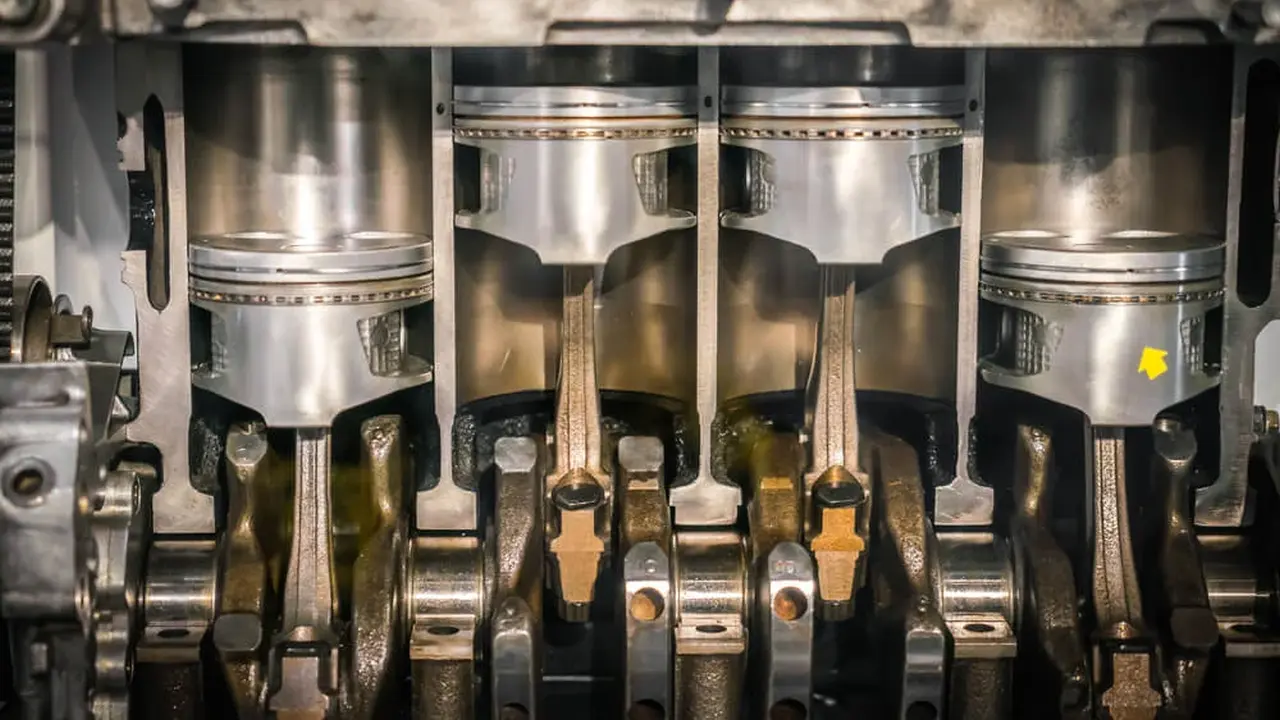
The firing order is one of the most important details in a multi-cylinder internal combustion engine. It determines the sequence in which the cylinders produce power by igniting the air-fuel mixture. Although the idea sounds simple, the firing order has a major effect on engine smoothness, vibration, balance, exhaust flow, and overall performance.
Every cylinder does not fire at the same time. Instead, the engine control system or ignition system follows a specific sequence designed by the manufacturer.
Understanding the firing order can be especially useful when diagnosing misfires, installing spark plug wires on older engines, checking ignition coils, or troubleshooting an engine that runs roughly after maintenance.
What Does Engine Firing Order Mean?
The engine firing order is the specific sequence in which the cylinders of an engine complete their combustion and power-producing events.
For example, a four-cylinder engine may have a firing order such as:
1-3-4-2
This means cylinder number 1 fires first, followed by cylinder 3, then cylinder 4, and finally cylinder 2.
The sequence then repeats continuously while the engine is running.
The firing order is not necessarily the same as the physical arrangement of the cylinders. Cylinder numbering and firing order are two different things.
Why Does an Engine Need a Firing Order?
A multi-cylinder engine could theoretically fire its cylinders in many different sequences, but the manufacturer selects a specific order to achieve the desired mechanical characteristics.
The firing order helps distribute the power strokes around the crankshaft.
A properly selected firing order can reduce:
-
Engine vibration
-
Uneven torque delivery
-
Crankshaft stress
-
Harmonic vibration
-
Noise
-
Uneven exhaust pulses
It also helps the engine operate smoothly at different engine speeds.
The firing order is therefore not simply an ignition setting. It is closely related to the engine's mechanical design.
How Does the Firing Order Work?
To understand firing order, it is useful to remember the four strokes of a conventional four-stroke engine:
Intake
The intake valve opens and the piston moves downward, allowing air or an air-fuel mixture into the cylinder.
Compression
The valves close and the piston moves upward, compressing the mixture.
Power
The mixture is ignited, and the expanding gases push the piston downward.
Exhaust
The exhaust valve opens and the piston moves upward, pushing the combustion gases out of the cylinder.
The firing order determines which cylinder reaches its power stroke at a particular point in the engine's operating cycle.
In a four-stroke engine, each cylinder completes one complete cycle over two crankshaft revolutions, or 720 degrees.
What Is a Typical Four-Cylinder Firing Order?
One of the most common firing orders for inline four-cylinder engines is:
1-3-4-2
However, this is not universal.
Different manufacturers and engine designs can use different firing orders.
For this reason, you should never assume that every four-cylinder engine uses 1-3-4-2.
The correct firing order should always be checked using the manufacturer's service information for the specific engine.
What Is the Firing Order of a Six-Cylinder Engine?
Six-cylinder engines can use different firing orders depending on their configuration.
For example, an inline-six engine may use a sequence such as:
1-5-3-6-2-4
Other six-cylinder engines can have different sequences.
V6 engines are even more complicated because their cylinder numbering and crankshaft design vary significantly between manufacturers.
The firing order is therefore determined by the specific engine rather than simply by the number of cylinders.
What Is the Firing Order of a V8 Engine?
V8 engines can have many different firing orders.
A traditional V8 may use a sequence such as:
1-8-4-3-6-5-7-2
But this is only one example.
Modern V8 engines can use different firing sequences depending on crankshaft configuration, cylinder numbering, bank arrangement, engine architecture, and manufacturer design.
This is why a firing order should never be guessed when working on an engine.
Is the Firing Order the Same as Cylinder Numbering?
No.
This is one of the most common sources of confusion.
Cylinder numbering tells you which physical cylinder is cylinder 1, cylinder 2, cylinder 3, and so on.
Firing order tells you which cylinder fires first, second, third, and so forth.
For example, an engine may have cylinders numbered:
1-2-3-4
while its firing order is:
1-3-4-2
The two sequences describe completely different things.
Why Is Cylinder Number 1 Important?
Cylinder number 1 is used as the reference point for identifying the other cylinders and establishing the firing order.
However, the location of cylinder number 1 is not universal.
Depending on the engine design, cylinder 1 may be located at one end of an inline engine or on a particular bank of a V-type engine.
For this reason, assuming that the cylinder closest to the radiator or transmission is always cylinder 1 can lead to mistakes.
The manufacturer's cylinder numbering diagram should be used whenever possible.
What Happens If the Firing Order Is Wrong?
A wrong firing order can cause major engine problems.
In an engine with conventional spark plug wires, connecting the wires to the wrong cylinders can result in an incorrect ignition sequence.
The engine may:
-
Fail to start
-
Start and run very roughly
-
Misfire
-
Backfire
-
Have very poor acceleration
-
Lose significant power
-
Stall
-
Produce unusual exhaust sounds
-
Trigger the check engine light
In severe cases, continued operation can cause damage to emissions components such as the catalytic converter.
Can a Modern Engine Have the Wrong Firing Order?
Modern engines generally do not rely on manually arranged spark plug wires in the same way older ignition systems did.
Many modern vehicles use coil-on-plug ignition, where each cylinder has its own ignition coil. The engine control module determines when each spark should occur.
The physical wiring and control strategy are designed according to the engine's specified firing sequence.
If an ignition coil is installed on the wrong cylinder, however, the result can effectively be an ignition timing or cylinder identification problem.
This can produce severe misfires and other drivability problems.
How Is Firing Order Related to the ECU?
The engine control unit must know exactly when each cylinder requires ignition.
In a modern gasoline engine, the ECU uses information from sensors such as the crankshaft position sensor and camshaft position sensor to determine engine position and synchronize fuel injection and ignition.
The ECU does not simply fire the cylinders in an arbitrary sequence.
It follows the engine's mechanical design and programmed firing strategy.
If the ECU receives incorrect crankshaft or camshaft position information, the ignition and injection events may become incorrectly synchronized.
This can cause difficult starting, misfires, poor performance, or a no-start condition.
What Happens If One Cylinder Does Not Fire?
A cylinder that fails to produce a power stroke is called a misfire condition.
The engine may continue running on the remaining cylinders, but the result can be noticeable.
For example, a four-cylinder engine with one cylinder not firing is effectively producing power from only three cylinders.
The driver may notice:
-
Rough idle
-
Engine shaking
-
Reduced power
-
Poor acceleration
-
Increased fuel consumption
-
Engine warning light
-
Unusual exhaust behavior
If the misfire is severe, the engine control unit may detect it and store a diagnostic trouble code.
Is Firing Order Related to Engine Balance?
Yes.
Firing order is closely related to engine balance and the way combustion forces are distributed through the crankshaft.
When cylinders fire in a carefully selected sequence, the power pulses are distributed more evenly.
This helps reduce unwanted vibration and makes torque delivery smoother.
The crankshaft, connecting rods, pistons, engine mounts, and other components are all designed with these forces in mind.
Changing the firing order is therefore not something that can normally be done without redesigning the engine's mechanical and control characteristics.
Does Firing Order Affect Engine Performance?
Yes, but not in the simple sense that one firing order is automatically "more powerful" than another.
The firing order is selected as part of the overall engine design.
It affects the timing and distribution of combustion pulses through the crankshaft and exhaust system.
In performance engines, firing order can also influence exhaust pulse timing and the way exhaust gases flow through the exhaust manifolds or headers.
This can affect sound, vibration characteristics, and exhaust tuning.
However, the correct firing order for a particular engine is determined by its mechanical configuration.
Firing Order and Spark Plug Wires
Firing order is especially important on older gasoline engines equipped with a distributor and separate spark plug wires.
The distributor sends the ignition voltage to the spark plug corresponding to the cylinder that needs to fire.
If the spark plug wires are connected according to the wrong sequence, the engine may not run correctly.
A common mistake during spark plug replacement is removing several wires at the same time and then reconnecting them incorrectly.
This can result in a no-start condition or severe misfire.
When working on such an ignition system, it is important to verify both the cylinder numbering and the manufacturer's specified firing order.
Firing Order in Coil-on-Plug Engines
Modern engines often use coil-on-plug ignition.
Instead of a distributor sending high-voltage current through long spark plug wires, an individual ignition coil is mounted directly above or near each spark plug.
The ECU controls the coils electronically.
This eliminates many of the traditional distributor-related problems, but the firing order remains essential because the ECU must still ignite each cylinder at the correct point in the four-stroke cycle.
Does the Firing Order Apply to Diesel Engines?
Yes.
Diesel engines also have a firing order.
The major difference is that diesel engines generally do not use spark plugs to ignite the mixture.
Instead, diesel fuel is injected into highly compressed, hot air, allowing combustion to occur.
The firing order still determines the sequence in which the cylinders produce their power strokes.
Therefore, the concept of firing order applies to both gasoline and diesel internal combustion engines.
How Do You Find the Firing Order of an Engine?
The safest method is to use reliable information for the exact engine.
The firing order may be found in:
-
The vehicle service manual
-
Manufacturer repair documentation
-
Engine identification information
-
Technical specifications
-
Engine diagrams
-
Information printed on some ignition components
Do not assume the firing order based only on the number of cylinders.
Two engines with the same number of cylinders can have completely different firing orders.
How Do You Diagnose a Possible Firing-Order Problem?
If an engine develops a severe misfire after spark plugs, ignition coils, or spark plug wires have been serviced, the firing order should be considered.
Start by confirming the cylinder numbering.
Then verify the firing order specified for the engine.
On engines with individual ignition coils, make sure each coil is installed on the correct cylinder and that electrical connectors are properly connected.
A diagnostic scanner can also be used to identify cylinder-specific misfire codes.
For example, codes such as P0301, P0302, P0303, or P0304 indicate detected misfires associated with specific cylinders.
However, a misfire code does not automatically mean that the firing order is wrong. Ignition coils, spark plugs, injectors, compression, wiring, fuel pressure, and mechanical problems can all cause similar symptoms.
Can a Wrong Firing Order Damage the Engine?
A wrong firing order can cause severe combustion problems.
If the engine is operated for an extended period with significant misfires, unburned fuel can enter the exhaust system.
This can cause excessive heat inside the catalytic converter and potentially damage it.
Severe abnormal combustion can also place unnecessary stress on engine components.
Therefore, an engine that suddenly runs extremely rough after ignition system work should not simply be driven until the problem disappears.
Why Do Different Engines Use Different Firing Orders?
The firing order is influenced by the engine's mechanical design.
Engineers consider factors such as:
-
Crankshaft design
-
Cylinder arrangement
-
Number of cylinders
-
Engine balance
-
Vibration
-
Torsional forces
-
Exhaust pulse timing
-
Intake and exhaust design
-
Ignition system
-
Manufacturing requirements
The goal is to create an engine that operates efficiently and smoothly while controlling unwanted forces and vibrations.
This is why there is no single firing order that applies to all engines.
Firing Order Is More Than an Ignition Sequence
The firing order may appear to be nothing more than a list of numbers, but it represents an important part of the engine's architecture.
Every combustion event produces a force on a piston. That force is transferred through the connecting rod to the crankshaft.
The order in which these forces occur affects how smoothly the crankshaft receives torque.
Engine manufacturers therefore carefully select the firing sequence to suit the mechanical characteristics of the engine.
Final Thoughts
The engine firing order is the sequence in which the cylinders produce their power strokes. It is essential for correct engine operation and is closely connected to the crankshaft, ignition system, fuel injection system, engine balance, vibration, and exhaust characteristics.
A four-cylinder engine, for example, may use a firing order such as 1-3-4-2, but this should never be assumed for every engine. Different engines can use completely different firing sequences.
If an engine develops a severe misfire after spark plugs, ignition coils, or spark plug wires have been serviced, checking the cylinder numbering and firing order is an important part of the diagnosis.
Most importantly, firing order and cylinder numbering are not the same thing. Cylinder numbering identifies where each cylinder is located, while firing order tells you the sequence in which those cylinders produce their power strokes. Understanding this distinction makes diagnosing many ignition and misfire problems much easier.