TR
TR EN
EN

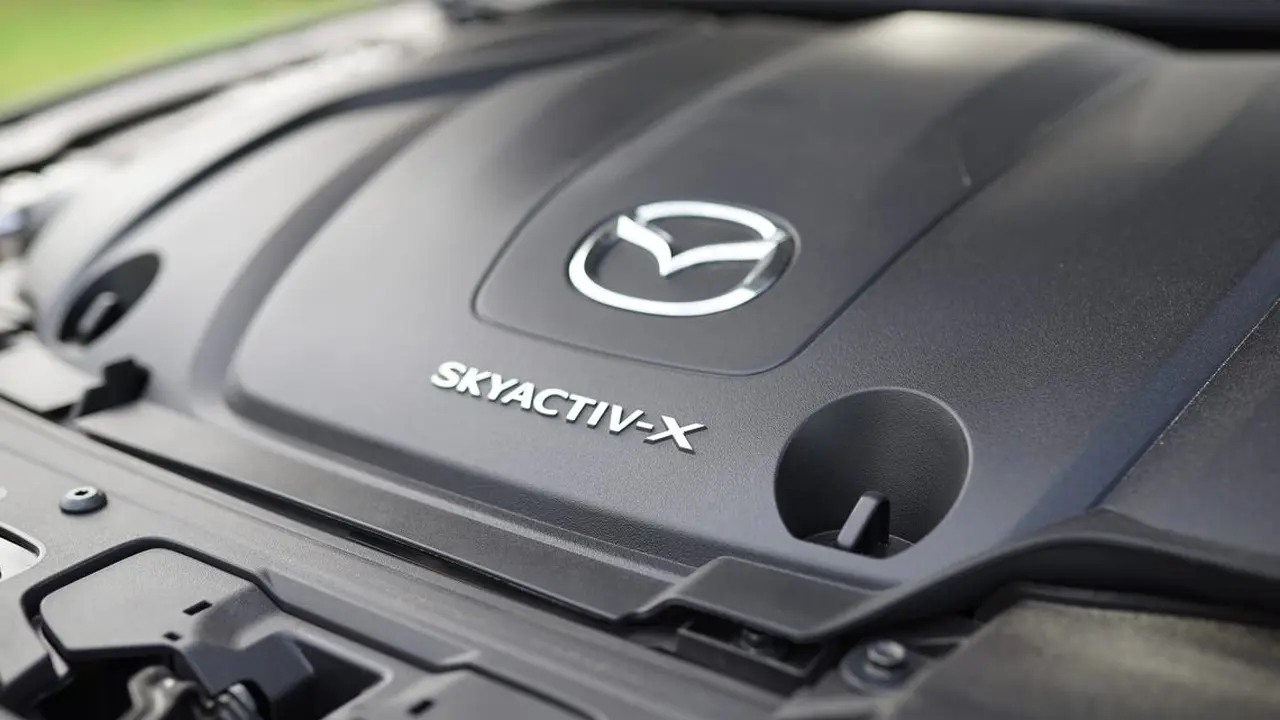
What Is Mazda Skyactiv Technology?
When Mazda is mentioned, one of the technologies that stands out most among its engine technologies is Skyactiv. However, Skyactiv is not simply the name of an engine technology. It refers to a broad engineering approach developed by Mazda to improve the efficiency of its engines, transmissions, body structures, chassis, and driving technologies.
The basic idea behind the Skyactiv philosophy is quite simple: to reduce fuel consumption while maintaining performance, driving enjoyment, and efficiency as much as possible.
For this reason, the Skyactiv name has been used for a wide range of technologies, from high-compression gasoline engines and efficient diesel engines to conventional automatic transmissions and lightweight, rigid vehicle structures.
What Does Skyactiv Technology Mean?
Skyactiv is the name Mazda gave to a family of technologies that began appearing in its newer-generation vehicles around the early 2010s.
Instead of focusing only on the engine, Mazda evaluated the vehicle as a complete system. While engine efficiency was improved, transmission losses were reduced, the body was made lighter, aerodynamics were improved, and the chassis was redesigned.
For this reason, it would not be accurate to describe Skyactiv simply as:
“Mazda's economical engine technology.”
More accurately, Skyactiv is a technology and engineering philosophy aimed at reducing energy losses and using the energy produced by the engine as effectively as possible.
What Is Skyactiv-G?
Skyactiv-G is Mazda's family of gasoline engines.
One of the most notable characteristics of these engines is their high compression ratios. In conventional gasoline engines, increasing the compression ratio also increases the risk of knocking.
Mazda developed different combustion and engine design solutions to benefit from a high compression ratio while reducing this risk.
A higher compression ratio can help the air-fuel mixture burn more efficiently. Under the right operating conditions, this can contribute to improved thermal efficiency and lower fuel consumption.
Skyactiv-G engines use technologies such as:
-
High compression ratios
-
Optimized combustion chambers
-
Direct fuel injection
-
Improved piston designs
-
More efficient removal of exhaust gases
-
Variable valve timing
-
Reduced mechanical friction
Why Is a High Compression Ratio Important in Skyactiv-G Engines?
As the compression ratio of a gasoline engine increases, thermal efficiency can theoretically improve.
However, high compression also creates an important challenge: knock.
During normal combustion, the mixture burns in a controlled manner after being ignited by the spark plug. During knock, part of the mixture can ignite unintentionally, creating abnormal combustion.
Mazda addressed this issue by developing the combustion chamber, piston design, exhaust system, and other engine components as a complete system.
Reducing the amount of residual exhaust gas left inside the cylinder can help create more suitable conditions for the next combustion cycle.
What Is Skyactiv-X?
One of the most interesting members of the Skyactiv family is the Skyactiv-X engine.
Skyactiv-X is a technology designed to combine some of the characteristics of gasoline engines with some of the advantages of compression ignition used in diesel engines.
At the heart of the system is a combustion method called SPCCI – Spark Controlled Compression Ignition.
It can be roughly described as spark-controlled compression ignition.
While the spark plug plays the primary role in ignition in a conventional gasoline engine, Skyactiv-X can use compression ignition under certain operating conditions.
However, the spark plug is not eliminated.
Instead, it plays an important role in controlling the combustion process.
How Does SPCCI Work?
The operating principle of Skyactiv-X is somewhat more complex than that of a conventional gasoline engine.
Under certain conditions, the engine can operate with a very lean air-fuel mixture. This means that the amount of fuel in the mixture is lower than under normal operating conditions.
However, reliably igniting a very lean mixture using conventional methods can be difficult.
Mazda uses the small, controlled combustion area created by the spark plug to address this problem.
This combustion increases the pressure inside the cylinder and helps trigger compression ignition of the main air-fuel mixture.
In this way, the system attempts to combine the control advantages of a spark plug with the efficiency advantages of compression ignition.
What Is Skyactiv-D?
Skyactiv-D is Mazda's diesel engine technology.
Skyactiv-D engines were also developed with high efficiency as a major objective. However, Mazda moved away from some traditional diesel-engine approaches.
In a diesel engine, reducing the compression ratio generally means a lower temperature at the end of the compression stroke. Mazda used this approach to achieve greater control over the combustion process.
These engines have used technologies such as:
-
Lower compression ratios
-
Twin-stage turbocharging applications
-
Precise fuel injection
-
Improved combustion control
-
Emissions control systems
The objective was not simply to produce a powerful diesel engine, but to achieve efficient and clean combustion across a wide engine-speed range.
What Is Skyactiv-Drive?
Skyactiv technology is not limited to engines.
Skyactiv-Drive is Mazda's automatic transmission technology.
Mazda aimed to retain the comfort of an automatic transmission while reducing the energy losses associated with conventional automatic transmissions.
One important characteristic of Skyactiv-Drive is that it uses a conventional torque-converter automatic transmission layout while allowing the lock-up mechanism to operate across a wider range of conditions.
A torque converter can create slip between the engine and transmission under certain conditions. While this provides smoothness and comfort, it can also result in energy losses.
Mazda increased the use of the lock-up mechanism to reduce these losses.
As a result, the transmission can:
-
Respond more quickly.
-
Transfer power more directly.
-
Help reduce fuel consumption.
-
Maintain the comfort expected from an automatic transmission.
What Is Skyactiv-MT?
Skyactiv-MT is Mazda's manual transmission technology.
Mazda did not focus only on durability when developing its manual transmissions. It also worked to reduce weight and mechanical losses.
Short and sporty gear changes were another important objective of the design.
For this reason, Skyactiv-MT is an important part of Mazda's approach to maintaining a strong connection between the driver and the vehicle.
What Is Skyactiv-Body?
Another important part of the Skyactiv approach is Skyactiv-Body.
The objective is to keep the vehicle body as light as possible while also achieving high rigidity and safety.
Vehicle weight affects much more than fuel consumption. A heavier vehicle:
-
Requires more energy to accelerate.
-
Requires more braking energy.
-
Places greater loads on the suspension.
-
Creates greater inertia when cornering.
Therefore, reducing vehicle weight can improve performance and efficiency even without increasing engine power.
Mazda placed particular emphasis on using different grades and proportions of high-strength steel strategically within the vehicle structure.
What Is Skyactiv-Chassis?
Skyactiv-Chassis refers to the development of the vehicle's suspension and chassis systems.
The goal is not simply to make the vehicle handle better.
Mazda aimed to create a balanced combination of steering response, suspension movement, body control, and ride comfort.
For this reason, driving feel is just as important as fuel efficiency within the Skyactiv philosophy.
Mazda's approach focuses on creating a more natural connection between the driver and the vehicle.
How Does Skyactiv Affect Fuel Consumption?
One of the main objectives of Skyactiv is to reduce fuel consumption.
However, it would be incorrect to assume that every Mazda carrying the Skyactiv name consumes the same amount of fuel.
Actual fuel consumption depends on factors such as:
-
Engine displacement
-
Engine type
-
Transmission
-
Vehicle weight
-
Driving style
-
Traffic conditions
-
Average speed
-
Tires
-
Air-conditioning use
-
Road gradient
The advantage of Skyactiv is its attempt to make the vehicle's overall use of energy more efficient.
Are Skyactiv Engines Turbocharged?
Not all Skyactiv engines are turbocharged.
Mazda's naturally aspirated Skyactiv-G gasoline engines, in particular, have a different character from turbocharged engines that produce strong low-rpm torque.
With a naturally aspirated engine, power generally increases more progressively as engine speed rises.
This can provide a more linear throttle response and a natural power delivery.
However, Mazda has also developed turbocharged Skyactiv engines in later generations.
For example, some larger-displacement Skyactiv-G engines use turbocharging.
Therefore, “Skyactiv means naturally aspirated” is not a general rule.
Are Skyactiv Engines Reliable?
The reliability of a Skyactiv engine depends on the specific engine design and how the vehicle is maintained and used.
Many Skyactiv engines can provide long-term service when properly maintained.
However, just like other modern engines, Skyactiv engines can develop problems when maintenance is neglected.
Potentially important issues include:
-
Neglecting engine oil level and quality
-
Using the wrong engine oil
-
Failing to replace the air filter for too long
-
Neglecting fuel-system maintenance
-
Neglecting the cooling system
-
Using poor-quality fuel
-
Ignoring DPF and EGR problems in diesel engines
These issues can eventually lead to more serious and expensive repairs.
Why Is Maintenance Important for Skyactiv Engines?
The high-efficiency design of Skyactiv engines makes maintaining the correct operating conditions particularly important.
The lubrication system, cooling system, and fuel-injection system are all critical to the engine's operating characteristics.
Routine maintenance should involve more than simply changing the engine oil.
The air filter, oil filter, spark plugs, coolant, and other service items should be inspected or replaced according to the manufacturer's recommended maintenance schedule.
In Skyactiv diesel engines, the DPF, EGR, and turbocharger systems are also particularly important.
Skyactiv and Hybrid Technology
In Mazda's newer technologies, the Skyactiv approach is also being combined with hybrid systems.
The goal is not simply to add an electric motor to the vehicle.
Instead, the efficiency of the internal combustion engine can be improved while the electric motor assists the engine during situations such as starting, low-speed driving, and acceleration.
This can help keep the internal combustion engine operating within more efficient conditions.
What Is the Biggest Difference With Skyactiv?
The most important characteristic of Skyactiv is that it does not focus on just one technology.
Mazda did not simply take the approach of:
“Let's make the engine more efficient.”
Instead, it worked on the relationship between:
engine + transmission + body + chassis + aerodynamics + electronic systems
to improve overall vehicle efficiency.
This is why Skyactiv is not the name of a specific engine or mechanical component. It represents Mazda's broader approach to vehicle engineering.
Skyactiv Technology in Simple Terms
Skyactiv is Mazda's family of automotive technologies developed to reduce energy losses and improve overall vehicle efficiency.
Skyactiv-G gasoline engines are known for their high compression ratios and optimized combustion technologies. Skyactiv-X uses the SPCCI system to make use of compression-ignition principles in a gasoline engine. Skyactiv-D focuses on efficient combustion and emissions control in diesel engines.
When technologies such as the Skyactiv-Drive automatic transmission, Skyactiv-MT manual transmission, Skyactiv-Body structure, and Skyactiv-Chassis are considered together, it becomes clear that Skyactiv is much more than an engine technology.
The basic philosophy is to create a vehicle that is more efficient, lighter, and enjoyable to drive while minimizing energy losses.