TR
TR EN
EN

ABS (Anti-lock Braking System) and Its History
ABS (Anti-lock Braking System) is a safety technology that prevents the wheels from locking up during braking, helping the driver maintain steering control. ABS allows the vehicle to remain stable even on slippery surfaces or during emergency braking and helps optimize braking performance. Today, ABS has become a standard feature in the automotive industry and is one of the fundamental technologies in road safety.
The Invention and Inventors of ABS
The development of the ABS system began with needs arising from both the aviation and automotive industries:
-
Origins in Aviation: The foundations of ABS can be traced back to mechanical systems developed in the 1920s to prevent aircraft wheels from locking during landing. In the 1950s, the British company Dunlop used a technology called Maxaret, which is considered one of the first mechanical anti-lock braking systems, on aircraft. This technology represented an important breakthrough in aviation by reducing the risk of skidding during landing.
-
Development in the Automotive Industry: The integration of ABS into automobiles took place much later. During the 1960s, various companies began adapting mechanical and hydraulic systems for cars. However, the evolution of these systems into what we recognize as modern ABS became possible with the development of electronic control units.
-
The Development of Modern ABS: During the 1970s, German technology companies Bosch and Mercedes-Benz played a leading role in the development of modern ABS. Bosch designed the electronic control unit (ECU) for ABS and helped adapt the system for use in automobiles. This technology became one of the first effective solutions to combine hydraulic braking systems with electronic control.
The First Use of ABS in Automobiles
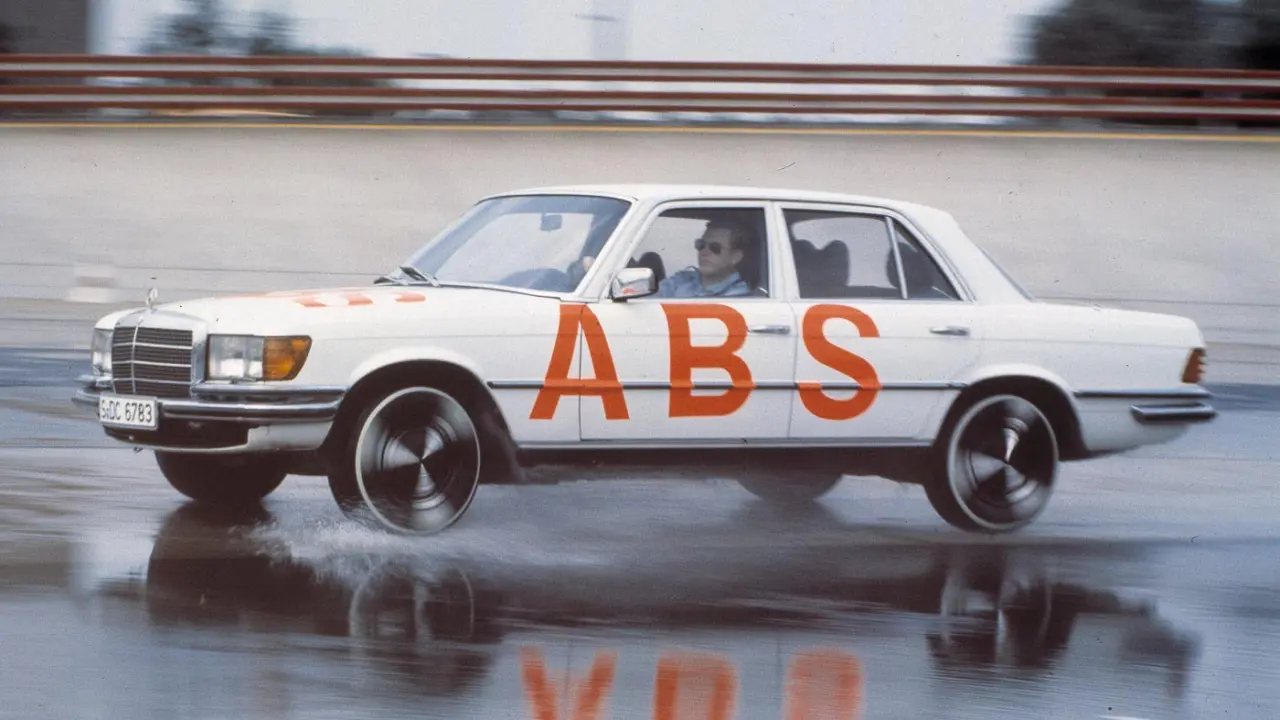
The ABS system was first used in 1978 in the Mercedes-Benz S-Class and BMW 7 Series models. Developed by Bosch, this system significantly improved braking safety in automobiles, and its effectiveness was demonstrated through testing. This year marked an important turning point in the commercialization and wider adoption of modern ABS technology.
The Mercedes-Benz S-Class Equipped with ABS:
-
Introduced in 1978, the system prevented the wheels from locking during braking, allowing the driver to maintain steering control even at high speeds.
-
The system optimized braking force according to road conditions, reducing the risk of skidding while improving braking performance.
Use in the BMW 7 Series:
-
BMW introduced ABS as an important safety feature in its luxury and performance-oriented models.
-
The system was particularly useful for drivers in European countries where winter driving conditions were common.
The Spread of ABS
-
1980s: ABS began becoming more common in luxury and sports cars. Four-channel, four-sensor systems allowed individual control of the wheels.
-
1990s: ABS was introduced into mid-range vehicles, making the technology available to a much wider audience. It also became mandatory in many countries.
-
2000s and Beyond: ABS became increasingly integrated with other safety systems such as the Electronic Stability Program (ESP) and Traction Control System (TCS).
ABS has been one of the major turning points in both automotive technology and vehicle safety. Developed by Mercedes-Benz and Bosch and first introduced in automobiles in 1978, the system has become increasingly effective and affordable over time. Today, ABS is no longer limited to luxury vehicles and is found as standard equipment in passenger cars in almost every part of the world. This technology has significantly reduced the risk of accidents on the road and has helped save millions of lives.