TR
TR EN
EN

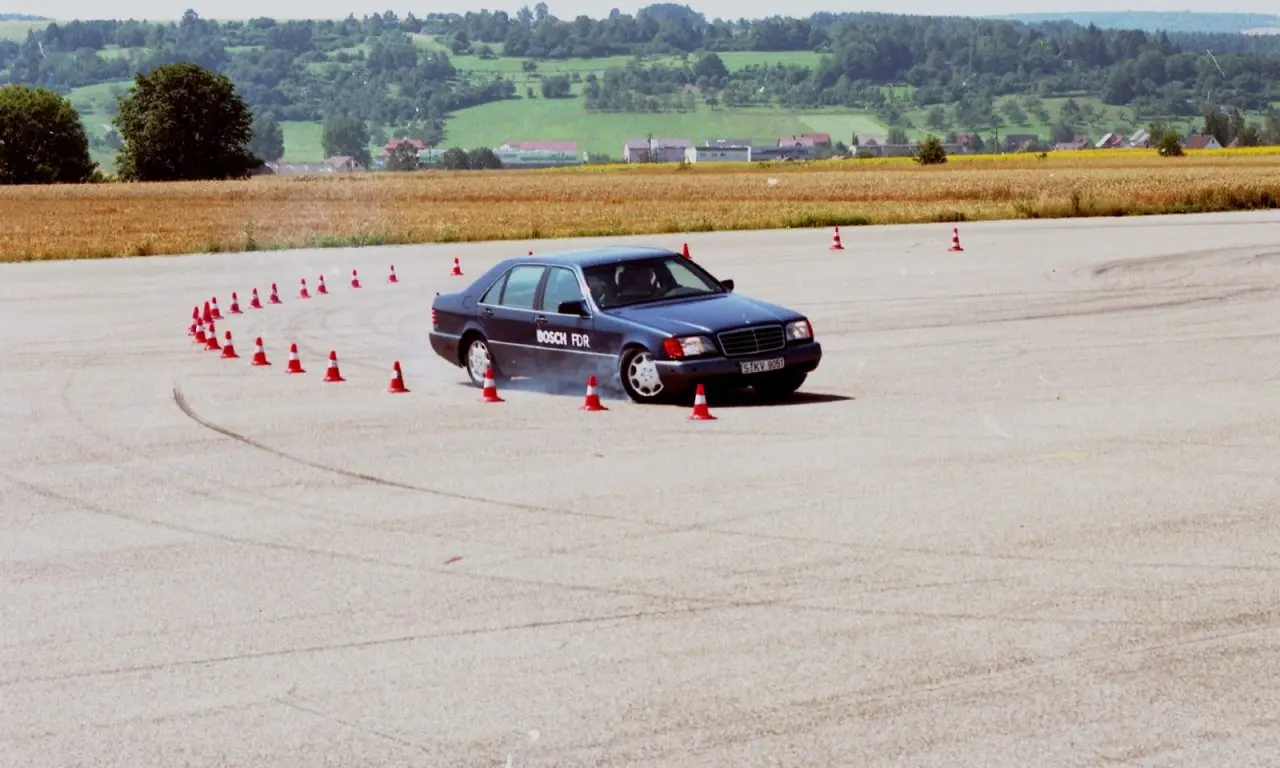
ESP (Electronic Stability Program) and Its History
ESP (Electronic Stability Program) is a safety system designed to help maintain a vehicle’s road grip and stability in situations where the driver is at risk of losing control. By analyzing the braking system, steering angle, and the vehicle’s trajectory information together, it can apply braking force to individual wheels or reduce engine power when necessary to keep the vehicle stable. ESP is one of the most important safety technologies in modern automobiles because it can help prevent many accidents.
The Invention and Inventors of ESP
The development of ESP was based on advances in fundamental safety systems such as ABS and Traction Control Systems (TCS). ESP was designed as a system in which these technologies could work together through more advanced control algorithms.
-
Inventor and Developer: The Electronic Stability Program was developed as a result of cooperation between Bosch and Mercedes-Benz. Bosch contributed its expertise in electronic braking systems and control units to the development of this new technology.
-
Foundations of the Invention: Bosch began developing ESP in 1992. The system aimed to reduce the risk of skidding, swerving, or losing control by combining and advancing the capabilities of ABS and TCS.
-
Patent and Introduction: In 1995, Bosch developed the first prototype of the Electronic Stability Program, and testing demonstrated the system’s effectiveness in preventing accidents.
The First Use of ESP in Automobiles
ESP was first used in the Mercedes-Benz S-Class and CL-Class models in 1995. At the time, the system was introduced as a safety technology offered primarily in luxury automobiles.
-
Mercedes-Benz S-Class:
-
The 1995 S-Class was the first mass-produced car equipped with ESP technology.
-
The system adjusted braking force to help prevent the rear or front axle from losing grip on slippery surfaces.
-
-
Mercedes-Benz CL-Class:
-
The CL-Class was also equipped with ESP in the same year, with the goal of providing a sportier driving experience while maintaining maximum safety.
-
The Spread of ESP
-
1990s:
-
ESP initially began appearing in luxury and sports cars.
-
Premium brands such as Audi and BMW followed Mercedes-Benz by incorporating ESP into their own models.
-
-
2000s:
-
ESP began becoming mandatory, particularly in Europe. From 2014 onward, the European Union required ESP to be offered as standard equipment on all newly produced passenger cars.
-
During the same period, manufacturers such as Toyota, Honda, and General Motors also began implementing ESP in ways that brought the technology to a much wider range of vehicles.
-
-
Today:
-
ESP has become an essential part of modern vehicle safety standards. The system is now used not only in passenger cars but also in commercial vehicles, trucks, and even motorcycles.
-
How Does ESP Work?
-
Sensors:
-
Wheel speed sensors, steering angle sensors, and lateral acceleration sensors detect the vehicle’s movement and the driver’s intended direction.
-
-
Electronic Control Unit (ECU):
-
The ECU analyzes the data received from the sensors and determines whether the vehicle is deviating from its intended trajectory.
-
-
Brake and Engine Control:
-
The ECU can apply individual braking pressure to specific wheels and reduce engine power to help keep the vehicle stable.
-
Advantages of ESP
-
Increased Safety:
-
It reduces the risk of skidding on slippery roads.
-
-
Accident Prevention:
-
It makes it easier to maintain control of the vehicle in poor weather conditions.
-
-
Usability Across Different Vehicle Types:
-
It can operate effectively in both passenger cars and commercial vehicles.
-
ESP is one of the most critical safety innovations in modern automotive technology. Developed through cooperation between Bosch and Mercedes-Benz and introduced in 1995, the system has significantly improved road safety by helping prevent millions of accidents. Today, ESP is no longer a luxury feature but has become a standard safety technology in vehicles. The widespread adoption of this technology represents one of the most important steps forward in the history of road safety.