TR
TR EN
EN

François Isaac de Rivaz: A Pioneer of the Steam Engine and the First Internal Combustion Vehicle
Throughout history, many great inventors have changed the world with their inventions. One of them was François Isaac de Rivaz. The Swiss inventor became one of the figures who laid the foundations of the automotive industry through the engine technology he developed in the 18th century. So, who was François Isaac de Rivaz, and what did he accomplish?
François Isaac de Rivaz: A Pioneer of the Steam Engine and the First Internal Combustion Vehicle
Throughout history, many great inventors have changed the world with their inventions. One of them was François Isaac de Rivaz. The Swiss inventor became one of the figures who laid the foundations of the automotive industry through the engine technology he developed in the 18th century. So, who was François Isaac de Rivaz, and what did he accomplish?
Who Was François Isaac de Rivaz?
François Isaac de Rivaz was born in Switzerland in 1752. Originally a lawyer and statesman, Rivaz managed to make his mark on history thanks to his interest in mechanics and engineering. Inspired by the innovations brought about by the Industrial Revolution toward the end of the 18th century, he began working on new sources of energy. In particular, he focused on developing an alternative to steam-powered engines.
The First Internal Combustion Engine and Rivaz’s Invention
In 1807, François Isaac de Rivaz developed what is regarded as the first internal combustion engine in history. The engine operated by igniting a mixture of hydrogen gas and air. This technology, which was revolutionary for its time, can be considered an ancestor of modern automobiles.
The basic operating principle of this engine was quite interesting:
-
Hydrogen was used as the fuel.
-
The gas mixture was ignited with the help of a spark, creating movement inside the cylinder.
-
This system produced mechanical energy through the up-and-down movement of the piston.
The First Internal Combustion Vehicle
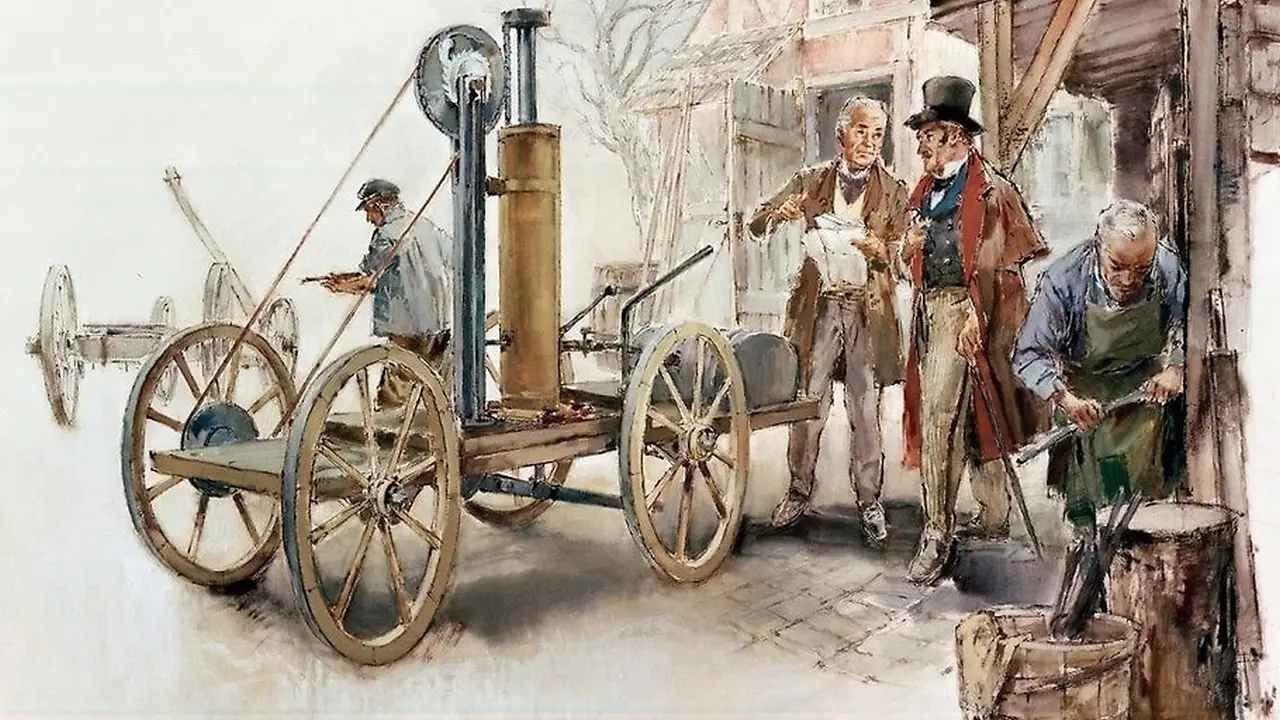
Rivaz decided to integrate his engine into a vehicle, and in 1807 he produced what is considered the world’s first vehicle powered by an internal combustion engine. However, the vehicle had a very primitive design and was not suitable for practical use. Because it was heavy and had low efficiency, it did not gain widespread acceptance. Nevertheless, Rivaz’s work became one of the most important steps in inspiring the development of the modern automobile.
Rivaz’s Legacy and Influence
Although François Isaac de Rivaz’s invention did not attract much attention during his lifetime, it helped pioneer the development of internal combustion engines. His ideas and work were further developed years later by inventors such as Nikolaus Otto and Karl Benz, helping pave the way toward the automobiles we know today.
Today, although the automotive world is increasingly moving toward electric and hydrogen fuel-cell vehicles, the invention Rivaz developed in the early 19th century continues to serve as a source of inspiration. If we were to identify an ancestor of the internal combustion engine, François Isaac de Rivaz would certainly be one of the names deserving of that distinction.
François Isaac de Rivaz was perhaps an inventor who did not receive enough recognition during his lifetime but remains a highly important figure in automotive history today. The internal combustion engine he developed was a revolutionary invention that helped lay the foundations of modern motor vehicles. If you are curious about how automobiles were invented, Rivaz’s work in 1807 can be regarded as one of the important starting points of that journey.