TR
TR EN
EN

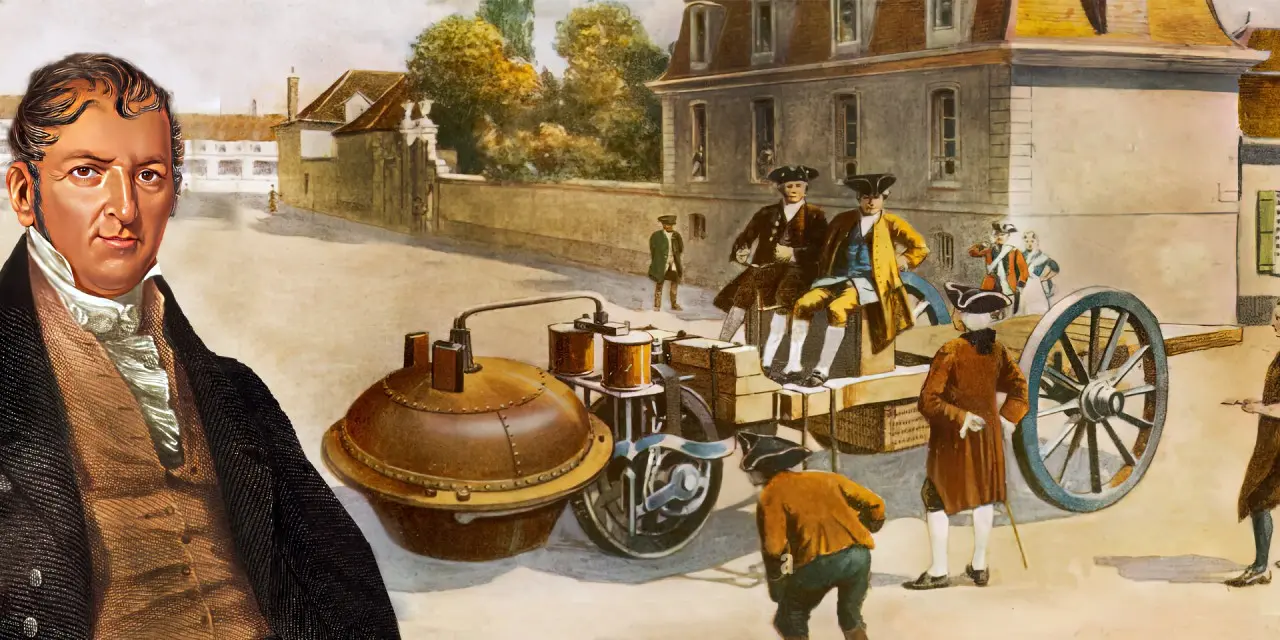
Nicolas Joseph Cugnot and the First Steam-Powered Vehicle
One of the most important figures in the history of the automobile, Nicolas Joseph Cugnot was a French inventor who developed what is considered the first motorized vehicle in human history. His invention laid the foundations for modern automobiles and created a major turning point in the history of transportation. So, who was Nicolas Joseph Cugnot, and what did he accomplish?
Who Was Nicolas Joseph Cugnot?
Nicolas Joseph Cugnot was born on February 26, 1725, in the town of Void-Vacon, France. From an early age, he developed an interest in mechanics and engineering. After receiving military training, he began serving in the French army and worked as an artillery engineer. Thanks to his experience in the military, he worked on mechanical systems designed to make it easier to transport heavy artillery.
The World’s First Motorized Vehicle: Fardier à Vapeur
In 1769, Cugnot developed the first motorized road vehicle powered by steam. Known as the Fardier à Vapeur, this three-wheeled vehicle was designed to transport heavy military artillery. Long before the development of internal combustion engines, this invention became one of the first examples of using steam power as a means of transportation.

The main features of the Fardier à Vapeur were:
-
The vehicle generated steam power using a large boiler.
-
It had a three-wheeled design.
-
It could travel at approximately 4 km/h.
-
It weighed around 2.5 tons and was designed to pull heavy loads.
The First Traffic Accident and the Challenges
In 1771, Cugnot’s vehicle crashed into a wall during a test drive, resulting in what is considered the first motor vehicle accident in history. This incident demonstrated that motorized vehicles were not yet fully practical for everyday use. In addition, factors such as the vehicle’s large and inefficient design and the difficulties associated with operating a steam engine for extended periods caused the project to lose support and eventually be suspended by the government.
His Later Years and Legacy
Because his invention failed to attract sufficient interest, Cugnot experienced financial difficulties later in life and left France to settle in Belgium. However, in 1804, the French government honored his achievements by granting him a small pension. Cugnot died on October 2, 1804.
Today, Nicolas Joseph Cugnot’s invention is considered an ancestor of the modern automobile. His Fardier à Vapeur is still displayed at the Conservatoire National des Arts et Métiers museum in Paris. Although the automotive world has advanced the motor vehicle technology pioneered by Cugnot to an entirely different level, his contributions will always be remembered.
Conclusion
Nicolas Joseph Cugnot was one of the first inventors in human history to imagine and create a motorized vehicle. The steam-powered vehicle he developed in 1769 helped shape the history of transportation and paved the way for the birth of the automotive industry. Today, automobile enthusiasts and engineers around the world continue to advance the field that Cugnot helped pioneer.