TR
TR EN
EN

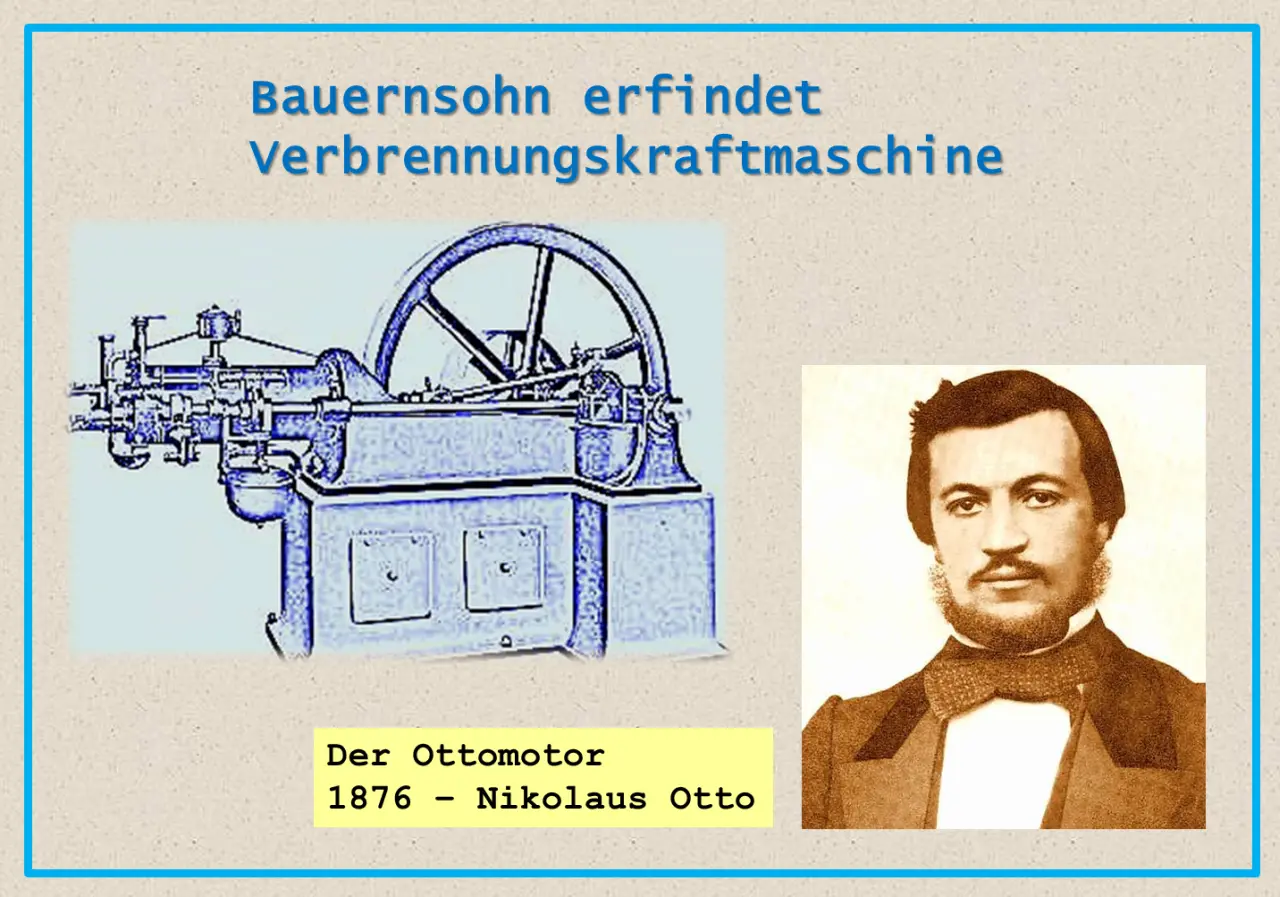
Nikolaus Otto: The Father of the Internal Combustion Engine
Nikolaus August Otto was an important inventor who pioneered the development of the modern internal combustion engine and helped lay the foundations of the automotive industry. His inventions formed the basis of today’s motor vehicles and made a major contribution to the advancement of the Industrial Revolution. So, who was Nikolaus Otto, and what did he invent? Here is his life and story.
The Life of Nikolaus Otto
Nikolaus August Otto was born on June 14, 1832, in the town of Holzhausen an der Haide, Germany. He began his education at a local school and later studied commerce in Frankfurt. However, what truly interested him was not business, but mechanics and engine technology.
Although he had no formal engineering education when he was young, he developed a strong curiosity about engine technology. At the time, steam engines were the most common source of mechanical power, and Otto was searching for alternatives. During the mid-19th century, he began studying the development of gas engines and started conducting his own work in this field. The invention of the gas engine by Étienne Lenoir was particularly inspiring to Otto.
His First Successes and the Internal Combustion Engine
Nikolaus Otto began researching gas engines in the 1860s. In 1864, he founded an engine manufacturing company called N.A. Otto & Cie together with Eugen Langen. The company played an important role in the development of internal combustion engines and eventually became the major engine manufacturer known as Deutz AG.
Otto’s greatest achievement came in 1876, when he developed the four-stroke internal combustion engine. This engine formed the foundation of the engine systems used in modern automobiles. Known as the Otto cycle, the four-stroke system consisted of the following stages:
-
Intake: The air-fuel mixture is drawn into the cylinder.
-
Compression: The mixture is compressed and prepared for combustion.
-
Combustion (Power): The mixture is ignited by a spark, forcing the piston downward.
-
Exhaust: The burned gases are expelled from the cylinder.
This system was considerably more efficient and powerful than the earlier one-stroke and two-stroke engines. Otto’s engine quickly gained popularity and helped create a major transformation in industry and transportation.
In 1877, Otto received a patent for his engine, which soon began to be used in industry and agriculture. Much lighter and more practical than steam engines, this engine played a major role in the development of the automotive industry.

The Spread and Impact of the Four-Stroke Engine
Otto’s four-stroke engine played a critical role, particularly in the development of the automotive industry. Inventors such as Karl Benz and Gottlieb Daimler based their work on Otto’s engine technology when developing modern automobiles. Over time, Otto’s engine technology evolved and established the fundamental principles behind modern gasoline and diesel engines.
However, Otto’s patent process was difficult. In 1886, he lost his patent for the internal combustion engine. The court determined that a similar concept had previously been used by Étienne Lenoir and revoked Otto’s patent rights. Nevertheless, this event could not diminish his contributions to engine technology.
Otto’s Legacy and Later Years
Otto’s engine was rapidly adopted, particularly in the industrial and transportation sectors. The technology he developed was used in many different applications, ranging from ships to agricultural machinery.
Despite this major achievement in engine technology, Nikolaus Otto died in Cologne, Germany, in 1891. However, his legacy continues to live on in the automotive and industrial worlds. Today, every vehicle powered by an internal combustion engine is connected to the revolutionary technology pioneered by Otto.
Conclusion
Nikolaus Otto went down in history as an inventor who played a key role in the development of the internal combustion engine. His four-stroke engine became the foundation of modern internal combustion engines and helped accelerate the development of the automotive industry. If we use vehicles powered by gasoline or diesel engines today, Nikolaus Otto’s revolutionary invention played a major role in making that possible. His work continues to serve as a source of inspiration in the world of engineering.