TR
TR EN
EN

Henry Ford: The Genius Who Revolutionized Automobile Manufacturing
Henry Ford was one of the most influential figures in American industry, a pioneer of modern automobile manufacturing, and one of the world’s best-known businessmen. His life story and innovations fundamentally transformed not only the automobile industry but also the way labor was organized and modern manufacturing methods were developed.
The Life Story of Henry Ford
Birth and Early Years
Henry Ford was born on July 30, 1863, in Dearborn, Michigan. His family made a living through farming, but Ford showed little interest in agriculture during his childhood. From an early age, he became fascinated by machines. Although his father encouraged Henry to work in farming, the young Ford’s interests were focused on machinery and engineering. Before beginning work as an apprentice at the age of 16, he briefly attended an engineering school in Detroit.
His Early Work and Interest in Automobiles
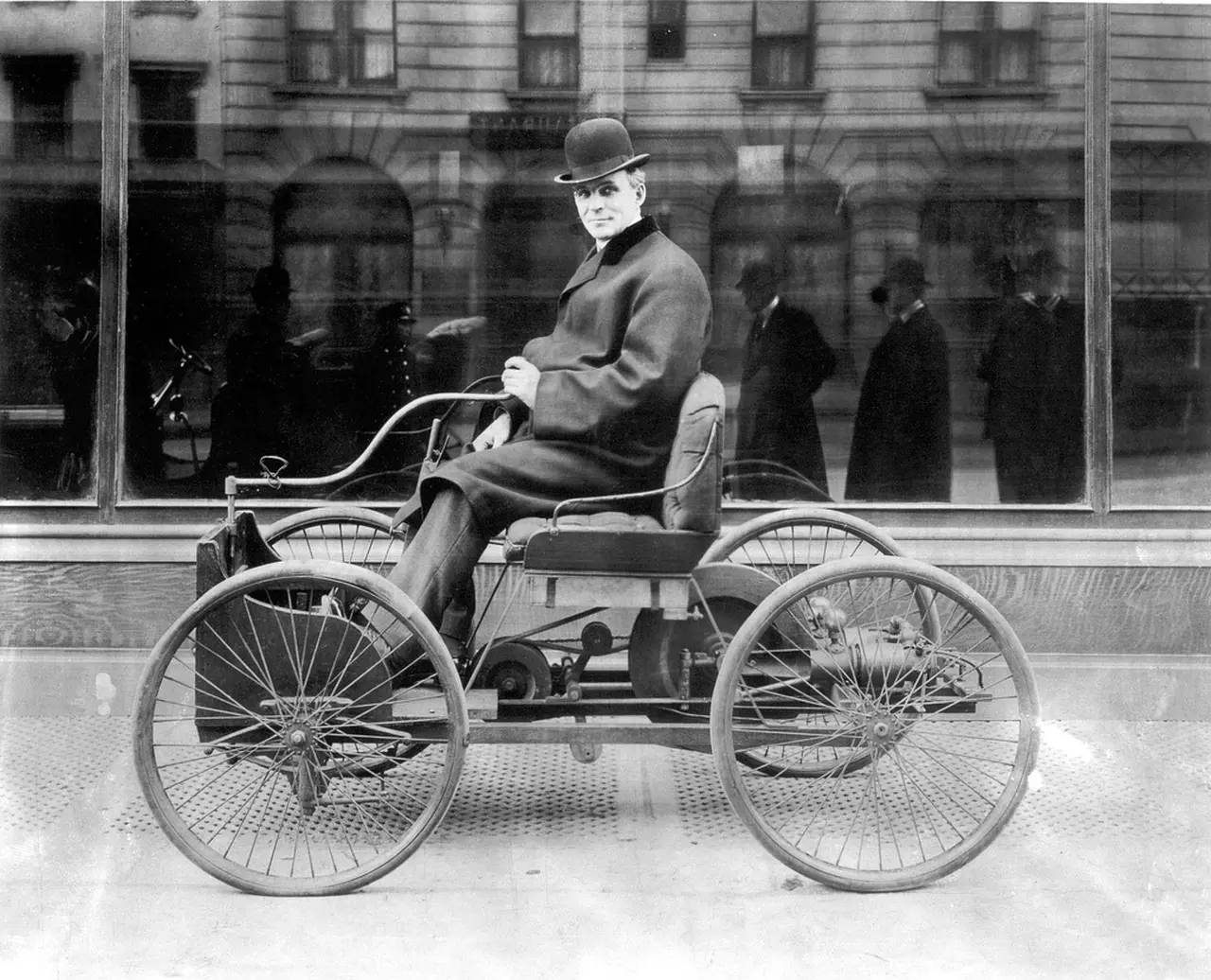
Ford’s interest in automobiles dates back to the early 1890s. In 1896, he designed his first automobile powered by an internal combustion engine. Known as the Quadricycle, the vehicle had four wheels, a two-speed transmission, and a simple engine. This design demonstrated Ford’s determination to develop and manufacture automobiles.
The Founding of Ford Motor Company
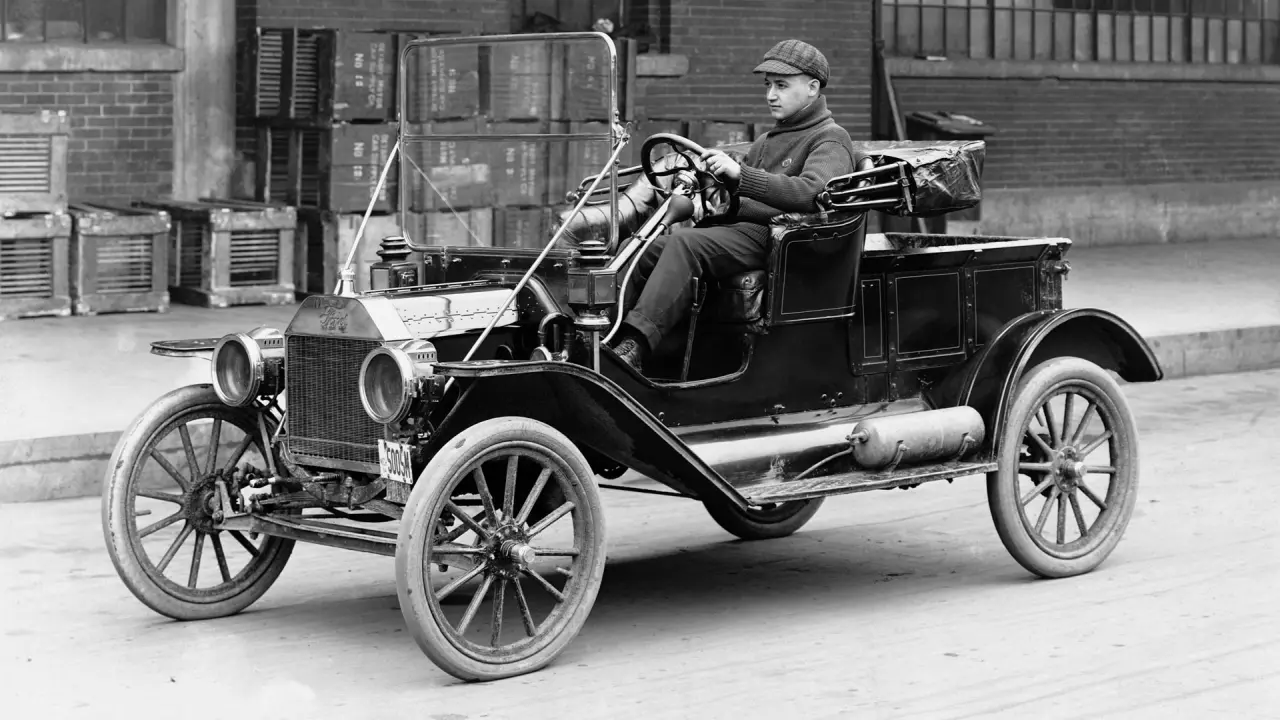
Ford revolutionized automobile manufacturing by founding the Ford Motor Company in 1903. The company’s first production model, the Model A, was introduced at an affordable price of around $850 and initially achieved limited success. Ford’s greatest achievement, however, came with the later development of the Model T. Introduced in 1908, the Model T quickly became enormously popular around the world.
Henry Ford’s Inventions and Innovations
The Assembly Line and Mass Production
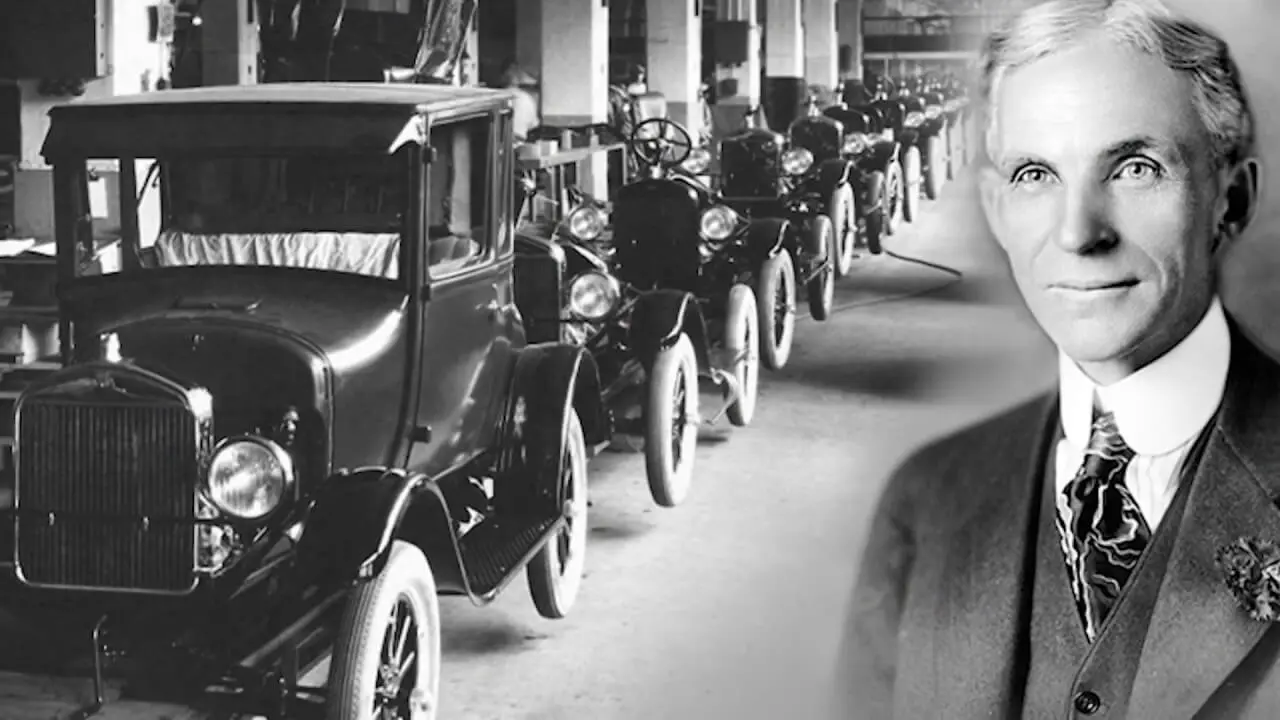
One of Ford’s most important contributions to automobile manufacturing was the introduction of the moving assembly line. The assembly-line technique, introduced for automobile production in 1913, dramatically accelerated the manufacturing process and made it possible to produce automobiles of consistent quality at much lower prices.
This innovation helped spread the concept of mass production around the world and encouraged other industries to adopt similar manufacturing systems. Ford also increased workers’ wages, helping improve productivity while simultaneously expanding the potential customer base for his automobiles.
The Model T and Affordable Mobility
Ford’s Model T had a major impact not only on the American public but also on people around the world. The car became so popular that Ford rapidly grew into one of the most successful automobile manufacturers of the era.
Ford continuously searched for ways to reduce production costs and eventually developed automobiles that were affordable enough to become accessible to a large portion of the American population.
The Wage Revolution and Employee Benefits
Another major innovation associated with Henry Ford was his approach to employee wages. In 1914, he introduced a $5-per-day wage for many of his workers, which was nearly twice the average wage of the time.
This decision was significant not only for Ford’s automobile manufacturing operations but also for broader labor standards. The policy helped attract and retain workers, while improved working conditions and higher wages contributed to productivity and efficiency.
His Philosophy and Role in Society
Ford had a significant influence not only on the business world but also on social life. He aimed to make automobile ownership accessible to ordinary people, while also introducing various programs intended to improve the efficiency and well-being of modern society.
He supported initiatives related to education, healthcare, and quality of life. Ford also provided various benefits and social programs for employees working in his factories.
His Influence Abroad
Ford’s influence was not limited to the United States. Similar assembly-line systems were established in Europe, helping accelerate automobile production and industrial development.
Ford’s affordable automobiles provided accessible transportation to people around the world and contributed to major changes in how people lived, worked, and traveled.
His Final Years and Legacy
Ford died in 1947, but the legacy he left behind continues to this day. He went down in history not simply as an automobile manufacturer but as a leader who helped establish the foundations of modern labor and manufacturing practices.
The assembly-line production system developed and refined under Ford’s leadership was adopted not only in automobile manufacturing but also across numerous other industries. Today, assembly-line production remains one of the fundamental principles of modern automotive manufacturing.
The company founded by Ford continues to be one of the world’s major automobile manufacturers, while many of the production principles associated with his work remain fundamental to the modern automotive industry.
Ford also played an important role in the development of ideas surrounding business innovation, wage policies, and corporate social responsibility. His influence therefore extended beyond the automobile industry and into the broader development of modern society.
Henry Ford’s Influence on the Modern World
Today, Henry Ford’s legacy extends far beyond the automobile industry. His influence can still be seen in manufacturing, production efficiency, labor policies, engineering, and corporate management.
Henry Ford remains an important historical figure whose ideas helped shape the modern industrial world. His approach to manufacturing, worker compensation, and industrial organization influenced generations of businesses and manufacturers.
Henry Ford’s life and innovations are important not only for understanding the development of automobile manufacturing but also for understanding how labor, technology, and society evolved around the world. The innovations he introduced continue to resonate throughout today’s industrial world and remain a source of inspiration for more efficient manufacturing and evolving approaches to labor policy.