TR
TR EN
EN

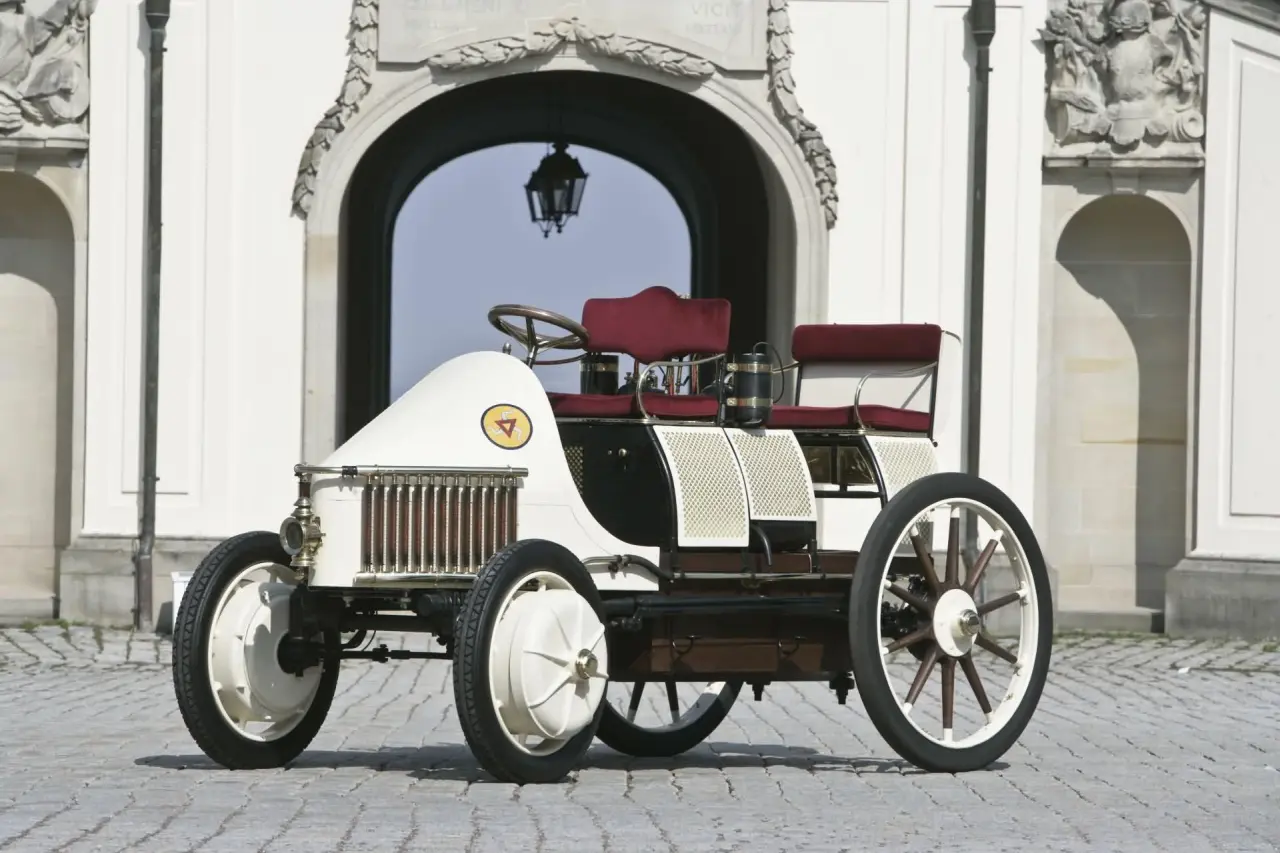
The History and Design of the Lohner-Porsche Electric Car
The Lohner-Porsche Electric Car, designed and built by Ferdinand Porsche in 1900, is regarded as one of the earliest electric automobiles in history. The vehicle was an important achievement during the early development of the automobile and became a significant milestone in the evolution of electric vehicles.
In 1900, Ferdinand Porsche began developing an electric-powered automobile in cooperation with Lohner-Werke, an Austrian vehicle manufacturer. This collaboration represented a major step forward in the development of electric vehicles at the time. Porsche’s design aimed to offer a cleaner and quieter alternative to the internal-combustion-powered vehicles that were beginning to emerge.
The Lohner-Porsche Electric Car was one of the most innovative electric vehicles of its era, attracting particular attention because of several unusual features incorporated into its design.
Technical Specifications
-
Electric Motor and Power Source: The Lohner-Porsche Electric Car was equipped with electric motors producing around 4 horsepower (HP). Electrical power was transmitted directly to the wheels through the electric drive system, allowing the vehicle to move without a conventional gasoline engine or mechanical transmission.
The vehicle used large battery packs as its power source. These batteries were highly advanced for their time. Depending on the configuration and operating conditions, the vehicle could achieve a range of several dozen kilometers, which was a significant distance for an early electric vehicle.
-
Braking System: One of the interesting aspects of the Lohner-Porsche concept was the ability to use its electric motors not only for propulsion but also for reverse movement and braking. The motors could be operated in the opposite direction for reversing, while the electrical drive system could also contribute to slowing the vehicle.
-
Ferdinand Porsche’s Design: Porsche’s engineering approach was highly innovative. The vehicle integrated the electric motors, batteries, and drive system into a single concept designed to transmit power directly to the wheels. This approach became an important foundation for later electric vehicle designs. Porsche was among the early engineers to explore the advantages of placing the drive system close to the wheels instead of relying on a conventional engine and transmission layout.
-
Vehicle Chassis and Structure: Unlike many conventional automobiles of the period, the Lohner-Porsche had a relatively simple and functional structure. It was generally designed as an open-bodied vehicle with four wheels. Its chassis combined an elegant appearance with a sturdy construction suitable for the technology of the time.
Key Features of the Lohner-Porsche
-
The Power of Electric Motors: At the time, electric motors offered significant advantages over internal combustion engines in terms of quiet operation and the absence of direct exhaust emissions. The Lohner-Porsche demonstrated that electric propulsion could be used as a practical means of powering a road vehicle.
-
Electric-Powered Transportation: During the late 19th and early 20th centuries, electric vehicles were considered a cleaner and quieter alternative to emerging gasoline-powered automobiles. The Lohner-Porsche demonstrated the potential of electric propulsion at a time when the automobile industry was still in its infancy.
-
Ferdinand Porsche’s Innovative Engineering: Ferdinand Porsche was among the early engineers to seriously explore electric vehicle technology. His work with electric motors and vehicle drive systems during this period would become an important part of his broader engineering career.
Production and Further Development
The Lohner-Porsche Electric Car was first presented publicly at the 1900 Paris World’s Fair, where it attracted considerable attention. The exhibition provided an important opportunity to demonstrate the potential of electric propulsion to an international audience.
The Lohner-Porsche Electric Car represented the innovative and modern engineering thinking of its era. However, electric vehicles were still far from becoming widespread. Battery technology was limited, charging infrastructure was practically nonexistent, and battery weight significantly affected vehicle performance and range. As a result, it would take many decades before electric vehicles could compete effectively with gasoline-powered automobiles.
The Next Steps in Electric Vehicle Development
The Lohner-Porsche design was an early demonstration of Ferdinand Porsche’s vision as an automotive engineer. Porsche would later become involved in many major automotive projects and would eventually establish the Porsche name as one of the most famous brands in automotive history.
Electric vehicles, meanwhile, remained limited for much of the 20th century because of the restricted capacity and weight of battery technology. In recent decades, however, advances in batteries, electric motors, power electronics, and charging infrastructure have brought electric vehicles back to the center of the automotive industry.
Modern electric vehicles use technologies that are vastly more sophisticated than those available to Ferdinand Porsche. Nevertheless, the fundamental concept of using electric motors to drive the wheels remains remarkably similar to the principle explored in the Lohner-Porsche.
A Milestone in Electric Vehicle History
The Lohner-Porsche Electric Car is historically important for several reasons:
-
It was one of the earliest vehicles to demonstrate the practical potential of electric propulsion.
-
It showcased Ferdinand Porsche’s engineering skills and innovative approach at a very early stage of his career.
-
Its electric drive concept contributed to the early development of technologies that would later become important in electric vehicles.
-
It demonstrated that automobiles did not necessarily have to rely on internal combustion engines for propulsion.
-
Its engineering approach anticipated some concepts that are once again becoming important in modern electric vehicle design.
Today, electric vehicles are undergoing rapid development around the world, with advances in battery technology, charging systems, electric motors, and energy management transforming the automotive industry. More than a century earlier, the Lohner-Porsche demonstrated that electric propulsion was already a viable technological possibility.
For this reason, the Lohner-Porsche remains one of the important milestones in the history of the automobile and an early symbol of the long journey toward the modern electric vehicle.