TR
TR EN
EN

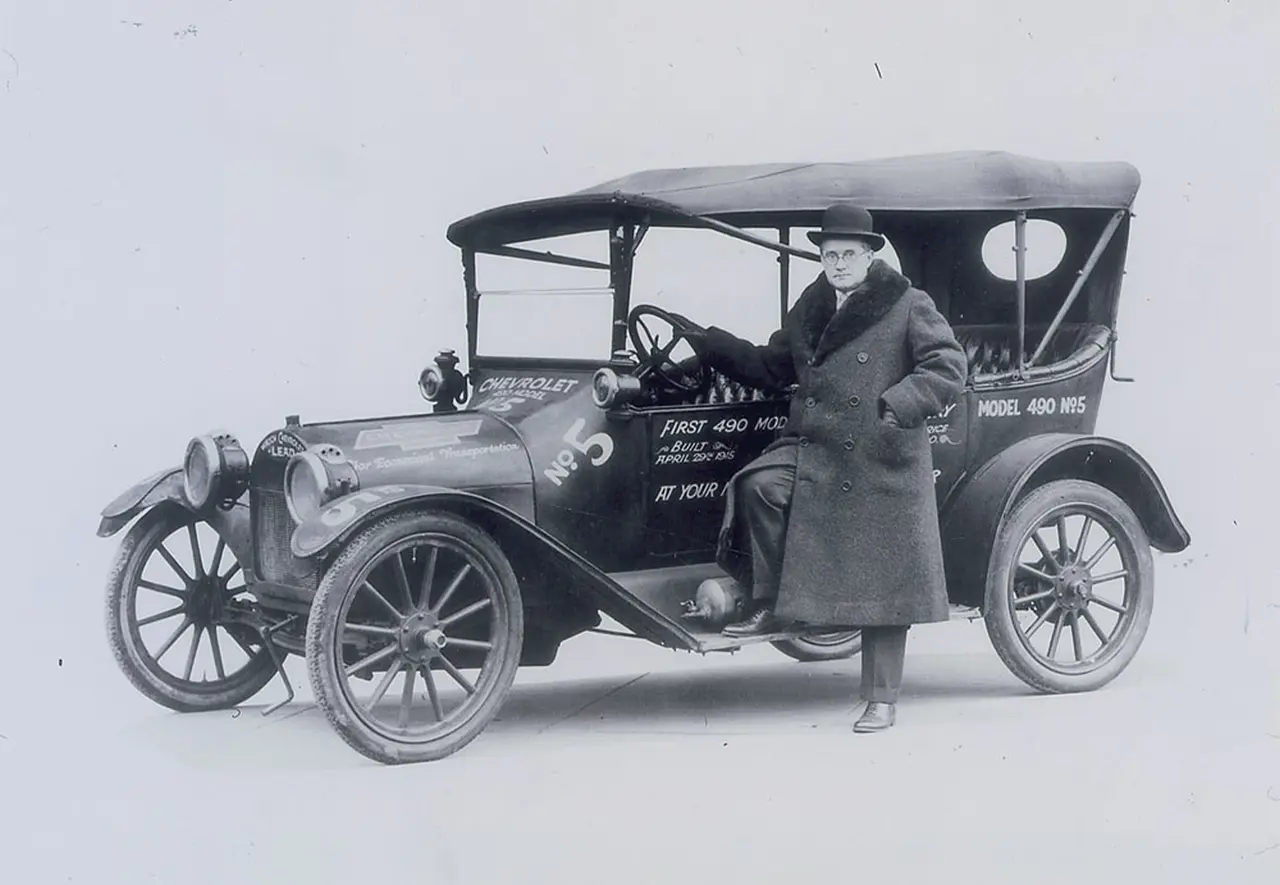
William Crapo Durant: The Founder of General Motors
William Crapo Durant was one of the most influential and entrepreneurial figures in the automotive industry. Known as the founder of General Motors (GM), Durant was one of the individuals who helped lay the foundations of the modern automotive industry.
Through his vision and business acumen, he succeeded in bringing several different brands together under one roof and building a massive automotive empire. However, his life was marked not only by success but also by major challenges, financial difficulties, and dramatic setbacks.
Early Life and Education
William C. Durant was born on December 8, 1861, in Boston, Massachusetts. He came from a family with prominent political and business connections in the United States. Although he valued education during his youth, he had little interest in traditional academic studies. He eventually left school and decided to enter the business world, beginning his commercial career at an early age.
His First Steps in Business
William Crapo Durant’s first major step in the business world came in 1886 when he founded the Durant-Dort Carriage Company, a manufacturer of horse-drawn carriages. The company quickly became one of the largest carriage manufacturers in the United States. The mass-production and marketing experience Durant gained there would later form the foundation of many of the strategies he used in the automotive industry. This experience taught him how to make production processes more efficient, build a strong market presence, and reach a large customer base.
Durant’s interest in the automotive world took a major turn when he acquired the Buick Motor Company in 1902. The knowledge and experience he had gained in the carriage industry encouraged him to enter automobile manufacturing. Buick’s success became Durant’s first major achievement in the automotive sector, and the brand quickly gained popularity. Durant applied the same marketing and production strategies he had used in the carriage business to automobiles, helping Buick reach a much broader audience.
The Founding of General Motors
At the beginning of the 20th century, the automobile industry was undergoing rapid transformation. At a time when Henry Ford was changing the market with mass-production techniques, Durant also recognized enormous opportunities in the growing automotive sector. In 1908, he founded General Motors (GM), launching an ambitious enterprise that would have a profound impact on the automotive industry.
With the establishment of General Motors, Durant sought to create a broader group of automobile manufacturers. GM grew through mergers and acquisitions, allowing Durant to bring several automobile brands under a single corporate structure. Among the brands that eventually became part of GM were Chevrolet, Cadillac, Buick, Oldsmobile, and Pontiac. These brands would go on to occupy important positions in the automotive market, while GM would eventually become one of the largest automobile manufacturers in the world.
Durant’s business strategy was not based solely on production. He also wanted to address different segments of the automobile market. Offering vehicles in different price and market categories became one of the key characteristics that distinguished GM from its competitors. This structure allowed individual brands to target different customer groups while giving the company a broad product range, from affordable vehicles to luxury automobiles.
Durant also introduced important financial and sales strategies. He supported financing methods that made it easier for customers to purchase automobiles. These approaches helped make car ownership more accessible and contributed to the expansion of the automobile market among ordinary consumers. Durant’s strategies represented a major shift in the way automobiles were marketed and sold.
The First Major Crisis and His Departure from GM
Durant’s aggressive expansion strategy allowed GM to grow rapidly, but it also increased the company’s financial risks. By 1910, concerns over the company’s heavy debt and financial position led to Durant losing control of General Motors. He was removed from the company’s leadership by the board of directors.
However, this setback did not stop Durant.
In 1911, he founded the Chevrolet Motor Company together with Louis Chevrolet. The Chevrolet brand grew rapidly, and Durant eventually regained control of General Motors by acquiring a majority stake in the company in 1916.
Durant’s Success Beyond Automobiles: The Acquisition of Frigidaire
Durant’s entrepreneurial career was not limited to automobiles. In 1918, he also took control of Frigidaire, a company producing refrigerators and refrigeration equipment.
This move expanded Durant’s influence beyond the automotive sector and into the home appliance industry. Frigidaire would eventually become one of the major names in the American appliance market. Durant’s approach to acquisitions and business expansion demonstrated that his ambitions extended well beyond automobile manufacturing.
By investing in both the automotive and home appliance industries, Durant demonstrated his ability to build businesses across different sectors and recognize opportunities beyond his original field.
Losing Control of GM for the Second Time
During the period when Durant regained control of GM, he continued expanding the company and strengthening its position in the global market. However, by 1920, economic instability and aggressive investment policies once again created serious financial difficulties.
Durant ultimately lost control of General Motors permanently.
Despite this major setback, he did not abandon his entrepreneurial ambitions. In 1921, he founded a new automobile company called Durant Motors. The company initially attracted attention, but it was unable to achieve the level of success Durant had experienced with GM.
The economic conditions of the late 1920s made matters even worse. During the Great Depression, Durant Motors eventually collapsed and went bankrupt.
His Final Years and Legacy
William C. Durant experienced extraordinary highs and lows throughout his business career. During the 1930s, he faced severe financial difficulties and lost much of his influence in the automotive industry. In his later years, he worked on smaller business projects, but he was never able to recreate the enormous success he had achieved earlier in his career.
William C. Durant died on March 18, 1947, in New York, at the age of 85.
Despite the financial setbacks he experienced later in life, his influence on the automotive industry remains significant. His ability to recognize the potential of automobile manufacturing, combine different brands under one corporate structure, and develop new approaches to automobile sales helped shape the industry for decades.
His Business Innovations and Contributions
Durant was not primarily a technical inventor. His greatest contribution was his ability to use business strategy, organization, marketing, and acquisitions to reshape the automotive industry.
-
The Multi-Brand Automotive Holding Model: Durant’s strategy of bringing multiple automobile brands together under General Motors helped establish a business model that would later become common among major global automotive companies.
-
The Rise of Chevrolet: Durant’s involvement in Chevrolet and its eventual integration into GM strengthened the company’s position against Ford and helped create a brand capable of appealing to a broad customer base.
-
Financial and Sales Strategies: Durant supported methods such as installment payments and automobile financing, helping make vehicle ownership more accessible to a larger portion of the population.
-
Market Segmentation: By positioning different brands at different price and luxury levels, Durant helped develop a broader approach to serving different customer groups within the same corporate structure.
-
Strategic Acquisitions: His willingness to acquire and combine companies demonstrated how consolidation could be used to rapidly expand an automotive business.
Conclusion
William C. Durant became one of the most important figures in automotive history through his vision, entrepreneurial spirit, and willingness to take bold risks. By founding General Motors, he helped create an automotive giant with a multi-brand structure that would influence the industry for generations.
His involvement with Chevrolet also intensified competition in the American automobile market, while his business strategies helped establish the foundations of the modern multi-brand automotive corporation. Although his career was marked by major financial failures as well as remarkable successes, Durant’s influence on the automotive world remains undeniable.
His life is a powerful example of how business success is not always a straight path to the top. Durant’s story is also about taking risks, experiencing dramatic setbacks, rebuilding, and leaving behind an influence that can outlast the individual who created it.