TR
TR EN
EN

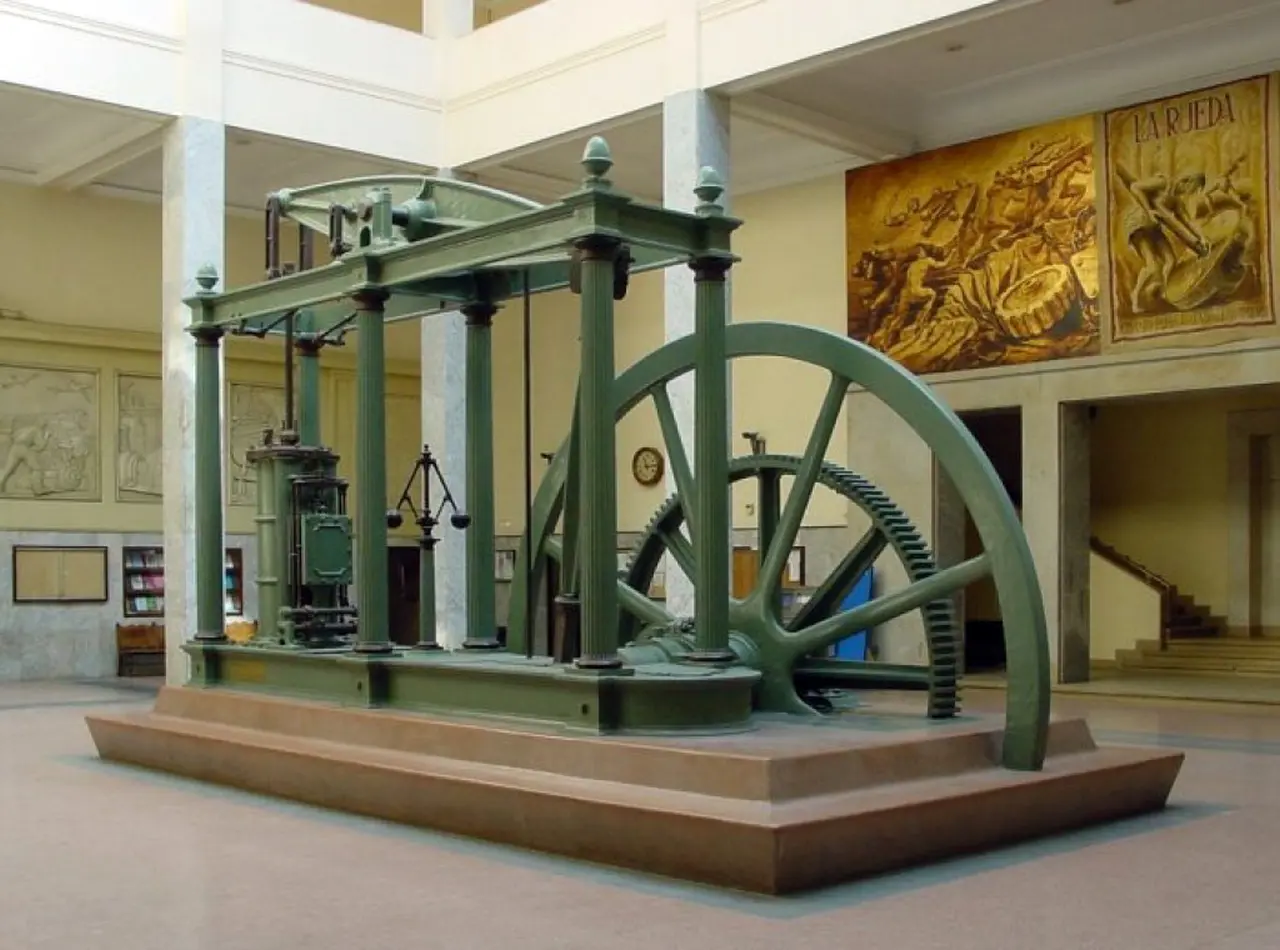
James Watt: The Engineer Who Changed the World
James Watt is widely regarded as one of the most influential engineers and inventors in history. Although he did not invent the steam engine, his revolutionary improvements transformed it into a practical and efficient source of power that helped fuel the Industrial Revolution. His innovations changed manufacturing, transportation, mining, and countless other industries, making him one of the most important figures in modern engineering.
Today, Watt's name lives on not only through history books but also in everyday life, as the international unit of power—the watt (W)—is named in his honor.
Early Life
James Watt was born on January 19, 1736, in Greenock, Scotland. His father was a successful shipwright, merchant, and instrument maker, while his mother was well educated and encouraged his curiosity from an early age.
Unlike many children of his era, Watt spent much of his childhood learning at home because of frequent health problems. During these years, he developed a fascination with mathematics, mechanics, and the way machines worked. He enjoyed repairing tools and building small mechanical devices, talents that would later define his career.
As a teenager, Watt traveled to London to study mathematical instrument making, where he learned how to manufacture and repair precision scientific instruments.
Beginning of His Engineering Career
After completing his training, James Watt returned to Scotland and established a workshop at the University of Glasgow. There, he repaired scientific instruments for professors and students while collaborating with some of the leading scientists of the time.
Working in an academic environment exposed Watt to new scientific ideas and engineering challenges. One project, in particular, would change his life forever—a repair job involving a model of the Newcomen steam engine.
The Problem with Early Steam Engines
Before Watt's improvements, the most common steam engine was the Newcomen engine, invented in the early 1700s. It was primarily used to pump water out of mines.
Although effective for its intended purpose, the Newcomen engine had a major weakness: it consumed enormous amounts of coal because the cylinder had to be repeatedly heated and cooled during every operating cycle.
This made the engine slow, inefficient, and expensive to operate.
While repairing one of these engines in 1763, James Watt realized that much of the energy was being wasted through repeated heating and cooling.
Instead of accepting this limitation, he began searching for a better solution.
The Separate Condenser: Watt's Greatest Invention
In 1765, Watt conceived the idea that would revolutionize steam power.
Rather than cooling the main cylinder after every stroke, he designed a separate condenser where steam could condense without lowering the temperature of the engine's working cylinder.
This simple but brilliant concept dramatically improved efficiency.
The advantages included:
-
Much lower fuel consumption
-
Faster engine operation
-
Greater mechanical reliability
-
Reduced operating costs
-
Increased power output
The separate condenser reduced fuel consumption by approximately 60–75% compared to earlier steam engines, making steam power economically practical for many industries.
This innovation became one of the defining engineering breakthroughs of the Industrial Revolution.
Partnership with Matthew Boulton
Although Watt possessed extraordinary engineering talent, he struggled financially while trying to commercialize his invention.
Everything changed when he partnered with Matthew Boulton, a successful English manufacturer based in Birmingham.
Together they founded Boulton & Watt, one of the most important engineering companies of the eighteenth century.
Boulton managed the business and financing, while Watt focused on engineering and product development.
Their partnership allowed Watt's improved steam engines to be manufactured on a large scale and sold throughout Britain and eventually around the world.
The success of Boulton & Watt helped spread steam power into nearly every major industry of the time.