TR
TR EN
EN

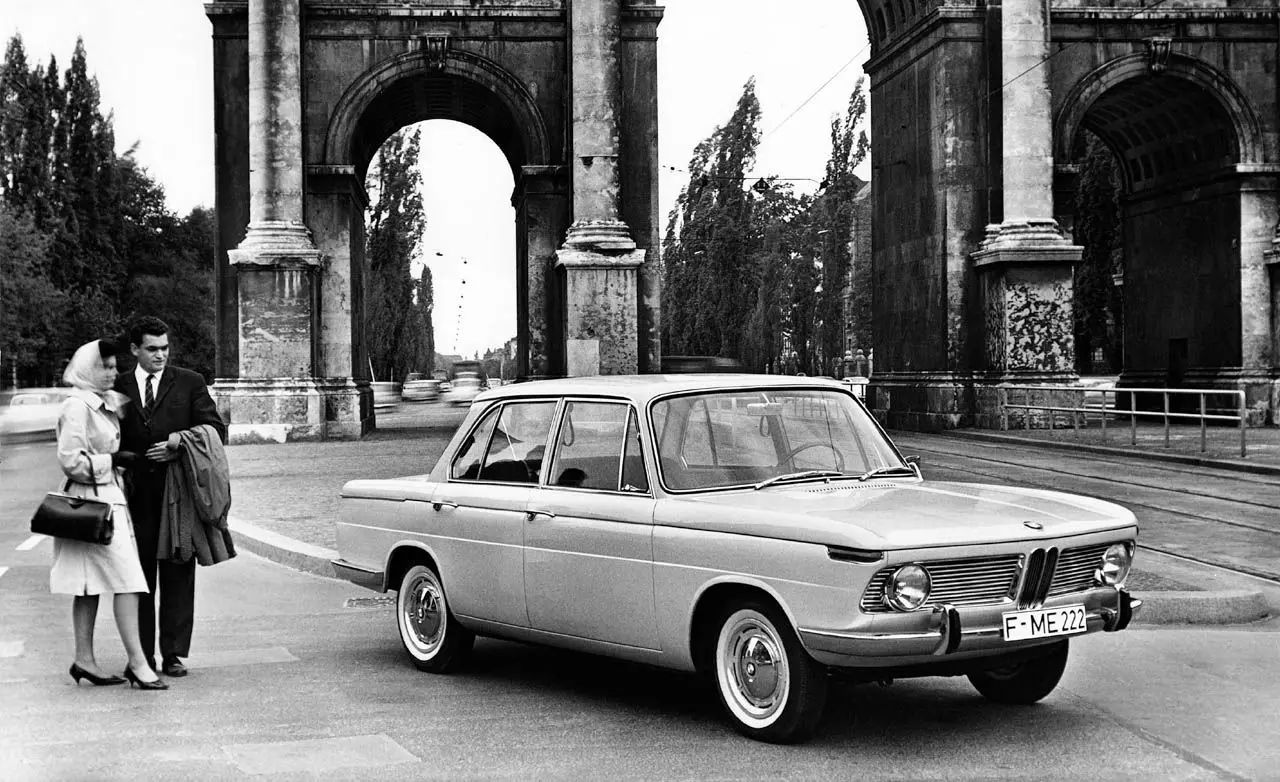
BMW History: The Rise of a German Automotive Legend
BMW (Bayerische Motoren Werke AG) is one of Germany's most prestigious automobile manufacturers and one of the world's leading premium automotive brands. Known for combining luxury, innovation, precision engineering, and outstanding driving dynamics, BMW has earned a reputation that spans more than a century.
Although BMW is now recognized for producing high-performance sports sedans, luxury SUVs, and cutting-edge electric vehicles, the company's journey began in a completely different industry. Its history stretches from aircraft engine manufacturing during World War I to becoming one of the most influential automotive companies in the world.
The Foundation of BMW (1916-1920s)
BMW's story began in 1916 in Munich, Germany. The company traces its origins to Rapp Motorenwerke, an aircraft engine manufacturer established to meet the growing demand for aviation technology during World War I.
At the time, aviation was developing rapidly, and reliable aircraft engines were essential. Rapp Motorenwerke focused on designing lightweight, powerful, and dependable engines for military aircraft. Although the company achieved several engineering successes, it struggled financially and underwent major restructuring.
In 1917, the company adopted the name Bayerische Motoren Werke (BMW), meaning Bavarian Motor Works. This marked the beginning of one of the most recognizable names in automotive history.
Following the end of World War I, Germany faced severe industrial restrictions under the Treaty of Versailles. Aircraft engine production was prohibited, forcing BMW to completely rethink its future. Instead of disappearing, the company diversified into producing industrial engines, agricultural equipment, motorcycle engines, and various mechanical components while searching for a new direction.
These difficult years shaped BMW's engineering philosophy—precision, efficiency, and innovation under challenging conditions.
BMW's First Motorcycles
Before becoming famous for automobiles, BMW established itself as a successful motorcycle manufacturer.
In 1923, BMW introduced the legendary BMW R32, its first production motorcycle.
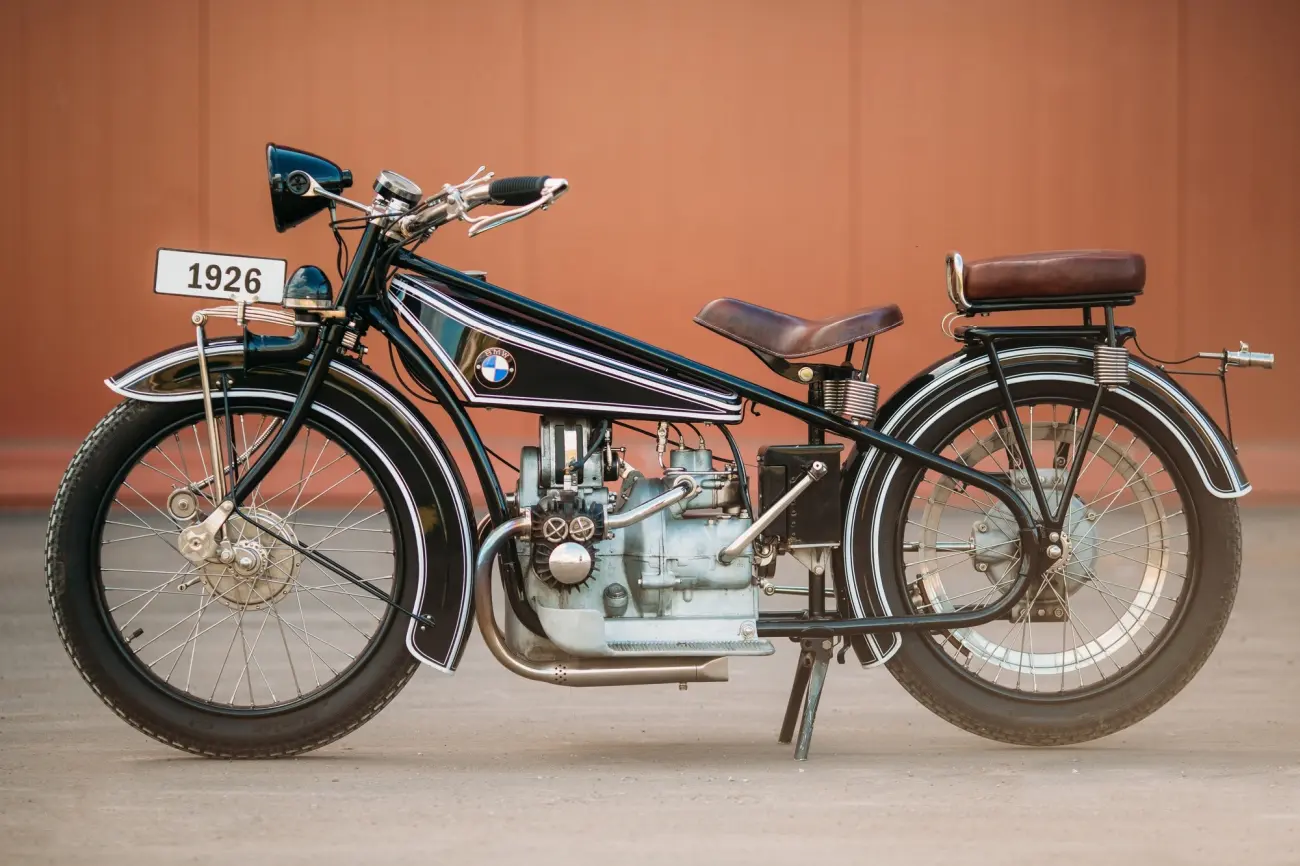
The R32 featured an air-cooled 494 cc horizontally opposed twin-cylinder boxer engine, a layout that would become one of BMW Motorrad's defining characteristics for decades. The motorcycle also introduced shaft-drive technology instead of the more common chain drive, offering improved durability, lower maintenance requirements, and smoother power delivery.
The BMW R32 quickly gained recognition for its reliability, engineering quality, and impressive performance. Its success helped stabilize the company financially and laid the foundation for BMW's long-term reputation for engineering excellence.
BMW Enters the Automobile Market
BMW officially entered the automobile industry in 1928 after acquiring Fahrzeugfabrik Eisenach, a manufacturer producing licensed versions of the British Austin Seven.
This acquisition allowed BMW to begin manufacturing passenger cars almost immediately.
BMW Dixi (1927-1929)
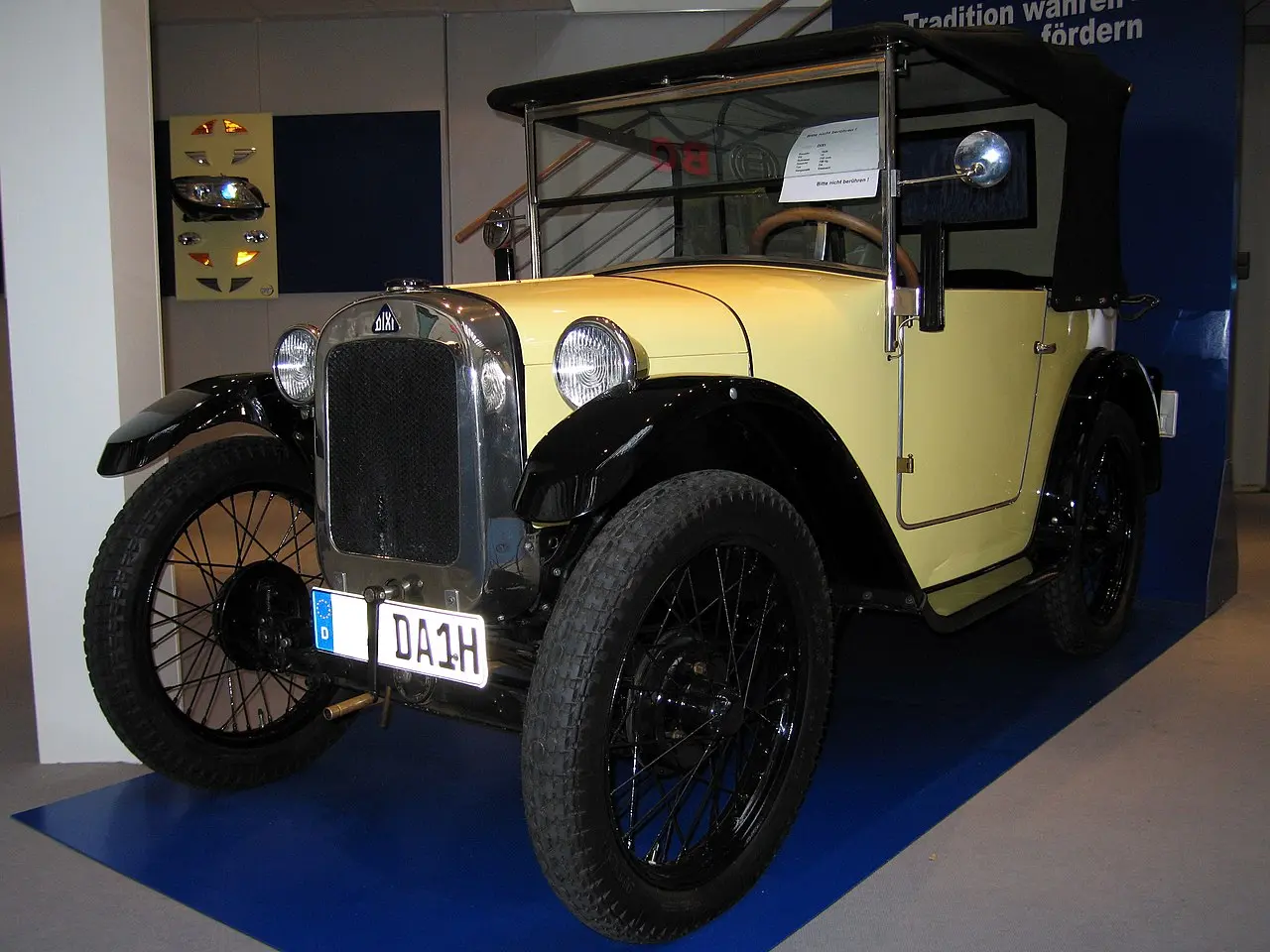
The company's first automobile was the BMW 3/15 DA, commonly known as the BMW Dixi.
Although compact in size, the Dixi played a vital role in BMW's early automotive history. It was affordable, reliable, easy to maintain, and perfectly suited for everyday transportation during a challenging economic period.
Engine
The BMW Dixi was powered by a 747 cc four-cylinder engine producing approximately 15 horsepower.
Performance
Its top speed was around 75 km/h (47 mph), making it competitive among small European cars of the late 1920s.
While the Dixi was not designed as a luxury or performance vehicle, it gave BMW invaluable experience in automobile engineering, production, and customer expectations. The success of this small car encouraged BMW to continue expanding its passenger vehicle lineup.
BMW 328 Roadster (1936-1940)
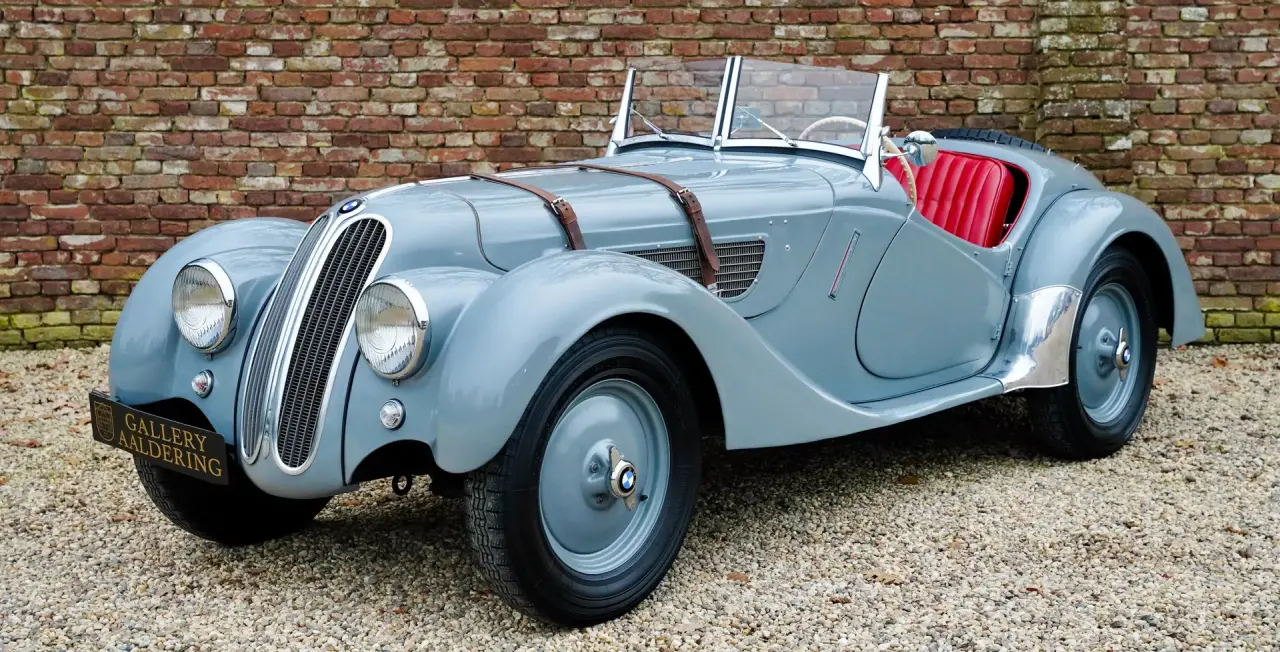
One of the most important vehicles in BMW's early history was the legendary BMW 328 Roadster, introduced in 1936.
The 328 quickly became one of Europe's most respected sports cars thanks to its combination of lightweight construction, aerodynamic styling, advanced engineering, and outstanding handling.
Even today, it is considered one of the greatest pre-war sports cars ever built.
Elegant Lightweight Design
The BMW 328 featured beautifully sculpted bodywork with smooth aerodynamic lines that reduced drag while giving the car a timeless appearance.
Its lightweight construction significantly improved acceleration, handling, and overall driving performance.
Unlike many sports cars of its era, the 328 balanced elegance with functionality, a philosophy that continues to influence BMW design today.
Engine
The vehicle was powered by a naturally aspirated 2.0-liter inline-six engine producing approximately 80 horsepower.
While this figure may seem modest by modern standards, it delivered remarkable performance during the late 1930s.
Performance
The BMW 328 could reach a top speed of approximately 150 km/h (93 mph), making it one of the fastest production sports cars of its time.
Its balanced chassis and responsive steering earned praise from both professional racing drivers and private owners.
Motorsport Success
The BMW 328 achieved remarkable success in international motorsport.
It claimed victories in prestigious events including the Mille Miglia, Tourist Trophy races, Nürburgring competitions, and numerous endurance races across Europe.
Perhaps its greatest achievement came in the 1940 Mille Miglia, where specially prepared BMW 328 models dominated their class and demonstrated BMW's engineering superiority on the international stage.
These racing victories transformed BMW from a relatively small German manufacturer into a globally respected performance brand.
Only 464 examples of the BMW 328 were produced, making surviving vehicles among the most valuable and collectible classic BMWs in existence today.
Challenging Times and World War II (1930s-1940s)
The late 1930s and the years surrounding World War II represented one of the most challenging periods in BMW's history. While the company had established itself as a respected manufacturer of motorcycles and passenger cars, global political tensions dramatically changed its direction.
As Germany prepared for war, BMW gradually shifted its production away from civilian automobiles and focused primarily on manufacturing aircraft engines for the German military. The company's engineering expertise made it one of the country's leading suppliers of high-performance aviation engines.
BMW 326 (1936-1941)
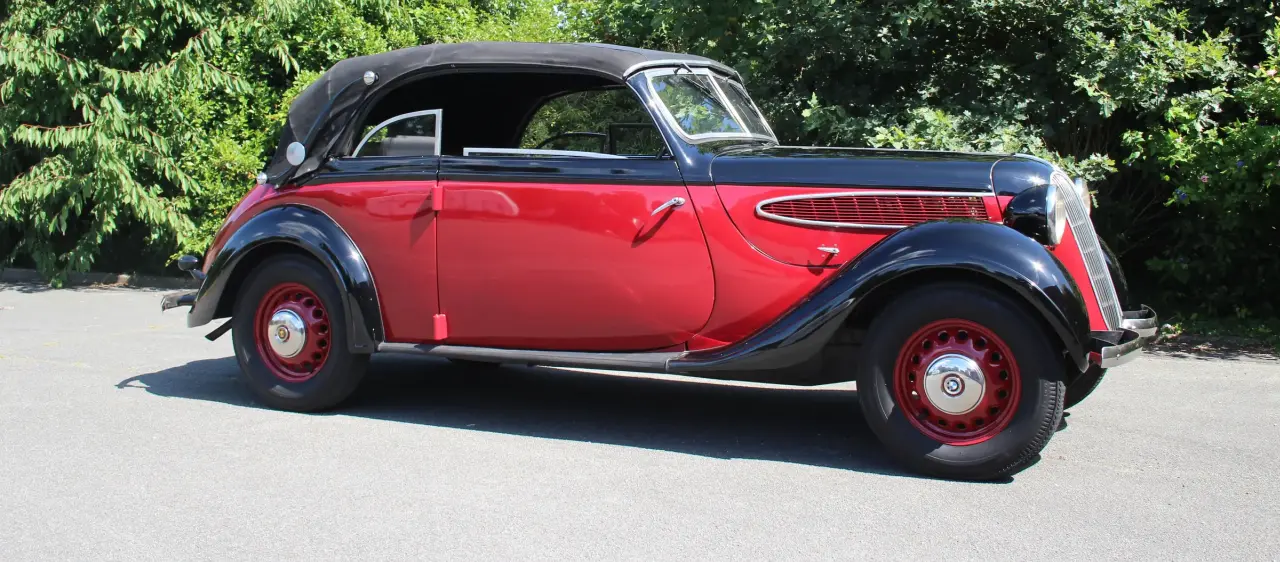
Before the outbreak of World War II, BMW expanded its passenger car lineup with the introduction of the BMW 326 in 1936.
The BMW 326 was the company's first mid-size four-door sedan and marked an important step toward becoming a premium automobile manufacturer.
Unlike BMW's earlier compact vehicles, the 326 emphasized comfort, practicality, and refinement while maintaining the sporty character the company had become known for.
Elegant Design
The BMW 326 featured smooth, flowing body lines, integrated headlights, and the now-famous twin kidney grille. Its styling was considered modern and sophisticated for its era.
Engine
The vehicle was powered by a 2.0-liter inline-six engine producing approximately 50 horsepower.
Although not designed as a high-performance sports car, the engine delivered smooth power and excellent reliability.
Comfort and Driving Experience
The BMW 326 offered a spacious cabin, improved suspension, and refined handling compared to many competitors of the late 1930s.
Its combination of luxury and driving quality helped establish BMW's reputation for producing premium automobiles.
Production continued until World War II interrupted civilian vehicle manufacturing.
BMW During World War II
During World War II, BMW's factories concentrated almost entirely on military production.
The company manufactured aircraft engines used in several German military aircraft, including engines developed for the Luftwaffe.
Although these projects demonstrated BMW's advanced engineering capabilities, the war left devastating consequences.
Many production facilities were heavily damaged by Allied bombing campaigns, while others were dismantled or placed under foreign control after the conflict ended.
Post-War Restrictions
Following Germany's defeat in 1945, BMW faced enormous challenges.
The company was temporarily prohibited from manufacturing automobiles and aircraft engines.
Several factories located in eastern Germany were lost, while surviving facilities in Bavaria struggled to resume production.
To survive financially, BMW began manufacturing everyday products such as bicycles, kitchen equipment, industrial tools, brake components, and household goods.
Although far removed from luxury automobiles, these products allowed the company to remain in business while rebuilding its engineering capabilities.
Rebuilding the Company (1950s)
The early 1950s marked BMW's return to automobile manufacturing.
The company sought to rebuild its reputation by producing elegant luxury sedans equipped with advanced engineering and premium craftsmanship.
However, rebuilding the business proved far more difficult than expected.
Luxury cars were expensive to develop, and post-war Europe still faced economic hardship.
BMW needed products that could restore profitability while maintaining its premium image.
BMW 501 (1952-1964)
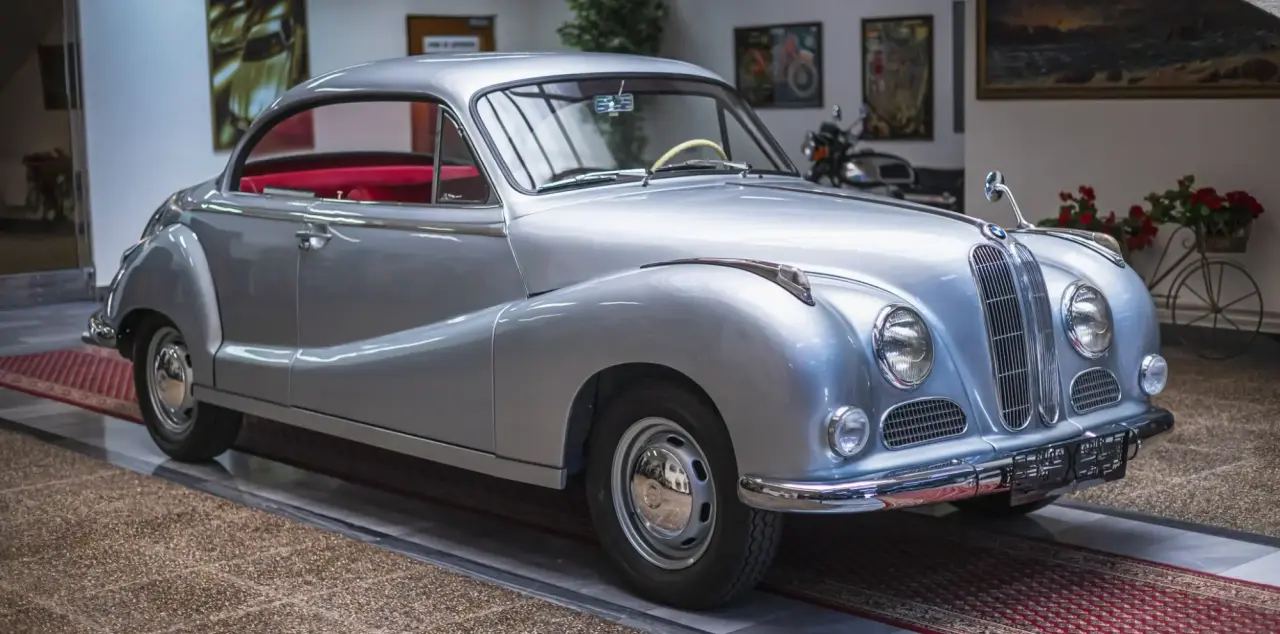
Introduced in 1952, the BMW 501 became BMW's first completely new passenger car after World War II.
Nicknamed the "Baroque Angel" because of its rounded body lines and elegant styling, the 501 represented a major milestone in the company's recovery.
Luxury Design
The BMW 501 featured a spacious cabin finished with premium materials, handcrafted details, and exceptional build quality.
It was designed to compete with Germany's finest executive automobiles.
Engine Options
Early models used a 2.0-liter inline-six engine before later versions introduced more powerful V8 engines.
Ride Comfort
The 501 prioritized comfort, smooth driving characteristics, and long-distance touring capability.
Although highly respected by automotive journalists, the car was expensive to manufacture and generated relatively low profits.
BMW 502
BMW introduced the BMW 502 shortly after the 501.
This model became Germany's first post-war production car equipped with a V8 engine.
The lightweight aluminum V8 delivered stronger performance while maintaining impressive refinement.
The 502 further demonstrated BMW's engineering capabilities, but high production costs continued to place significant financial pressure on the company.
By the late 1950s, BMW faced serious financial difficulties and even considered selling the business.
The company urgently needed a new strategy to survive.
BMW 507 (1956-1959)
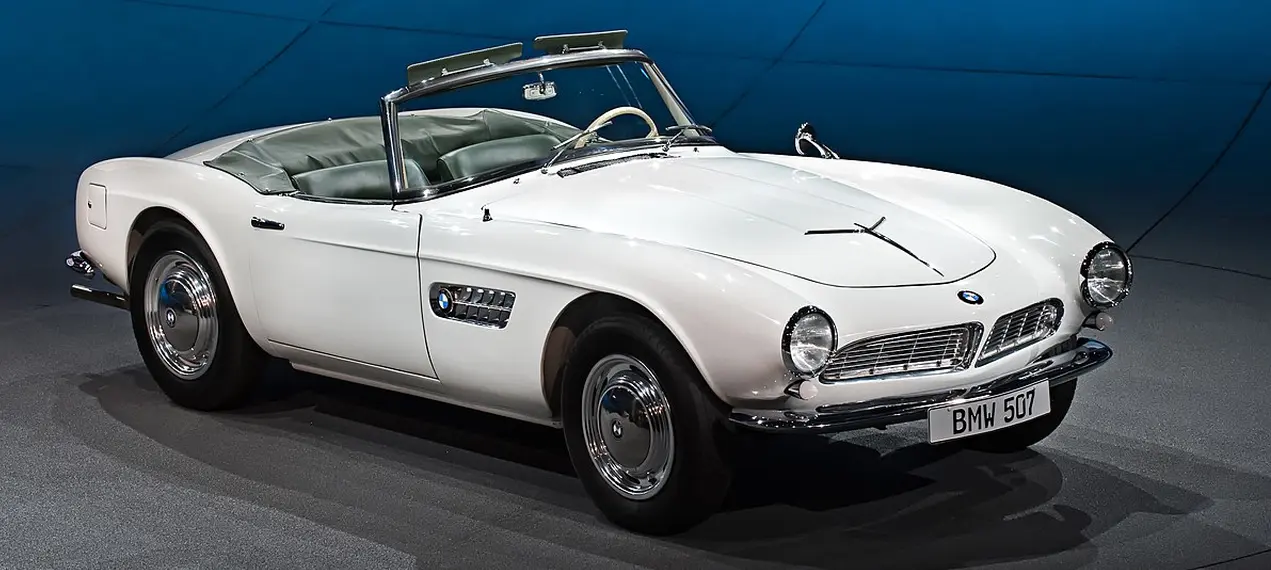
One of the most legendary automobiles ever built by BMW is undoubtedly the BMW 507. Produced between 1956 and 1959, this elegant roadster became one of the most beautiful sports cars of the 1950s and remains one of the most valuable classic BMWs ever made.
The BMW 507 was developed to compete with luxury sports cars from manufacturers such as Mercedes-Benz, Jaguar, and Chevrolet. Although the project was intended to strengthen BMW's position in the premium sports car market, its high production costs made it commercially unsuccessful. Nevertheless, the 507 would later become one of the company's greatest icons.
Elegant Design
The BMW 507 was designed by renowned automotive designer Albrecht Graf von Goertz. Its long hood, short rear deck, flowing body lines, and perfectly balanced proportions created a timeless appearance that still looks stunning today.
Unlike many sports cars of the era, the 507 combined elegance with simplicity, making it one of the most recognizable BMW designs ever produced.
Engine
The BMW 507 was powered by a naturally aspirated 3.2-liter V8 engine producing approximately 150 horsepower.
Power was delivered to the rear wheels through a four-speed manual transmission.
Performance
For the late 1950s, the BMW 507 offered outstanding performance.
-
Top speed: approximately 220 km/h (137 mph)
-
0-100 km/h acceleration: around 11 seconds
Its lightweight aluminum body and balanced chassis made it enjoyable to drive while maintaining excellent stability at higher speeds.
Limited Production
Because each vehicle required extensive hand-built craftsmanship, production costs became extremely high.
Only 252 examples of the BMW 507 were manufactured, making it one of the rarest BMW production cars ever built.
Today, original BMW 507 models regularly sell for several million dollars at international collector auctions.
Celebrity Ownership
The BMW 507 became famous not only for its beauty but also because of its celebrity owners.
Perhaps the most well-known owner was Elvis Presley, who purchased a BMW 507 while serving in the U.S. Army in Germany during the late 1950s.
His ownership significantly increased the model's popularity and helped cement its legendary status.
Although the BMW 507 was not a commercial success, it became an enduring symbol of BMW's commitment to engineering excellence, elegant design, and driving pleasure.
The Neue Klasse Revolution (1960s)
By the beginning of the 1960s, BMW was facing one of the most critical periods in its history.
The company needed a completely new product strategy to survive financially.
Rather than focusing exclusively on expensive luxury cars, BMW decided to develop a new generation of compact executive sedans that combined sporty handling, practicality, and premium quality.
This new family of vehicles became known as the Neue Klasse ("New Class").
The Neue Klasse models completely transformed BMW's future and established the company's identity as a manufacturer of premium sports sedans.
BMW 1500 (1962)
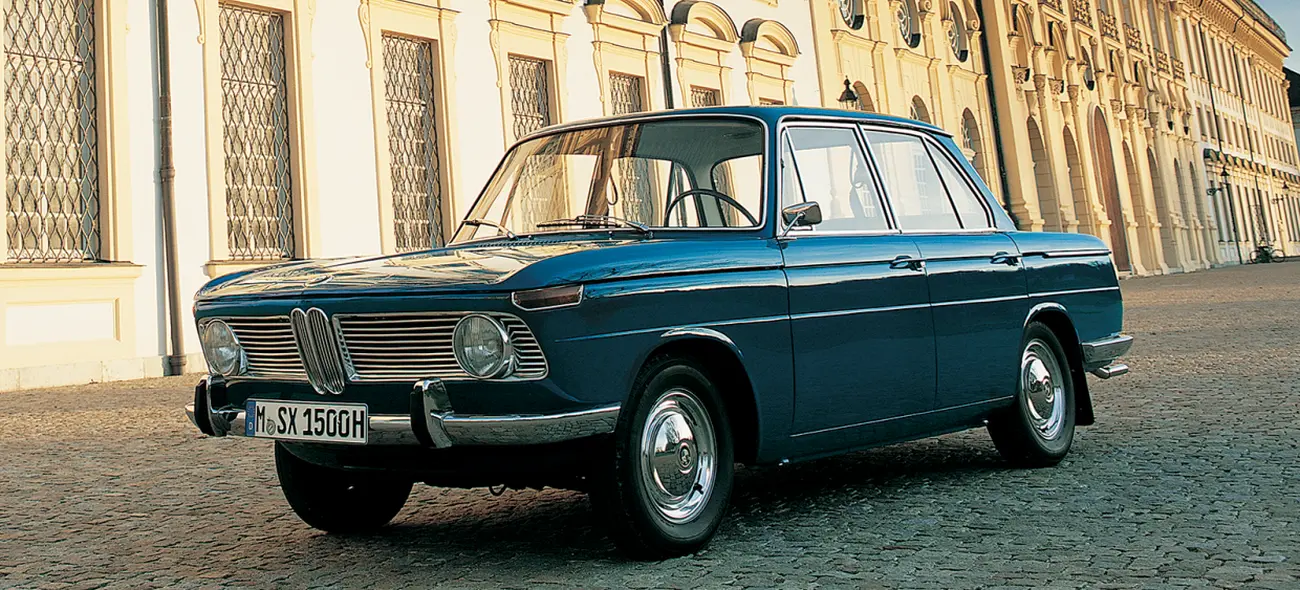
The first Neue Klasse model was the BMW 1500, introduced in 1962.
The vehicle immediately attracted attention thanks to its modern styling, spacious interior, advanced suspension, and lively driving characteristics.
Engine
The BMW 1500 featured a 1.5-liter four-cylinder engine producing approximately 80 horsepower.
Innovation
The model introduced independent suspension, excellent weight distribution, and responsive steering, creating a driving experience unlike most family sedans of the time.
The BMW 1500 became the foundation of BMW's modern philosophy: combining everyday practicality with genuine driving enjoyment.
BMW 1600 (1966)
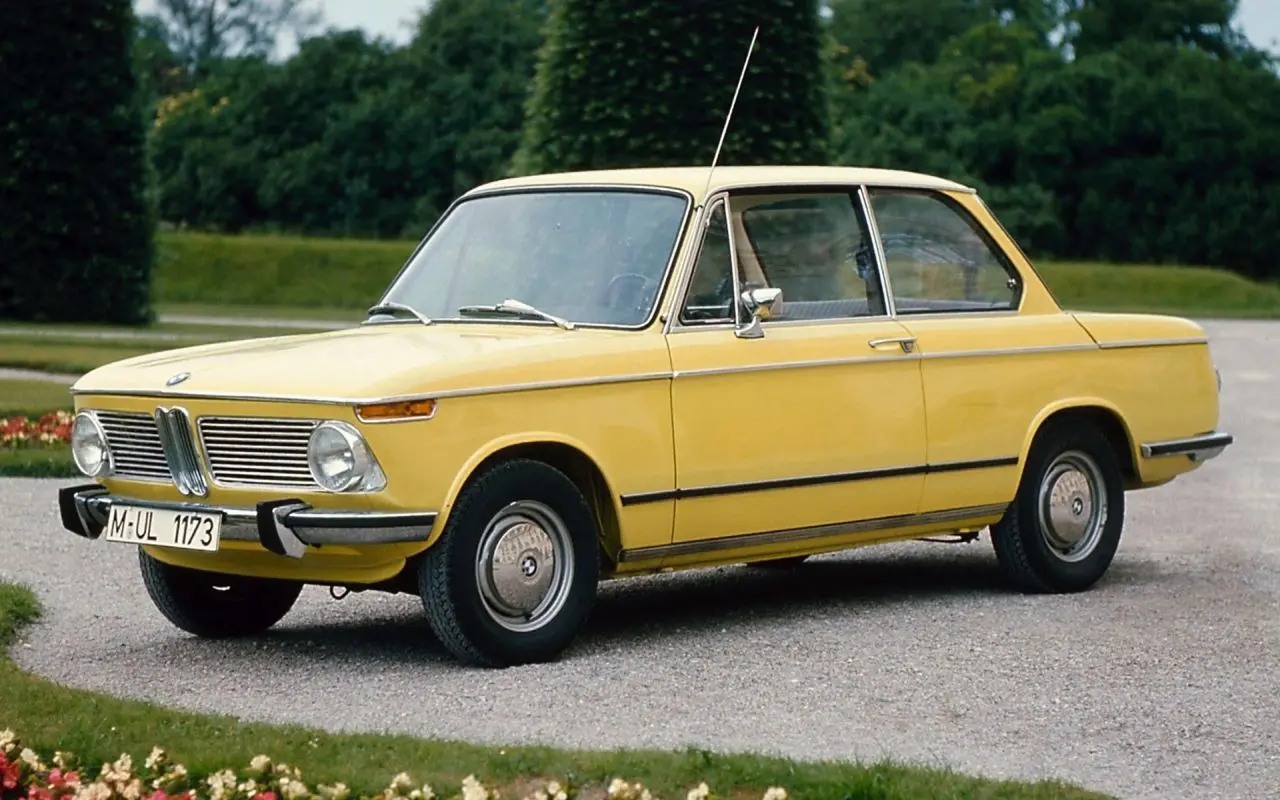
Building on the success of the 1500, BMW introduced the BMW 1600 in 1966.
The larger engine improved both performance and refinement while maintaining excellent fuel efficiency.
Engine
1.6-liter inline-four
Approximately 85-105 horsepower, depending on the version.
Driving Experience
The BMW 1600 offered precise steering, balanced handling, and sporty performance that appealed to enthusiastic drivers.
Its success helped establish BMW as a serious competitor to Mercedes-Benz in the premium automobile market.
BMW 2002 (1968-1976)
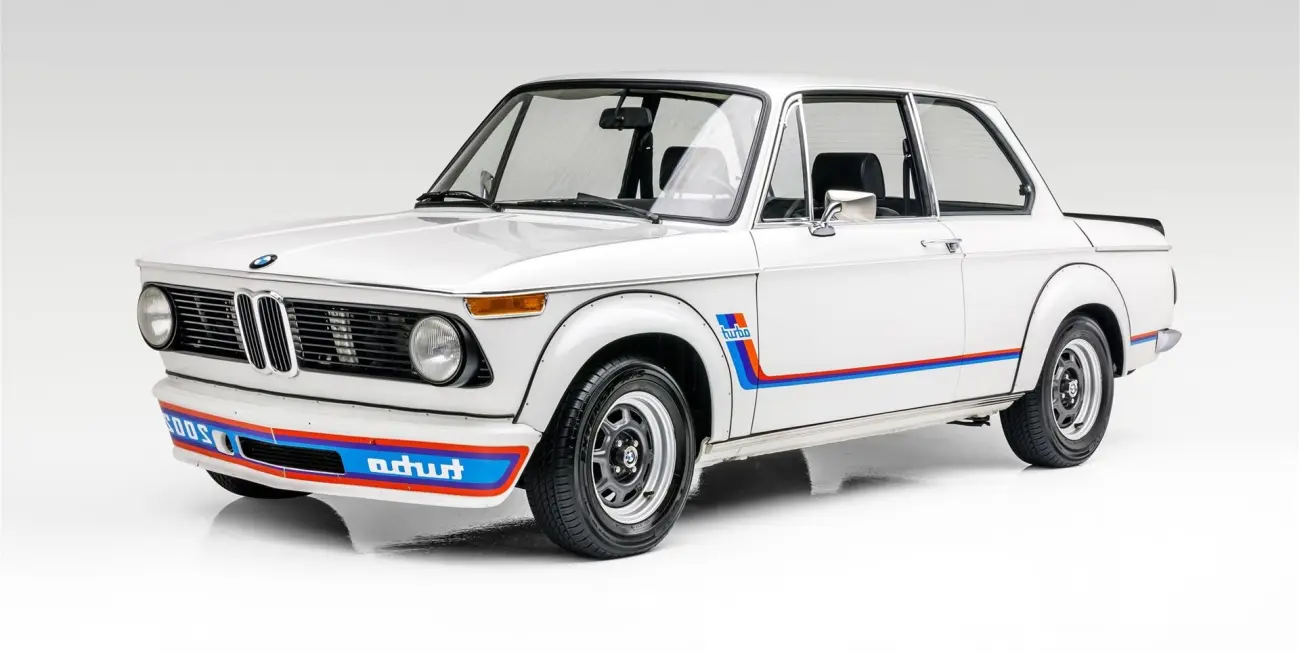
Perhaps the most influential Neue Klasse model was the legendary BMW 2002.
Many enthusiasts consider the BMW 2002 to be the car that defined BMW's identity as "The Ultimate Driving Machine."
Compact, lightweight, practical, and incredibly fun to drive, the 2002 became one of BMW's greatest success stories.
Engine
2.0-liter inline-four engine
Power ranged from approximately 100 horsepower to over 170 horsepower in the high-performance Turbo version.
BMW 2002 Turbo
Introduced in 1973, the BMW 2002 Turbo became Europe's first turbocharged production car.
Its impressive acceleration and sharp handling made it one of the fastest compact cars of its era.
Today, the BMW 2002 Turbo remains one of the most collectible classic BMW models ever produced.
The success of the Neue Klasse series completely transformed BMW's financial position and laid the groundwork for every modern BMW that followed.
Without the BMW 1500, 1600, and 2002, iconic models such as the 3 Series, 5 Series, and M cars might never have existed.
The Birth of the BMW 3 Series (1975)
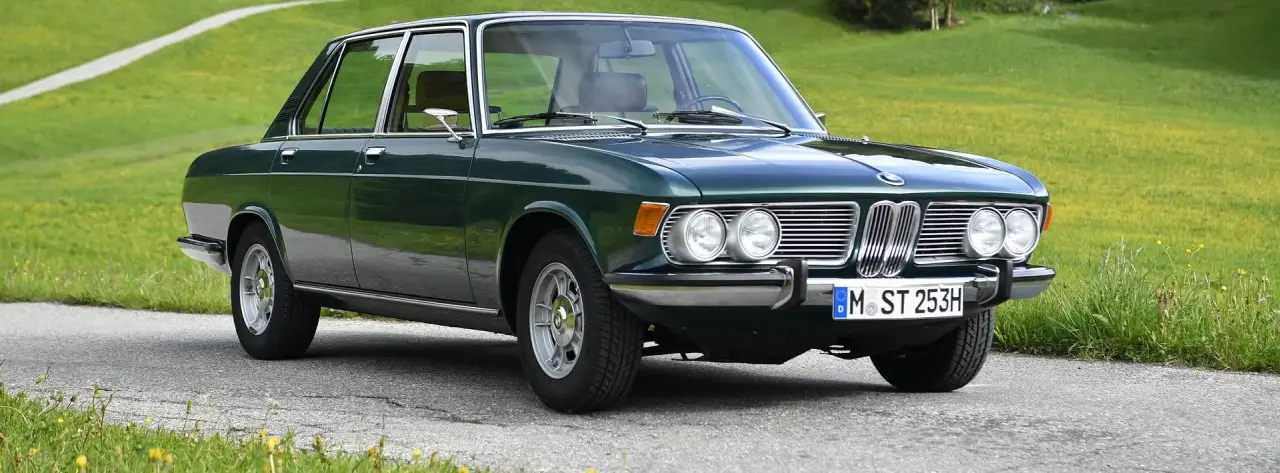
In 1975, BMW introduced what would become one of the most successful premium automobiles in history—the BMW 3 Series. Replacing the BMW 2002, the first-generation E21 established a new benchmark for compact executive cars by combining sporty handling, everyday practicality, and premium quality.
The 3 Series quickly became the heart of BMW's product lineup and remains the company's best-selling model to this day.
Design
The first-generation 3 Series featured clean, timeless styling with the signature twin kidney grille, round headlights, and a driver-focused cockpit. Every aspect of the interior was designed with the driver in mind, reinforcing BMW's philosophy of delivering the ultimate driving experience.
Engine Options
The E21 was available with a range of four-cylinder and six-cylinder petrol engines, producing between approximately 75 and 143 horsepower depending on the model.
Driving Dynamics
Rear-wheel drive, near-perfect weight distribution, responsive steering, and a well-balanced suspension made the 3 Series one of the most enjoyable compact sedans on the market.
Its success established BMW as a leader in the premium sports sedan segment.
BMW 5 Series (1972)
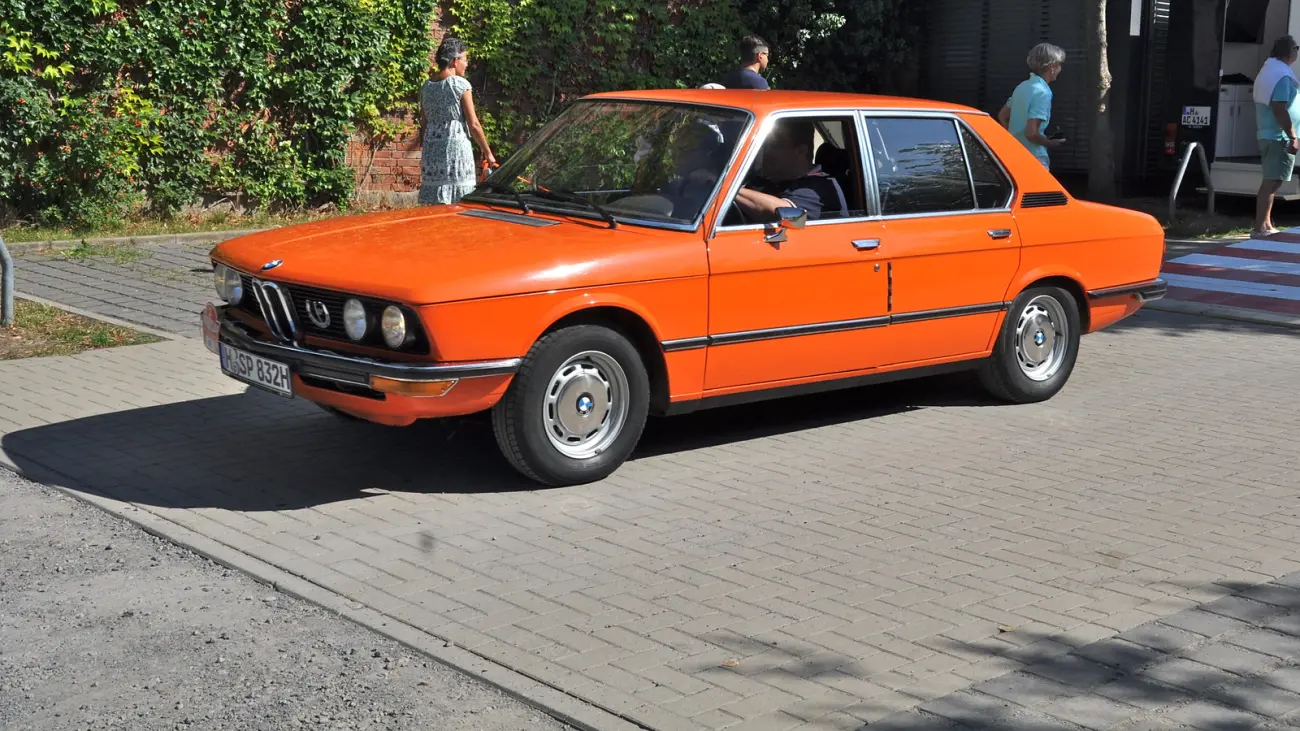
Although introduced a few years before the 3 Series, the BMW 5 Series deserves special recognition as it created the modern executive sedan category.
The first-generation E12 combined luxury, comfort, and sporting performance in a package that appealed to business professionals and driving enthusiasts alike.
Luxury Meets Performance
Unlike many executive cars of the era, the 5 Series emphasized dynamic handling alongside premium comfort.
Drivers could enjoy long-distance refinement without sacrificing driving enjoyment.
Today, the BMW 5 Series continues to be one of the world's most respected executive sedans.
BMW 7 Series (1977)
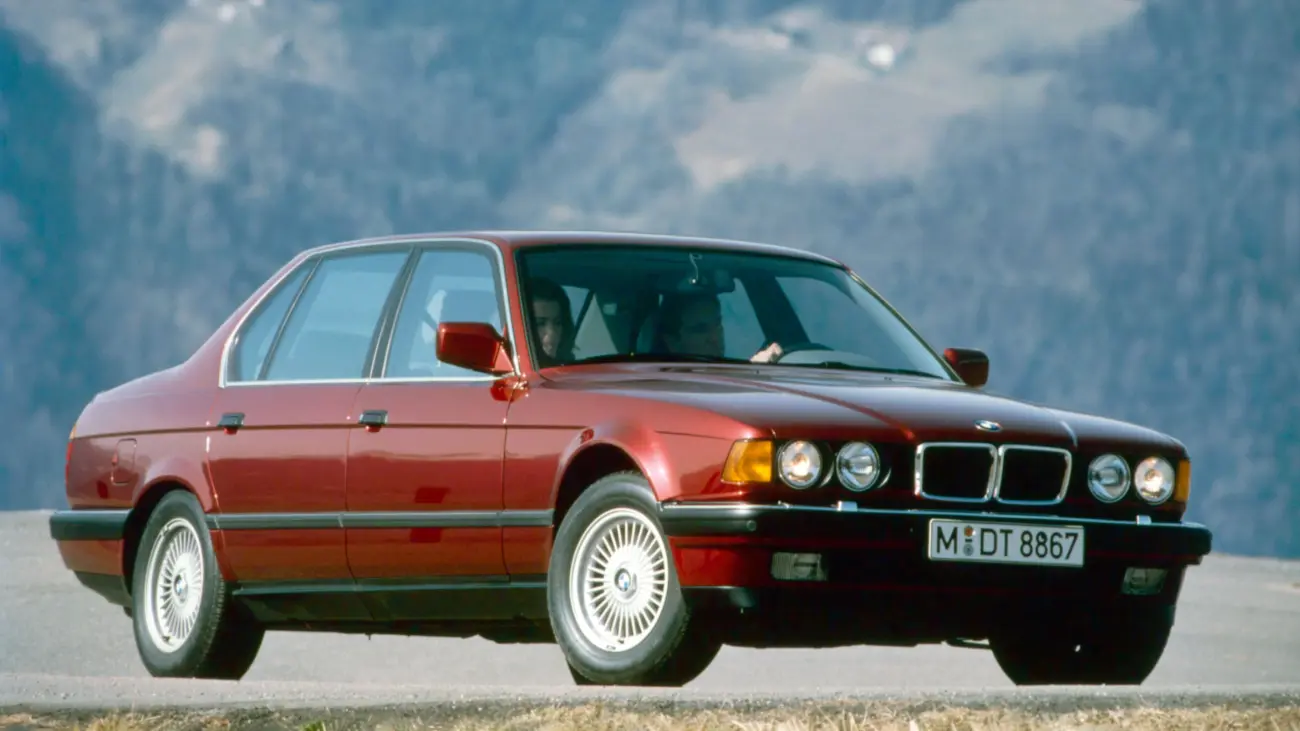
BMW entered the flagship luxury sedan market in 1977 with the launch of the BMW 7 Series.
Designed to compete directly with the Mercedes-Benz S-Class, the 7 Series showcased BMW's most advanced engineering, safety innovations, and luxury features.
Throughout successive generations, the model introduced numerous technologies that later became standard across the automotive industry.
These innovations included:
-
Electronic driver assistance systems
-
Advanced onboard computers
-
Adaptive suspension technologies
-
Luxury interiors with premium materials
-
Cutting-edge infotainment systems
Today, the 7 Series remains BMW's flagship luxury sedan.
BMW Motorsport and the Birth of the M Division
In 1972, BMW founded BMW Motorsport GmbH, now known simply as BMW M.
Originally created to support BMW's racing activities, the division soon began developing high-performance road cars inspired by motorsport technology.
The letter "M" quickly became synonymous with exceptional performance, precision engineering, and thrilling driving dynamics.
BMW M vehicles are designed to deliver race-inspired performance while remaining practical enough for everyday driving.
BMW M1 (1978-1981)
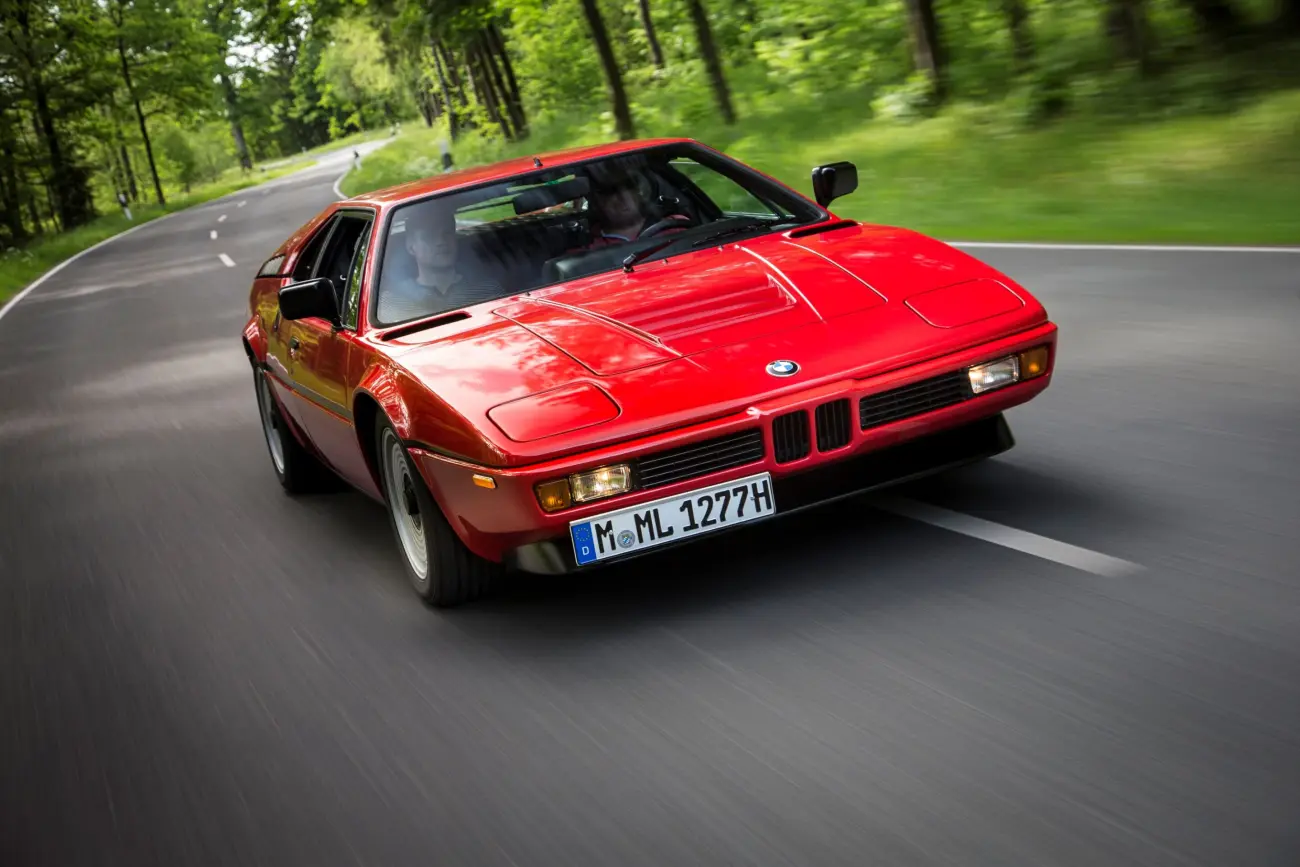
The BMW M1 became the first production vehicle developed entirely by BMW's Motorsport division.
Built as a homologation model for international racing, the M1 remains one of BMW's rarest and most iconic supercars.
Design
The M1 featured a dramatic wedge-shaped body designed by legendary Italian stylist Giorgetto Giugiaro.
Its low profile, sharp lines, and mid-engine layout gave it an unmistakably exotic appearance.
Engine
The car was powered by a naturally aspirated 3.5-liter inline-six engine producing approximately 277 horsepower.
Performance
-
Top speed: approximately 265 km/h (165 mph)
-
0-100 km/h: around 5.6 seconds
Only 453 units of the BMW M1 were produced, making it one of the rarest production BMWs ever built.
Today, it is considered one of the most collectible German sports cars in history.
BMW M3
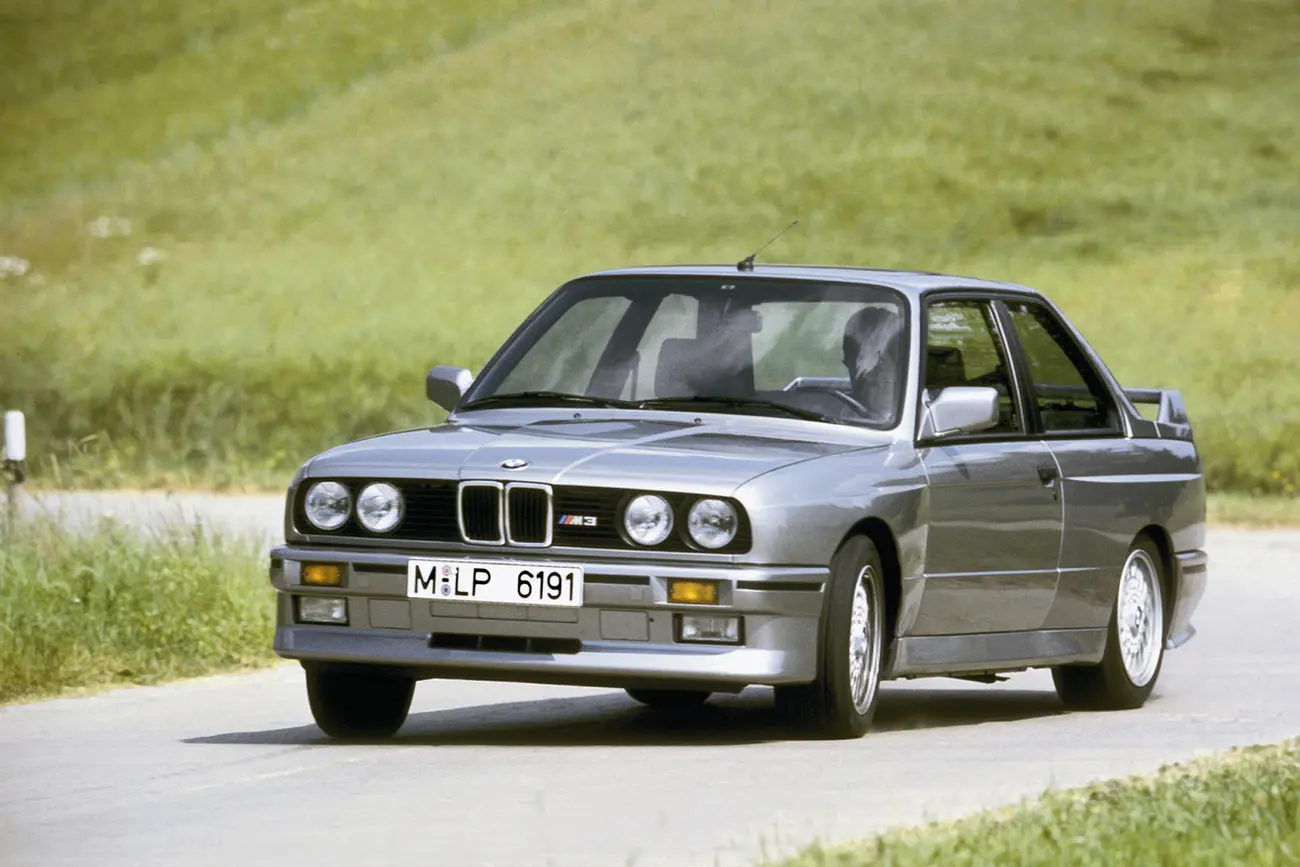
Perhaps no performance model has had a greater impact than the BMW M3.
First introduced in 1986 based on the E30 3 Series, the M3 was developed primarily to compete in touring car racing championships.
Performance Heritage
The original E30 M3 featured lightweight construction, aggressive aerodynamics, and a high-revving four-cylinder engine that delivered exceptional handling.
Over the decades, the M3 has evolved through multiple generations while remaining one of the world's most respected performance sedans.
Modern M3 models produce well over 500 horsepower, combining everyday usability with supercar-level acceleration.
BMW M5
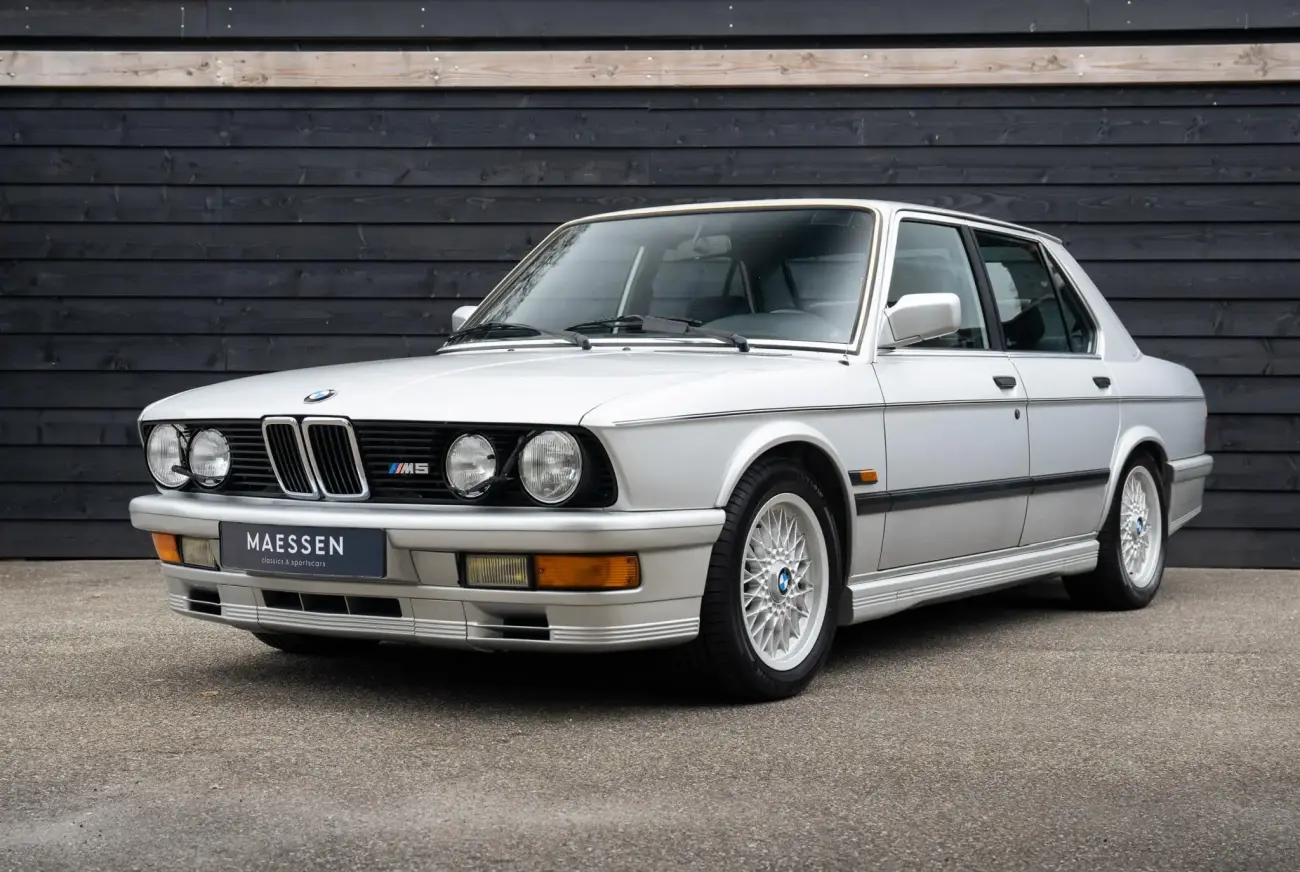
Introduced in 1985, the BMW M5 redefined what a luxury sedan could achieve.
By combining executive comfort with race-inspired engineering, BMW created one of the world's first true high-performance luxury sedans.
Each generation of the M5 has introduced increasingly powerful engines, advanced suspension technology, and innovative driver-assistance systems.
Today's BMW M5 offers supercar performance while maintaining the comfort and practicality expected from a premium executive sedan.
Global Expansion During the 1980s and 1990s
During the 1980s and 1990s, BMW expanded rapidly across international markets.
New manufacturing plants were established in Europe, North America, South Africa, and later Asia, allowing BMW to serve a growing global customer base.
The company's reputation for quality, reliability, and driving dynamics attracted buyers worldwide, transforming BMW into one of the leading premium automotive manufacturers.
By the end of the 1990s, BMW had become a truly global brand with millions of loyal customers across every continent.
BMW's Global Expansion and the Birth of the M Division
The 1980s and 1990s marked one of the most successful periods in BMW's history. During these decades, the company transformed from a respected European manufacturer into a truly global premium automotive brand. Production facilities expanded across Europe, North America, and later Asia, allowing BMW to serve growing international markets while maintaining its reputation for German engineering excellence.
One of the most significant developments during this period was the rapid growth of BMW M GmbH, commonly known as the BMW M Division. Originally established to develop motorsport vehicles, the M Division soon became responsible for producing high-performance road cars that combined everyday practicality with racing-inspired engineering.
The legendary BMW M3, introduced in 1986, quickly became one of the most successful sports sedans ever built. Designed initially as a homologation model for touring car racing, the first-generation M3 featured lightweight construction, aggressive aerodynamics, and a high-revving four-cylinder engine. It dominated race tracks around the world while earning a reputation as one of the greatest driver's cars in automotive history.
The success of the M3 was followed by the introduction of the BMW M5, which proved that a luxury executive sedan could also deliver supercar-like performance. With powerful inline-six and later V8 and V10 engines, the M5 redefined the concept of a high-performance luxury sedan.
The BMW M6 expanded the M philosophy into the grand touring segment, offering exceptional speed, luxury, and long-distance comfort. These vehicles became symbols of BMW's commitment to engineering vehicles that were both practical and exhilarating to drive.
Unlike many manufacturers that focused only on straight-line speed, BMW continued to prioritize balanced chassis dynamics, precise steering, near-perfect weight distribution, and driver engagement. This philosophy became known worldwide as "The Ultimate Driving Machine," a slogan that perfectly reflected BMW's engineering approach.
BMW's Motorsport Success
BMW's reputation was strengthened through continuous success in international motorsport.
The company achieved victories in:
-
Formula One
-
Touring Car Championships (DTM and WTCC)
-
European Touring Car Championship
-
24 Hours of Nürburgring
-
IMSA Racing
-
Le Mans Prototype racing
Perhaps one of BMW's greatest racing achievements came in 1999, when the BMW V12 LMR won the prestigious 24 Hours of Le Mans, proving the company's engineering capabilities on one of the world's toughest endurance circuits.
Motorsport success was never separated from production vehicles. Technologies developed for racing—including advanced suspension systems, lightweight materials, aerodynamic improvements, and engine management software—eventually found their way into BMW's road cars.
Luxury Brand Expansion
BMW also expanded its portfolio through strategic acquisitions.
In 1994, BMW acquired the Rover Group, although the partnership was ultimately unsuccessful. However, one part of the acquisition proved to be a tremendous long-term success: MINI.
After redesigning and relaunching MINI in 2001, BMW transformed the iconic British small car into a global premium compact brand while preserving its unmistakable personality.
BMW also secured the rights to Rolls-Royce Motor Cars, officially beginning production of new Rolls-Royce vehicles under BMW ownership in 2003. This allowed BMW to compete at the absolute pinnacle of the luxury automotive market while maintaining Rolls-Royce's unique identity and craftsmanship.
By the end of the 1990s, BMW had become far more than a luxury car manufacturer. It had evolved into a global automotive group capable of producing everything from compact city cars and sports sedans to ultra-luxury limousines and world-class performance vehicles, all while preserving the engineering philosophy that had defined the company since its earliest days.
Technology, Innovation, and Electrification (2010s–Present)
The 2010s marked the beginning of a new era for BMW. While the company continued producing its traditional gasoline and diesel-powered vehicles, it also invested heavily in electrification, sustainable manufacturing, autonomous driving technologies, and digital connectivity. Rather than abandoning its performance heritage, BMW sought to combine innovation with the driving dynamics that had made the brand famous for more than a century.
One of BMW's most ambitious projects was the launch of the BMW i sub-brand, introduced to develop next-generation electric and hybrid vehicles.
BMW i3: A Revolutionary Electric Car
Introduced in 2013, the BMW i3 became one of the world's first premium mass-produced electric vehicles. Unlike many electric cars of its time, the i3 was built from the ground up as an EV rather than being converted from an existing gasoline model.
The vehicle featured several groundbreaking technologies, including:
-
A lightweight carbon fiber reinforced plastic (CFRP) passenger cell
-
An aluminum chassis
-
Rear-wheel drive
-
A fully electric drivetrain
-
Sustainable interior materials made from recycled and renewable resources
BMW focused not only on reducing emissions during driving but also on minimizing the environmental impact of manufacturing. Production of the i3 incorporated renewable energy and recycled materials, making it one of the industry's most environmentally conscious vehicles.
Over its production life, the i3 became a symbol of BMW's commitment to sustainable mobility while demonstrating that electric vehicles could still deliver enjoyable handling and premium quality.
BMW i8: The Hybrid Supercar
Alongside the i3, BMW introduced the stunning BMW i8 in 2014.
The i8 combined futuristic styling with advanced hybrid technology, creating one of the most recognizable sports cars of the decade.
Its powertrain paired:
-
A turbocharged 1.5-liter three-cylinder gasoline engine
-
An electric motor
-
Intelligent all-wheel drive
-
Lightweight carbon fiber construction
Together, these components produced impressive acceleration while maintaining exceptional fuel efficiency for a sports car.
The i8 demonstrated that environmental responsibility did not have to come at the expense of excitement or performance. Its butterfly doors, aerodynamic bodywork, laser headlights, and advanced engineering made it a technological showcase for BMW.
Although production ended in 2020, the i8 remains one of BMW's most innovative vehicles and helped reshape public perception of hybrid performance cars.
Digital Innovation and Connected Technology
During the 2010s, BMW significantly expanded its digital technologies.
Modern BMW vehicles introduced features such as:
-
Large curved digital displays
-
Voice-controlled BMW Intelligent Personal Assistant
-
ConnectedDrive online services
-
Over-the-air software updates
-
Smartphone integration
-
Remote vehicle management via mobile applications
These innovations transformed BMW vehicles into highly connected smart cars while improving convenience, safety, and driver experience.
BMW also invested heavily in advanced driver assistance systems, including adaptive cruise control, lane-keeping assistance, automated parking, traffic jam assistance, and semi-autonomous driving technologies.
Rather than replacing the driver completely, BMW focused on technologies designed to assist the driver while maintaining an engaging driving experience.
Expansion of the SUV Lineup
Another major contributor to BMW's global success has been its rapidly expanding lineup of Sports Activity Vehicles (SAVs), commonly known as SUVs.
Starting with the original BMW X5 in 1999, BMW gradually introduced a complete family of X models.
Today, the lineup includes:
-
BMW X1
-
BMW X2
-
BMW X3
-
BMW X4
-
BMW X5
-
BMW X6
-
BMW X7
-
BMW XM
These vehicles combine luxury, practicality, advanced technology, and BMW's signature driving dynamics, making them some of the company's best-selling models worldwide.
The success of the X Series has helped BMW maintain strong global sales while appealing to customers seeking premium SUVs for families, business use, and adventure.
BMW's Electric Future and Next-Generation Mobility
As the automotive industry moves toward electrification, BMW has committed to developing a future where sustainability and driving pleasure coexist. Rather than abandoning its traditional engineering philosophy, BMW aims to combine zero-emission technology with the dynamic performance that has defined the brand for over a century.
The company's latest generation of electric vehicles demonstrates this vision.
The BMW i4 offers the performance of a traditional sports sedan with a fully electric powertrain, delivering impressive acceleration, long driving range, and advanced digital technology.
The BMW iX represents BMW's flagship electric SUV. Built on a dedicated platform, it combines luxury, cutting-edge driver assistance systems, and sustainable materials with powerful electric motors capable of producing remarkable performance.
Other electric models, including the BMW i5, BMW i7, and BMW iX1, have expanded the company's EV portfolio across multiple market segments. These vehicles prove that customers no longer have to choose between premium comfort, advanced technology, and environmental responsibility.
BMW is also investing heavily in next-generation battery technology. Improvements in energy density, charging speed, and battery longevity are expected to significantly increase driving range while reducing charging times. The company continues to research recyclable battery materials and more sustainable production methods to lower the environmental impact of electric vehicle manufacturing.
Artificial intelligence has also become an important part of BMW's future strategy. Modern BMW vehicles use AI-powered systems to optimize navigation, improve energy efficiency, personalize driver settings, and enhance safety features. Continuous software updates allow many new functions to be added long after a vehicle has left the factory.
Autonomous driving remains another major area of development. BMW continues to refine advanced driver assistance technologies with the goal of improving safety and reducing driver workload, while maintaining the engaging driving experience that customers expect from the brand.
BMW in Motorsport Today
Despite its growing focus on electrification, BMW has never abandoned motorsport.
The company remains active in several international racing championships, including GT racing, endurance events, touring car competitions, and electric racing development. BMW M Motorsport continues to develop high-performance race cars while transferring knowledge gained on the track directly into production vehicles.
Many technologies found in today's BMW M models—including improved suspension systems, lightweight materials, aerodynamic components, braking systems, and engine management software—have their origins in motorsport engineering.
This close relationship between racing and production has always been one of BMW's defining characteristics.
BMW's Legacy
Over more than a century, BMW has evolved from a small aircraft engine manufacturer into one of the world's most respected premium automotive companies.
Its success has been built on several key principles:
-
Precision German engineering
-
Continuous innovation
-
Driver-focused performance
-
Premium quality and craftsmanship
-
Motorsport heritage
-
Advanced safety technologies
-
Sustainable mobility
From the early Dixi and legendary BMW 328 Roadster to iconic models such as the BMW 507, 3 Series, M3, M5, X5, i8, and today's electric i Series, BMW has consistently shaped the automotive industry through innovation and engineering excellence.
Conclusion
BMW's history is a remarkable story of resilience, innovation, and continuous evolution. Founded in 1916 as an aircraft engine manufacturer, the company successfully adapted to changing markets and global challenges to become one of the world's leading premium automotive brands.
Throughout its history, BMW has balanced luxury with performance, tradition with innovation, and engineering precision with driving enjoyment. Whether producing elegant executive sedans, high-performance M cars, luxurious SUVs, motorcycles, or fully electric vehicles, BMW has remained committed to delivering an exceptional driving experience.
Today, BMW continues to lead the industry through electrification, intelligent technologies, sustainable manufacturing, and advanced mobility solutions. As the automotive world enters a new era, BMW is well positioned to remain one of the most influential and respected manufacturers, carrying its legacy of innovation and driving excellence into the future.