TR
TR EN
EN


The Transformers of the Road: Foldable Cars and the Future of Urban Mobility
As cities become more crowded every year, traffic congestion, limited parking, and narrow streets continue to challenge drivers around the world. Automakers and engineers are responding with increasingly creative solutions, and one of the most fascinating concepts is the foldable car.
Imagine driving through city streets in a fully functional electric car that can shrink its size when parked, allowing several vehicles to fit into a single parking space. It sounds like something from a Transformers movie, but several companies and research teams have already built working prototypes.
Although foldable cars are still a niche technology, they offer a glimpse into what urban transportation may look like in the coming decades.
What Is a Foldable Car?
A foldable car is a vehicle specifically designed to reduce its physical dimensions when it is parked or not in use. Unlike conventional automobiles, these vehicles use movable body sections, retractable wheels, or telescopic chassis designs to occupy significantly less space.
Most foldable cars are:
-
Fully electric
-
Built for city driving
-
Designed for one or two passengers
-
Lightweight and energy efficient
-
Easy to park in crowded urban areas
The primary goal is simple: maximize urban mobility while minimizing the amount of space each vehicle occupies.
Why Was the Idea Developed?
During the early 2000s, rapid urbanization created serious transportation challenges in major cities worldwide.
Common problems included:
-
Increasing traffic congestion
-
Expensive parking
-
Limited street space
-
Growing environmental concerns
-
Rising demand for electric mobility
Engineers began asking a simple question:
What if a car only occupied its full size while driving?
This idea eventually inspired several innovative foldable vehicle projects.
HIRIKO Fold (Spain)
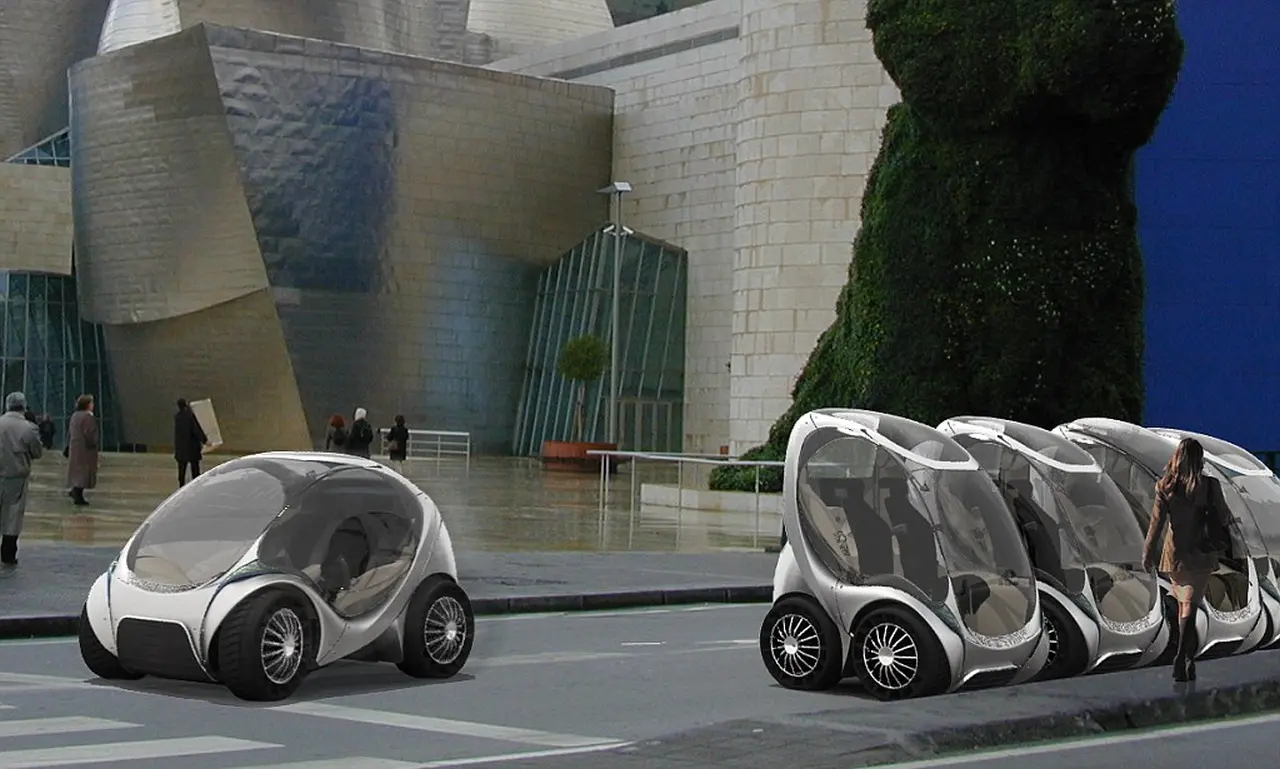
One of the most famous foldable vehicle concepts was the HIRIKO Fold, developed in Spain with support from the European Union in collaboration with researchers from the Massachusetts Institute of Technology (MIT).
The HIRIKO was designed specifically for dense urban environments.
Key specifications included:
-
Fully electric two-seat microcar
-
Driving range of approximately 120 km (75 miles)
-
Four independent in-wheel electric motors
-
Maximum speed of 50 km/h (31 mph)
-
Weight under 500 kg
-
Length reduced from 2.5 meters to just 1.5 meters when parked
Its hinged chassis allowed the front and rear sections to fold inward, dramatically shortening the vehicle.
This meant that three HIRIKO vehicles could fit into a single conventional parking space.
The HIRIKO also introduced several innovative features.
Instead of a traditional steering wheel, it used a joystick-like controller similar to those found in aircraft.
The wheels could rotate up to 60 degrees, allowing:
-
Extremely tight turning circles
-
Sideways parking maneuvers
-
Rotation around its own axis
Passengers entered through a front-opening canopy that included the windshield, while the battery pack was mounted beneath the floor to lower the center of gravity and improve stability.
Although the project generated significant excitement, it never reached full commercial production.
ARMADILLO-T (South Korea)
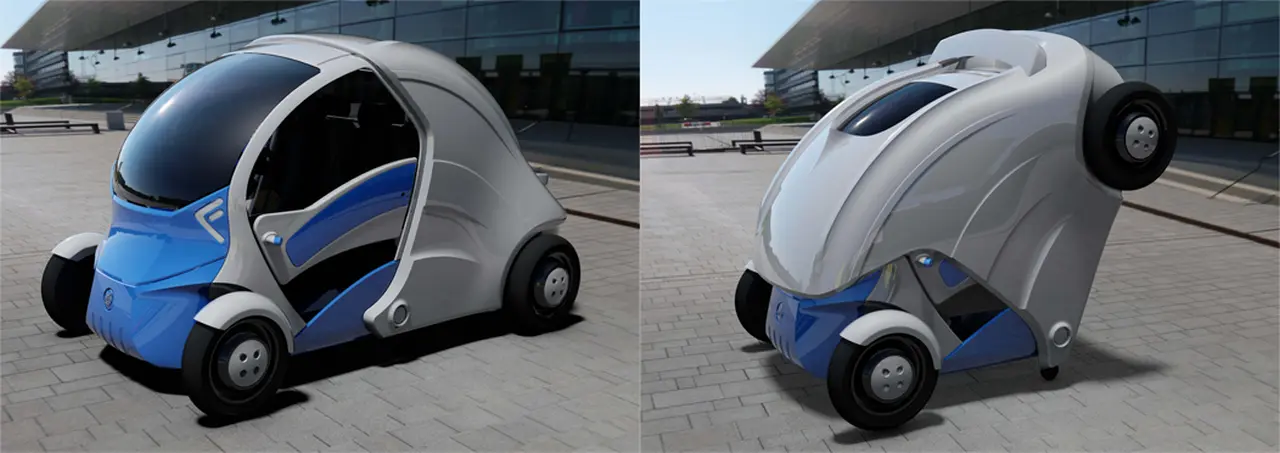
Developed by researchers at the Korea Advanced Institute of Science and Technology (KAIST), the ARMADILLO-T takes its inspiration from the animal whose armored shell folds for protection.
This lightweight electric vehicle weighs approximately 450 kg and can reduce its overall length by nearly half while parked.
Additional features include:
-
Smartphone remote control
-
Highly compact dimensions
-
Electric drivetrain
-
Urban-focused design
The project demonstrates how advanced robotics and electric mobility can be combined to improve city transportation.
City Transformer (Israel)
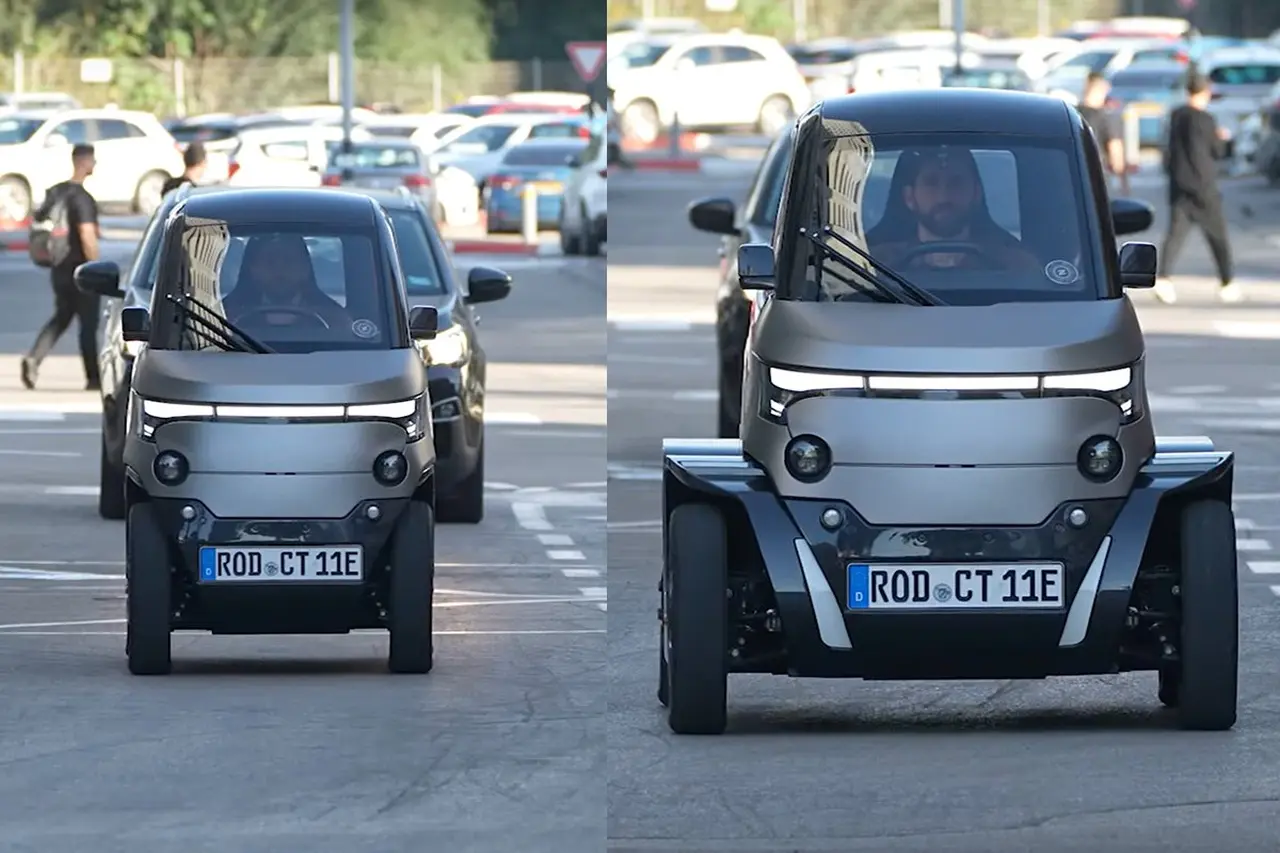
Among today's most promising foldable vehicle startups is City Transformer, an Israeli company developing production-ready urban electric vehicles.
Unlike vehicles that shorten their length, the City Transformer changes its width.
In driving mode:
-
Width: 1.4 meters
In city or parking mode:
-
Width: Only 1 meter
This allows the vehicle to maneuver through narrow streets while occupying much less parking space.
The CT-1 features:
-
Two 7.5 kW electric motors
-
Battery-powered electric drivetrain
-
Vehicle weight of approximately 590 kg
-
Quiet, zero-emission operation
The upcoming CT-2 model is expected to include:
-
Driving range of approximately 180 km
-
Opening sunroof
-
Smartphone connectivity
-
Power windows
-
Air conditioning
-
Cabin heating
City Transformer has also received significant international recognition.
The company won a Gold Award from the German Design Council in 2023 for passenger vehicle design, while TIME Magazine named the concept one of the Best Inventions of 2020.
Lit Motors C-1 (United States)
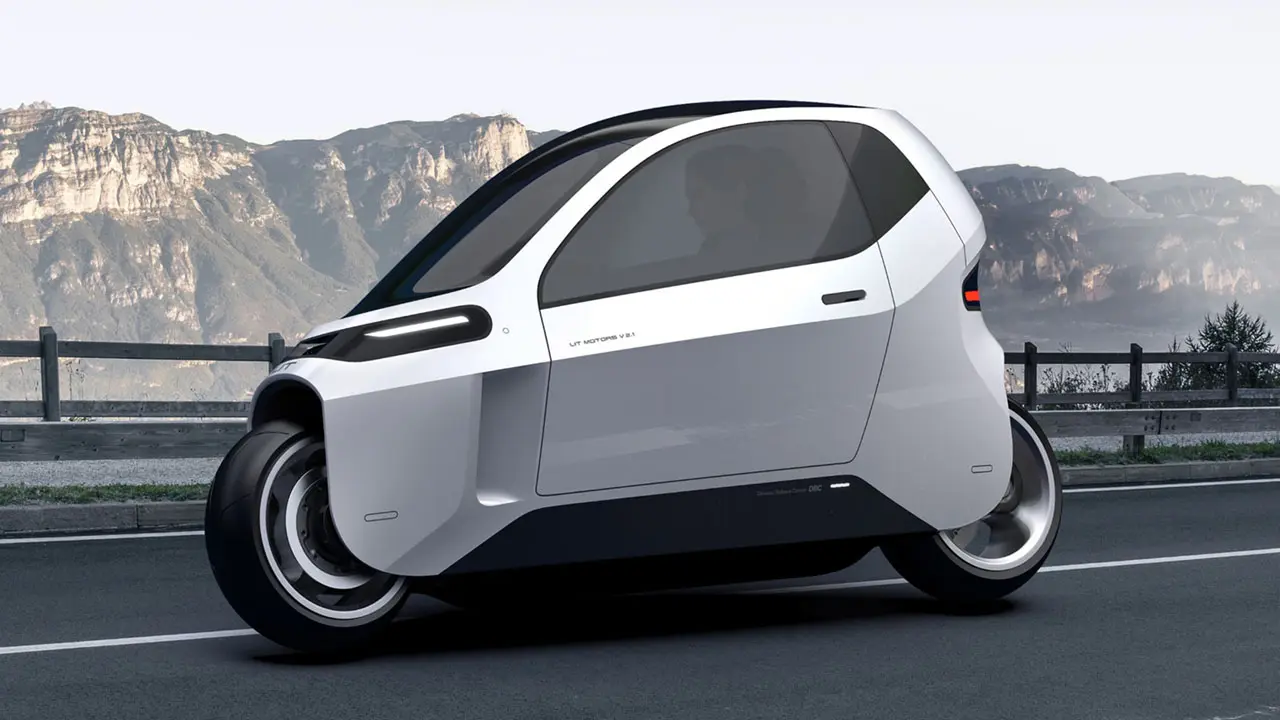
The Lit Motors C-1 approaches urban mobility from a different direction.
Although it does not physically fold, it combines the narrow profile of a motorcycle with the safety of an enclosed automobile.
Its most innovative feature is a gyroscopic stabilization system that allows the vehicle to remain balanced even when stopped.
The result is:
-
Motorcycle-sized footprint
-
Car-like weather protection
-
Improved safety
-
Excellent maneuverability in urban environments
The C-1 demonstrates that reducing vehicle size can be achieved through innovative engineering rather than folding mechanisms alone.
Turkey's Own "Transformer": Letrons

Turkey has also contributed to the world of transforming vehicles.
The Ankara-based company ANTIMON, through its Letrons project, converted a BMW 3 Series into a giant robot capable of transforming via remote control.
Although the vehicle cannot be driven after transformation, it features:
-
Moving arms
-
Rotating head
-
Articulated neck
-
Remote-controlled transformation
While created primarily for entertainment and promotional purposes, the project showcases Turkish engineering creativity and robotics expertise.
Advantages of Foldable Cars
Foldable vehicles offer several important benefits for modern cities.
Space-Saving Parking
The biggest advantage is their ability to dramatically reduce parking requirements.
Instead of occupying an entire parking space, multiple foldable cars may fit where only one conventional vehicle normally could.
Environmentally Friendly
Most concepts are fully electric, producing zero tailpipe emissions while consuming far less energy than traditional automobiles.
Improved Energy Efficiency
Smaller dimensions and lighter construction reduce energy consumption and increase driving efficiency.
Ideal for Urban Mobility
Foldable vehicles integrate well with:
-
Public transportation
-
Bike-sharing programs
-
Electric scooters
-
Smart city mobility systems
Challenges and Limitations
Despite their potential, foldable cars still face several obstacles.
Crash Safety
Their compact size and lightweight construction make meeting modern crash safety standards more challenging than with larger vehicles.
Limited Passenger Capacity
Most designs accommodate only one or two passengers and offer minimal cargo space.
Market Acceptance
Consumers remain more familiar and comfortable with conventional automobiles, making widespread adoption slower.
Regulatory Issues
Vehicle regulations differ from country to country, and many existing laws were not written with foldable vehicles in mind.
Could Foldable Cars Become Common?
As cities become denser and smarter, foldable vehicles may become increasingly attractive.
Possible future applications include:
-
Car-sharing fleets
-
Autonomous urban taxis
-
Last-mile transportation
-
Corporate mobility services
-
Smart parking systems
Combined with autonomous driving technology, future foldable vehicles could transport passengers to work before automatically folding, parking themselves, and even driving to charging stations without human intervention.
While mass adoption may still be years away, many of the technologies needed to make this vision possible already exist.
Final Thoughts
Foldable cars demonstrate how innovative engineering can rethink one of the world's oldest transportation challenges: space.
Projects like the HIRIKO Fold, ARMADILLO-T, City Transformer, and Lit Motors C-1 prove that compact vehicles can be practical, efficient, and surprisingly sophisticated. Even experimental projects such as Turkey's Letrons show how transformation technologies continue to capture the imagination of engineers and automotive enthusiasts alike.
Although foldable cars are not yet a common sight on city streets, they represent an exciting vision of future mobility—one where vehicles are cleaner, smarter, and adaptable enough to fit the ever-changing needs of modern urban life.