TR
TR EN
EN

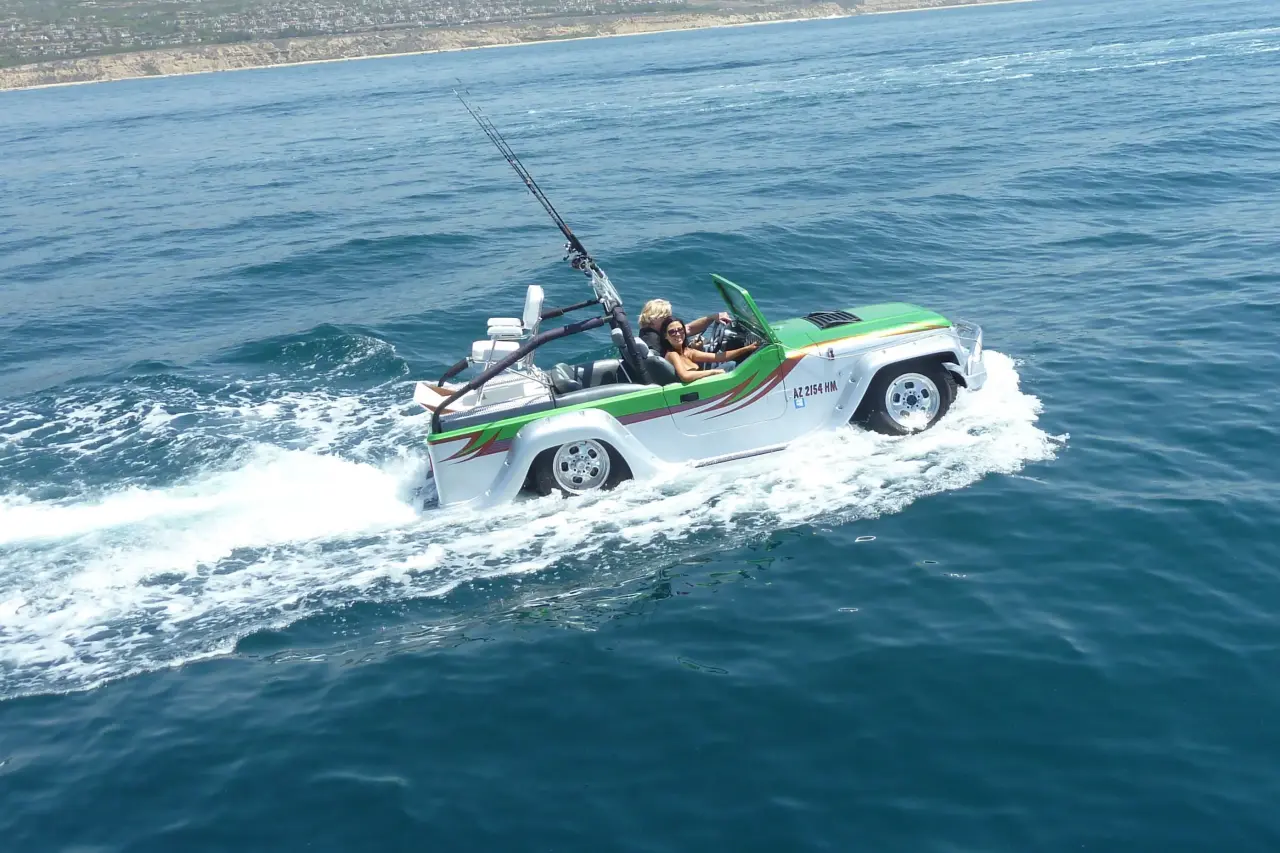
Cars That Can Drive on Water: The Real Story of Amphibious Vehicles
Imagine driving down the highway, reaching the shoreline, and continuing straight into the water—without sinking. Instead of stopping, your vehicle transforms into a boat and keeps moving across the lake or sea.
It may sound like something from a science fiction movie, but amphibious vehicles have been making this dream a reality for decades. Designed to operate on both land and water, these remarkable machines combine automotive engineering with marine technology.
From military transport vehicles to record-breaking sports cars and extreme off-road machines, amphibious vehicles represent some of the most innovative engineering ever created.
What Is an Amphibious Vehicle?
An amphibious vehicle is designed to travel on both roads and waterways without requiring separate transportation.
Unlike simply driving through shallow water, true amphibious vehicles are capable of floating and navigating across rivers, lakes, and even coastal waters.
To achieve this, they combine several technologies, including:
-
A waterproof body or hull.
-
Road wheels and conventional steering.
-
Marine propulsion such as water jets or propellers.
-
Sealed drivetrains and electrical systems.
-
Buoyancy systems that keep the vehicle afloat.
Some models can transition from driving to boating in just a few seconds.
A Brief History of Amphibious Vehicles
The concept has existed for more than a century, but practical amphibious vehicles became widely known during World War II.
1940s – Military Origins
The most famous early amphibious vehicle was the DUKW, developed for the United States military during World War II. It transported troops, equipment, and supplies directly from ships to shore without requiring docks or ports.
Its success proved that dual-purpose vehicles could perform reliably in demanding environments.
1960s – Civilian Amphibious Cars
The dream of owning a road-going boat became reality with the introduction of the Amphicar 770, one of the first commercially available civilian amphibious cars.
Although production numbers were limited, the Amphicar became an icon of automotive history.
2000s and Beyond
Advances in lightweight materials, computer-aided engineering, and powerful engines led to a new generation of high-performance amphibious vehicles capable of impressive speeds on both land and water.
Gibbs Aquada
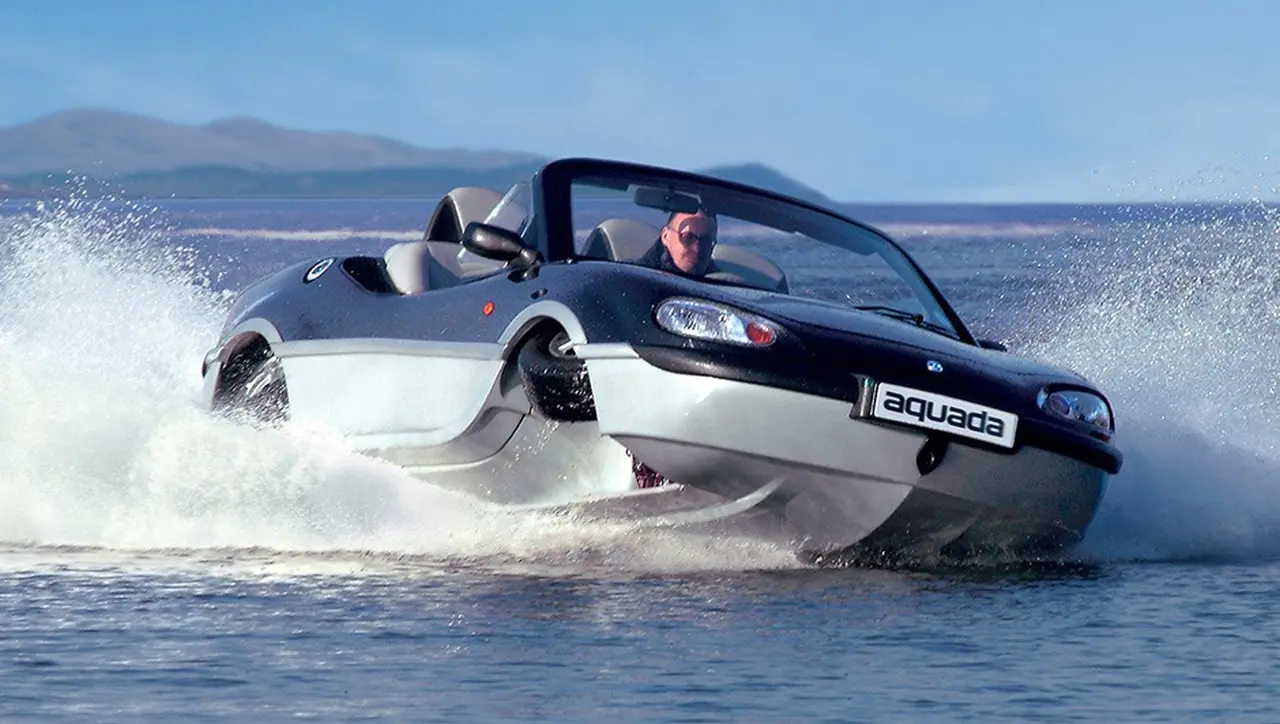
The Gibbs Aquada is one of the world's most famous modern amphibious cars.
Developed by Gibbs Sports Amphibians, it was engineered from the ground up rather than simply modifying an existing automobile.
Specifications include:
-
Top speed on land: 160 km/h (99 mph)
-
Top speed on water: 50 km/h (27 knots)
-
Engine: 2.5-liter Rover V6
-
Production period: 2003–2004
-
More than 60 engineering patents
Instead of functioning as a car that floats, the Aquada was specifically designed to perform efficiently in both environments.
One of its most famous moments came in 2004, when Richard Branson crossed the English Channel in an Aquada, setting a new amphibious vehicle record.
His journey took 1 hour, 40 minutes, and 6 seconds, dramatically improving upon the previous record of approximately six hours.
The Aquada later inspired other Gibbs vehicles, including the Humdinga and Quadski.
WaterCar Panther
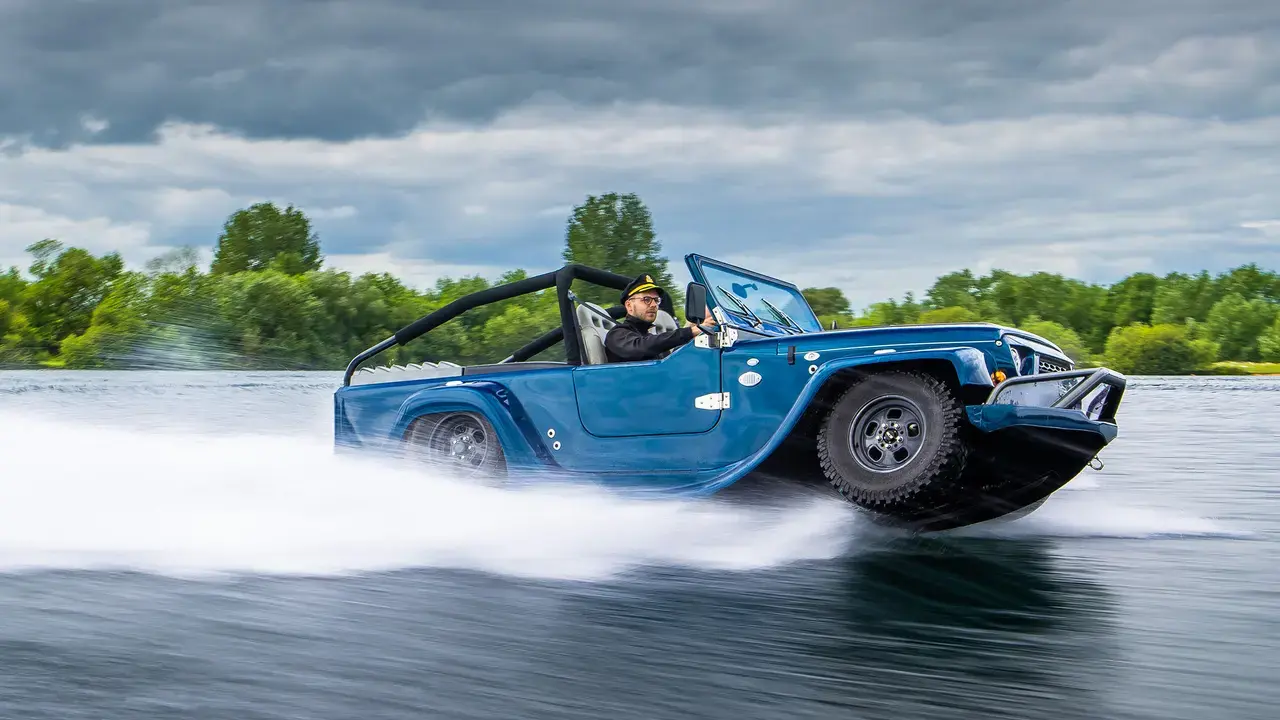
Built in California by WaterCar, the WaterCar Panther combines the appearance of a Jeep-style SUV with the capabilities of a speedboat.
Specifications include:
-
Top speed on land: 137 km/h (85 mph)
-
Top speed on water: 72 km/h (45 mph)
-
Engine: 3.7-liter V6 producing approximately 305 horsepower
-
Lightweight steel frame with fiberglass body
-
Production began in 2013 after approximately fourteen years of development
The Panther remains one of the fastest and most capable recreational amphibious vehicles ever offered commercially.
SHERP: Built for Extreme Environments
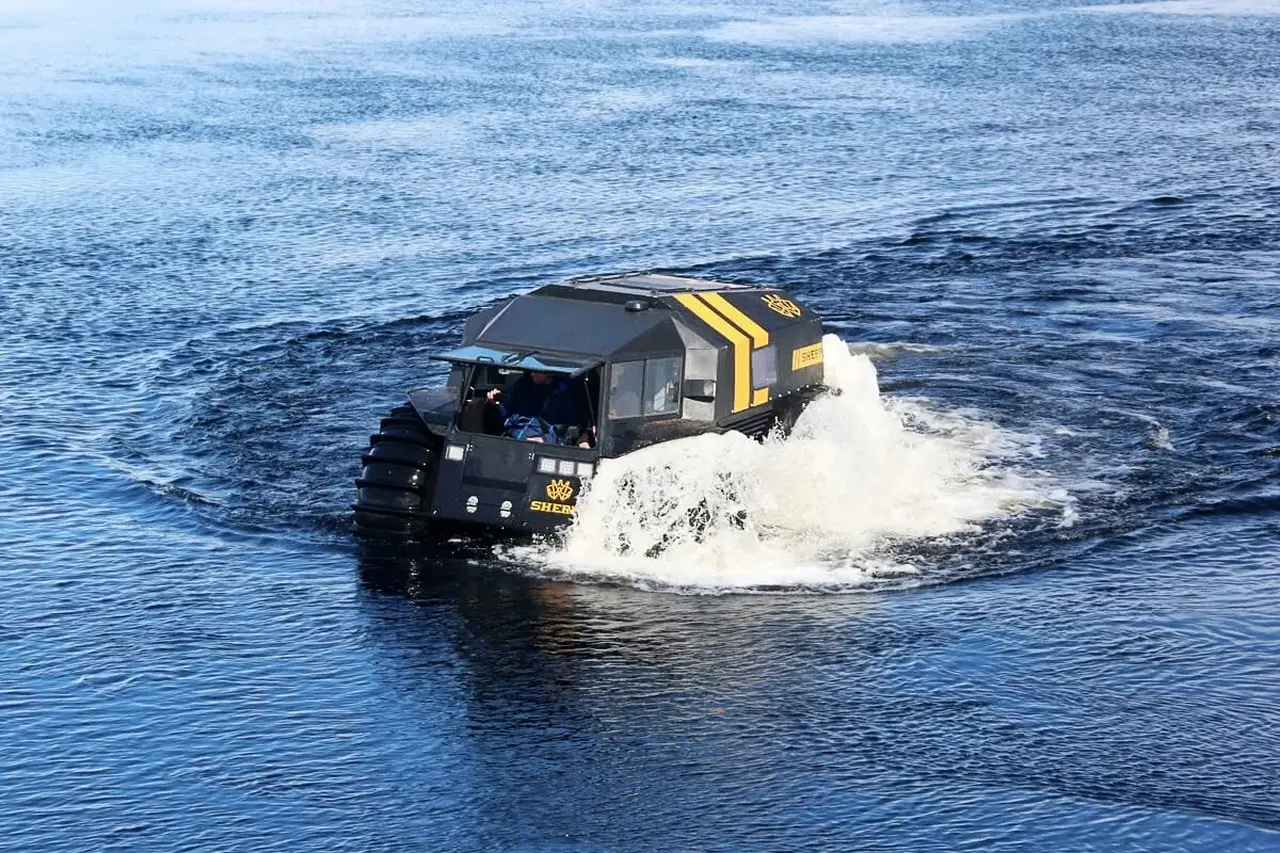
Unlike sports-oriented amphibious cars, the SHERP is designed for extreme off-road conditions.
Developed by the Ukrainian company QUADRO INTERNATIONAL, SHERP is capable of traveling through:
-
Deep mud
-
Snow
-
Swamps
-
Rivers
-
Marshes
-
Ice-covered terrain
Its enormous low-pressure tires provide both flotation and exceptional traction across almost any surface.
SHERP is commonly used by:
-
Rescue teams
-
Geologists
-
Scientific researchers
-
Oil and gas companies
-
Remote exploration crews
Some SHERP vehicles have also supported humanitarian operations in cooperation with the United Nations World Food Programme, helping deliver supplies to difficult-to-reach communities.
Sea Lion

The Sea Lion is another remarkable amphibious vehicle known for its incredible speed on water.
Developed between 2006 and 2012, it became famous for reaching approximately 96 km/h (60 mph) on water, making it one of the fastest amphibious cars ever built.
Like other advanced amphibious vehicles, the Sea Lion uses sophisticated engineering to transition rapidly between road and water operation while maintaining high performance in both environments.
How Do Amphibious Vehicles Work?
Although every design is different, most amphibious vehicles operate using the same basic principles.
Driving on Land
On roads, they function much like conventional automobiles.
Most use:
-
Gasoline or diesel engines.
-
Manual or automatic transmissions.
-
Standard steering systems.
-
Four road wheels.
Operating on Water
Once entering the water, propulsion switches to either:
-
Water jet propulsion.
-
Marine propellers.
Many modern systems automatically retract or partially raise the wheels to reduce drag while floating.
Transition Between Modes
One of the most impressive features is the transition from land to water.
Depending on the model, changing modes can take as little as 5 to 10 seconds, often by pressing a single button.
Carefully engineered hull shapes provide buoyancy while maintaining vehicle stability in the water.
Why Doesn't Everyone Own an Amphibious Vehicle?
Despite their impressive capabilities, amphibious vehicles remain relatively rare.
Several factors limit widespread adoption.
High Purchase Price
Designing a vehicle capable of safely operating on both land and water requires complex engineering and specialized materials, making production expensive.
Maintenance Complexity
Owners must maintain both automotive and marine systems, increasing servicing costs and technical complexity.
Legal Requirements
In many countries, amphibious vehicles must comply with both road traffic regulations and maritime safety laws.
Depending on local regulations, owners may need:
-
Vehicle registration.
-
Boat registration.
-
Marine safety equipment.
-
Appropriate driving or boating licenses.
Limited Everyday Demand
For most drivers, an amphibious vehicle is considered a recreational luxury rather than a practical daily means of transportation.
What Does the Future Hold?
Rapid advances in electric propulsion, battery technology, and autonomous navigation could make amphibious vehicles more practical in the future.
Potential developments include:
-
Fully electric amphibious vehicles.
-
Smart navigation systems that seamlessly integrate road and water routes.
-
Improved lightweight composite materials.
-
More efficient water propulsion systems.
-
Specialized urban transportation solutions for waterfront cities.
While they are unlikely to replace conventional cars anytime soon, future designs may become more affordable, environmentally friendly, and practical than ever before.
Final Thoughts
Amphibious vehicles represent some of the most creative achievements in automotive and marine engineering. From the military DUKW to the record-breaking Gibbs Aquada, the adventure-ready SHERP, and the high-performance WaterCar Panther, each model demonstrates that transportation doesn't have to stop where the road ends.
Although they remain a niche segment today, advances in electric mobility and engineering continue to push the boundaries of what these remarkable vehicles can do. One day, commuting across a bay or river without leaving your car may become far more common than it seems today.