TR
TR EN
EN

What Should You Do If Your Car Battery Dies? How to Start a Car with a Dead Battery
You get into your car, insert the key or press the start button, and... nothing happens. The engine won't crank, the dashboard lights are dim or completely off, and the vehicle refuses to start.
In many cases, the cause is simple: a dead battery.
A flat battery is one of the most common reasons a car won't start, and it can happen to any driver, regardless of the vehicle's age. Fortunately, understanding why batteries fail and knowing how to deal with the situation can save you time, money, and frustration.
In this guide, we'll explain what causes a car battery to die, how to safely start your vehicle again, and how to prevent the problem in the future.
What Does a Car Battery Do?
The battery is one of the most important electrical components in your vehicle.
It supplies electricity to:
-
The starter motor
-
Headlights
-
Interior lighting
-
Dashboard electronics
-
Infotainment systems
-
Power windows
-
Climate control systems
-
Electronic control units (ECUs)
When you start the engine, the battery provides the power needed to turn the starter motor. Once the engine is running, the alternator recharges the battery while supplying electricity to the vehicle's electrical systems.
Without a properly functioning battery, your vehicle cannot operate normally.
Why Does a Car Battery Go Flat?
Several factors can cause a battery to lose its charge.
Long periods without driving
Cars that sit unused for several weeks gradually lose battery charge because many electronic systems continue drawing small amounts of electricity even when the engine is off.
Lights left on
Leaving the headlights, interior lights, or trunk light on overnight can completely drain the battery.
Modern vehicles often provide warning sounds, but not all cars automatically switch the lights off.
Cold weather
Low temperatures reduce the battery's ability to produce electrical current.
This is why battery failures are much more common during winter.
Older batteries are especially vulnerable in freezing conditions.
Alternator problems
If the alternator is faulty, the battery cannot recharge properly while driving.
In this case, replacing the battery alone won't solve the problem.
An aging battery
Most conventional car batteries have an average lifespan of three to five years.
As batteries age, they gradually lose their ability to hold a charge, making starting problems more frequent.
How to Start a Car with a Dead Battery
There are several safe ways to get your vehicle running again.
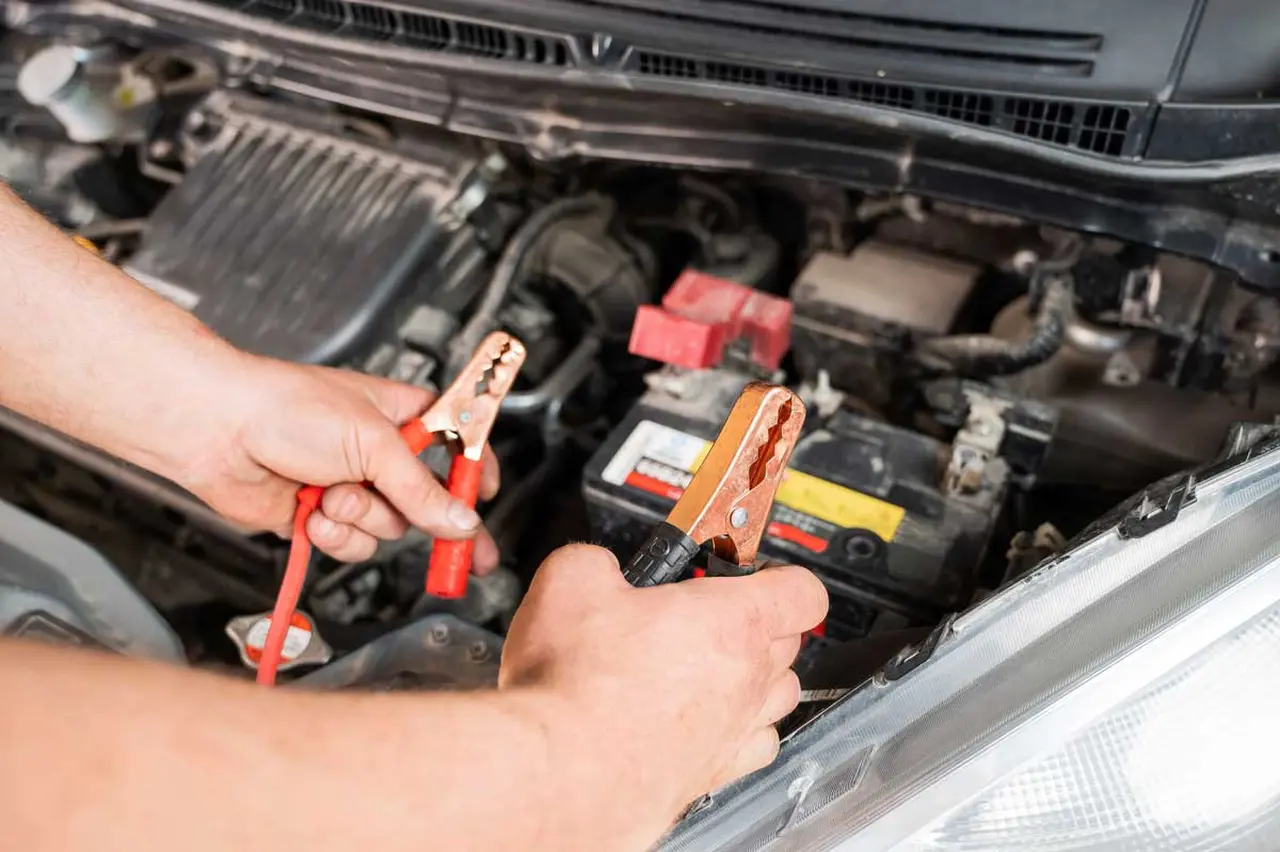
Jump-starting with jumper cables
This is the most common solution.
You'll need:
-
A set of jumper cables
-
Another vehicle with a healthy battery
Follow these steps carefully:
-
Park the vehicles close together without allowing them to touch.
-
Turn both vehicles off.
-
Connect the red cable to the positive (+) terminal of the dead battery.
-
Connect the other red end to the positive (+) terminal of the good battery.
-
Connect one end of the black cable to the negative (-) terminal of the working battery.
-
Attach the remaining black clamp to an unpainted metal part of the disabled vehicle's engine or chassis, away from the battery.
-
Start the donor vehicle and let it run for a few minutes.
-
Try starting the vehicle with the dead battery.
-
Once it starts, carefully disconnect the cables in the reverse order.
After successfully jump-starting the car, drive for at least 20–30 minutes to allow the alternator to recharge the battery.
Using a Portable Jump Starter
Portable jump starters have become increasingly popular.
These compact battery packs allow you to start your vehicle without needing another car.
Simply connect the jump starter according to the manufacturer's instructions and start the engine.
Many modern jump starters also include:
-
USB charging ports
-
Flashlights
-
Emergency SOS lights
-
Air compressors on some models
Keeping one in your trunk can be extremely useful, especially during long trips.
Push Starting a Manual Transmission Vehicle
If you drive a manual transmission car, push-starting may work under certain circumstances.
However, this method is not suitable for automatic transmissions and may not be recommended for some modern vehicles.
The basic process involves:
-
Turning the ignition on.
-
Selecting second gear.
-
Pressing the clutch pedal.
-
Allowing the vehicle to gain some speed by pushing or rolling downhill.
-
Releasing the clutch quickly while applying light throttle.
If successful, the engine should start.
Always consult your vehicle owner's manual before attempting this method.
What Should You Avoid Doing?
When dealing with a dead battery, avoid making the problem worse.
Do not:
-
Continuously turn the key or repeatedly press the start button.
-
Leave headlights or interior lights switched on.
-
Connect jumper cables incorrectly.
-
Smoke or create sparks near the battery.
-
Attempt repairs if you're unsure of the correct procedure.
Incorrect jump-starting can damage sensitive electronic systems and may even create a fire hazard.
Signs Your Battery May Be Failing
A weak battery usually provides warning signs before it fails completely.
Common symptoms include:
-
Slow engine cranking.
-
Clicking sounds when starting.
-
Dim headlights.
-
Flickering dashboard lights.
-
Electrical accessories working poorly.
-
Battery warning light appearing on the dashboard.
-
Difficulty starting the engine, especially in cold weather.
If you notice these symptoms regularly, have your battery tested before it fails unexpectedly.
How to Prevent Your Battery from Dying
Good battery maintenance can significantly extend its lifespan.
Helpful habits include:
-
Drive the vehicle regularly.
-
Avoid leaving electrical accessories on when the engine is off.
-
Keep the battery terminals clean and free from corrosion.
-
Have the charging system inspected during routine servicing.
-
Test the battery annually once it reaches three years of age.
-
Park in a garage during extremely cold weather whenever possible.
Preventive maintenance is far less expensive than dealing with a roadside breakdown.
When Should You Replace the Battery?
Sometimes charging the battery is no longer enough.
Consider replacing the battery if:
-
It is more than five years old.
-
It repeatedly loses charge.
-
It struggles to start the engine even after charging.
-
A battery load test shows poor performance.
-
The battery case is swollen, cracked, or leaking.
Replacing a failing battery before it completely dies can help prevent unexpected breakdowns.
Frequently Asked Questions
Can I drive immediately after jump-starting my car?
Yes. Driving for at least 20 to 30 minutes helps recharge the battery, although a severely discharged or damaged battery may require professional charging or replacement.
How long does a typical car battery last?
Most conventional batteries last between three and five years, depending on driving habits, climate, and maintenance.
Can cold weather kill a battery?
Cold weather doesn't usually damage a healthy battery, but it significantly reduces its available power and can expose weaknesses in older batteries.
Can I jump-start any vehicle?
Always check your owner's manual first. Some hybrid, electric, and luxury vehicles have specific jump-start procedures that should be followed carefully.
Final Thoughts
A dead battery is frustrating, but it's usually one of the easiest vehicle problems to solve.
Knowing how to safely jump-start your car, recognizing the early warning signs of battery failure, and carrying a portable jump starter can help you avoid unnecessary stress and expensive roadside assistance.
If your battery keeps going flat despite repeated charging, don't ignore the warning signs. It may indicate that the battery has reached the end of its service life or that another component—such as the alternator or charging system—needs professional attention.
A little preparation today can prevent a major inconvenience tomorrow.