TR
TR EN
EN

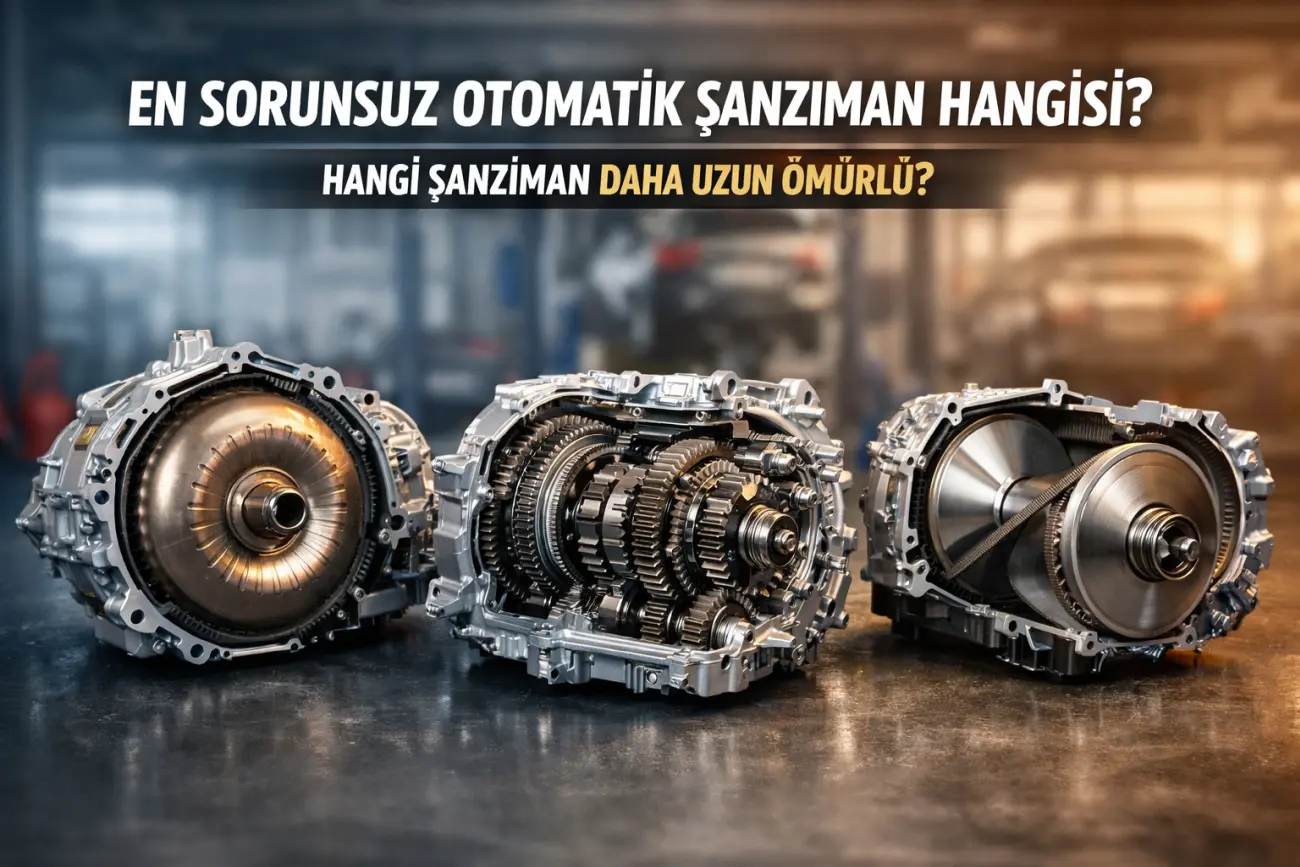
Which Automatic Transmission Is the Most Reliable? A Guide to Long-Lasting Automatic Gearboxes
When buying a car with an automatic transmission, one question comes up more than almost any other: Which automatic transmission is the most reliable?
The answer matters because even the most dependable engine can become expensive to own if the transmission develops problems. Repair costs for automatic gearboxes can easily run into thousands of euros or pounds, making reliability one of the most important factors when choosing a used or new vehicle.
In this guide, we'll compare the most common types of automatic transmissions based on durability, maintenance requirements, driving characteristics, and long-term reliability.
Types of Automatic Transmissions
Modern passenger vehicles typically use one of four main automatic transmission designs:
-
Torque converter automatic
-
Continuously Variable Transmission (CVT)
-
Dual-clutch transmission (DCT/DSG)
-
Automated Manual Transmission (AMT)
Each system works differently, which means their reliability and maintenance needs also vary.
Torque Converter Automatic: The Most Reliable Choice
For most drivers, a torque converter automatic remains the most reliable type of automatic transmission.
Instead of relying on friction clutches to transfer power, it uses a hydraulic torque converter, reducing wear during everyday driving.
Advantages
-
Excellent long-term durability
-
Smooth gear changes
-
Performs well in stop-and-go traffic
-
Better suited to towing and heavy loads
-
Many units can exceed 300,000 km (186,000 miles) with proper maintenance
Disadvantages
-
Slightly slower shifts than dual-clutch gearboxes
-
May consume slightly more fuel than some modern transmissions
For buyers who value reliability over outright performance, this is generally the safest option.
CVT: Reliable with Proper Maintenance
A Continuously Variable Transmission (CVT) works differently from conventional automatics. Instead of fixed gears, it uses a belt or chain running between variable-diameter pulleys to provide seamless acceleration.
Advantages
-
Very smooth driving experience
-
Excellent fuel economy
-
Efficient operation
-
Comfortable for city driving
Disadvantages
-
Some designs are sensitive to heavy towing or aggressive driving
-
Regular fluid changes are especially important
-
Repairs can be expensive if maintenance is neglected
A well-maintained CVT can provide many years of dependable service, particularly when driven gently and serviced according to the manufacturer's recommendations.
Dual-Clutch Transmission (DSG/DCT): Fast but More Complex
Dual-clutch transmissions combine the efficiency of a manual gearbox with the convenience of an automatic.
They are designed for rapid gear changes and excellent performance.
Advantages
-
Extremely fast shifting
-
Strong acceleration
-
Good fuel efficiency
-
Sporty driving characteristics
Disadvantages
-
More mechanically complex
-
Clutch wear over time
-
Mechatronic unit failures can be costly
-
Some systems perform less smoothly in heavy traffic
Wet-clutch DCT systems generally prove more durable than dry-clutch versions because they are better cooled and designed to handle higher torque.
Drivers seeking maximum reliability may prefer a traditional torque converter instead.
Automated Manual Transmission (AMT)
An Automated Manual Transmission (AMT) is essentially a manual gearbox operated by electronic actuators instead of a clutch pedal.
Advantages
-
Lower manufacturing costs
-
Simpler mechanical design
-
Often inexpensive to repair
Disadvantages
-
Noticeably slower gear changes
-
Less refined driving experience
-
More hesitation during acceleration
-
Lower comfort compared with other automatic systems
AMTs remain common in some entry-level vehicles but generally rank lower for refinement.
Which Automatic Transmission Is the Most Reliable?
Based on long-term ownership experience and maintenance requirements, a general ranking would be:
-
Torque converter automatic
-
CVT (when properly maintained)
-
Dual-clutch (DCT/DSG)
-
Automated manual (AMT)
However, reliability depends not only on transmission type but also on the specific design, manufacturer, and maintenance history.
Manufacturers Known for Reliable Automatic Transmissions
Some automakers have developed particularly strong reputations for automatic transmission reliability.
Toyota
Toyota's CVT and traditional automatic transmissions are generally regarded as among the industry's most dependable when maintained correctly.
Honda
Honda has significantly improved its modern CVT transmissions, which are now known for smooth operation and long service life.
Hyundai and Kia
Many torque converter automatics used by Hyundai and Kia have earned a reputation for solid durability and relatively low maintenance costs.
BMW and Mercedes-Benz
Many BMW and Mercedes-Benz models equipped with ZF torque converter automatic transmissions are widely respected for their excellent reliability, smooth operation, and longevity when serviced properly.
Is There Such a Thing as a Maintenance-Free Transmission?
No.
Despite claims that some transmissions contain "lifetime fluid," many independent specialists recommend changing transmission fluid periodically to extend service life.
Regular maintenance remains one of the best ways to prevent expensive repairs.
How to Make an Automatic Transmission Last Longer
Following good driving habits can significantly increase transmission life.
Recommended practices include:
-
Change transmission fluid according to the manufacturer's maintenance schedule.
-
Avoid aggressive acceleration when the transmission is cold.
-
Come to a complete stop before shifting between Drive and Reverse.
-
Avoid holding the vehicle on hills using the accelerator.
-
Use the parking brake correctly before selecting Park.
-
Have unusual noises or shifting problems inspected promptly.
These simple habits can help reduce wear and extend the life of almost any automatic transmission.
Should You Avoid Certain Transmission Types?
Not necessarily.
Every transmission design has strengths and weaknesses.
For example:
-
A properly maintained DCT can provide years of reliable service.
-
A neglected torque converter transmission can still fail prematurely.
-
A well-maintained CVT may outlast a poorly serviced conventional automatic.
Maintenance history is often more important than transmission type alone.
Final Thoughts
There is no such thing as a completely fault-free automatic transmission. However, some designs consistently prove more durable than others.
For drivers who prioritize long-term reliability, smooth operation, and lower repair risk, torque converter automatic transmissions remain the best overall choice.
A well-maintained CVT can also be an excellent option for everyday driving, while dual-clutch transmissions appeal to those seeking faster shifts and sportier performance.
The bottom line: Don't judge a vehicle solely by the type of transmission it uses. Consider the manufacturer's reputation, service history, maintenance records, and driving style before making your decision. A properly maintained automatic transmission—regardless of its design—can provide many years of dependable service.