TR
TR EN
EN

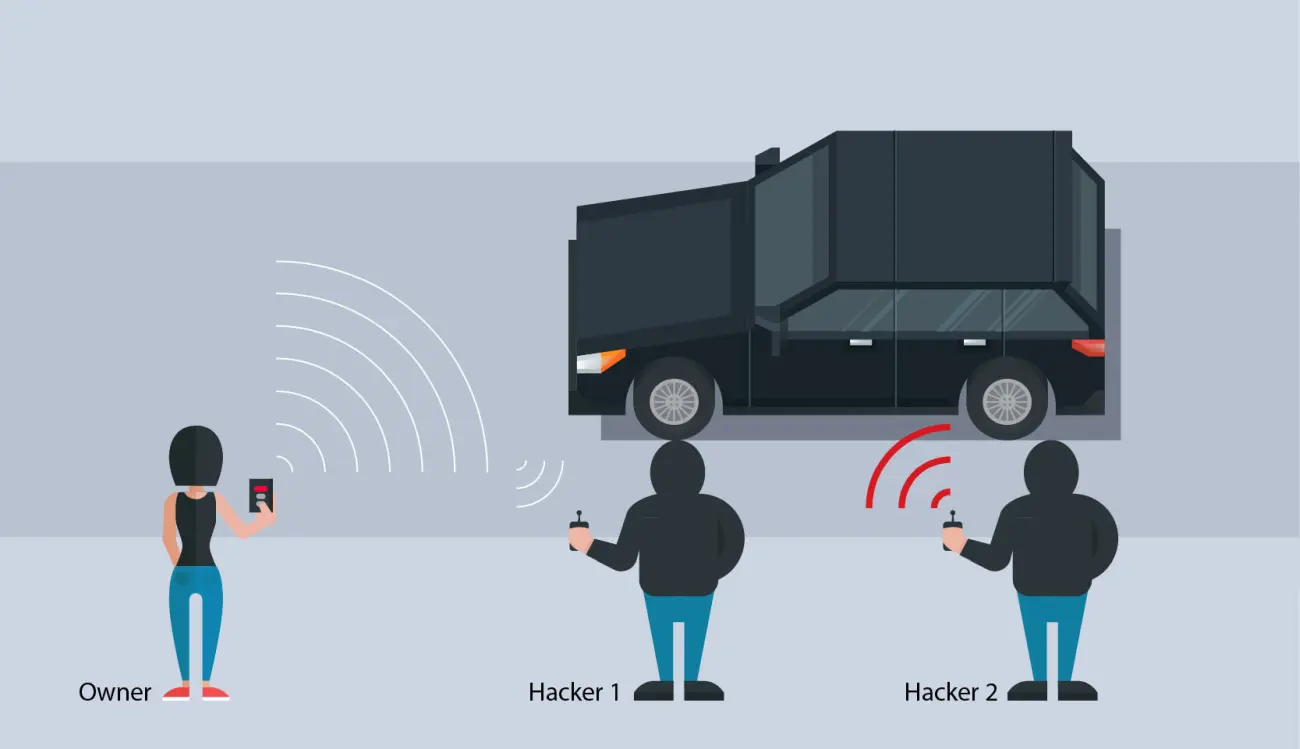
Could Your Car Be Stolen Without Your Knowledge? Understanding Keyless Car Theft (Relay Attack)
Keyless car theft, commonly known as a Relay Attack, has become one of the fastest-growing vehicle theft methods in recent years. It primarily targets vehicles equipped with keyless entry and keyless start systems, allowing criminals to unlock and start a car without ever touching the owner's key.
The most alarming part is that your car can be stolen while the key is still inside your home.
How Does a Relay Attack Work?
A Relay Attack exploits the wireless communication between your vehicle and its key fob.
In a typical attack, two thieves work together:
-
One stands near your home or wherever the key is located.
-
The second waits beside the vehicle.
-
A relay device captures the signal emitted by the key fob.
-
The signal is transmitted to the second device near the vehicle.
-
The car believes the key is nearby, unlocks the doors, and allows the engine to start.
The entire process can take less than a minute and often leaves no visible signs of forced entry.
Which Vehicles Are Most at Risk?
Relay attacks mainly affect vehicles equipped with:
-
Keyless entry systems
-
Push-button start systems
-
Passive keyless access
Many vehicles manufactured since the mid-2010s include these features.
Luxury and premium brands are frequently targeted because of their resale value, but the vulnerability is not limited to specific manufacturers. Any vehicle using similar keyless technology could potentially be affected.
Why Is This Theft Method So Dangerous?
Relay attacks are particularly concerning because they are:
-
Fast and quiet
-
Non-destructive
-
Difficult to detect
-
Able to bypass traditional locks
Since there is often no visible damage to the vehicle, proving theft circumstances can sometimes complicate insurance investigations, depending on local laws and policy terms.
Does Wrapping Your Key in Aluminum Foil Work?
A popular suggestion on social media is to wrap the key fob in aluminum foil.
There is some scientific basis for this idea.
Key fobs continuously emit low-power radio signals so the vehicle can detect them when nearby. Aluminum foil can partially block these radio signals by acting as a basic electromagnetic shield.
However, this method has important limitations:
-
Small gaps can allow signals to escape.
-
It provides inconsistent protection.
-
It may not stop professional relay equipment.
-
The foil can tear or become ineffective over time.
For these reasons, aluminum foil should only be considered a temporary solution rather than a reliable security measure.
Better Ways to Protect Your Vehicle
Several measures can significantly reduce the risk of a relay attack.
Consider the following:
-
Store your key inside a Faraday pouch or Faraday box designed to block radio signals.
-
Keep keys away from doors, windows, and exterior walls.
-
Disable passive keyless entry if your vehicle allows it.
-
Use a visible steering wheel lock as an additional physical deterrent.
-
Park in secure garages or well-lit monitored areas whenever possible.
-
Keep your vehicle's software updated if the manufacturer provides security updates.
Combining multiple security measures offers better protection than relying on a single solution.
Is Relay Theft Really Becoming More Common?
Law enforcement agencies and automotive security experts across Europe have reported an increase in relay theft incidents over recent years.
The rise of keyless technology has improved convenience for drivers, but it has also created new opportunities for organized vehicle theft.
As manufacturers introduce stronger encryption and ultra-wideband (UWB) key technology in newer vehicles, relay attacks may become less effective. However, millions of existing vehicles remain potentially vulnerable.
Can Manufacturers Prevent Relay Attacks?
Many automakers are already improving keyless security by introducing features such as:
-
Motion-sensing key fobs that stop transmitting when left stationary
-
Ultra-Wideband (UWB) technology, which verifies the actual distance between the key and the vehicle
-
Enhanced encryption protocols
-
Optional settings to disable passive unlocking
These technologies are expected to become increasingly common in future vehicle models.
Final Thoughts
Keyless entry systems provide exceptional convenience, but they also introduce new security challenges.
A Relay Attack allows criminals to extend the signal from a nearby key fob, making the vehicle believe the key is present—even when it is safely inside your home.
Fortunately, simple precautions such as storing your keys in a Faraday pouch, keeping them away from entrances, and using additional physical security devices can greatly reduce the risk.
The bottom line: Keyless technology makes everyday driving easier, but protecting your key fob is just as important as locking your car.